Matox News

Truth Over Trends, always!

Ford taps F1 tech and rewards to craft $30K electric truck for young drivers

Ford’s Bold Shift: Disrupting the EV Market with Innovation

In a move that underscores the relentless pace of disruption in the automotive industry, Ford is charting a new course with its Universal EV platform (UEV), signaling a strategic pivot aimed at revitalizing its EV business amid recent setbacks. After incurring a significant $19.5 billion loss in December, Ford has ended its production of the battery-electric F-150 Lightning, abruptly shifting focus to more affordable, scalable electric vehicles designed for efficiency and mass-market appeal. This move signals a clear response to investor pressures and a recognition that innovation must translate into viable business models capable of competing with electric giants like Tesla.

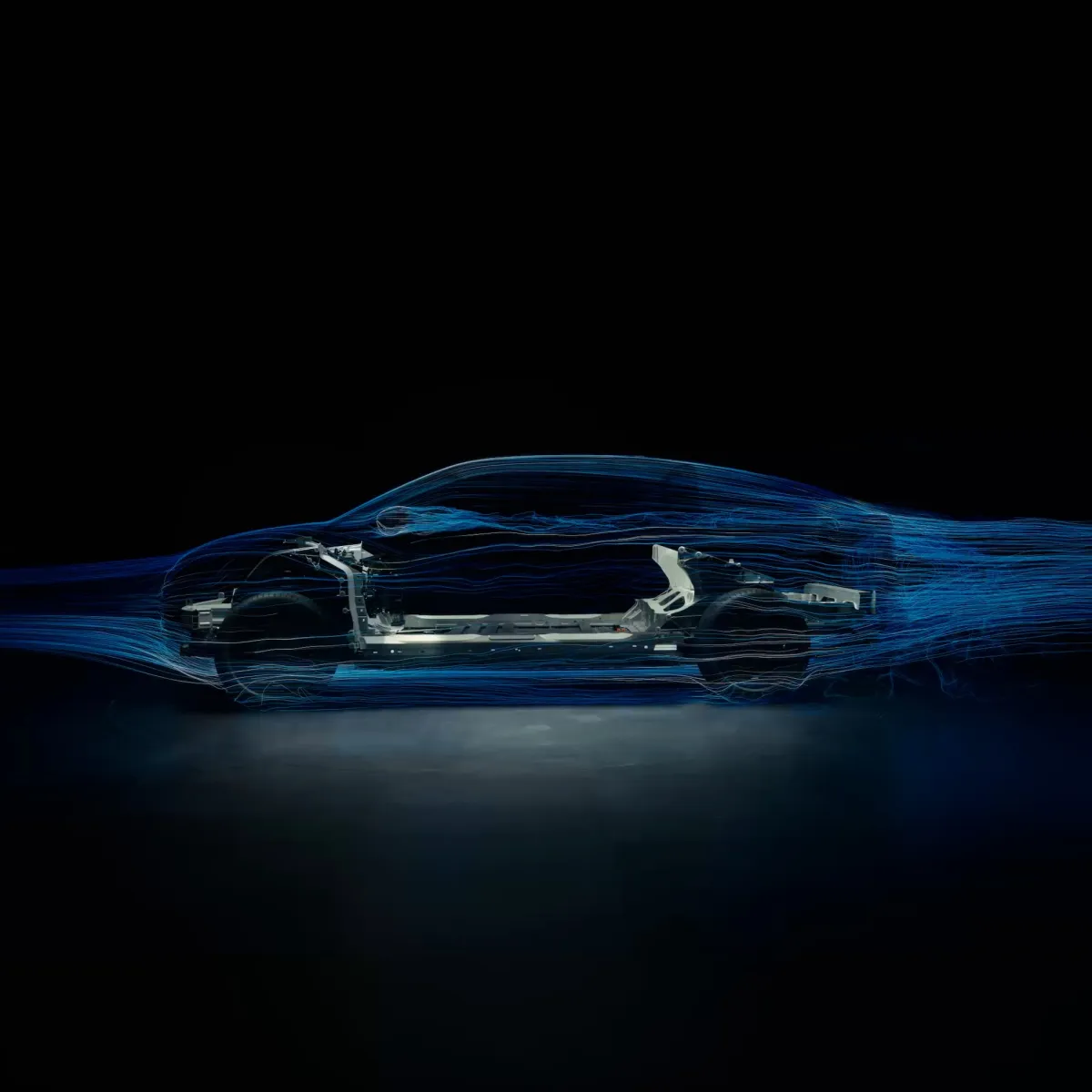
At the heart of Ford’s new strategy is a ground-up architectural overhaul: the UEV platform. This “clean sheet” design emphasizes modularity, lightweight construction, and manufacturing efficiency. Built upon aluminum unicastings—a technique borrowed from Tesla and Rivian—this platform minimizes parts and assembly time, driving down costs while maximizing durability and performance. Experts at MIT and analysts from Gartner acknowledge that such innovation in manufacturing could redefine profit margins in the EV market, allowing Ford to produce a broad array of vehicles including trucks, sedans, crossovers, and commercial vans from a single, versatile platform. The implication is profound: a tectonic shift in manufacturing economics that could make EVs more accessible, changing the landscape for competitors and consumers alike.

Disruption through Efficiency and Software Innovation

  • The UEV system employs single-piece aluminum components and a downsized, high-efficiency battery, offering about 15% more range—roughly 50 miles—compared to traditional gas-powered trucks.
  • The move to a zonal architecture—a departure from scattered ECUs—reduces complexity, cost, and weight, enabling ford to develop its own software stack for vehicle control.

According to Alan Clarke, who led Ford’s team of ex-Tesla engineers, the platform is designed around efficiency and affordability: “It’s built around making long-range EV travel accessible to more people.” This focus on cost-effective mass production is a game-changer, especially as traditional automakers struggle with scaling EV manufacturing profitably. The integrated control modules and proprietary software developed by Ford provide a strategic edge, giving the company full control over vehicle functions, sensor integration, and user experience— capabilities that can rival Tesla’s vertically integrated approach.

Implications for Industry and Market Dynamics

The innovation embodied in Ford’s approach highlights a broader trend of disruptive potential sweeping through the auto industry. If successful, Ford’s UEV could serve as a template for legacy automakers seeking to compete with Tesla’s dominance by reducing costs and increasing flexibility in manufacturing. Market analysts from Gartner forecast that a shift toward unified platform architectures and integrated software will accelerate overall EV adoption, pushing industry standards towards modular, scalable designs aligned with the evolving needs of consumers and commercial fleets.

Yet, challenges remain. As Peter Thiel and other tech investors warn, “innovation alone isn’t enough”; the ability to massively scale, maintain quality, and develop a robust software ecosystem will determine whether Ford can capitalize on these technological advancements. In the near future, industry leaders must innovate relentlessly, embracing disruption or risk being left behind. The next 12-24 months are crucial as Ford’s new EV strategy begins to take shape, setting the stage for a new era of automotive competition rooted in innovation, efficiency, and software supremacy.

In this high-stakes race, Ford’s bold move underscores a fundamental truth: the future belongs to those who innovate with purpose and execute at scale. As investor confidence, consumer expectations, and industry standards evolve rapidly, the urgency to disrupt and adapt has never been greater. The coming years will reveal whether Ford’s paradigm shift will trigger a seismic shift across the industry or serve as a cautionary tale for complacency in the face of technological upheaval.


Rivian’s Drive to Autonomy: The Future of Youth-Led Tech

Rivian’s Bold Push Toward Autonomous Driving Disrupts Future of Electric Vehicles

In a paradigm-shifting move, Rivian has announced its accelerated transition into the realm of fully autonomous vehicles, promising a future where “hands-off” driving becomes a reality by 2026. The company’s recent Autonomy & AI Day revealed a series of groundbreaking developments rooted in innovation and disruption—aimed squarely at redefining the EV and autonomous market landscape. This move places Rivian ahead of many traditional automakers, demonstrating how a fresh approach to AI-centric design, powered by transformer-based architectures, can potentially overhaul existing automotive paradigms.

Central to Rivian’s strategy is the development of its Large Driving Model (LDM), a product of a shift from deterministic rule-based systems to a data-driven, AI-first platform. As CEO RJ Scaringe explained, Rivian’s earlier models relied heavily on prescriptive control strategies, but his team quietly pivoted in 2021, adopting a comprehensive transformer-based AI structure similar to innovations pioneered by Tesla with its Full Self-Driving (FSD). This new platform leverages Nvidia’s Orin processors and accumulates data from its fleet to rapidly enhance vehicle autonomy capabilities.

The implications for the automotive business are profound: Rivian’s focus on AI-centric systems is surprising industry veterans who traditionally favored rule-based automation. The company’s goal to achieve “Universal Hands-Free” driving by early 2026, covering over 3.5 million miles in North America, demonstrates a committed disruption to the traditional automobile manufacturing timeline. Should Rivian successfully train its LDM in this tight window, it could establish a new standard for disruptive innovation—shifting consumer expectations from semi-autonomous systems to fully autonomous, driverless operations significantly earlier than competitors.

Advancements in lidar technology and custom hardware, including the unveiling of a new autonomy computer, are set to facilitate this transformation. However, the industry remains cautious. The challenge of transitioning from “eyes-on” to “eyes-off” driving is non-trivial, and even with a state-of-the-art system, safety remains a paramount concern. Nevertheless, Rivian’s transparent communication about product timelines aims to differentiate itself in a crowded market by setting realistic expectations, potentially giving it a competitive edge in consumer trust and brand loyalty.

The broader market impact could be revolutionary. Industry analysts from Gartner and MIT acknowledge that this integration of AI and hardware signifies a fundamental shift—foreshadowing a future where traditional automakers are forced to rethink their strategies. Companies like Tesla have pioneered this space, but Rivian’s approach, emphasizing clarity on timelines and customer choices, signals a new era of agile innovation in the EV sector. Such disruption threatens established giants, paving the way for smaller, nimble challengers leveraging cutting-edge AI to accelerate autonomous capabilities.

Looking ahead, Rivian’s focus on AI-driven software and hardware advancements points toward a future where autonomous mobility is not a distant dream but an imminent reality. The company’s roadmap to roll out progressively capable driver assistance systems, culminating in fully hands-free and eyes-off driving, features a dynamic mix of **innovation, disruption**, and relentless business pragmatism. The industry’s next few years will dictate whether Rivian’s aggressive push can succeed in transforming the automotive landscape—an urgent call for competitors to innovate or risk obsolescence in a rapidly evolving tech-automotive ecosystem.

Rivian CEO RJ Scaringe Scores $5B Pay Package, Spotlight on EV Boom

Rivian Reshapes Executive Incentives to Accelerate Market Disruption

The EV startup Rivian has announced a strategic overhaul of its compensation strategy for founder and CEO RJ Scaringe, signaling a bold move to align executive incentives with future innovation and market dominance. According to a recent filing, Scaringe is being rewarded with a new performance-based stock award that could eventually be valued at approximately $5 billion, contingent on hitting ambitious growth benchmarks. This initiative underscores Rivian’s commitment to disruption, not just through its electric vehicles, but through a recalibrated business strategy that keeps pace with industry giants like Tesla and emerging players leveraging the latest in autonomous and clean tech innovation.

The company’s latest move follows a period marked by fluctuating market valuation, with Rivian’s stock soaring past $129 post-IPO in November 2021—only to slump to around $30 in subsequent months. Currently trading between $10 and $20, this volatility reflects broader industry challenges but also emphasizes why now more than ever, redefining incentives for leadership is critical in maintaining competitive advantage. Rivian’s decision to double Scaringe’s annual salary to $2 million and grant a significant 10% stake in its newest spinout, Mind Robotics, exemplifies an aggressive push towards technological diversification and integration. Such approach aims to unlock new revenue streams and deepen innovation pipelines, potentially changing the landscape of robotics and AI within the automotive sector.

By canceling Rivian’s previous 2021 performance grant, the company’s compensation committee aims to counteract what it calls a “lack of incentive,” replacing it with a more aggressive, goals-based equity scheme. This strategic pivot echoes trends seen across high-growth tech sectors, where disruption of traditional business models hinges on aligning executive rewards with technological milestones. The move also signals to investors and competitors alike that Rivian intends to accelerate R&D, especially as it prepares to launch its anticipated R2 model, a critical phase in its competitive push against legacy automakers and likes of Tesla’s autonomous vehicle empire.

Looking ahead, industry analysts like Gartner and think tanks such as MIT emphasize that the next wave of innovation in EVs and advanced automation is driven by relentless disruption in hardware, software, and business models. Rivian’s evolving incentive structure reflects a broader market recognition that attracting top-tier talent and incentivizing breakthrough performance is essential in a landscape where timing is everything. With the global push for cleaner transportation and autonomous tech accelerating, Rivian’s bold strategic incentives highlight a clear message: the race to redefine mobility is not just automation or electrification but the strategic mastery and vision of industry leaders prepared to disrupt the status quo at a moments’ notice. As the industry stands on the cusp of what may be a transformational decade, Rivian’s moves signal a clarion call—those who innovate fastest and incentivize effectively will shape the future of transportation.

Social Media Auto Publish Powered By : XYZScripts.com



