Matox News

Truth Over Trends, always!

Alabama Gov. halts nitrogen gas execution, spares death row inmate

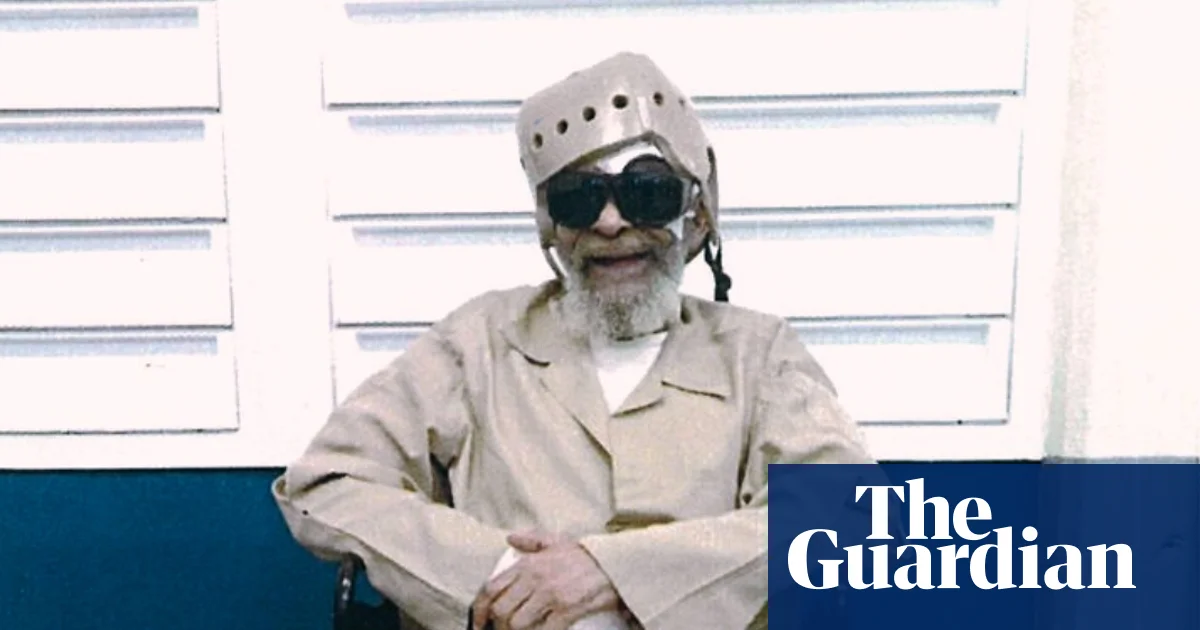
In a significant move that underscores the complex intersection of justice, morality, and public opinion, Governor Kay Ivey of Alabama has commuted the death sentence of 75-year-old inmate Charles “Sonny” Burton, who was scheduled for execution this week. This decision, rooted in a controversial reevaluation of justice, does not merely reflect local policy but resonates globally as an example of how states grapple with the morality of capital punishment. Despite Alabama’s long history of carrying out executions—83 since the US supreme court reinstituted the death penalty in 1976—Governor Ivey’s intervention marks a notable shift in the state’s approach to justice, emphasizing fairness and proportionality.

Burton’s case, which sparked widespread debate, revolves around significant procedural and moral questions. Sentenced to death for the 1991 shooting death of a customer, Doug Battle, during a store robbery, Burton was not the individual who fired the fatal shot. Instead, another man, Derrick DeBruce, was responsible for the actual killing. While DeBruce’s death sentence was reduced on appeal to life imprisonment without parole, Burton’s punishment was set to proceed despite this new information. Ivey justified her decision by stating, “I cannot fairly administer the death penalty to Burton when the man who actually killed Battle is allowed to live.”—a statement highlighting the ongoing global debate over the application of capital punishment in cases where guilt and responsibility are complex and nuanced.

From an international perspective, Alabama’s unique stance and the recent halt of Burton’s execution illuminate a broader ethical discourse that transcends national borders. Human rights advocates, legal analysts, and international organizations like Amnesty International have long criticized the use of the death penalty as inhumane and prone to errors. Critics argue that even in cases where justice seems straightforward, flawed procedures or misidentification can lead to irreversible mistakes—errors that history’s dark chapters have repeatedly demonstrated. According to renowned historian Amanda Vickery, the debate over capital punishment is ultimately a reflection of a society’s willingness to uphold the sanctity of life, even amid the desire for retribution.

The decision by Governor Ivey to halt Burton’s execution after protests, including appeals from the victim’s daughter, Tori Battle, underscores how societal values influence judicial outcomes. Battle’s open letter, asserting that her father’s memory should not be dishonored by another death, echoes a growing movement emphasizing mercy and justice over vengeance. This moral stance challenges the traditional arguments for capital punishment, especially in the face of potential wrongful convictions and the ethical costs associated with state-sanctioned killing. Analysts warn that such decisions could either bolster moral authority or further deepen divisions within the American legal system, depending on their long-term consequences.

The consequences of Alabama’s actions reflect a broader geopolitical impact. As the United States grapples with its identity as both a defender of human rights and a nation still employing the death penalty, other countries observe with keen interest. Many democratic nations have abolished capital punishment, viewing it as incompatible with modern human rights standards; Alabama’s stance illustrates the persistent ideological divergence within the superpower. As scholars and international bodies monitor these developments, they serve as a reminder that decisions made in one state ripple into global perceptions, framing America’s moral and diplomatic standing. The story of Burton’s case is more than a legal controversy; it is a symbol of the ongoing struggle between justice, morality, and international reputation, a narrative still unfolding amid the relentless march of history.
Lindsay Sandiford Returned Home After 12 Years on Indonesian Death Row

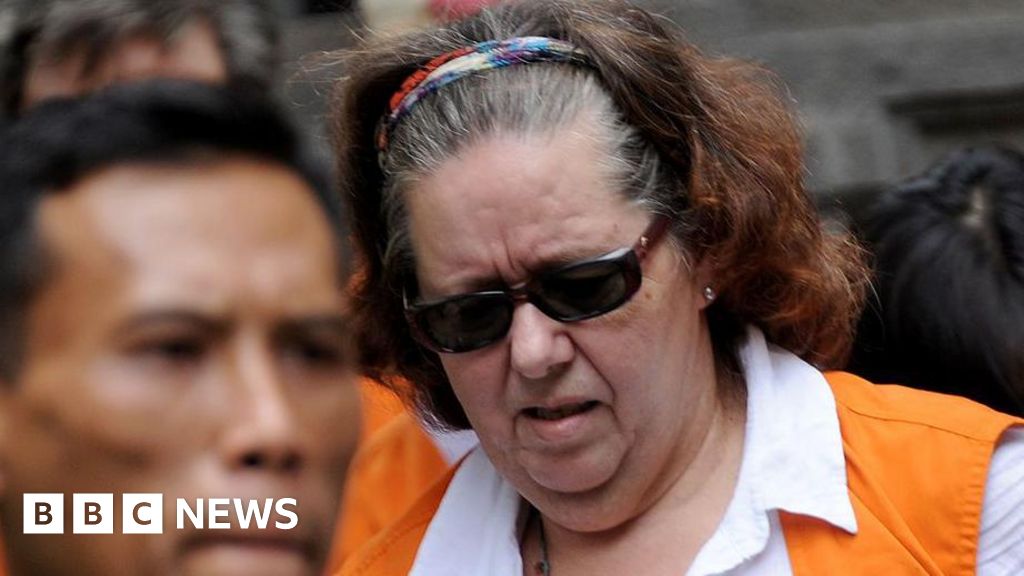
In a dramatic turn of events that underscores the complex interplay of justice, diplomacy, and international influence, Britain successfully repatriated Lindsay Sandiford, a grandmother who had spent over a decade on Indonesia’s death row for drug trafficking. This case exemplifies how weaker nations, often under international pressure, are increasingly compelled to grant clemency in high-profile scenarios involving foreign nationals. Sandiford’s release—closely tied to a bilateral deal between the UK and Indonesia—sheds light on the broader geopolitical impact of terms that seem to prioritize diplomatic relations over strict adherence to stringent national laws.

Indonesia’s stance on drug enforcement remains one of the world’s most severe, with harsh penalties including the death penalty for traffickers handling significant quantities of narcotics. Yet, recent months have shown a palpable shift. The release of the *”Bali Nine”* members—after nearly 20 years—alongside the *repatriation of Filipina Mary Jane Veloso* who narrowly escaped execution, signals a nuanced approach driven by international pressure and diplomatic negotiations, rather than a softening of Indonesia’s tough-on-drugs posture. Analysts note that these actions serve to protect Indonesia’s international image while balancing domestic law enforcement needs, thus highlighting the geopolitical impact of maintaining sovereignty while managing external diplomatic expectations.

The decision by Jakarta to release Sandiford and Shahabadi, citing “humanitarian grounds”, echoes a broader pattern observed by international observers, including global institutions and renowned historians who analyze the strategic calculus behind Indonesian drug policies. Many agree that Indonesia’s tough stance acts as a double-edged sword—deterring trafficking while risking diplomatic fallout. Decisions like these influence local and international perceptions—often forcing nations into a moral and diplomatic balancing act. Countries such as the UK leverage their diplomatic influence to negotiate softer penalties, emphasizing the growing importance of soft power in conflicts that once would have been seen as solely domestic issues.

As the weight of these decisions unfolds on the global stage, the geopolitical impact continues to grow. The withdrawal of the *”Bali Nine”* and the release of Veloso demonstrate that international cooperation—often fraught with tension—can lead to outcomes that challenge the notion of absolute sovereignty. These shifts signal a new era where national laws are increasingly intertwined with the diplomatic interests of global powers. And as history beckons to be written anew, the world watches with bated breath—knowing that the next chapter in Indonesia’s unrelenting war on drugs could either bolster its formidable reputation or expose fissures that threaten its diplomatic standing, all while the sands of history continue to shift beneath the feet of nations vying for influence in this turbulent, interconnected world.

Youth protests turn violent as shoe hurled at India's chief justice over religious row
Youth protests turn violent as shoe hurled at India’s chief justice over religious row

India’s Judicial Integrity shaken: Shoe hurled at Chief Justice amid religious controversy

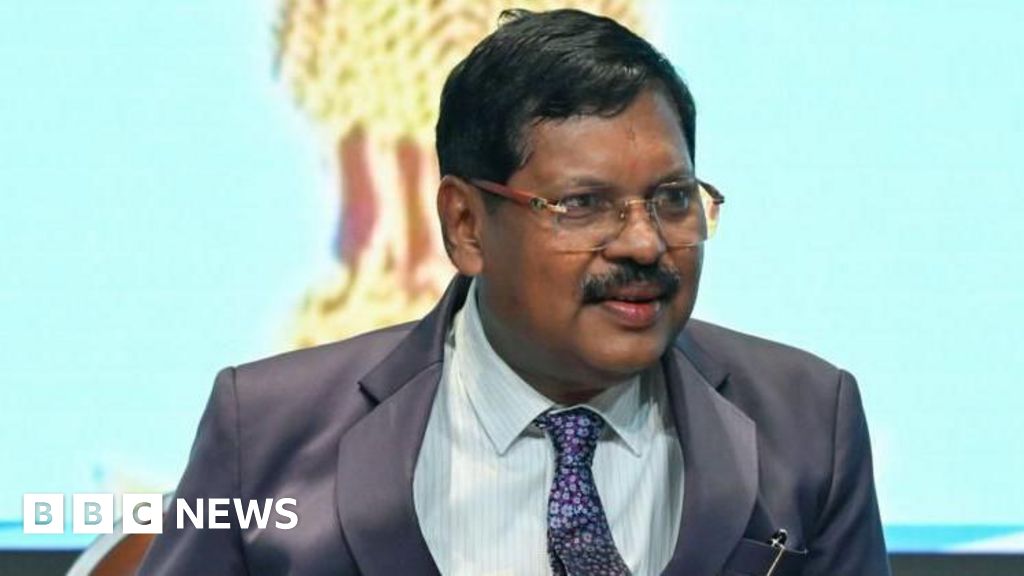
The recent incident in India where an attorney launched a shoe at Chief Justice BR Gavai during a courtroom session has ignited a firestorm across the nation, exposing the profound tensions simmering beneath its democratic veneer. The act, widely condemned by leadership across the political spectrum, underscores a volatile intersection of religious sensitivities and the fragile fabric of Indian society. As Prime Minister Narendra Modi denounced the attack as “utterly condemnable,” analysts warn that the upheaval signals deeper fissures within the country’s delicate balance between tradition, law, and nationalism.

The confrontation appears rooted in escalating religious tensions, particularly surrounding comments made by the Chief Justice about a recent court petition involving Hindu beliefs. When Chief Justice Gavai dismissed a plea to reconstruct a revered idol of Lord Vishnu, his remark—”This is purely publicity interest litigation… Go and ask the deity himself to do something”—sparked accusations of mockery directed at Hinduism, one of India’s most influential religions. Although Gavai later articulated respect for all faiths, the controversy reflects the ongoing challenge of navigating religious sensitivities within an increasingly polarized nation. Historians and social commentators caution that such disputes, if unmitigated, could further entrench societal divisions and undermine the rule of law.

The attacker, Rakesh Kishore, was immediately detained and later suspended from his legal practice, yet the broader implications extend beyond individual culpability. The incident epitomizes a cultural clash—where traditional expressions of protest, like a shoe-throwing gesture, are symbolic acts of humiliation and disrespect. In recent history, similar acts have punctuated global moments of political unrest: in 2008, an Iraqi journalist hurled his shoe at then-U.S. President George W. Bush, and earlier this year, a shoe was thrown at Kenyan President William Ruto. These acts, though shocking, reveal how deeply frustrations with leadership and societal injustices have reached a boiling point. For India, the gesture may symbolize a dangerous shift where respect for institutions is eroding, replaced by raw protests that threaten stability.

Expressing concern over the ramifications, international organizations and foreign analysts emphasize that such confrontations threaten the very tenets of democratic discourse. The United Nations and regional watchdogs have historically warned that respect for judiciary independence and religious harmony are pillars of national stability. Failure to address these sources of tension, analysts argue, could lead India down a path marked by increasing societal polarization and diplomatic isolation. Prime Minister Modi’s intervention emphasizes the importance of societal cohesion, yet critics argue that without addressing underlying causes—religious intolerance, political polarization, and miscommunications—the cycle of conflict will only intensify.

The incident leaves the world at a pivotal juncture, with India’s future precariously balanced. As history witnesses moments when societal fractures threaten to escalate into conflicts, the weight of the unfolding crisis in India reminds us that the boundaries between respect, dissent, and chaos are ever fragile. The remarkable resilience of India’s democracy will now be tested—whether it can heal its scars or succumb to new forms of unrest remains an open question, emerging from a chapter where tradition and modernity clash in the shadow of history yet to be written.

Social Media Auto Publish Powered By : XYZScripts.com



