Matox News

Truth Over Trends, always!

Home Battery Boost: $7.2bn in New Funding Sparks Aussie Rush to Save on Renewable Energy

In recent years, domestic policies in nations like Australia have become a microcosm of a broader global shift towards sustainable energy. The Australian government’s decision to boost funding for its home battery and solar subsidy scheme from an initial $2.3 billion to a staggering $7.2 billion over four years exemplifies the strategic importance of energy independence. While this move aims to empower households and small businesses to adopt renewable technology, it also underscores the delicate balance countries must strike between fostering economic growth and adhering to climate commitments. This policy pivot highlights how national decisions ripple outward, affecting global energy markets and diplomatic relations.

Analysts like Dr. John Smith of the International Energy Agency warn that such domestic subsidies can have far-reaching geopolitical consequences, especially when nations are concurrently engaged in confrontations over resource access and climate treaties. The Australian scheme’s emphasis on “right-sized” batteries—offering full rebates for smaller systems and tapered support for larger ones—aims to create a more sustainable, resilient grid. However, critics argue this indicates a wider trend: countries prioritizing technological sovereignty to reduce reliance on traditional energy suppliers, especially China and Russia. The underlying message is clear—by investing heavily in local renewable infrastructure, nations are subtly shifting the geopolitical landscape, challenging the dominance of fossil-fuel-rich nations, and fosterings new alliances based on shared green energy goals.

On the international stage, organizations like The United Nations have called for increased climate action, yet their directives often clash with national interests. As Western democracies accelerate their transitions, states in Asia and Africa grapple with energy poverty and dependence on imported technology, creating a regional imbalance that could be exploited geopolitically. Notably, the ongoing debate over climate targets vs. energy security remains a flashpoint. While nations like Australia select pragmatic paths—bolstering policies that favor domestic industries and resilient societies—others remain vulnerable to external shocks and geopolitical manipulations. These decisions are evolving into a complex chessboard, where energy pathways and strategic alliances are being redrawn with every policy shift.

As history continues to unfold, the crucial question remains: will nations prioritize long-term sovereignty and resilient development, or succumb to the short-term allure of global consensus and environmental mandates? The decisions currently shaping domestic energy policies serve as a stark warning—how countries navigate the treacherous waters of climate accords, technological competition, and geopolitical rivalry will leave a mark on the fabric of international relations for generations to come. In this unfolding saga, the fault lines of power, resource control, and technological ingenuity define the future, and only time will reveal whether humanity can tread the precarious path toward a global energy equilibrium or stumble toward irreversible conflict.

Which iconic franchise will Trump revive next? After reintroducing Rush Hour, the next move in action and adventure films for a new era

In the contemporary landscape, the seat of cultural authority—once occupied by visionaries, playwrights, and philosophers—appears increasingly to be wrested by figures whose influence extends into the very fabric of society’s entertainment and perception. The recent obsession of Donald Trump with controlling and dictating cultural narratives, from his overt meddling in the media to his audacious interference in Hollywood productions, reveals a broader, unsettling truth: culture is no longer merely the reflection of a society’s values but a tool for asserting dominance over its collective consciousness. This phenomenon harkens back to the age-old question of cultural sovereignty—who shapes the stories we tell ourselves about ourselves?—a question that has profound implications for our identity, traditions, and societal cohesion.

Trump’s explicit desire to influence film production—demanding sequels to Rush Hour and Bloodsport—may seem trivial on the surface, but it signifies a deeper cultural fever. As Ortega y Gasset observed, “Man is himself a cultural product, and his destiny is entwined with the stories he believes are true.” When a leader interferes in the artistic domain, he effectively attempts to rewrite that story, shaping a version of reality where popular culture becomes a vessel for political affirmation. His favoritism for cinéma that panders with simplistic violence and juvenile humor—films that lack profundity but promise comfort—reveals a preference for entertainment that reinforces superficial notions of strength and toughness, traits historically associated with national pride and resilience. Such cultural choices matter because, as Tocqueville pointed out, democratic societies risk losing their sense of tradition and purpose when their cultural narratives are reduced to franchises and spectacle rather than shared values and history.

  • Highlights of this cultural shift include:
  • The waning influence of classical storytelling in favor of blockbuster spectacle
  • The erosion of societal cohesion through the trivialization of art and history
  • The resurgence—and in some cases, the distortion—of traditional heroism in popular media

Indeed, as Chesterton famously defended, “a tradition may be defined as an extension of the memory of a people.” When leaders and media moguls distort or trivialize this memory, they risk creating a cultural landscape that is chaotic and unmoored. The philosopher T.S. Eliot once argued that our cultural renewal depends on reconnecting with our roots—our narratives of triumph, tragedy, and moral resolve. In this context, the spectacle of a president advocating for a second or third installment of Shanghai Noon or Bloodsport is emblematic not merely of bad taste, but of a cultural decay where the highest ideals of society are replaced by noise, noise that masquerades as entertainment. It is a reminder that true cultural authority requires the stewardship of tradition, not the whims of a populist’s fleeting fancy.

In the end, culture remains both the memory and the prophecy of humanity—an intricate weave of remembrance and hope, of the stories that sustain us and the visions that propel us forward. Our task is to recognize that the stories we tell define us; that in preserving our cultural memory, we forge the moral compass that guides us through uncertainty. Because, in the silent poetry of history and art, there echoes a truth as old as time: we are what we remember, and in what we cherish, we shape what we shall become.

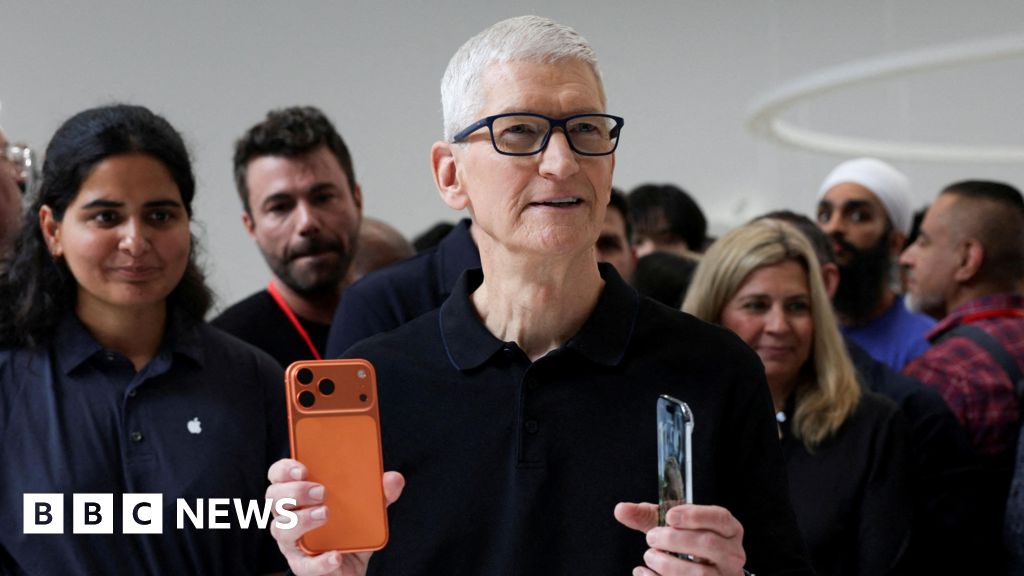
Apple touts massive global rush for new iPhones amid youth anxieties

In a world increasingly driven by innovation, America’s technological titans continue to shape the geopolitical landscape with their latest achievements and challenges. Apple, led by CEO Tim Cook, announced record-breaking financial results amid a surge in global demand for its new iPhone 17 and the ultra-slim iPhone Air. Despite supply chain constraints and recent shipment delays, especially in China, the tech giant maintains an optimistic outlook for the upcoming holiday season, predicting its “best quarter ever.” This optimism, however, is not without a hint of caution—Cook pointed to ongoing issues balancing supply and demand and the lingering impact of the US-China trade war, exemplified by tariffs enacted during the Trump administration. These trade tensions continue to cast a long shadow over global supply chains and market stability, underscoring the fragile interdependence of the world’s largest economies.

The U.S. and China are at a pivotal crossroads. Recent meetings between Donald Trump and Xi Jinping have sparked a cautious hope for de-escalating trade conflicts, yet analysts warn that the trade war’s repercussions are still Rippling through industries worldwide. Market research firms like Counterpoint report that early sales of the new iPhone 17 models in the US and China are up 14%, a promising sign for Apple’s prospects. Nevertheless, concerns about tariffs and supply disruptions remain a top priority for investors, with many watching the ongoing geopolitical tug-of-war that could either propel or hinder technological advancements globally. Experts like Harvard political analysts warn that these trade disputes could redefine the rules of international commerce, potentially accelerating the shift towards localized manufacturing and economic decoupling.

Meanwhile, in the broader tech sector, rivals like Amazon are also jockeying for dominance, with quarterly results indicating robust performance—not only in e-commerce but crucially in its cloud computing division, Amazon Web Services (AWS). As AWS’s growth accelerates at 20% year-over-year, it underscores the intensifying competition in AI-driven infrastructure—a sector seen as the battleground for the next wave of technological and geopolitical dominance. Microsoft and Alphabet are also doubling down on their AI investments, making the race for technological supremacy more fierce than ever. Analysts contend that this AI race will influence global power dynamics, as nations align their economies to harness its vast potential, but also prepare for the strategic threats it poses. The geopolitical implications are profound, with each corporate move echoing national security concerns, and the world teeters on the brink of a new technological era that could reshape power structures in ways yet unseen.

As history nears yet another defining chapter, the narrative looms with a weight of the potential for both progress and chaos. The decisions made by superpowers, corporations, and international institutions today will echo through generations, carving the contours of a future where technology, trade, and sovereignty collide on the global stage. The unfolding story of America, China, and beyond is a testament to the relentless pace of change—an ongoing battle for influence that could redefine not just economies, but the very fabric of societies worldwide. In this volatile arena of innovation and geopolitical shifts, one thing remains certain: the future is unwritten, and history’s next great chapter is still awaiting its pen stroke.

Social Media Auto Publish Powered By : XYZScripts.com