Matox News

Truth Over Trends, always!

San Diego Settles for $30M in Police Shooting Death of 16-Year-Old Boy

San Diego Reaches $30 Million Settlement in Police Shooting of Teenager

In a landmark decision, the city of San Diego has agreed to pay $30 million in a settlement to the family of Konoa Wilson, a 16-year-old who was fatally shot by a police officer while fleeing dangerous circumstances at a local train station. This settlement, one of the largest civil payouts in the United States concerning a police shooting, underscores the ongoing crisis of police use of deadly force and raises critical questions about race, accountability, and systemic bias within law enforcement agencies nationwide. As international observers watch, this incident exemplifies the complex intersection of justice and public safety, fueling debates that resonate well beyond American borders.

Wilson’s tragic death occurred during a chaotic shootout at the Santa Fe station, where a youth had opened fire and injured another individual. Exiting the scene in fear, Wilson ran past officer Daniel Gold, who, according to police footage, immediately drew his weapon and fired multiple shots at the fleeing teen’s back—even as Wilson did not threaten or brandish a weapon at the moment of the shooting. Body camera footage reveals that Gold identified himself only after initiating the gunfire, further fueling allegations of excessive use of force. The civil lawsuit filed on behalf of Wilson’s family accused the officer of racial violence, emphasizing the racial dynamics at play and portraying the shooting as rooted in systemic biases.

By accepting this settlement, San Diego tacitly acknowledged the gravity of the incident—though city officials maintained it was a *business decision* rather than an admission of liability. Critics argue that police officers operating within a framework of systemic racism often perceive Black youth as threats, leading to tragedies like Wilson’s death. Historians and human rights advocates point out that such incidents are not isolated; they reflect a broader pattern of racial profiling that persistently undermines community trust and endangers vulnerable populations. International organizations, including the United Nations, have repeatedly voiced concern about racial disparities in police violence, urging reforms to ensure more just and equitable law enforcement practices worldwide.

This incident marks a significant turning point—highlighting the urgent need for comprehensive reforms and better accountability mechanisms within police forces across the globe. As governments grapple with these issues, the fallout from such tragedies shapes international discourse on state violence and human rights. How nations respond to this mounting pressure will influence the delicate balance between security and liberty, potentially redefining the role of law enforcement in societies seeking justice and fairness.

The saga of Wilson’s death remains a stark reminder that the weight of history and the pursuit of justice continue to unfold, forging a path that nations worldwide are watching with cautious anticipation. As the ripple effects of this settlement echo through the corridors of power, one fact remains clear: the fight for meaningful reform is far from over, and its outcome will shape generations to come. With each decision, policymakers stand at a crossroads—either advancing toward genuine justice or retreating behind the barriers of systemic inertia, risking the further erosion of public trust and the moral fabric of society.
36 Hours in San Antonio, Texas: Uncover Heritage, Adventure, and Local Vibe

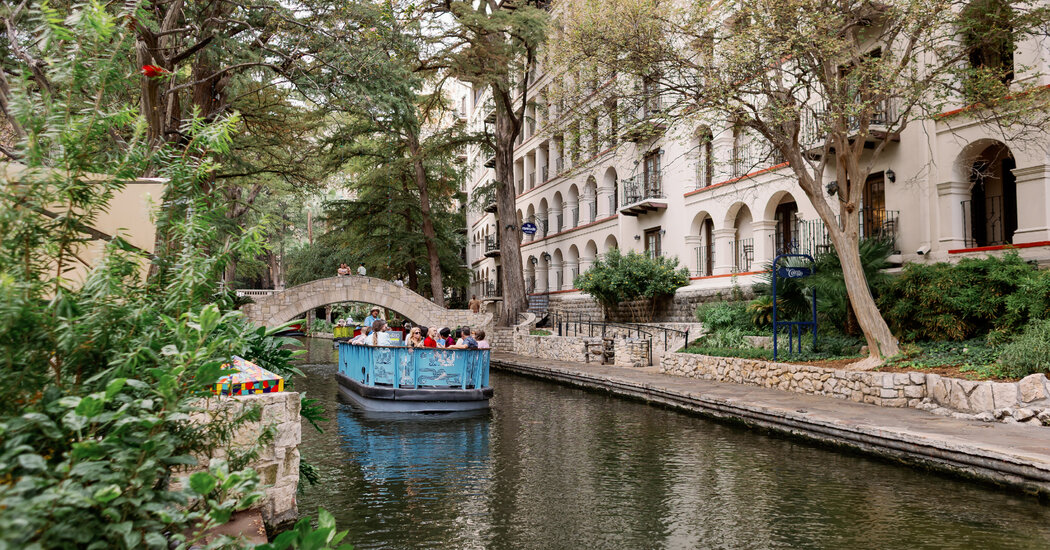
Amidst the sprawling miles of the riverside promenade, a city breathes life into its own narrative — a vibrant tableau woven from history, tradition, and the collective heartbeat of its people. As one ambles along this 15-mile artery of shared experience, it becomes clear that such spaces are not merely physical corridors but manifestations of cultural identity that define the very soul of a community. Here, the simple act of strolling transforms into a pilgrimage to memory, an homage to the ongoing story of a society that cherishes its roots while dancing into the future.

Within this tapestry of everyday life, the flavors of street-style tacos become symbols of cultural resilience and continuity, reaffirming that cuisine functions as a vital vessel for tradition. When locals gather to dance to Tejano and cumbia — genres born from the confluence of indigenous, Spanish, and African influences — they participate in a living dialogue with their ancestors, a reaffirmation that culture is both memory and prophecy. The rhythmic pulse of these musical forms reminds us that art is never merely aesthetic; it is a political act, a celebration of identity that defies homogenization and asserts a community’s right to exist on its own terms.

As the philosopher Ortega y Gasset observed, “The individual cannot live without a cultural environment; culture is the air in which the human spirit breathes and develops.” This city, with its melded heritage and local flavor, exemplifies this truth. While some may see such traditions as remnants of a bygone era, they are in fact the scaffolding upon which societies construct their future. Culture thus becomes both a sanctuary and a battleground, preserving the past while forging the identity necessary for the future. The vibrancy of this urban landscape echoes Tocqueville’s insight that democracy flourishes when rooted in a shared cultural fabric, binding diverse individuals through common stories and ancestral echoes.

In a world increasingly driven by transient trends and the specter of cultural nihilism, the enduring strength of local traditions offers a defiant voice. It reminds us that genuine cultural expression fosters a sense of belonging and purpose—principles vital to the health of society. We are called to cherish these living tapestries of history, to see in them not mere relics but ongoing acts of cultural creation. As G.K. Chesterton famously asserted, “The true object of nations is not to build walls for protection but to keep alive the fires of their identity.” And so, through these streets, through these melodies, and through these shared meals, society preserves its very essence, asserting that culture is the bridge connecting memory with hope, the guardian of our collective destiny and the seed of future generations.

In the end, we are all custodians of a vast, unfolding poem — a lyric left for humanity to read and recite anew. Just as a river carves its path through the landscape, so too does culture shape the contours of our existence, flowing from the past into the future, whispering softly, yet profoundly: that we are the heirs and architects of history’s grand, shimmering hymn.

San Francisco’s cherished cat’s passing sparks new Waymo scrutiny

In a stark reminder of the disruptive wave of autonomous vehicle technology, the recent death of a beloved neighborhood bodega cat named Kit Kat in San Francisco’s Mission District has ignited a fierce debate about the safety, accountability, and societal implications of driverless cars. The incident involved a Waymo robotaxi that ran over the feline, prompting community protests, memorials, and calls for regulatory reevaluation. This event underscores the urgent need for robust safety protocols and local or regional oversight in the emerging era of autonomous mobility.

Waymo, a major player in the autonomous vehicle ecosystem and a symbol of disruption in transportation, responded cautiously, citing that the incident was caused by a cat “darting under our vehicle as it was pulling away.” This explanation, however, has not assuaged community concerns, especially as local officials like Jackie Fielder advocate for a voter referendum on autonomous vehicle deployment. Fielder argued that the lack of human accountability in these self-driving systems creates significant risks—particularly for vulnerable populations—and emphasizes that regulatory gaps could have dire consequences for society. Her stance highlights a broader industry challenge: balancing technological innovation with urban safety and community trust.

This incident serves as a wake-up call for industry leaders and investors alike, emphasizing the pressing need for technological innovation in safety features. Experts predict that the future of autonomous mobility will hinge on integrating advanced sensors, AI-driven behavioral analysis, and fail-safe mechanisms to minimize accidents and deaths — especially in densely populated urban environments. Industry analysts at Gartner warn that failure to addressing these issues rapidly could hinder mainstream adoption, risking a potential backlash from regulators and the public. Companies like Waymo and rivals must accelerate their push into Disruptive safety technologies, which could redefine the entire industry landscape and unlock new business markets by establishing AI ethic standards and regulatory compliance frameworks.

Looking ahead, the transformation of urban transportation through autonomous vehicles promises unparalleled opportunities for disrupting traditional traffic paradigms, reducing emissions, and enhancing mobility. Yet, the incident in San Francisco illuminates a need for urgent innovation – not just in AI capabilities but also in societal and regulatory adaptation. As Elon Musk and Peter Thiel have long predicted, the next decade will determine whether autonomous tech becomes a societal enabler or a flashpoint for conflict and risk. Industries and policymakers must act swiftly—harnessing the potential of breakthroughs like real-time AI safety monitoring and accountability mechanisms—to ensure that urban mobility evolves responsibly. The future of autonomous vehicles will be written on this battleground of trust, innovation, and governance, and it is clear that the stakes have never been higher.

Social Media Auto Publish Powered By : XYZScripts.com