Matox News

Truth Over Trends, always!

Satellite provider limits Iran imagery amid U.S. pressure; fears grow among youth and analysts

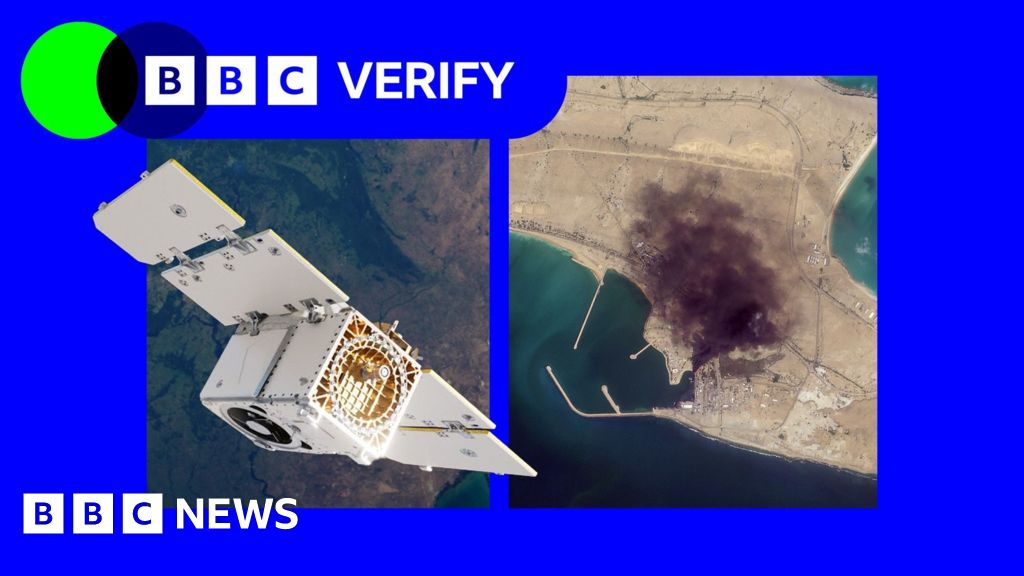
In the shadowy realm of space and surveillance technology, Vantor—formerly known as Maxar—remains a crucial yet understated player. Renowned for its extensive contracts with the US Army and US Space Force, the company’s operations underscore the strategic importance Washington attaches to military and intelligence capacity in the increasingly contested domain of space and digital surveillance. Recently, Vantor clarified that it has not been instructed by Pentagon officials to curtail its coverage of Iran, highlighting a critical aspect of its balancing act amidst rising geopolitical tensions.

The firm’s contracts with American military bodies testify to a broader trend of technological militarization at the frontiers of space and cyber domains. Analysts observe that such companies are becoming the invisible backbone of U.S. military strategy, enabling precise surveillance, intelligence gathering, and strategic planning. Yet, the decision not to restrict coverage of Iran signals a nuanced approach from U.S. defense agencies, possibly reflecting an awareness of the growing importance of transparency and information leverage in a complex global chess game. This stance challenges critics who argue that increased surveillance may escalate tensions, but it also exemplifies how technological firms operate in a gray zone—detached yet deeply intertwined with national security agendas.

Historians and international security analysts are closely watching Vantor’s positioning amidst the shifting alliances and rivalries of the modern era. The United States‘s focus on space dominance is part of a wider strategic doctrine that accentuates the importance of technological superiority in future conflicts. The firm’s decision to limit coverage of US military bases, while not extending restrictions to Iran, indicates a calculated approach—one that aims to uphold American technological edge without provoking unnecessary escalation. Such choices may influence global perceptions of American transparency and restraint, with other nations observing how the U.S. manages its strategic information in an era where every byte and satellite pass can shape geopolitical narratives.

Ultimately, the unfolding story of Vantor exemplifies how technological and military advancements are interwoven with international power structures. History warns that the frontier of space and digital surveillance is a new battleground for influence, where decisions ripple across nations, economies, and societies. As Vantor navigates these turbulent waters, the weight of history presses forward—reminding the world that the next chapter in global dominance may be written not just in treaties, but in the silent data streams orbiting high above. The future remains uncertain, but one certainty endures: the relentless march of technological power continues to shape our destiny, with nations vying for control over the realms that will define the next age of geopolitics.
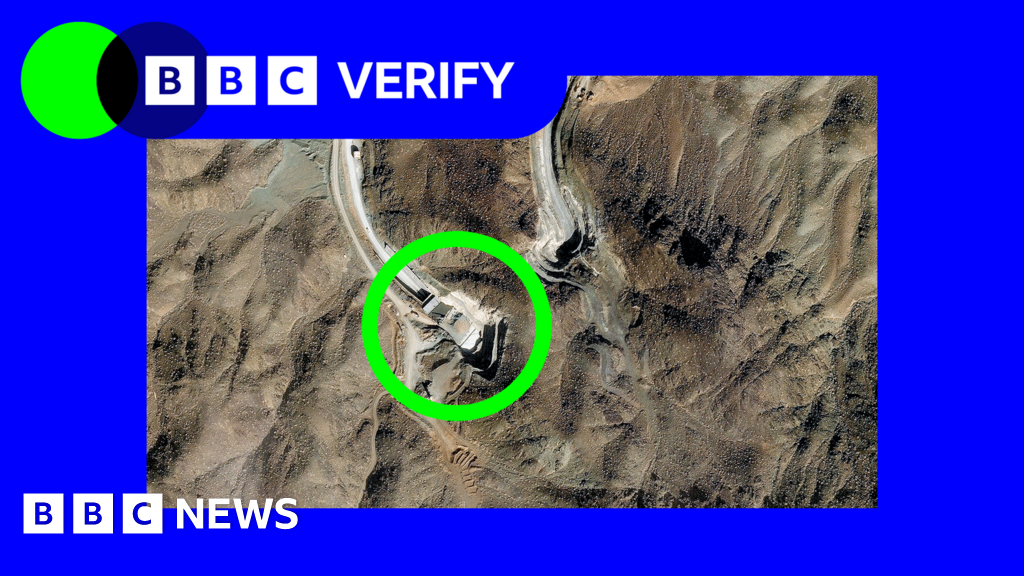

Iran bolsters underground complex near nuclear site, satellite images reveal

Recent developments in Iran’s nuclear program have once again placed the international community on edge, highlighting the fragile balance of power in the Middle East. According to intelligence reports, Tehran has made significant strides in constructing a new facility believed to be linked to their uranium enrichment activities. While Iran has previously claimed that such projects are solely for peaceful purposes, Western nations and international watchdogs remain wary, citing the potential for these developments to undermine regional stability and global non-proliferation efforts.

The size of the facility and its geographical advantages—notably, the protection offered by a tall mountain—prompted immediate concerns regarding its true purpose. Experts warn that the construction’s scale suggests more than just a typical centrifuge assembly plant. In fact, analysts from organizations like the International Atomic Energy Agency (IAEA) emphasize that such features could facilitate additional sensitive activities, potentially including uranium enrichment at a clandestine level. This raises a critical question: Is Iran inching towards developing a nuclear arsenal, or is this merely a strategic maneuver aimed at bolstering its regional deterrence?

Historically, Iran has tied its nuclear undertakings to the rebuilding of **advanced centrifuge assembly plants**, claiming these efforts are for civilian energy programs. Yet, geopolitical analysts and historians like Professor William Hartung argue that such activities often serve dual purposes—peaceful energy ambitions intertwined with clandestine weapons development. The potential breach of the 2015 Joint Comprehensive Plan of Action (JCPOA)—which sought to curb Iran’s nuclear capabilities—has destabilized negotiations and led to increased tensions. International organizations worry that a breakdown in diplomacy could reignite a nuclear arms race in a volatile region.

The geopolitical impact of these advancements extends beyond Iran and the Middle East. Allies of the United States and European nations are carefully recalibrating their strategies, emphasizing the importance of maintaining credible deterrence while avoiding escalation. The United Nations has called for renewed inspections and transparency, yet doubts persist about Iran’s willingness to fully cooperate. Such developments threaten to undermine decades of diplomatic efforts, opening a new chapter of uncertainty—where the outcome hinges on whether global leaders can prevent history from repeating itself or whether they will be drawn into another conflict fueled by nuclear ambition.

As the world’s eyes remain fixed on Iran’s clandestine activities, the question persists: Are we witnessing the dawn of a new nuclear竞赛 or merely an assertion of regional power by Iran? The weight of history is unyielding, and nations stand at a crossroads—either fostering diplomacy to avert catastrophe or abandoning the fragile peace for the chaos of war. What unfolds next could redefine the balance of power in the 21st century, leaving an indelible mark on the pages of history yet to be written.

Old school site set to boost Send pupils with new satellite campus

Reimagining Community Support for Children with Special Educational Needs

In a quiet corner of Wiltshire, a shift is underway that highlights the profound intersection of social issues, public policy, and the future of families and educational communities. Wiltshire Council has proposed transforming the historic Calder House Independent School, near Colerne, into the Northwood Centre, a satellite campus dedicated to serving children with special educational needs and disabilities (Send). This initiative aims to address a pressing societal challenge: providing quality, localized education for vulnerable children who often find themselves marginalized by an education system strained by economic constraints. The plan, which involves a £1.27 million annual budget for 50 high-need placements, seeks to serve as an alternative to more expensive independent specialist schools that can cost upwards of £62,000 per child annually.

While this initiative is widely praised for its cost-efficiency and community-centered approach, it also underscores broader issues affecting families, schools, and local communities. The sociologist Dr. Margaret Harris notes that the increasing reliance on centralized, often distant, specialist placements can foster feelings of alienation among families who would prefer their children to grow and learn close to home. The debate centers around whether community-led solutions can truly meet the complex needs of Send students without sacrificing quality of care or educational standards. The challenge is ensuring that local institutions are adequately funded, staffed, and equipped to serve a diverse spectrum of needs—an issue that reflects larger societal trends of underinvestment and bureaucratic priorities that often overlook the human element of education.

The Social Fabric of Education and Its Discontents

diminish the shallow comfort of cost-cutting measures and instead confront the moral and ethical responsibilities our society bears toward its most vulnerable members. For families affected by Send, the prospect of children being placed outside their local communities can create deep emotional and logistical strains. As charity CEO Philip Tansley emphasizes, although Wiltshire’s efforts are commendable, “there is still room for improvement” in delivering comprehensive post-educational support. This ongoing tension between fiscal prudence and moral duty fuels debates around how to build a resilient, inclusive society, where every child—regardless of their needs—can access a nurturing environment that fosters both independence and belonging. Sociologists like David G. Smith argue that true social progress hinges on empowering local communities to take ownership of their educational solutions, rather than relying solely on external institutions distant from the daily realities of families.

Moreover, the societal impact extends beyond immediate costs and facilities; it shapes perceptions of social cohesion, equity, and shared responsibility. When communities invest in inclusive education, they reinforce the moral fabric that binds society together. Conversely, *failing to support Send students adequately* risks fostering social divisions and a sense of neglect. As the social historian Dr. Anne Lewis notes, how we care for our most vulnerable reflects the moral integrity of our society. Ensuring local, high-quality educational provisions for children with Send is not simply a logistical issue; it is a moral imperative that speaks to the kind of society we aspire to become—one that values every child’s right to inclusion, understanding, and hope for a brighter future.

Hope Amidst Challenges: The Path Forward

Ultimately, society faces a pivotal question: Will we prioritize short-term savings over long-term social cohesion? The attempt to bolster local Send services in Wiltshire is, in many ways, a microcosm for a broader societal challenge—balancing fiscal responsibility with moral obligation. Transformative change requires more than infrastructure and funding; it calls for a cultural shift—a recognition that every child’s educational journey is a testament to collective human values. As society grapples with this balancing act, the hope remains that these efforts—grounded in community, compassion, and a sense of shared purpose—will inspire a new chapter where families, schools, and communities unite to forge a future that leaves no one behind. In the end, the society we choose to build will reflect the dignity we accord to our children and the moral strength of our shared humanity.

Social Media Auto Publish Powered By : XYZScripts.com



