Matox News

Truth Over Trends, always!

Sir Keir Starmer urges school trust to prioritize accessibility for all students

Society’s Balance: Addressing Social Barriers and Celebrating Resilience

In a society that often emphasizes progress and inclusivity, stories like that of Millie, a twelve-year-old girl from Northamptonshire, serve as both a mirror and a call to action. Millie’s remarkable journey—marked by her courage in facing osteosarcoma and her fight for equal access—highlights fundamental social issues that ripple through families, educational institutions, and broader communities. Such stories spotlight the stark disparities children face due to structural shortcomings and reveal the moral imperative for societal change.

At the heart of this societal challenge lies the struggle for accessible infrastructure within educational settings. Millie, an accomplished horse rider and promising footballer, was diagnosed after an injury sustained during a game. Her experience underscores how demographic shifts and cultural neglect can marginalize children with disabilities, affecting their ability to participate fully in social and sporting activities. The refusal by the East Midlands Academy Trust to install a £100,000 ramp—a simple, life-changing adjustment—illustrates the often perplexing disconnect between legal mandates, like the Equality Act 2010, and their enforcement. As sociologist Dr. Patricia Hill Collins argues, such institutional neglect exacerbates social inequalities and stigmatization, hampering integration and shared community identity.

Impacts on Families, Education, and Communities

  • Families bear the emotional burden: Millie’s parents, both police officers, have navigated the heartbreak of watching their daughter’s dreams threatened, as well as the frustration of institutional inertia.
  • Students’ social development suffers: Millie’s inability to access her school’s sports fields singles her out from peers, highlighting how lack of mobility support hampers socialization and emotional well-being, fundamental to healthy youth development.
  • Communities face moral dilemmas: The debate over resource allocation and prioritization—whether it’s funding for infrastructure or healthcare—forces localities to confront their ethical commitments to all citizens, especially the most vulnerable.

Historically, social commentators like Dr. Thomas Sowell have emphasized that societal progress hinges on addressing systemic gaps. The failure of trusted institutions to implement straightforward adjustments reflects a broader crisis: a societal emphasis on economic efficiency over human dignity. Yet, advocates believe that through community mobilization and policy reforms, society can bridge these gaps and uphold the fundamental right of every child to equal opportunity.

reflections and a hopeful future

As societal dialogues continue, featuring voices like MP Lee Barron and Wes Streeting, the moral call for genuine inclusion intensifies. Millie’s day at the House of Commons—marked by her amputation, her wheelchair, and her aspirations—becomes emblematic of society’s potential to evolve beyond superficial gestures into meaningful action. Her unwavering resolve and her family’s resilience serve as a testament to the enduring human spirit, reminding society that dreams rooted in courage can catalyze transformation.

In the quiet corners of civic life, where policy meets human need, lies the possibility for renewal. Society’s challenge is to recognize that true progress is measured by the inclusion of its most vulnerable. Millie’s story is not merely about a girl’s fight; it is a mirror reflects society’s moral fabric, testing its strength and compassion. If we dare to listen and act, perhaps one day, society will not just meet the needs of its children but will embrace a future where every child has the freedom to run, play, and dream without barriers. Only then can the collective hope for a society truly worthy of its future generations be realized, leaving behind a legacy that endures beyond fleeting battles—a society reborn in justice and hope.


Teens laud Droitwich project for turning around school attendance struggles

Society at a Crossroads: The Growing Crisis of School Attendance and Its Broader Social Implications

Over the past several years, the disruption caused by the Covid-19 pandemic has cast a long shadow over the fabric of our society, illuminating and exacerbating existing social issues. Among the most troubling of these is the alarming rise in pupil absenteeism, which directly impacts families, community cohesion, and the future of our educational institutions. Recent data reveals that since the 2018-19 academic year, the number of students missing more than a tenth of their school days has nearly doubled, soaring from approximately 771,863 to over 1.48 million in 2023-24. Experts, sociologists, and educators express grave concerns that this trend could undermine the foundation of societal stability, as education is intrinsically linked to upward mobility and social cohesion.

Within this context, individual stories such as that of Tamsin and Amber serve as poignant reflections of a broader educational emergency. Tamsin, from Droitwich, Worcestershire, experienced her attendance plummet to just 52% after the pandemic lockdowns, due to her struggles with anxiety and panic attacks that worsened with social exposure. Her case exemplifies a larger demographic shift—children and adolescents facing mental health challenges that schools are ill-equipped to handle without targeted support systems. Amber, similarly, grappled with the transition back to traditional schooling, having been educated in smaller, less intimidating classes during lockdowns. Her mother, Becki, notes how the school’s innovative program called “The Link,” a flexible learning approach, profoundly changed her daughter’s trajectory, encouraging her to regain confidence and pursue her GCSEs. These stories underscore how educational institutions must adapt their approaches to meet diverse mental health needs, reinforcing the moral imperative to prioritize student well-being alongside academic achievement.

Schools developing programs such as the Link demonstrate the resilience and ingenuity necessary to address this crisis. Developed at Droitwich Spa High School, this initiative enlists specialist teachers to teach as few as seven students for two hours daily, emphasizing personalized attention and flexible learning environments—such as optional uniforms and sensory gardens. Such approaches acknowledge the social and emotional toll of the pandemic on vulnerable learners and aim to reintegrate students through tailored support. Co-head teacher Gemma Lloyd Davies emphasizes that these efforts are crucial, noting that previously, some students could only attend a single day per week, but now, many are accessing education every day. The success stories—from Tamsin’s college ambitions to Amber’s aspiration to become a teacher—highlight firsthand the transformative effect of targeted, compassionate intervention. Here, educational leaders are not merely imparting knowledge but are actively rebuilding trust and confidence within fragmented communities, embodying a moral commitment to all children’s futures.

However, the societal challenge extends beyond individual schools. The Department for Education reports a concerted effort to curb persistent absenteeism, claiming that 140,000 fewer pupils are now classified as persistently absent. Still, the need for broader, systemic reforms remains pressing. Addressing the root causes—mental health crises, social disconnection, and the erosion of traditional community bonds—necessitates a societal shift that prioritizes early intervention, mental health support, and community engagement. As social commentators and historians observe, this era demands a moral reckoning: will we allow a generation to slip into social and educational marginalization, or will we harness innovation and compassion to forge a society resilient to crises? For many families, the hope is that society collectively recognizes this challenge—and chooses the path of renewal, ensuring that no child is left behind, not by neglect, but by conscious, moral resolve.

Ultimately, society’s greatest strength lies in its capacity for renewal. As families like Becki’s and community institutions rally around their children, there remains a spark of hope—an enduring belief that even amidst society’s greatest trials, the human spirit can adapt, uplift, and transform. The journey ahead is undeniably complex, but within it lies the potential for a society that values every child’s promise and acknowledges that the future of our communities depends on the compassion and ingenuity we bring today.

Rising Stars Shine as High School Championship Heats Up!

Mavericks vs. Spurs: Anticipation Meets Reality

On Wednesday night, the stage was set for what was expected to be an electrifying NBA showdown between the Dallas Mavericks and the San Antonio Spurs. All eyes were on rookie sensation Cooper Flagg, who made headlines as he became the fifth player in franchise history to record a double-double in his NBA debut. However, despite this individual achievement, the game ultimately fell short of the excitement generated in the lead-up.

Despite Flagg’s impressive debut performance, the Mavericks struggled to find their rhythm, facing a determined Spurs team. The score clock reflected a disappointing outcome for the Mavericks, who were unable to translate their talent into a winning result. Flagg finished the game with a commendable stat line, showcasing his potential for the season ahead, yet the ultimate desire for victory eluded the team.

In post-game comments, Mavericks head coach emphasized the need for growth: “While it’s fantastic to see Cooper perform at such a high level early in his career, we must come together as a unit. Individual accolades do not equate to team success.” His sentiments echo the crucial message that performance is a two-way street, reliant on both personal achievement and collective effort.

  • Cooper Flagg recorded a double-double: 18 points and 11 rebounds.
  • The Mavericks struggled defensively, allowing the Spurs critical scoring opportunities.
  • Despite Flagg’s success, team cohesion must improve for future matchups.

Ultimately, this encounter served as a reminder that sports goes beyond mere statistics and personal glory. As fans across the league fill arenas, they are united in their passion for the game, a shared love that transcends the scoreboard. The journey of each team, filled with ups and downs, is what we celebrate. In the end, it is these narratives that forge communities and create lifelong memories.

Source link

One in 12 teens in school face weekly isolation, new study reveals

Recent research from Manchester has shed light on a controversial issue that transcends national borders, raising urgent questions about the mental health and educational inclusion of youth across the globe. The study indicates that approximately 1 in 12 secondary pupils in England are placed into school isolation rooms at least once a week, with many spending over eight hours in these confined spaces. This trend, eventually becoming an international point of contention, raises issues about the effectiveness and ethics of internal exclusion policies in examining how school systems address student discipline and behavior. Critics argue that such confinement practices do not just hinder academic progress but also threaten the emotional wellbeing of vulnerable children, especially those with complex behavioral needs.

Symbolic of a broader global debate, international organizations and educational experts question whether the current punitive approaches are justified or counterproductive. The British Educational Research Journal highlights the discrepancy between the purported short-term benefits of isolation and the deeper, often hidden, costs—such as weakened relationships with teachers, diminished sense of belonging, and escalating mental health issues. Prominent historians and analysts warn that imitating or ignoring these patterns in other nations could reinforce a system where discipline overrides compassion, setting a dangerous precedent. Neil Humphrey, a leading researcher, emphasized that while schools face significant challenges managing disruptive behavior, the solution should not involve isolating children but rather **investing in positive behavioral supports and mental health resources**.

Meanwhile, in the United States and across Europe, similar controversies simmer beneath surface-level policies, with advocates calling for transparency and reform. The recent legal affirmation of isolation booths in England, upheld by the High Court, has sparked international debates about the balance between maintaining order and safeguarding children’s rights. Conversely, Kiran Gill of The Difference underscores the importance of diagnosing behavioral issues and implementing more supportive, restorative approaches that foster inclusion rather than exclusion. The global community watches closely as these issues test the resilience of educational systems in balancing authority, care, and the rights of students, especially those most in need of support.

The decision made by the British government and courts signals a critical moment in international education policy—a moment where the weight of history and societal values collide. Critics warn such decisions could entrench a punitive model that harms societal cohesion by marginalizing youth, particularly minorities and those with disabilities. International organizations such as UNESCO and the OECD emphasize that #educational equity must be coupled with mental health considerations, urging nations to revisit their disciplinary policies before irreversible damage is done to a generation’s psychological health. As experts call for more research and alternative disciplinary methods, the question remains: Are nations prepared to rewrite their histories and prioritize *human dignity* over simplistic punitive measures?

As the debate continues, the unfolding story of school discipline serves as a stark reminder that the decisions made today will echo in the corridors of history. Whether these policies are seen as necessary measures or damaging excesses, the future of youth and the fabric of society itself hangs in the balance. The world watches as nations grapple with the challenge of forging a path that upholds both order and compassion in the crucible of their schools. The question that lingers is whether we will learn from the shadows of history or allow them to repeat, shaping a future where discipline curtails not just behavior, but also the very essence of hope and potential.

Rising Stars Shine as High School Championships Kick Off This Weekend!

Chelsea Dominates in 3-0 Triumph Over Spurs: A Turning Point for Postecoglou

In a stunning display of skill and strategy, **Chelsea** overwhelmed **Tottenham Hotspur** with a decisive 3-0 victory at Stamford Bridge. The match not only showcased the prowess of players like **Pedro Neto**, who was pivotal in the commanding win, but it also marked a watershed moment for Spurs’ head coach **Ange Postecoglou**, leading to his dismissal after just eight games in charge. The defeat raised eyebrows and ignited debates among fans and analysts alike about the current state of Tottenham football.

From the outset, it was clear that Chelsea had come to assert their dominance. The first half witnessed a flurry of offensive tactics that left **Spurs** scrambling. Pedro Neto, in particular, had a standout performance, demonstrating not only his skill but also his ability to elevate the game of his teammates. His contributions were instrumental in __opening the scoring__ with an impeccably placed goal in the 23rd minute. According to former player and commentator **Gary Neville**, “Neto’s explosive play was exactly what Chelsea needed to regain their edge.”

  • Match Highlights:
  • **Pedro Neto** scores the opener in the 23rd minute.
  • **Chelsea** doubles the lead with a stunning free-kick that catches the Spurs’ defense off-guard.
  • **Neto** seals the victory with a second goal late in the game, showcasing remarkable composure.

Postecoglou’s tenure at Spurs was already under scrutiny prior to this match; however, the lack of tactical adjustments and squandered opportunities highlighted the struggles the team faces. Figures like **Jamie Carragher** commented, *“In a league as competitive as this, results speak volumes. Spurs need a leader who can inspire and elevate their performance.”* As fans process the implications of this defeat, they are left to consider what the future holds for Tottenham.

Yet, amid the tension and disappointment, the true spirit of sports emerges. A victory like that of **Chelsea** is more than just a statistic; it is a representation of hard work, teamwork, and the unwavering pursuit of excellence. As rival fans and players leave the pitch, the game serves to unite diverse supporters in their shared passion for football. It is in the highs and lows that we find a common ground, reminding each of us that, beyond the scoreboard, the heart of the game is about community and connection.

Source link

Most missing students at local school found—community urged to stay vigilant

In recent weeks, the Educational Authority (EA) of Northern Ireland has revealed a harrowing glimpse into the ongoing crisis affecting the region’s families and communities. The EA published a list of more than 50 children across the UK and Ireland who have been unaccounted for in the school system since the start of the academic year. Of particular concern is the case of Harryville Primary in Ballymena, where 24 students, all from the same school, disappeared without clear documentation of their whereabouts. Although some have been traced and returned, a significant number remain missing, intensifying fears of a looming social catastrophe that extends beyond mere truancy to the social fabric itself.

This phenomenon of persistent absence is not isolated but signals a broader breakdown in safeguarding systems. According to social commentators and sociologists, such as Dr. Jonathan Driver, these issues are symptomatic of systemic failures rooted in economic hardship, social unrest, and cultural tensions. When families are fractured by socio-economic disparities or violence, children often become collateral damage—stripped from the safety of their institutions and forced into uncertain situations. The case of Ballymena, a town scarred by recent riots and social unrest, exemplifies how social tensions can ripple through generations, threatening to undermine the stability of its community and the education system at large.

‘Tip of the iceberg’: A societal warning sign

The NI Children’s Commissioner, Chris Quinn, warned that the visible numbers are merely the “tip of the iceberg.” “I fear that large numbers of children are slipping through the cracks, and we are sleepwalking into a community crisis,” he said, emphasizing that this issue is likely a wider systemic problem affecting the entire region. This concern is echoed by social historians who warn that unchecked social despair can lead to further alienation and radicalization if left unaddressed. The troubling images of protests and riots, including those in Ballymena, reflect a society struggling to reconcile differences and maintain cohesion amidst upheaval—divisions that threaten to fragment communities along lines of ethnicity, socio-economic status, and cultural identity.

Politicians and community leaders have spoken out, with Alliance MLA Sian Mulholland expressing her concern that the large number of missing children represents a direct consequence of ongoing social unrest. She asserted that school is often a sanctuary for vulnerable children, especially for those from marginalized or immigrant families, and its erosion can lead to social disintegration. Particularly, the displacement of Roma families following violent riots underscores the social tensions that persist beneath the surface of Northern Irish society. The departure of these families, as confirmed by MP Jim Allister, highlights the fragile social fabric and raises questions about the long-term implications of such community upheavals.

In a society where demographic shifts and cultural tensions are increasingly prominent, the challenge is to reconcile the need for security with the preservation of community integrity. The focus must shift from merely tracing missing children to addressing the root causes—inequality, social dislocation, and cultural alienation—that fuel societal discontent. As history shows, when communities are strained beyond resilience, the result can be a cycle of mistrust and violence that leaves lasting scars. Yet, amidst this turmoil, the hope for societal renewal exists in the capacity of communities, policymakers, and educators to forge pathways toward comprehensive social healing. Bridging gaps of division and restoring faith in institutions will be the true test of society’s moral resilience, and in this endeavor, the focus must always be on safeguarding the future of our children.

Local High School Stars Shine in Championship Showdown: A New Era of Talent Emerges!

Game Day Showdown: Stars Shine Before the Clash

The atmosphere was electric as players from both Team A and Team B made their grand entrances into the stadium, decked out in styles that reflect their unique personalities. The pregame tunnel was not just a passageway, but a runway, with each athlete showcasing not only their sportsmanship but also their fashion sense. Commentary from former player and analyst Mike Johnson emphasized the importance of these moments, stating, “It’s all part of the show. Fans connect with their favorite players in more ways than just the scoreboard.”

As anticipation built for the highly-anticipated matchup, fans filled the stands, eager for what would likely be a game to remember. The strategic minds behind each team, Coach Smith of Team A and Coach Johnson of Team B, meticulously crafted their game plans. Both coaches seem determined to outsmart each other on the field, emphasizing their unique approaches. “Defensive discipline will be key today,” Coach Smith noted during a pregame interview, underscoring the importance of a solid defense in high-stakes games.

  • Team A boasts a formidable offensive lineup, having averaged 30 points per game this season.
  • Player X from Team B is a standout, holding the title of league MVP and racking up an impressive 1,200 yards this season.
  • The game features a historical rivalry that has captured the attention of fans for decades.

As the clock winds down and fans anxiously await the kickoff, it is more than just a battle for victory. This is a celebration of community and the spirit of sport, where the scoreboard tells one story while the passion and unity among fans write another. The essence of competition goes beyond just points; it thrives in the shared experiences, the highs and lows that bind us together. In a world increasingly divided, sports remain a beacon, reminding us of our collective strength. As the players prepare to take the field, one sentiment rings true: the love for the game unites us all.

Source link

High School Stars Shine Bright: Championship Weekend Delivers Thrills and Upsets

Anticipated Superstar Returns Shape the 2025-26 Sports Season

As the 2025-26 sports season approaches, fans and analysts alike are eager to see the impact of several injured superstars returning to the field. These athletes are not just key players for their teams but also icons capable of changing the trajectory of the league. The spotlight shines brightest on names that have been sidelined, making their comeback a major storyline as the season unfolds.

Players to Watch: Among the most eagerly awaited returns is David Johnson of the Redhawks. Johnson, known for his explosive speed and agility, suffered a severe ankle injury last season. Coach Peter Thompson remarked, “David’s determination during rehabilitation has been incredible. We are optimistic he will return to his previous form and play a crucial role in our lineup.” The dynamic forward’s comeback is expected to be a game-changer, especially after accounting for his impressive average of 22 points and 8 rebounds per game before the injury.

Another top star anticipated to make a splash is Butch Malone from the Titans. He endured a shoulder injury that kept him away from the court. His return in the opening match is set to elevate the team’s performance, given his prior stats of a 37% three-point shooting rate. Commentators are keen to observe how Malone adjusts back into the Titans’ fast-paced play style under Coach Lisa Harper.

  • David Johnson, Redhawks – Ankle injury, expected return enhances scoring potential.
  • Butch Malone, Titans – Shoulder injury, three-point shooting pivotal for team strategy.
  • Crystal Lee, Sharks – Recovering from knee surgery, anticipated to boost defensive and offensive strategies.

As the season looms, the returns of these athletes bring hope and excitement, reminding fans of the resilience that characterizes sports. _The cumulative effect of their competitive spirit transcends individual performances and brings communities together, united by their shared passion for the game_. The thrill of witnessing a player’s journey from injury to comeback is not just a victory for the athlete; it is a victory for every fan who has ever dreamed of greatness in the arena.

Source link

Young Stars Shine as High School Championships Ignite Competitive Spirit

Week 7 College Football: A Showcase of Talent and Team Spirit

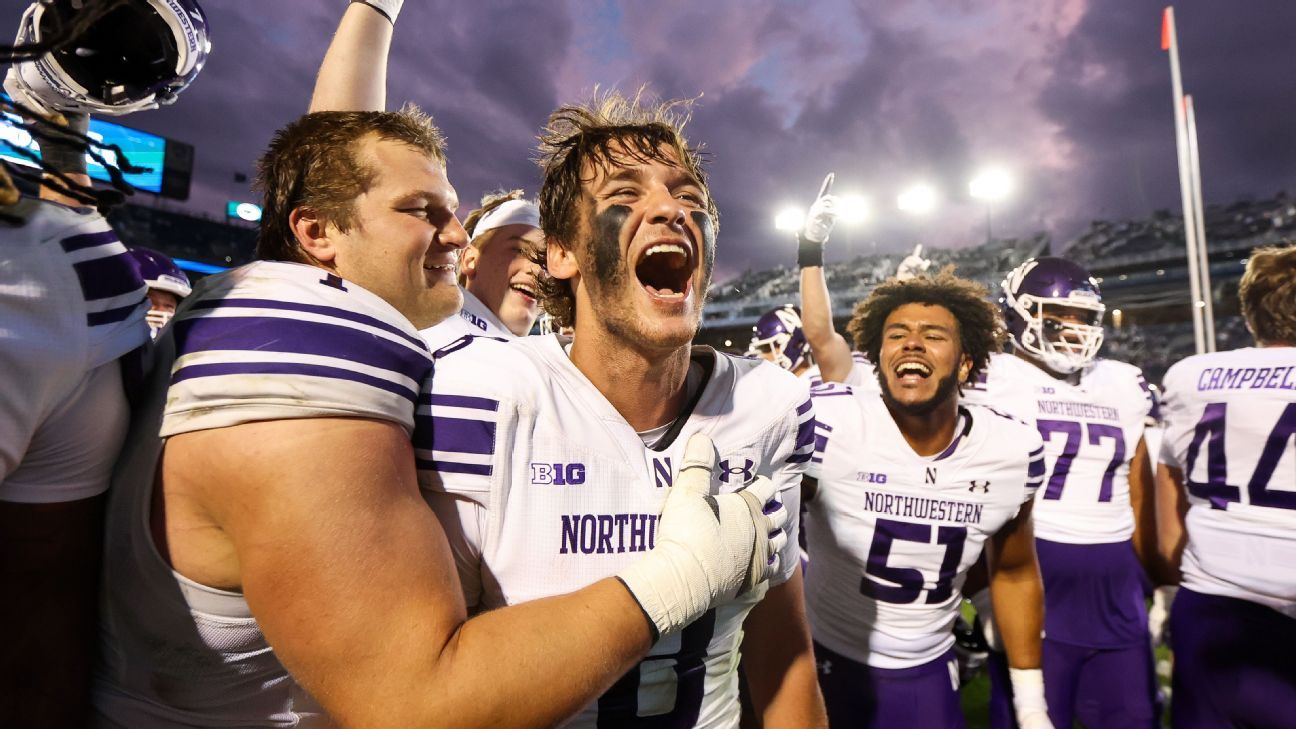
In a thrilling Week 7 of the college football season, Northwestern and Texas emerged victorious, showcasing not just their athletic prowess but also an engaging presence on social media that has sparked conversation among fans and commentators alike. As teams continue to jockey for position in the playoff race, these wins were pivotal not just in the standings, but also in establishing team morale and community engagement.

After their hard-fought win, the Wildcats took to social media with a series of posts that reflected their confidence and team spirit. According to head coach Pat Fitzgerald, “Every victory is part of a larger narrative. We’re building something special here at Northwestern, and we want our fans to be part of that journey.” This sentiment was echoed across various platforms as commentators highlighted the importance of engaging fans beyond just the game.

Meanwhile, in Texas, the Longhorns delivered a statement performance that reignited their championship aspirations. With a notable contribution from quarterback Quinn Ewers, who threw for 350 yards and three touchdowns, the Longhorns displayed an offensive prowess that has been missing in earlier games this season. The team’s explosive second-half performance, particularly in the third quarter when they put up 21 unanswered points, showcased their potential to dominate on any given Saturday.

  • Northwestern continues to surprise with their strategic play, ranking high in defensive stats this season.
  • Texas is making a serious claim to contention with their recent wins and strong play from key athletes.
  • Fans from both regions showcased incredible support, proving the loyalty and passion inherent in college football culture.

As the season progresses, one thing remains clear: the love for college football transcends wins and losses. Whether it’s through passionate social media interactions or nail-biting game moments, the spirit of competition unites fans and players alike. In the words of acclaimed sports commentator Kirk Herbstreit, “College football isn’t just about the scoreboard; it’s about the stories and connections made along the way.” Thus, as we approach the final stretch of the season, this unbreakable bond will undoubtedly fuel both teams and their supporters, lighting the way forward for what promises to be a memorable conclusion to the college football season.

Source link

Coroner: Suffolk School Not to Blame for Girl’s Tragic Death

Society Faces Critical Challenges as Young Lives Are Lost to Social and Mental Health Crises

The tragic death of Georgia Scarff, a talented 16-year-old from Bury St Edmunds, Suffolk, underscores the complex nexus of mental health issues, school safeguarding shortcomings, and broader societal challenges affecting families, education, and communities. While the context surrounding Georgia’s death is individually heartbreaking, it also reflects systemic flaws that demand urgent societal reflection and action. The circumstances reveal how social issues, when unaddressed, can lead to devastating outcomes for our youth—and by extension, threaten the fabric of our society.

A key element of the tragedy lies in the ineffective safeguarding protocols within Georgia’s school environment. Despite an established system meant to protect students, a critical lapse occurred when an email from her mother outlining her mental health struggles was not logged on the school’s safeguarding platform. This omission meant that teachers and staff, who might have been able to intervene, remained unaware of Georgia’s vulnerability. Coroner Darren Stewart, in his report, emphasized that such failures in communication could compromise the well-being of children. As sociologists like Dr. Helen Fisher point out, “school safeguarding systems are only as strong as their implementation—and that implementation must be universal and meticulous.” The gap in information sharing serves as a cautionary tale about the importance of robust, technology-enabled safeguarding that ensures no warning signs go unnoticed, especially when young lives hang in the balance.

Further complicating Georgia’s story are broader societal issues such as mental health stigma and demographic pressures faced by well-funded institutions. Despite her evident talents and positive reputation among peers and family—highlighted as a “significantly positive force”—she struggled with feelings of hopelessness rooted in personal loss and academic anxiety. Her family described her as “kind and thoughtful,” passionate about design, technology, and geopolitics, and an accomplished athlete. Yet, her transition into an elite boarding school, where fees can reach £52,000 annually, was marked by difficulties. The emotional toll of adapting and her prior history of trauma, including her father’s tragic death, were overshadowed by societal expectations of resilience and success. This mismatch between societal assumptions and individual mental health needs fosters a social tension whereby young people feel compelled to hide their struggles in environments that are supposed to nurture them.

  • High academic pressure and societal expectations can amplify mental health issues among youth.
  • School safeguarding protocols need more rigorous, technology-driven safeguards to prevent information gaps.
  • Families and communities must foster open, stigma-free dialogue around mental health to better support vulnerable youth.
  • Public policies should prioritize mental health funding and teacher training to recognize early signs of distress.

As social commentator Mark Bauerlein observes, “the society we have built often overlooks the silent suffering of its young, making tragedy an all too familiar outcome.” Georgia’s story is a stark reminder that mental health crises cannot be ignored or minimized, nor can they be treated as solely personal issues. Instead, they are societal issues demanding collective responsibility—a shared moral imperative to reshape our institutions and cultural attitudes. The hope remains that through improved communication, comprehensive support systems, and a societal shift toward genuine empathy and understanding, we can prevent future tragedies and create an environment where young people like Georgia—bright, hopeful, and talented—can realize their potential without the shadow of despair looming over them.

In this society’s reflection on loss, there lies an opportunity—an opening to rebuild and to fortify the bonds that define our communities. For even as the night falls dark with tragedy, the dawn of a more compassionate and robust social fabric glimmers on the horizon. Society’s greatest challenge is not just in acknowledging these wounds, but in tending to them—the hope of transformation whispering softly amid the echoes of those we’ve lost.

Social Media Auto Publish Powered By : XYZScripts.com