Matox News

Truth Over Trends, always!

Big School PFI Firm Crushing Under Debt, Leaving Repairs Behind

Cracks in the Foundation: Societal Consequences of PFI Contract Failures in English Schools

In a case that exemplifies the rising social tensions surrounding privatization and public accountability, the collapse of the Private Finance Initiative (PFI) contract in Stoke-on-Trent reveals deeper issues affecting families, education, and community cohesion. The company responsible for maintaining dozens of schools—Transform Stoke Schools Ltd (TSSL)—is now heading into liquidation, threatening to leave 88 schools with unfinished repairs and sagging safety standards. This development highlights how financial arrangements driven by profit motives are increasingly putting the well-being of our youth and the stability of our communities at risk.

TSSL’s contractual failure underscores a growing trend where public infrastructure increasingly relies on private corporations, often at the expense of long-term societal interests. The Stoke-on-Trent City Council previously acknowledged that repairs would be incomplete when the contract expired; -a sign of how outsourcing complex community responsibilities can fail to serve the public’s needs effectively. The recent letter sent to schools confirms that some repairs remain unfinished, warranties unclaimed, and payments unsettled. This situation, reminiscent of warnings issued by the National Audit Office back in 2020, illustrates the risks of over-reliance on contractual arrangements that prioritize short-term financial gains over community welfare.

This failure does not affect only bricks and mortar but also penetrates the very fabric of society, impacting the families and educational environment. The uncertainty over school safety and the quality of repairs jeopardizes children’s access to secure learning spaces, which sociologists argue is fundamental to healthy development. According to social critic James Stanford, “when infrastructure fails, the most vulnerable—our children—bear the heavy burden of neglect and mismanagement.” The plight of Stoke’s schools acts as a mirror to larger issues facing many communities across England, where plans for maintaining public assets are often sabotaged by bureaucratic neglect and profit-driven motives, leading to an erosion of trust and social capital.

Moreover, the societal fallout extends into the realm of civic accountability. The case has sparked calls from local authorities and community leaders for a comprehensive reassessment of how public-private partnerships are managed. The Durham-based sociologist Dr. Rachel Morgan emphasizes that “our collective future depends on genuine engagement and accountability, not just contractual guarantees.” While the Stoke council has set aside £3.5 million as a contingency fund, critics argue that this is merely a Band-Aid that highlights the need for Systemic overhaul. Without meaningful safeguards and transparent oversight, such crises threaten to deepen social divides and undermine the trust necessary for cohesive communities. Ultimately, society must ask whether this reliance on private entities serves the true interests of the public or merely shields corporations from accountability, leaving citizens and families to bear the costs of systemic failures.

As society stands at this crossroads, the challenge lies in transforming these setbacks into catalysts for renewed faith in public institutions. The story of Stoke-on-Trent’s schools echoes the broader narrative of a nation grappling with how to balance economic efficiency with moral responsibility. Looking ahead, hope resides in a collective awakening—where communities demand better accountability, transparency, and above all, unwavering commitment to the essential social contract: ensuring that every child, regardless of their background, can learn and flourish within safe, supportive environments. Only then can society transcend these fractures and build a future where societal resilience replaces the scars of neglect.
Rising Star Shines as High School Soccer Championship Kicks Off!

Quarterback Woes: Rodgers’ Status in Question for Key Game

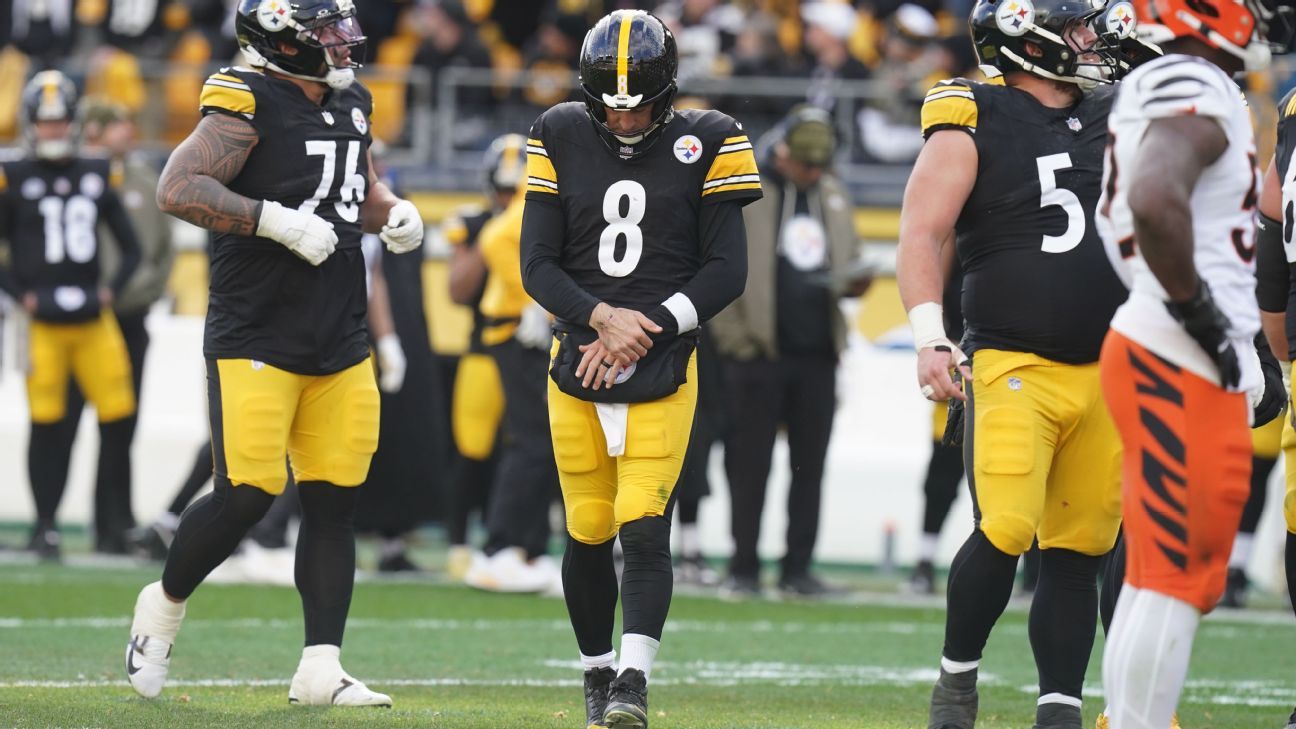
As the weekend approaches, fans of the Green Bay Packers are holding their breath regarding the status of star quarterback Aaron Rodgers. Dealing with a small fracture in his left wrist, Rodgers is listed as questionable for Sunday’s highly anticipated game against the historic rival, the Chicago Bears. Coach Mike Tomlin addressed the media on Friday, indicating that the team is weighing their options carefully as they look ahead to this critical matchup.

Rodgers, a perennial All-Pro and two-time MVP, has been the heart and soul of the Packers’ offense. Should he miss the game, it would not only leave a significant void in the starting lineup but also drastically shift the dynamics on the field. Tomlin stated, “We are monitoring his progress closely. This is a game of inches, and we want to ensure we’re making the right call.” The uncertainty surround Rodgers’ participation puts even more pressure on the backup to perform under immense expectations incoming into such a vital clash.

  • Aaron Rodgers‘ current injury: small fracture in his left wrist
  • Coach Mike Tomlin indicated squad decisions will be made closer to game time
  • The matchup against the Chicago Bears carries historical significance

If Rodgers is unable to play, the Packers will need to lean heavily on their roster’s depth. The coaching staff might look to elevate players who can rise to the occasion. The fans will be eager to see how young talent can step up in a game that cannot just define this season, but ripple through the long-standing rivalry. As the showdown unfolds, commentators will note that sports are seldom just about what happens on the scoreboard; they encapsulate moments of courage, grit, and unity.

As the sun sets over Soldier Field, the implications of Sunday’s game reach far beyond mere rankings. Whether it is Aaron Rodgers charging down the field or a backup stepping up to take the reins, sports have a unique ability to bring us together. With every pass thrown and every yard gained, these athletes remind us that the spirit of competition fosters camaraderie, making each game an enduring spectacle that unites fans from all walks of life.

Source link

Nigerian Catholic School Students Abducted in Shocking Attack

The recent surge of violence and insecurity in Nigeria has precipitated a crisis that threatens the stability of West Africa’s most populous nation. In a series of catastrophic events, armed groups—ranging from criminal gangs to jihadist factions—have intensified their operations, abducting thousands of innocents and unleashing chaos across multiple states. Amidst this upheaval, the recent abduction of students from St Mary’s School in Papiri, Niger state, underscores a disturbing trend: the deterioration of security that now engulfs Nigeria like a relentless storm. The attack, executed by armed men reportedly storming the educational facility in the early hours, left residents in fear and confusion, highlighting the reckless disregard for life and” safety,” as analysts warn of a **”nation on the brink.”**

Geopolitical Impact: Nigeria’s Crisis and the International Response

International observers, including prominent historians and security analysts, connect these domestic upheavals to the broader geopolitical consequences for Africa and the global community. From the mounting human rights concerns to the destabilization of regional economies, Nigeria’s security failures threaten to ripple far beyond its borders. Notably, US President Donald Trump has made controversial claims that Christians are being persecuted within Nigeria, fueling diplomatic tensions. His overt threat to deploy troops—asserting he would send “guns blazing”—was swiftly dismissed by the Nigerian government as a *”gross misrepresentation.”* Despite this, such declarations amplify the fragile perception of Nigeria as a failed state, where the rule of law is under siege.

Meanwhile, the United Nations and various regional blocs have expressed concern over the proliferation of violence, including the ongoing jihadist insurgency in the north-east and resource-driven conflicts between herders and farmers in the central region. Analysts warn that Nigeria’s overlapping crises—religious, ethnic, and criminal—test the limits of state authority and threaten to ignite even greater regional instability. “Without decisive action,” warns one international security expert, “Nigeria could become a failed state whose chaos spills into neighboring countries.”

How Decisions Shape Societies and Futures

The Nigerian authorities have faced immense criticism for their response—or lack thereof. Despite repeated warnings and intelligence reports, government agencies permitted the reopening of schools like St Mary’s, after ignoring directives designed to safeguard students in a time of heightened threat. This persistent neglect is symptomatic of deeper systemic failures, as local authorities scramble to contain the mounting crises without sufficient resources or coordination. Governments’ decisions to mismanage or neglect essential security measures directly influence societal resilience, shaping the lives of millions. For many young Nigerians, the long-term impact is clear: a loss of hope, disrupted education, and the risk of radicalization as chaos becomes the magnetic force drawing vulnerable youth toward insurgent factions.

Furthermore, the international community remains divided in how to address Nigeria’s multifaceted crisis. While some, like the U.S., threaten military intervention, others advocate for enhanced aid, diplomatic pressure, and internal reforms. Yet, as the violence persistently erupts, it becomes evident that the fate of Nigeria—the giant of Africa—may hinge on whether its leaders can muster the political will to confront these criminal and insurgent networks with unwavering resolve. “Decisions made today,” warns a renowned historian, “will determine whether Nigeria’s children can inherit a nation of peace, or a land awash in the blood of the innocent.”

As the world watches Nigeria teeter on the edge, history reminds us that the unfolding chapter remains unwritten—and that every choice, every response, will echo through generations. The duration of Nigeria’s tumultuous struggle is yet to be measured, but the weight of what is happening now leaves no doubt: the continent’s future, and perhaps the global order, hang in the balance as the shadows of conflict stretch across the horizon, looming ominously over a nation’s destiny yet to be determined.

Nearly a million youth remain out of work or school, new stats reveal

The Rising Challenge of Youth Disconnection in Society

Recent statistics from the Office for National Statistics (ONS) reveal that nearly one in eight young people aged 16-24 in the UK—approximately 946,000 individuals—are classified as Neet: not in education, employment, or training. This figure, though marginally lower than previous quarters, remains alarmingly high, especially considering the cyclical trends that have persisted over the past decade. Historically, the Neet population surged to over a million during the aftermath of the 2008 financial crisis, emphasizing how economic downturns exacerbate social divide, impairing the fabric of families, communities, and social mobility.

This persistent demographic fracture disproportionately impacts communities across socio-economic spectra, yet it aligns strongly with moral and societal concerns. The majority—over 580,000—are classified as economically inactive, largely due to rising long-term sickness and mental health conditions. Cultural shifts, such as the increased awareness and diagnoses of mental health issues among youth—evidenced by nearly 20% of Neet individuals experiencing mental health challenges—highlight a pressing need to address the human toll of societal neglect. Social commentators warn that neglecting the root causes of youth disconnection risks perpetuating cycles of poverty, crime, and family instability, thereby threatening social cohesion and the future of generations.

Societal Impact: How Disconnection Disrupts Families and Communities

The ripple effects of youth unemployment and disengagement reach far beyond individual hardship, influencing family stability and community well-being. Families suffer when young members are deprived of meaningful opportunities to build independent lives. As sociologist Dr. Caroline Jackson notes, “Young people without access to stable employment or education often face fractured family dynamics, reduced self-esteem, and increased dependence on social services.” This phenomenon compounds social tensions, especially in communities already vulnerable to deprivation and disenfranchisement. Schools and local institutions are bearing the brunt of an increasing number of youth facing mental health crises, which hampers their ability to engage with learning and development, creating a cycle that becomes progressively difficult to break.

Efforts like the government’s recent “Youth Guarantee” scheme aim to mitigate these issues by providing guaranteed access to education, training, or paid work. However, critics argue that without addressing the underlying social and psychological barriers—such as mental health challenges and long-term social exclusion—such policies may fall short. Education experts warn that neglected youth are at risk of falling into a socio-economic abyss, eroding community strength and societal resilience.While initiatives like the Spear Programme are making strides in coaching young people, gathering empirical evidence suggests that more systemic approaches—including mental health support and targeted community engagement—are essential to reversing this trend.

Pathways to Societal Renewal and Hope

Addressing youth disconnection requires a multipronged strategy that combines economic opportunity with moral and social responsibility. The government’s plans for a “Youth Guarantee” and linked measures—such as mandatory work placements for long-term benefit claimants—represent steps toward fostering accountability and opportunity. Yet, social commentators emphasize that employers must embrace a more inclusive vision that values motivated, less-qualified young people, recognizing that potential often resides beyond academic credentials alone. The insights of sociologist Anthony Giddens remind us that “a society’s strength hinges on its ability to nurture hope and resilience among its youth—those who are destined to be the architects of its future.”

Ultimately, society faces a reflection: will we continue to observe the silent suffering of millions of young people trapped in a cycle of inactivity, or will we rally to forge pathways that empower them? The stories of Nathan and others like him evoke a future where hope is more than a word—it’s a collective mission. As communities, families, and institutions confront the challenges ahead, their resilience may yet seed a transformation—one that rekindles the promise of opportunity and restores the moral fabric of society for generations to come.

Rising Stars Shine as High School Championships Kick Off: A New Era of Talent Unfolds!

Philadelphia 76ers Forward Kelly Oubre Jr. Faces Injury Setback

In a disappointing turn of events for the Philadelphia 76ers, forward Kelly Oubre Jr. has been diagnosed with a sprained ligament in his left knee, sidelining him for at least two weeks. The announcement came Wednesday night, raising concerns about the team’s depth and performance as they look to solidify their playoff positioning in the Eastern Conference. Coach Doc Rivers expressed his concern about the timing of Oubre’s injury, emphasizing the need for other players to step up during this critical stretch.

Oubre Jr., who has emerged as a crucial player for the 76ers this season, was averaging 18.5 points and 5.2 rebounds per game prior to the injury. His dynamic scoring ability and quick athleticism have provided the team with a much-needed offensive spark. Commentator Stephen A. Smith weighed in on the impact of Oubre’s absence, stating, “This is not just a loss of points; this is a loss of energy and momentum for a team trying to find stability.” This underscores the importance of his role as the 76ers navigate the challenges ahead.

As the 76ers prepare for upcoming matchups, including a crucial game against the Miami Heat, the team will need to find a way to compensate for Oubre’s void. The organization is looking to veteran players like James Harden and Joel Embiid to carry the load, while younger talents will need to rise to the occasion. Head Coach Rivers remains optimistic about his squad’s resilience, stating, “Injuries happen, but they also provide opportunities for growth. We have a deep bench, and I trust these guys.”

While statistics and standings certainly matter, the essence of sports extends beyond the scoreboard. The culture of teamwork, resilience, and unity remains a staple of participation in any athletic endeavor. Every time a player dons the jersey, they not only represent their team but also the hope and enthusiasm of fans everywhere. As the Philadelphia 76ers move forward in the absence of Kelly Oubre Jr., the challenge becomes more than just winning games; it is about coming together, carrying the torch for one another, and demonstrating that true strength lies in unity.

Source link

Young Stars Shine as High School Football Season Kicks Off with Thrilling Matchups

Manchester United Prepares for Everton Clash Without Star Forward Benjamin Sesko

In a significant blow to Manchester United, talented forward Benjamin Sesko is confirmed to miss the upcoming Premier League fixture against Everton on Monday. Sources close to the club reported that the young star is set to make his return in December, raising questions about United’s attacking options in his absence.

Coach Erik ten Hag faces a tough challenge as he prepares to lead his squad against a resilient Everton side. The decision to rest Sesko comes as he continues to recover from a minor injury, and the coaching staff believes that allowing him adequate time to heal will pay dividends in the long run. As highlighted by veteran commentator Gary Neville, “Keeping your key players fit for the crucial months ahead is what champions do.”

The match against Everton has many implications beyond just the points on the table. United currently sits mid-tier in the standings, and the clash could offer the necessary momentum they desperately need. Fans are eager to see how Marcus Rashford and Antony will step up in Sesko’s absence, and whether young talent like Alejandro Garnacho can shine when given the opportunity.

  • Ben Sesko’s absence: A skillful forward known for his speed and precision, his injury is a significant loss.
  • Coaching strategy: Ten Hag’s adaptability will be tested as he modifies his tactics without Sesko.
  • Key players to watch: Rashford and Antony’s performances could define United’s game against Everton.

In closing, Monday’s match against Everton is more than just a fixture in the Premier League calendar; it is an opportunity for Manchester United to rise to the occasion and showcase their depth. In moments of adversity, teams often find their true character, and the spirit of competition binds fans, players, and coaches alike. As the stadium lights illuminate the pitch, and the roar of the crowd resonates, sports transcend mere victories and losses—they unite us all in passion and purpose.

Source link

Poole School Clamps Down on KPop Demon Hunters Songs, Limiting Youth Voice

Societal Tensions Collapse into Schoolyard Politics as Cultural Shifts Trigger Debate

In the quaint town of Poole, Dorset, a recent controversy at Lilliput Church of England Infant School has exposed the deep fissures that can arise within communities grappling with changing social norms. The school’s decision to ban a popular song from the Netflix animated film KPop Demon Hunters—citing concerns about its “Christian ethos”—has ignited a broader debate over how cultural shifts and demonic imagery influence the moral fabric of our youth. This incident exemplifies a societal struggle: balancing the zeal to protect traditional values while fostering an inclusive environment and recognizing that social issues extend far beyond the classroom.

At the core of this controversy is a clash of moral perceptions and generational values. The school asserted that references to demons and themes of temptation, embedded in the film’s narration and songs, pose a moral challenge for some community members. According to acting head teacher Lloyd Allington, the decision was motivated by a desire to support families who find such themes “challenging.” This response reflects an ongoing societal trend where moral anxieties—particularly those rooted in religious doctrines—shape educational content and community activities. Sociologists like Dr. James Davison Hunter have noted that in these moments, society often reverts to moral absolutism as a mechanism for social cohesion, particularly when confronting rapid demographic and cultural changes.

However, critics highlight that such protective reactions can inadvertently harm the social cohesion and mental wellbeing of young learners. One parent argued that “my daughter is very into K-pop and her friends love the music,” emphasizing the importance of children experiencing diverse cultural expressions. The conflict here underscores a fundamental issue: how to cultivate resilience and critical thinking among youth without succumbing to fear-based censorship. Educational experts warn that overprotecting children from media representations can limit their capacity to navigate complex moral landscapes, especially when such representations reflect contemporary societal issues like identity, temptation, and moral ambiguity.

  • Rising concerns over the impact of media with darker themes on young minds.
  • Community debates over the influence of popular culture and moral standards.
  • Educational institutions struggling to find a balance between safeguarding values and promoting open-mindedness.
  • Calls for fostering dialogue on diversity of beliefs within increasingly multicultural societies.

Reflecting this societal tension, social commentators like philosopher Dr. Michael Sandel argue that the challenge for modern communities lies in fostering spaces where “conflicting moral views can collide without fracturing the social fabric.” The incident at Lilliput School underscores the importance of promoting understanding and respect for differing beliefs—whether they stem from faith, culture, or personal experience. While some fear that exposure to darker themes might corrupt innocence, others see it as an essential part of education, cultivating morally aware, culturally literate citizens. As society navigates these turbulent waters, the hope remains that through open dialogue and mutual respect, communities can move toward a future where young minds are empowered to question, reflect, and ultimately forge their own moral compass.

In the end, society’s greatest challenge is not merely in policing the content children consume, but in planting seeds of moral resilience and empathy. Just as a fertile land requires nourishing soil, our communities need to nurture conversations rooted in understanding rather than fear. Society stands on the cusp of a transformation—one in which tradition and progress may coexist, offering a vision of hope where the youngest generation navigates complexity with courage and clarity. For in these moments of cultural clash, there lies an opportunity for society to reimagine the moral landscape—an enduring testament to the resilience of community, faith, and the indomitable spirit of youthful enquiry.

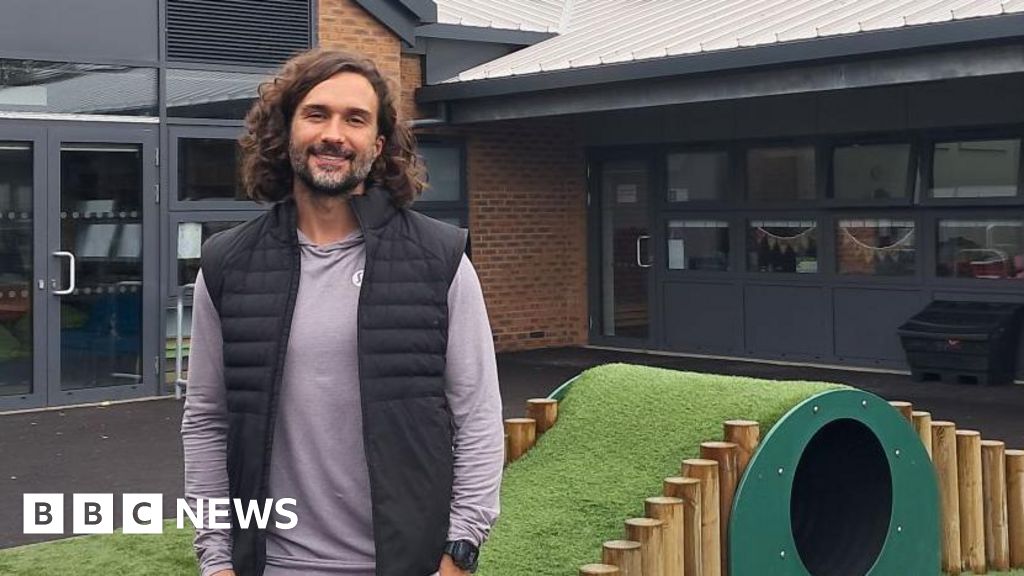
Joe Wicks comes back to rally community at fire-damaged school reopening

Society faces persistent challenges when it comes to supporting families, education, and community resilience. Recent occurrences, such as the devastating fire at Yatton Infants School in Somerset, illustrate not just the physical destruction of a building, but also the profound social and emotional upheaval experienced by those impacted. In May 2023, half of the school’s roof was consumed by flames, leaving approximately 200 young pupils and dedicated staff devastated, with their belongings and hopes reduced to ashes. The aftermath of such an event exposes a society under strain, highlighting gaps in safety, mental health support, and community preparedness that sociologists argue must be addressed proactively.

For the families and communities involved, the repercussions extend far beyond the loss of bricks and mortar. The emotional trauma of witnessing a school—an institution symbolizing safety, growth, and future—burn to the ground can have lasting impacts on children’s sense of security and well-being. The deputy headteacher reflected on the scene of shock and sadness that initially engulfed the school, emphasizing how vital community cohesion becomes in the wake of tragedy. As historian Dr. Ian McDonald notes, “The social fabric of a community is often tested during crises, revealing both its fractures and its capacity for healing.” The rebuilding process, therefore, becomes not just about new classrooms but about restoring hope and confidence in society’s collective commitment to its youngest members.

  • Southwest England’s local authorities and community groups rallied to hasten the rebuilding effort, recognizing that education continuity is essential for family stability and childhood development.
  • Yet, the displacement caused by the fire—forcing children into different schools—highlighted how social issues such as educational disruption can negatively influence learning outcomes and peer relationships.
  • Addressing mental health needs in young survivors became a priority, emphasizing the need for comprehensive support services that foster resilience in children and help them navigate the emotional aftermath.

While the refurbished Yatton Infants School reopens as a symbol of community perseverance, the social issues it exposes require ongoing vigilance and deliberate action. Sociologists like Daisy Reed argue that “The resilience of communities hinges on proactive policies that prioritize not only physical reconstruction but also social healing and inclusive educational environments.” The experience of children, who faced the upheaval and then the joy of returning to a rebuilt school, underscores the importance of fostering a social environment where children can feel safe, supported, and inspired to dream big once again. As this community begins the process of recovery, it leaves us pondering: in a society that often moves too swiftly, how do we ensure that no child’s future is left smoldering in the ashes of tragedy? The hope lies in recognizing that societal strength is measured not only by physical infrastructure but by the capacity to nurture resilience, unity, and hope within every family, every school, and every community.”

Luton School Prepares for Closure to Fix Critical Ceiling Repairs—Safety First for Our Students

Community in Flux: Addressing the Impact of School Repairs on Families and Education

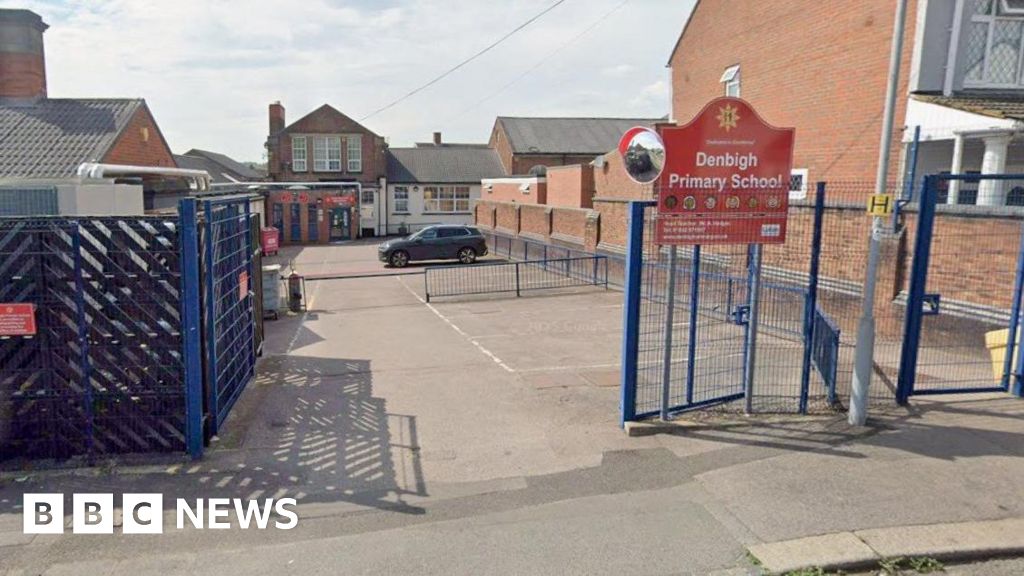
In the heart of communities like Luton, where education serves as the backbone of society, unexpected disruptions to schools reveal much about the ongoing challenges faced by today’s families. The recent closure of Denbigh Primary School for six months, due to necessary ceiling repairs, underscores a broader societal issue: how infrastructure issues can ripple across communities, affecting educational stability, family routines, and social cohesion. Despite being a temporary inconvenience, such measures highlight the urgent need for systematic investment in local schools—an issue that sociologists and community leaders increasingly scrutinize as a failure of policy and priorities.

Google The gates outside Denbigh Primary School in Luton.
Students will be moved to a temporary site nearby in January

The decision to relocate students, from January onward, to a temporary site on the Bishopscote Road playing fields until July 2026, is more than just logistical; it exposes the vulnerability of our civic infrastructure. The routine inspection that uncovered the ceiling issues sheds light on a systemic neglect—where routine maintenance often takes a backseat amidst funding constraints and administrative oversight, risking safety and long-term community well-being. As historians like E.P. Thompson have observed, neglect of foundational institutions such as schools often signals deeper societal fissures—fissures that threaten to widen if immediate action isn’t prioritized.

At the core of this issue are

  • the safety of children and staff,
  • the disruption of daily routines for working families,
  • and the collection of socio-economic disparities that often underlie infrastructure deficiencies.

The local authorities emphasize that these repairs are mandatory to preserve the “long-term stability and safety” of the school. Yet, critics argue that such measures should be part of a comprehensive, proactive strategy—rather than reactive fixes—highlighting the importance of investing in building resilient educational environments that can withstand future challenges.

For families, these disruptions translate into upheaval, forcing parents to adapt work schedules and children to face new routines—an emotional toll that can ripple through families’ social fabric. Educational stability is more than just infrastructure; it’s about fostering environments where young minds can thrive without fear or interruption. Addressing these issues calls for not only immediate repairs but also a societal reckoning with *how* and *where* we choose to allocate resources. As social commentators argue, investing in the physical and moral fabric of our schools is an investment in the moral health of our society itself.

Ultimately, society stands at a crossroads: it can continue to neglect the vital institutions that shape its future or embrace a revolutionary approach rooted in proactive investment and community engagement. The challenge is to recognize that social issues are inherently intertwined with infrastructure, education, and family well-being. As communities rally to support their children and staff during this transitional period, they embody a collective hope—a hope that society’s focus will shift from short-term fixes to sustained, meaningful reform. Because in saving our schools, we also save our future generations, reaffirming our shared belief that resilience begins with community action, and hope persists in the steadfast belief that society can, and must, do better.”

Young Stars Shine: High School Championships Deliver Thrilling Performances

Football in Spain: Chiefs vs. Broncos Showdown

This weekend, the excitement was palpable as the Kansas City Chiefs faced off against the Denver Broncos in a highly anticipated match. In the world of football, young fans are becoming increasingly engaged, captivated by not just the athletes, but the stories behind their journeys. At the forefront of this clash was the competition between quarterbacks Baker Mayfield and Josh Allen, two players who represent the hope and determination of a new generation in the sport.

The game did not disappoint as both teams showcased their skills and perseverance. The first half saw Mayfield’s precision passing, leaving the defense scrambling and earning him a commendable first-quarter touchdown. Meanwhile, Allen retaliated with a spectacular deep throw that resulted in a stunning catch from his receiver, bringing the Buffalo Bills back into contention. As the second half commenced, the game intensified with both teams exchanging powerful plays.

  • Baker Mayfield completed 24 of 32 passes for 305 yards and 2 touchdowns.
  • Josh Allen matched him with 23 completions on 29 attempts, totaling 290 yards and 3 touchdowns.
  • Defensive highlights included crucial sacks from both teams, shifting the momentum frequently.

Commentators noted that the game was not merely about individual glories; it was a testament to teamwork and strategy. As the clock wound down, and tensions escalated, the crowd erupted when Mayfield orchestrated a comeback drive. The final minutes were nothing short of dramatic as he skillfully maneuvered the field, delivering a touchdown pass that left fans on the edge of their seats. In the end, it was Allen’s powerful throw that sealed the victory, but both quarterbacks proved they were worthy of their spotlight.

As the final whistle blew, the game reflected more than just points on a scoreboard; it showcased the unity that sports can foster among fans and players alike. With every throw and tackle, young athletes like Mayfield and Allen inspire future generations to dream big. In a world often divided, football stands as a beacon of hope, offering a common ground where rivalries are fierce yet respectful, and where every touchdown resonates far beyond the field. This is the spirit of sports; an arena where talent meets determination, and where every game writes a new chapter in the heart of the young and young at heart.

Source link

Social Media Auto Publish Powered By : XYZScripts.com