Matox News

Truth Over Trends, always!

Salmon hits $100M to give underbanked Filipinos secure digital credit access

Philippine Fintech Surge Ignites Disruption in Consumer Lending

The Philippines is rapidly emerging as a fertile ground for financial technology innovation, driven by a mobile-savvy, youthful population and an unbanked demographic that has remained underserved by traditional banks. In a bold move highlighting disruption and market opportunity, Salmon, a Manila-based consumer finance startup, has secured a substantial $100 million in combined equity and debt funding, aiming to revolutionize lending processes for Filipinos. This injection of capital is a clear sign that new entrants are challenging legacy financial institutions and paving the way for a more inclusive digital banking ecosystem.

Founded by former employees of the Russian digital bank Tinkoff, Salmon is immediately positioning itself as a market disruptor. The company’s strategy leverages innovative digital scoring methods—delivering instant loan decisions, often within seconds—thus bypassing traditional, paper-intensive, and time-consuming procedures that have historically hampered access to credit. This shift towards digitization responds to a broader industry trend that Gartner analysts predict will redefine financial services worldwide over the next decade, emphasizing agility, rapid decision-making, and customer-centric digital interfaces. The company’s decision to acquire a rural bank established in 1963 to accelerate licensing highlights its disruptive approach—combining legacy assets with innovative technology to leapfrog regulatory barriers and accelerate deployment of diverse financial products.

Business Implications and Market Impact

With its focus on unbanked and underbanked Filipinos, Salmon is addressing a significant gap within the local financial ecosystem. The Philippines is recognized as one of the most active mobile markets globally, with social media dominance and tech-savvy youth, yet its banking infrastructure has struggled to keep pace. Salmon’s suite of offerings, including revolving credit lines, installment loans, motorbike loans, and deposits, exemplifies a shift toward end-to-end digital financial services that dramatically reduce processing times and increase financial inclusion. Notably, the company boasts a competitive loan approval process—customers fill out a form, upload a few documents, and receive a decision in 20 seconds, a feat that traditional lenders would find unimaginable.

  • Digital credit scoring based on behavioral and digital data
  • Interest-free grace periods of up to 62 days for timely repayments
  • Building a full-suite ecosystem that includes savings and deposit products

This market disruption has major implications for traditional banking, which has been slow to innovate and digitize. Salmon’s success signals an urgent call for legacy institutions to modernize or risk losing relevance in a political and economic landscape increasingly driven by quick, frictionless digital access. Moreover, the startup’s ability to secure funding from diverse sources—including the Nordic bond market—reflects an industry-wide recognition that technological agility and strategic capital deployment are critical for capturing high-potential markets.

Looking Ahead: A Global Tech Race in Digital Finance

As Salmon plots its expansion plan beyond the Philippines, the broader question is how disruptive fintechs will reshape financial services across emerging markets. With over $310 million raised in total and strong backing from global investors—including FJ Labs, IFC, and Abu Dhabi’s ADQ—the startup exemplifies a new class of aggressive, innovation-driven companies ready to challenge entrenched incumbents. Industry experts like Peter Thiel emphasize that companies employing deep tech and innovative business models can unlock unprecedented value, especially in regions where traditional financial infrastructure remains inadequate.

The urgent imperative for traditional banks and financial regulators is clear: embrace blockchain, AI, and API-driven ecosystems to stay competitive. As Salmon and similar ventures accelerate their growth trajectories, the next two to three years will determine whether they dominate local markets or spur a global wave of financial innovation and disruption. The pace of technological change demands instant adaptation—those who delay will face obsolescence in an era where speed and innovation are the new currencies of market leadership.

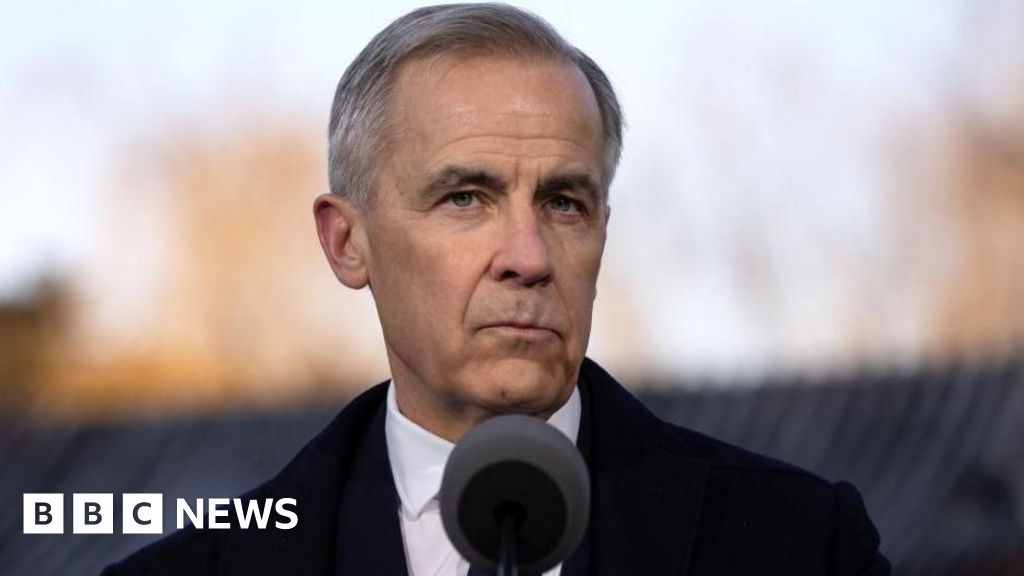
Canada’s Carney pushes for three key by-elections that could secure his majority

Global Power Shifts in Canada’s Political Landscape Signal Broader Geopolitical Tensions

The recent by-elections in Toronto have unexpectedly become a focal point for international observers tracking the shifting balance of influence within Canada—an influential member of the G7—and how internal political adjustments ripple outward in an increasingly complex global chess game. The vacancies arose after the resignation of Chrystia Freeland, a prominent figure known for her forte in economic diplomacy and her close ties to international financial institutions, and Bill Blair, who was appointed as Canada’s envoy to theUnited Kingdom. While ostensibly local in scope, these adjustments carry profound implications for how Canada positions itself on the world stage amidst mounting geopolitical conflicts involving Russia, China, and the United States.

International analysts note that the appointment of Freeland to advise Ukrainian President Volodymyr Zelenskyy underscores Canada’s deepening commitment to supporting Ukraine’s sovereignty in its ongoing conflict with Russia. This move isn’t simply about one politician stepping down; it is a clear signal of Canada’s alignment with a broader Western strategy that aims to counter Russian expansionism and contain Chinese influence in global affairs. Such decisions demonstrate a willingness by Canadian leadership to prioritize diplomatic and military support for Ukraine—an approach that resonates with many at home who see the defense of Western values as integral to their national identity, yet concerns are voiced about the potential costs and divisions this stance may sow domestically.

Meanwhile, Bill Blair’s transition to become Canada’s envoy to the UK signals another layer of international diplomacy, especially as post-Brexit relations between the UK and global powers continue to evolve. Many experts interpret this appointment as an attempt to reinforce alliance ties amidst ongoing geopolitical shifts in Europe and beyond. Historian Dr. James Thornton highlights that these diplomatic moves are more than symbolic—they are strategic recalibrations that will shape Canada’s influence and credibility in the international arena. Such diplomacy also signals a desire to maintain robust connections within the Anglosphere, which could have significant implications for trade, security, and political alliances in the long term.

Indeed, these internal vacancies in Canada’s political landscape serve as a reminder—every leadership change and diplomatic appointment carries weight beyond their borders. As the world braces for further contention over resources, technology, and ideological influence, the actions taken by Canadian leaders reveal their intent to navigate this turbulent environment with assertiveness and strategic patience. The unfolding story of Toronto’s by-elections may seem local, but in an era of growing geostrategic competition, they are stepping stones—each move shaping the contours of history yet to be written, as nations prepare for the next storm of international upheaval with eyes fixed on the horizon.”

Student Loans Crisis in England: Action Needed to Secure Our Future Students

In an era marked by soaring student debt and economic uncertainty, international observers are witnessing a critical juncture that underscores the fragile state of global socio-economic stability. As countries grapple with mounting financial burdens, the lens is now sharply focused on major Western nations where policy decisions regarding higher education funding and economic reforms are illustrating broader geopolitical shifts. The recent debates over student loans, interest rates, and university funding within the United Kingdom serve as a microcosm of a global crisis—one that threatens to reshape societal structures and international influence.

Within the UK, the political landscape is rife with tension as policymakers from both sides of the aisle scramble to address widespread discontent. The Labour government, represented by figures like MP Nadia Whittome, highlights a stark reality: even highly paid individuals see their financial situations erode over time due to rising inflation and disproportionate interest payments. This frustration feeds into a broader narrative of systemic unfairness, compounded by ailing institutions. The debate about student debt relief and university funding has escalated rapidly, prompting pledges from the ruling Conservatives to cut interest rates on certain loans—an initiative that has met with controversy and alarm from independent financial experts like Martin Lewis. Such internal conflicts expose the underlying fragility of the nation’s financial model and hint at upcoming political upheaval.

The geopolitical impact extends beyond the UK’s borders. As policymakers cut back on “ineffective” university courses and shift funding priorities, internationally entrenched issues surrounding global competitiveness and educational quality are intensifying. Countries across the world are observing these debates, recognizing that a nation’s future economic strength hinges on the sophistication of its human capital. Meanwhile, analysts warn that such domestic upheavals in a Western powerhouse could embolden authoritarian actors, especially in regions where Western influence is waning. The United States, for example, is also facing a renewed crisis over the affordability of higher education, foreshadowing a potential ripple effect that could destabilize international alliances and push nations further into strategic competition.

Institutions like the International Monetary Fund and OECD have sounded the alarm over how these domestic policies, if left unresolved, threaten to exacerbate inequalities worldwide. The undeniable truth is that decisions made in London or Washington do not simply stay local; they influence global economic patterns, migration, and diplomatic relations. The emphasis on suppressing university costs and realigning fiscal priorities is, in essence, a reflection of a deeper desire to reconfigure the global power hierarchy. Each reform, each budget cut, meticulously analyzed by geopolitical strategists, signals a move toward an uncertain future where the sovereignty of nations may become increasingly intertwined with their ability to sustain socioeconomic stability amid external pressures.

As the shadows lengthen across international theaters, the question remains—how will history judge this epoch of upheaval? With every policy shift, the weight of tomorrow’s world is being written. Will these decisions lay the groundwork for a renewed era of national strength, or will they serve as a cautionary tale about the perils of shortsighted governance? The scars of this tumultuous chapter are yet to be fully revealed, but one thing is certain: the course of history is still being set, and the echoes of today’s choices will resonate for generations to come.

Secure your spot at Disrupt 2026: Showcase your tech, make deals, and build your pipeline!

TechCrunch Disrupt 2026: A Platform for Innovation and Market Disruption

From October 13–15, TechCrunch Disrupt 2026 is poised to serve as a crucible for the world’s most influential startups, investors, and industry leaders. Held at San Francisco’s Moscone West, this premier event is not just an exhibition; it represents a vital convergence point for over 10,000 decision-makers seeking to catalyze rapid growth through strategic deals and innovation. As the technology landscape accelerates into new paradigms, the event underscores a crucial trend: the shift towards immersive, deal-driven networking that echoes the disruptive spirit of the digital age.

At its core, TechCrunch Disrupt symbolizes a disruptive force shaping the future of tech markets. Startups are increasingly leveraging exhibit opportunities to convert visibility into tangible business metrics—namely, customer acquisition, strategic partnerships, and investor funding. The event’s exhibit hall serves as an incubator for innovation, granting direct access to decision-makers and enabling lead generation through integrated tools such as the Disrupt app. This model—focusing on measurable growth rather than fleeting awareness—signals a broader industry shift: a move towards performance-driven, high-impact engagement that shortens time-to-market and fundraising cycles. According to Gartner analyst Alice LaPlante, such event-driven ecosystems will become indispensable for startups seeking to establish a competitive foothold in rapidly evolving markets.

Disruption in Business Models and Industry Implications

The market implications of this convergent ecosystem extend beyond single deals. As startups showcase breakthrough technologies—ranging from AI-powered automation to next-generation blockchain solutions—they collectively challenge traditional industry incumbents. Innovation is no longer an incremental process but a disruptive force capable of reshaping entire sectors. This is exemplified by emerging ventures that are challenging established players through decentralized platforms, AI innovation, and green technology. For instance, Fye Labs, a recent exhibitor at Disrupt 2025, pioneered a blockchain-enabled supply chain solution that has redefined transparency standards, forcing traditional logistics firms to rethink their operational models.

The event’s emphasis on multi-channel ROI—incorporating media exposure, sponsor branding, and direct investor engagement—further underscores the shift towards integrated, strategic growth efforts. Companies that can leverage this opportunity will not just survive but thrive amid disruption, drawing on the insights of industry visionaries like Elon Musk and Peter Thiel, who have consistently championed innovation-driven market dominance. As industry observers note, these shifts are setting the stage for a new normal—where agility, disruptive innovation, and strategic partnerships become the defining metrics of success.

Strategic Opportunities and the Future of Tech Ecosystems

With limited exhibit space and an emphasis on curated interaction, disruptors must act quickly to secure their place in this high-stakes arena. The benefits of participation—ranging from face-to-face investor contact to multi-channel marketing—are clear: faster deals, stronger collaborations, and access to high-quality opportunities. For companies aiming to lead in next-generation markets, the event offers an unrivaled platform to showcase breakthrough innovations and strategically position themselves for rapid growth. Forward-looking industry analysts warn that neglecting such opportunities could leave firms vulnerable to more disruptive competitors wielding new, game-changing technologies. As the industry pivots sharply towards digital disruption, the urgency for startups to align their business models with these emerging paradigms has never been greater.

Looking ahead, the trajectory is unmistakable: innovation is accelerating, competition intensifies, and success hinges on one’s ability to harness disruptive technologies and strategic ecosystem engagement. The window for strategic action is narrow. Tech companies and startups that embrace this new paradigm—focusing on measurable, high-impact growth—will shape the industry’s future. As Disrupt 2026 approaches, the imperative for speed and disruption becomes ever clearer: those who seize the moment will not just participate in the future—they will define it.

Japan’s conservatives, led by Sanae Takaichi, secure big win in decisive election victory

Japan has undergone a decisive political shift, cementing its conservative roots with a landslide victory in recent elections that will undoubtedly shape regional and global geopolitics for years to come. The Liberal Democratic Party (LDP), under the leadership of the newly re-elected Sanae Takaichi, secured as many as 328 of 465 seats in the lower house of parliament—surpassing the 233 needed for a majority—thus establishing a supermajority of two-thirds. This electoral triumph signals not only a domestic mandate for Takaichi’s policies but also a strategic move in Japan’s ongoing response to the complex geopolitical environment of the Indo-Pacific region. The election results, in the face of fierce winter storms and low voter turnout, reflect a societal lean toward stability and a reassertion of nationalist conservatism amidst mounting regional tensions.

However, the victorious leader’s ambitious agenda is shadowed by the mounting economic and diplomatic challenges facing Japan. Takaichi’s pending policy initiatives—most notably a ¥21 trillion stimulus package and proposed suspension of the 8% consumption tax on food—have sparked concern among financial markets, which worry about Japan’s ballooning debt—more than twice its GDP—and the potential for currency volatility. The fiscal policy debate epitomizes a broader question: can Japan maintain its economic stability while pursuing aggressive social spending reforms? As noted by international analysts, Japan’s debt burden remains the heaviest among advanced economies, raising fears that reckless fiscal expansion could ignite turbulence in global markets, especially if coupled with a weakened yen. Yet, Takaichi’s promise to prioritize responsible investment, echoing her admiration for Margaret Thatcher, signals her intention to balance growth with fiscal prudence. The internal political landscape, however, remains dynamic as her victory grants her greater latitude—but also exposes her to external pressures, especially from neighboring nations.

The regional geopolitical stakes are equally high. Takaichi’s assertive stance on Taiwan—including her recent remarks suggestive of potential military involvement if China attempts to invade—has worsened China’s diplomatic posture towards Japan. The Chinese government responded by urging tourists to avoid traveling to Japan, citing “safety concerns,” and halting cultural exchanges—an unprecedented move that signals heightened tensions. The disruption of decades-old “panda diplomacy” and the deterioration of Sino-Japanese ties could have far-reaching consequences, not only for economic cooperation but also for regional stability. Margarita Estévez-Abe, a political scientist from Syracuse University, suggests that with her fresh mandate, Takaichi might use her newfound political space to repair relations with Beijing; yet, her rhetoric and policies hint at a readiness to confront Chinese influence, especially over Taiwan—an issue that remains a simmering flashpoint. As international observers analyze her intentions, the overarching question becomes whether Japan will pivot towards a more belligerent stance or seek diplomatic recalibration amid the pressures from both the US and China.

Looking ahead, the larger geopolitical impact of Japan’s electoral outcome resonates far beyond its shores. A strong, assertive Japan under Takaichi’s leadership could redefine alliances and military postures in the Indo-Pacific, challenging China’s regional ambitions and possibly prompting a faster militarization of neighboring countries. Furthermore, her domestic policies and diplomatic rhetoric will influence global economic flows—especially if her fiscal policies trigger volatility in currency markets. With her clear intent to bolster Japan’s resilience and sustain growth through strategic investments, the world watches as the nation stands at a crossroads between old pacifist policies and a new assertiveness. As history unfolds, the fate of the Indo-Pacific’s delicate balance hangs precariously—each decision, every diplomatic move, echoing through the corridors of power, shaping the future for generations, and etching new chapters into the annals of international history.

Party members secure permanent name amid tense first conference

The emergence of Your Party, a new left-wing organization founded by Jeremy Corbyn and Zarah Sultana, signals a notable attempt to reshape the socialist landscape within Britain. Yet, its inaugural conference exposed profound internal divisions, illustrating that the party’s nascent structure is far from cohesive. Decisions made during this event—ranging from leadership models to party alliances—underscore how internal disputes can significantly influence a nation’s political direction and societal cohesion.

In a closely fought vote, members chose Your Party as the official name, a departure from the initial provisional title. However, the factional infighting continued unabated. Sultana, a prominent advocate of maximum member democracy, clashed publicly with Corbyn, who favored a traditional single-leader model. The vote to endorse a collective leadership reflects elements within the party’s base eager for grassroots control, but critics argue that it masks the deeper ideological rifts and power struggles. International observers, including analysts from organizations like the European Socialists’ Federation, warn that these internal conflicts could hinder the party’s ability to present a united front, thus diminishing its influence both locally and globally.

Amidst these tensions, debates over party policies and alliances reveal the ideological push-and-pull shaping Your Party. Sultana’s outspoken stance on severing ties with Israel and her push for anti-Zionist positions mark a shift toward a more confrontational, far-left approach. Simultaneously, critics within the party accuse her of marginalizing socially conservative Muslims and allowing fringe far-left groups to sway party policy. Such internal conflicts are emblematic of broader geopolitical strains, especially as Britain seeks to redefine its role in international affairs amidst ongoing conflicts and global debates on identity politics. Historians, like Dr. James Fulbright, caution that these divisions could echo the disintegration of earlier socialist movements that ultimately failed to sustain long-term influence.

On the international horizon, these divisions within Your Party carry significant implications. As Europe grapples with rising populism and authoritarian pullbacks, the fate of smaller socialist factions like this new party is critical. Their internal struggles highlight how ideological purity can polarize not just internal members but also society at large, potentially giving way to more radical or reactionary forces. Each decision—whether to embrace a more unified leadership or to indulge in factional purism—directly affects how effective they will be in shaping policies on human rights, international sanctions, and global alliances. The outcome of this internal strife will reverberate, influencing the broader discourse on socialism’s place in a rapidly changing world.

As the dust settles over Liverpool, history remains unwritten. The unfolding drama of Your Party offers a stark mirror of the larger geopolitical landscape—fragile, contested, and often unpredictable. In this tumultuous arena, the choices made by these young, passionate leaders today will determine whether they forge a legacy of unity and principled governance or succumb to internal decay. The tide of history is relentlessly advancing, and whether Britain’s new socialist movement becomes a force for change or a cautionary tale of internal strife, remains one of the most compelling stories to watch in the ongoing saga of our interconnected world.

Austrian Nuns Secure New Lease on Life at Abandoned Convent

Global Impact of a Local Scandal: Austria’s Convent in the Crosshairs

The story of three Austrian nuns—Sister Bernadette, Sister Regina, and Sister Rita—has transcended local boundaries to ignite an international debate on faith, societal values, and the influence of social media. Residing within the historic Schloss Goldenstein convent near Salzburg, these elderly women, who historically dedicated their lives to spiritual service, have unexpectedly become icons of a burgeoning cultural conflict. Their decision to reoccupy their long-held home after being removed to a care facility against their wishes has stirred a whirlwind of controversy, highlighting the tension between religious tradition and contemporary societal pressures.

In a move that can be seen as a symbolic stand against the encroachments of modernity, the nuns’ community has garnered nearly 100,000 followers on social media platforms like Instagram and Facebook, where they share moments of prayer, daily routines, and even fitness routines, such as Sister Rita’s boxing workouts. Their social media presence, supported by sympathetic former students and supporters, has challenged the authorities’ attempt to suppress their voice, prompting questions about the role of technology as a tool for empowerment versus control. The Church authorities now find themselves in a precarious position, trying to contain the narrative while enforcing discipline, with Andrea historians warning that this case exemplifies the growing divide between faith communities and modern social values.

Decision to Halt Social Media and Restrict Access: Geopolitical Ramifications

Recently, Church officials offered the nuns the chance to remain at Kloster Goldenstein with conditions: they could stay if they ceased their social media activities and restricted access to the enclosed parts of the convent. This decision exemplifies a broader strategy by religious institutions to control their image in increasingly digital societies, where social media alters power dynamics. Harald Schiffl, a spokesman for the authorities, emphasized that the nuns’ social media activities would be a key condition, framing their online presence as a threat to their traditional roles. This response signals a wider struggle within the European Union—where conservative and progressive forces vie for influence—highlighting the geopolitical impact of local religious disputes. Critical international organizations such as the Council of Europe warn that these tensions could reflect a wider erosion of religious freedoms in Europe, where societal liberalization often clashes with centuries-old institutions.

Using historical analysis, some scholars suggest that the nuns’ predicament mirrors a resurgence of traditionalism in the face of modern secular society. Other analysts argue that the Church’s move to suppress the nuns’ social activism might backfire, fueling resistance against authoritarian tendencies within religious hierarchies. The case has also spotlighted Austria’s delicate balance between maintaining cultural heritage and embracing the social fluidity of a diverse, globalized Europe. As the government contemplates its position, the incident underscores how decisions taken in one country ripple across borders, influencing debates about religious identity, individual rights, and societal cohesion within the wider European context.

The Dawn of a New Epoch or the End of an Era?

With negotiations ongoing and the nuns still residing at their convent, the world watches as this small but potent controversy unfolds. The Church’s insistence on control, coupled with the nuns’ staunch resistance and social media activism, sketches a vivid portrait of societal change in motion. International commentators warn that this story is more than a local squabble—it is a microcosm of the global clash between tradition and transformation. As the nuns’ future remains uncertain, history echoes a warning: societies that suppress voices rooted in their past risk losing their very soul. Whether this chapter ends with reconciliation or prolongs into further upheaval, the echoes of their story will reverberate in the corridors of history, shaping the narrative of faith and freedom for generations to come.

US Banks Scramble to Secure Data After Hack Hits Financial Tech Firm

Cyber Breach at SitusAMC Sparks Industry-Wide Concerns Over Data Security and Disruption

In a rapid display of the evolving cybersecurity landscape, SitusAMC, a prominent provider of financial technology solutions to over a thousand commercial and real estate lenders, confirmed a significant data breach earlier this month. This incident underscores the escalating sophistication and audacity of cybercriminals targeting vital infrastructure within the financial sector. The breach, identified on November 12, involves the exfiltration of sensitive corporate data, including banking client information, legal agreements, and accounting records, which could have far-reaching implications for the stability and privacy of major financial institutions. The breach’s discovery has triggered a swift response from industry giants, including JPMorgan Chase, Citigroup, and Morgan Stanley, emphasizing how vulnerabilities in third-party technology providers can cascade across the financial ecosystem.

This incident illustrates a broader trend where disruption comes not only from emerging fintech innovations but also from the vulnerabilities they introduce. As SitusAMC processes billions of documents annually, its role as a critical intermediary in real estate and commercial financing has positioned it as a high-value target for hackers. The attack’s modus operandi indicates an intent focused on data exfiltration rather than destruction, as no encrypting malware was reported—highlighting a strategic shift towards covert data theft that could facilitate future financial fraud or blackmail scenarios. Industry analysts, including those from Gartner, warn of a “strategic gap” in cybersecurity defenses, especially among firms relying heavily on third-party vendors for core operations.

The strategic implications for financial institutions are profound. This breach exposes critical vulnerabilities that threaten the integrity of customer data and challenge the notion that current blockchain and encryption technologies alone can guarantee safety. Fintech disruptors and traditional banks alike are under rising pressure to implement comprehensive, proactive security measures. The incident serves as a stark warning: the future of fintech innovation depends heavily on disrupting accepted cybersecurity paradigms and investing in next-generation solutions. Institutions involved in this ecosystem must re-examine their risk models, as well as their reliance on external vendors, to prevent catastrophic breaches that could diminish consumer trust and regulatory approval—elements crucial for future growth.

Looking ahead, experts including Elon Musk and Peter Thiel emphasize that rapid technological advancements demand equally rapid innovation in security infrastructure. As AI-driven threat detection matures, the businesses that focus on disrupting traditional cybersecurity models now will be tomorrow’s leaders. The interconnectedness of financial technology, legal compliance, and data privacy dictates an urgent race to outpace hackers. The FBI’s ongoing investigation underscores the seriousness of these threats, and the industry must respond with greater urgency given the increasing frequency and sophistication of cyberattacks. It is clear that an era of robust, resilient, and disruptive cybersecurity measures is imminent—those who lead this charge will shape the future of financial innovation and maintain global market stability amidst an increasingly hostile digital battleground.

Trump supporter Timothy Mellon funds $130M to secure troop pay amid shutdown

In a startling display of private influence over public policy, timing and financial dominance converge as news broke of an anonymous donation that temporarily eased the burdens of U.S. troops during the prolonged federal shutdown. According to The New York Times, the donor, identified only as Timothy Mellon, committed a staggering $130 million to the U.S. government — a move unprecedented in its clandestine nature and its implications for americas’ political landscape. Mellon’s history as a major Republican benefactor and heir to an industrialist legacy underscores a broader trend: wealthy private actors increasingly shape governmental functions, blurring the lines between citizen participation and covert influence.

This infusion of private capital raises critical questions about how international and domestic policy decisions are influenced by billionaires. The donation, accepted under the Pentagon’s “general gift acceptance authority,” was reportedly aimed solely at subsidizing service members’ salaries and benefits. Yet, the controversy lurks in the potential violations of the Antideficiency Act, which explicitly prohibits federal agencies from spending beyond their congressional appropriations or accepting voluntary services outside emergencies involving human safety. Such measures drift dangerously towards undermining the checks and balances fundamental to American democracy, where the power of the purse traditionally rests with elected representatives, not anonymous magnates.

Historically, figures like Mellon symbolize a nexus of wealth, political influence, and ideological confrontations. As research by analysts and historian suggest, Mellon’s substantial campaign contributions — totaling over $165 million in recent election cycles — exemplify how interwoven private fortunes are with the fabric of candidate support and policy advocacy. His recent backing of intense border projects in Texas, and support for antitrust ideological movements, reveal a strategic effort to shape regional and national narratives aligned with a broader conservative resurgence.

The geopolitical impact of such private influence extends beyond American borders. As international organizations warn of increasing transnational power struggles, the US’s internal reliance on billionaire benefactors risks destabilizing the foundational principles of democracy in favor of a shadowy corporatocracy. The actions of Mellon and similar donors set a precedent where financial might can quietly mold policy outcomes, often at odds with citizen interests. Their role invites scrutiny from global governance bodies, which are already observing the fragility of the American political order amidst growing societal divisions.

As history continues to unfold in the corridors of power, the weight of these clandestine financial maneuvers threatens to redefine the very notion of sovereignty. With each secret donation, each act of influence, the dividing lines between the public and private sphere blur further, raising urgent questions about accountability and transparency. As nations look on, they recognize the inescapable reality that the future of free societies hangs by a thread, woven with the invisible threads of wealth and power, leaving the world to ponder — whose interests truly shape the course of history?

£800m to Fix Failing NI Schools and Secure Our Future Millennials

Social Crisis in Northern Ireland Schools: Foundations of Future Society at Risk

Amid the echoes of faded chalkboards and crumbling brickwork lies a stark reality: the state of Northern Ireland’s educational infrastructure reflects deeper societal failures. Many schools across the region are caught in a cycle of neglect, characterized by a backlog of maintenance estimated at between £600m and £800m. This crisis is not merely structural but fundamentally impacts families, communities, and the very fabric of future generations. As sociologists like Charles Murray have argued, the environments in which children grow significantly influence their capacity to thrive, yet the systemic disrepair and poor management threaten to erode these foundations.

A damning report from Stormont’s Public Accounts Committee (PAC) paints a picture of systemic failure, with many children and teachers working amidst overcrowded, poorly heated, and dilapidated structures. Many educational institutions are now in a state of deferred maintenance—an issue that compromises safety and educational quality, and that critics consider an ethically unacceptable neglect of societal duty. The report highlights a reactive approach to infrastructure management rather than a comprehensive, forward-looking plan, leading to conditions where learning environments become a battleground for survival rather than a sanctuary for growth. Such neglect disproportionately affects families in less affluent communities, deepening the cycle of poverty and social exclusion that has persisted for decades, according to social historians like E.P. Thompson.

School heads, such as Emma Quinn of Rathcoole Primary School, describe their days as dominated by “chasing works,” reporting leaks, and fixing broken windows”. The frustration is palpable—their schools are described as “simply not fit for purpose,” with students enduring inadequate heating, leaky roofs, and crumbling infrastructure. These conditions, while seemingly physical, strike at the moral heart of society’s obligation to safeguard its youngest members. The disparities in funding and maintenance are especially severe for schools serving disadvantaged communities, emphasizing how socio-economic divides are entrenched within educational environments.

What Can Be Done?

  • The Department of Education (DE) and Education Authority (EA) are urged to implement a clear and sustainable management strategy with regular condition surveys and monthly maintenance planning.
  • Swift action on urgent repair backlogs, especially in classrooms where improper heating and hazardous environments threaten the health and morale of students and staff alike.
  • Broader investment is necessary, with officials like Education Minister Paul Givan calling for cross-party support to secure funding for infrastructure improvements and to address soaring costs in special educational needs provision—a sector that has seen an 850% increase in emergency placements over six years.

As society’s sociologists have pointed out, these issues extend beyond bricks and mortar—they threaten the social cohesion and moral fabric of communities. The prolonged neglect signals a failure of governance and resource allocation that, if left unaddressed, could erode trust and social mobility for generations. Yet, amidst this grim landscape, hope persists in the realization that intentional societal change—prioritized investments, strategic planning, and community engagement—can reverse these trends. In the end, society’s strength lies in its commitment to its children and the collective responsibility to build nurturing environments. Society must reflect deeply on these social wounds, for without immediate action, the very future of the next generation remains in jeopardy—an unspoken legacy of societal neglect that demands urgent redress.

Social Media Auto Publish Powered By : XYZScripts.com