Matox News

Truth Over Trends, always!

Millions of UK workers set for pay boost as Reeves announces higher minimum wage — Budget 2025

In the latest move reflecting domestic economic policy intertwined with global labor trends, the United Kingdom has announced a significant increase in minimum wages, aiming to bolster the living standards of its low-paid workers. The country’s leadership under Prime Minister Rishi Sunak has committed to raising the national living wage from £12.21 to £12.71 per hour for over-21s starting April, an increase of 4.1%. This escalation is designed to lift approximately 2.4 million workers, pushing their annual earnings up by around £900—an effort to counteract stubbornly high inflation and resolve the ongoing cost-of-living crisis. At the same time, the government is narrowing the gap for younger workers by increasing rates for 18- to 20-year-olds by 8.5%, signifying a preference for wage equality that continues to shape the nation’s economic landscape.

International and economic analysts observe this development as a reflection of a broader global shift toward protecting worker rights, yet caution that such measures carry complex geopolitical repercussions. Critics argue that steep wage increases, particularly for youth, could hinder employment opportunities by discouraging employers from hiring entry-level staff, especially amidst a backdrop of rising national insurance and economic uncertainties. According to the Resolution Foundation, youth unemployment has surged to 14.5%, up from 13.7% a year ago, illustrating the delicate balance between social welfare and economic vitality. Empirical data suggest that artificially inflating wages without concurrent productivity growth risks hampering economic competitiveness—a concern echoed by business leaders who report struggles in hiring due to increased labor costs.

This policy debate, however, extends beyond UK borders and touches on international labor standards. European countries, with their own history of wage regulation, brace for potential shifts in investment and migration patterns should wage policies influence business decisions. Meanwhile, the International Labour Organization and various global economic think tanks warn that inconsistent wage policies across nations could exacerbate trade imbalances and disrupt global supply chains. The UK’s push to elevate wages is, in part, a reflection of how rising populist sentiments and economic nationalism are reshaping traditional international relations, increasingly framing labor rights as elements of national sovereignty and economic resilience.

Historian and geopolitical analyst Dr. Emily Carter emphasizes that these internal economic choices are also part of a larger narrative—one where nations are reasserting control over their economic destinies amid a shifting international order. As China and the United States grapple with their own wage and inflation issues, smaller nations like the UK are making bold moves that could ripple through the global geopolitical landscape. The decision to safeguard jobs and raise wages can be viewed as an attempt to secure social stability, but it also leaves out the broader question: will such measures ignite a race to the top—or to the bottom in global labor competitiveness?

As history continues to unfold in the coming months, the UK’s wage policies serve as a stark reminder of how domestic economic reforms are intertwined with international trends. The world watches as nations balance between protecting their citizens and maintaining economic strength in an era marked by upheaval and uncertainty. Decisions taken today are likely to set precedents for future global interactions—where the tug-of-war between social justice, economic stability, and geopolitical influence remains as fierce and unpredictable as ever. The stage is set for a new chapter in history—one written not only through policies and politics but through the lives and futures of millions caught in the crossfire of a rapidly changing world order.
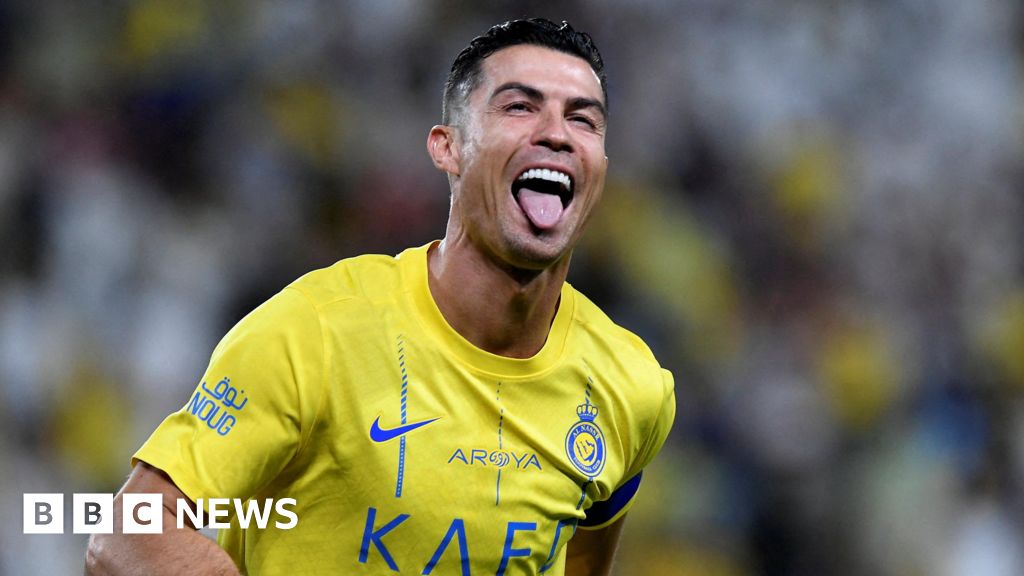

Ronaldo Set to Visit White House Amid Saudi Crown Prince Visit Day

The anticipated visit of Cristiano Ronaldo to the White House, confirmed by a US official, underscores the shifting landscape of global influence in the early 21st century. Set against the backdrop of Ronaldo’s recent engagements in Saudi Arabia, this visit symbolizes more than a sports celebrity’s diplomatic move; it reflects the intricate web of geopolitical power plays orchestrated by nations vying for prestige and strategic advantage. Ronaldo, whose presence in the Saudi Pro League has become emblematic of the kingdom’s ambitious modernization drive, now steps into a geopolitical spotlight that transcends the football field.

  • Ronaldo’s historic visit to the US marks a rare return since 2016, a period that has seen him embroiled in controversy over allegations of sexual assault, which he has vigorously denied. Although US prosecutors decided in 2019 not to pursue charges, the allegations continue to cast shadows over his public image, illustrating how personal reputation intersects with international diplomacy in the modern era.
  • Meanwhile, Ronaldo’s role in Saudi Arabia’s strategic initiatives, under Crown Prince Mohammed bin Salman, underscores a deliberate effort by the kingdom to diversify away from oil dependence by leveraging global icons like Ronaldo to boost tourism, sports, and cultural soft power. His lucrative contracts—reportedly totaling over $600 million—highlight a broader trend of nations using high-profile deals to elevate their standing in the global arena.

Experts such as Sanam Vakil from Chatham House have emphasized Saudi Arabia’s intensive investment in high-profile figures and sporting events as an aggressive move toward international engagement and soft power diplomacy. This strategic pivot aligns with the kingdom’s vision for a 21st-century identity that balances traditional values with modern spectacle. Ronaldo’s endorsement of this vision—calling Prince Mohammed “our boss” and advocating for Saudi development projects—embodies the use of sports as a diplomatic tool. His expressed support for hosting the 2034 FIFA World Cup exemplifies how nations are increasingly leveraging global sporting events to project influence.

Meanwhile, the diplomatic dance involving United States and Saudi Arabia remains complex. The White House’s decision to host Ronaldo, whether as a guest or a symbolic envoy, signals a subtle recalibration of American engagement with regional powers. As analysts observe, these moves are not merely about entertainment but represent a strategic layer in the ongoing redefinition of alliances and influence. The significance of the shift towards multi-nation diplomacy—where personal prominence intersects with national interests—indicates a world that is less binary and more interconnected, yet riddled with rivalries and ambitions.

It is in this evolving geopolitical theater that history continues to unfold—an intricate mosaic of power, influence, and the unyielding pursuit of national prestige. As Ronaldo’s footsteps echo from the White House to Riyadh, it leaves behind a stark reminder: in today’s international arena, societal values, personal legacies, and state strategies are increasingly intertwined. The next chapters are yet to be written, but one thing is certain—these moments will be remembered as the catalyst for a new phase of global influence, where cultural icons become ambassadors of international chess moves, shaping the destiny of nations.

David Nicholls Set to Bring Adrian Mole's Secret Diary to BBC for a Fresh Generation
David Nicholls Set to Bring Adrian Mole’s Secret Diary to BBC for a Fresh Generation

Global Cultural Shifts and the Power of Nostalgia in a Fragmented World

In a moment of profound geopolitical upheaval, cultural narratives continue to serve as both mirrors and anchors for societies on the edge of change. Recently, the BBC announced a 10-part adaptation of Sue Townsend’s beloved novel, The Secret Diary of Adrian Mole Aged 13¾, helmed by acclaimed writer David Nicholls. Despite originating over four decades ago, the character of Adrian Mole remains a symbol of adolescent anxieties and societal critique, highlighting how storytelling persists as a vital force amid global instability. As nations grapple with economic crises, social unrest, and shifting alliances, the revival of such cultural relics signals a collective yearning to revisit familiar truths about human vulnerability and resilience.

The international impact of this adaptation extends beyond mere entertainment. Historians and analysts affirm that nostalgic content—particularly stories rooted in the familiar—can serve as a psychological respite in tumultuous times. The BBC’s initiative underscores this phenomenon, emphasizing Adrian’s timeless struggles—first love, identity, family upheavals—that resonate across generations. As global institutions like UNESCO advocate for the preservation of cultural identity amid relentless change, such productions rejuvenate national and regional narratives, fostering shared memories and values. In this context, storytelling acts as a counterbalance to the fragmentation of geopolitics, offering societies a sense of continuity and purpose.

From a geopolitical perspective, the decision to recreate beloved cultural icons like Adrian Mole exemplifies the strategic importance nations assign to soft power and cultural diplomacy. The International Organization for Cultural Diversity has consistently promoted narratives that reinforce societal cohesion. By investing in adaptations rooted in local history and humor, countries aim to strengthen their soft influence and foster a sense of national pride—a subtle yet potent form of resistance against the rising tide of global populism and authoritarianism. Furthermore, these adaptations serve as a means for societies to implicitly challenge or reaffirm prevailing values—highlighting the enduring relevance of classic stories in shaping public discourse.

Despite the shifting sands of geopolitics, the enduring influence of Townsend’s creation—and others like it—highlights an essential truth: how nations decide to remember and reinterpret their cultural legacies directly impacts their societal cohesion and international stature. The adaptation’s producers, including Big Talk Studios and writers like Caitlin Moran, are acutely aware that stories rooted in universal themes of youthful anxiety and hope foster a shared cultural language beyond borders. As political analysts warn of the dangers of cultural fragmentation and the rise of deepening divides, these stories function as a reminder that beneath nation-states’ conflicts, the human experience is fundamentally interconnected and timeless. Such cultural projects are, in many ways, acts of defiance—asserting that amidst global chaos, shared stories and memories remain a cornerstone of human society.

As history continues to unfold with unpredictable violence and peace negotiations, the cultural resurrection of Adrian Mole presages a deeper truth: the stories we cherish today are the seeds of tomorrow’s collective memory. In an era marked by unprecedented geopolitical shifts, the enduring relevance of Townsend’s wit and character demonstrates that even in times of uncertainty, society’s greatest strength lies in its capacity to reflect, adapt, and remember. The weight of this ongoing cultural renaissance may yet influence the course of history—reminding us that, as we navigate a fractured world, our stories remain a vital, unyielding force. The question now is whether these narratives can sustain societies long enough to shape a future still unwritten—one that echoes the timeless truths of human hope and resilience.

Trump vows to sue BBC over speech edit, claiming he has a duty to set the record straight—latest updates

Global tapestry of Power, Media, and Political Battles: The Shifting Geopolitical Landscape of 2025

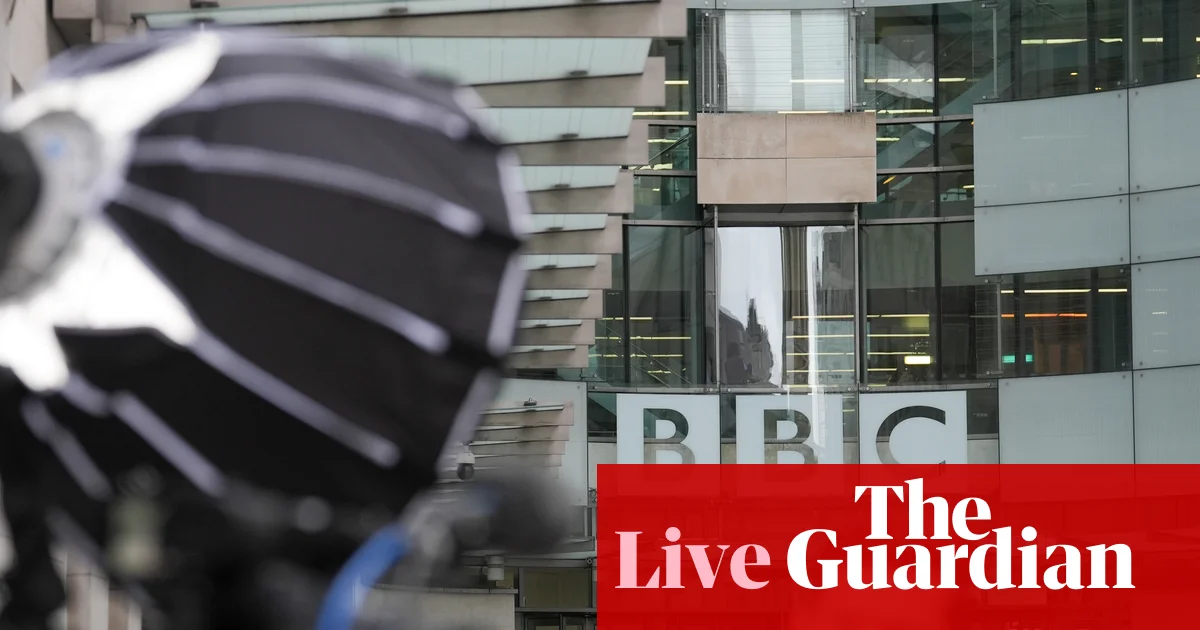
As 2025 continues to unfold, an intricate web of international conflicts, media controversies, and political power plays underscores a world in flux. Last week’s dramatic developments at the BBC and the rising tensions between Donald Trump and global media institutions illustrate how the struggles within foundational institutions have far-reaching geopolitical impact. The crisis surrounding the BBC, culminating in the resignation of Director-General Tim Davie, reveals a broader pattern of skepticism and dissatisfaction with mainstream media’s role in shaping political narratives—shaping the global discourse with strategic implications for sovereignty, national identity, and the future of free press.

Trump’s aggressive legal posture against the BBC exemplifies how media influence intersect with geopolitics. The former U.S. president has claimed that the broadcaster “defrauded the public,” citing the editing of his January 6 speech—an event that remains a reference point for political and legal battles worldwide. Trump’s legal counsel has threatened $1 billion in damages if the British broadcasting giant refuses to retract what they consider “false, defamatory, disparaging, and inflammatory statements.” Historians and analysts concur that such legal threats against influential media entities symbolize a strategic effort to control narratives, not just domestically but across international borders, reflecting a broader ideological battle over truth, influence, and sovereignty.

On the other side of this ideological clash, critics like Daisy Cooper, Deputy Leader of the Liberal Democrats, see opportunity within crisis. Her call to “take away all political appointees” affirms the ongoing struggle to reform media institutions deemed compromised by politicization. Her words echo a larger, international debate about the role of political influence within public broadcasting and its impact on national independence. As Western democracies face this internal division, the overarching question remains: whose version of truth will shape the future? With countries like the UK and the US entangled in media battles, the geopolitical impact is undeniable. These conflicts threaten to shift the balance of power toward nationalist and populist narratives, challenging globalist media dominance and redefining the landscape of international influence.

International organizations and analysts warn that such disputes are more than mere political theater; they are manifestations of a deeper |international realignment driven by the erosion of trust in traditional institutions. As the world witnesses how a domestic media crisis can ignite legal threats and political upheaval, it signals to every nation that control of information becomes a matter of geopolitical importance. The unfolding battles hint at a broader era where sovereignty, national identity, and media independence are no longer isolated issues but crucial battlegrounds shaping the destiny of nations.

In this rapidly transforming world, the stakes are extraordinary. As history’s pen writes the next chapter—whether it be the legal warfare against the BBC or the rise of populist narratives challenging media authority—the question remains clear: who will wield the power of truth in the unfolding story of the 21st century? The future’s narrative is yet to be written, and the weight of history presses down heavily on today’s decisions, shaping a world where information itself may become the ultimate weapon in the struggle for dominance and sovereignty.

Rising Stars Shine: Young Athletes Set to Take Center Stage in Upcoming Championship!

The 2025 Baseball Awards: A Celebration of Excellence

As the 2025 baseball season comes to a close, the league is abuzz with excitement as teams and players gather to celebrate their achievements. The annual awards ceremony not only honors individual excellence but also showcases the spirit of sportsmanship that defines baseball. This year’s accolades spotlight the incredible talents of players and the strategic genius of managers who have left an indelible mark on the game.

Leading the pack, the Los Angeles Dodgers made headlines as they captured the coveted Best Team of the Year award. Manager Dave Roberts, known for his innovative strategies, expressed gratitude, stating, “It’s a testament to our team’s hard work and dedication throughout the year.” The Dodgers’ key players, including MVP candidate Freddie Freeman, delivered striking performances that contributed to the club’s success, making them a formidable force in the league.

On an individual level, the spotlight shone brightly on rookie sensation Jackson Martinez of the New York Yankees, who took home the Rookie of the Year award. Martinez’s impressive statistics—batting an astounding .310 with 20 home runs—have set a new standard for newcomers in the league. “Winning this award is unbelievable,” Martinez commented. “It just goes to show that with hard work and passion, anything is possible.”

  • Best Pitcher: Jacob deGrom of the New York Mets showcased outstanding skill, finishing the season with a staggering 2.10 ERA.
  • Best Manager: A.J. Hinch of the Detroit Tigers proved his mettle, transforming a struggling team into playoff contenders.
  • Defensive Player of the Year: Andrelton Simmons dazzled fans and critics alike with his phenomenal fielding prowess.

As the season concludes, it is vital to recognize that baseball is more than just numbers or trophies; it is a unifying force within communities. Teams like the Chicago Cubs and the Atlanta Braves, who battled fiercely on the field this year, represent the hope and resilience found in every fan that supports them. In the words of renowned commentator Bob Costas, “Baseball is a celebration of life—triumphs and defeats, but above all, the bonds shared among those who watch and play.” As we look forward to the next season, let us carry this spirit of camaraderie and sportsmanship into the off-season, reminding us that in baseball, and in life, unity amidst competition is the ultimate victory.

Source link

Rising Stars Shine: Young Athletes Set Record-Breaking Performances This Weekend

Ducks Triumph Over Hawkeyes in Nail-Biting Finish

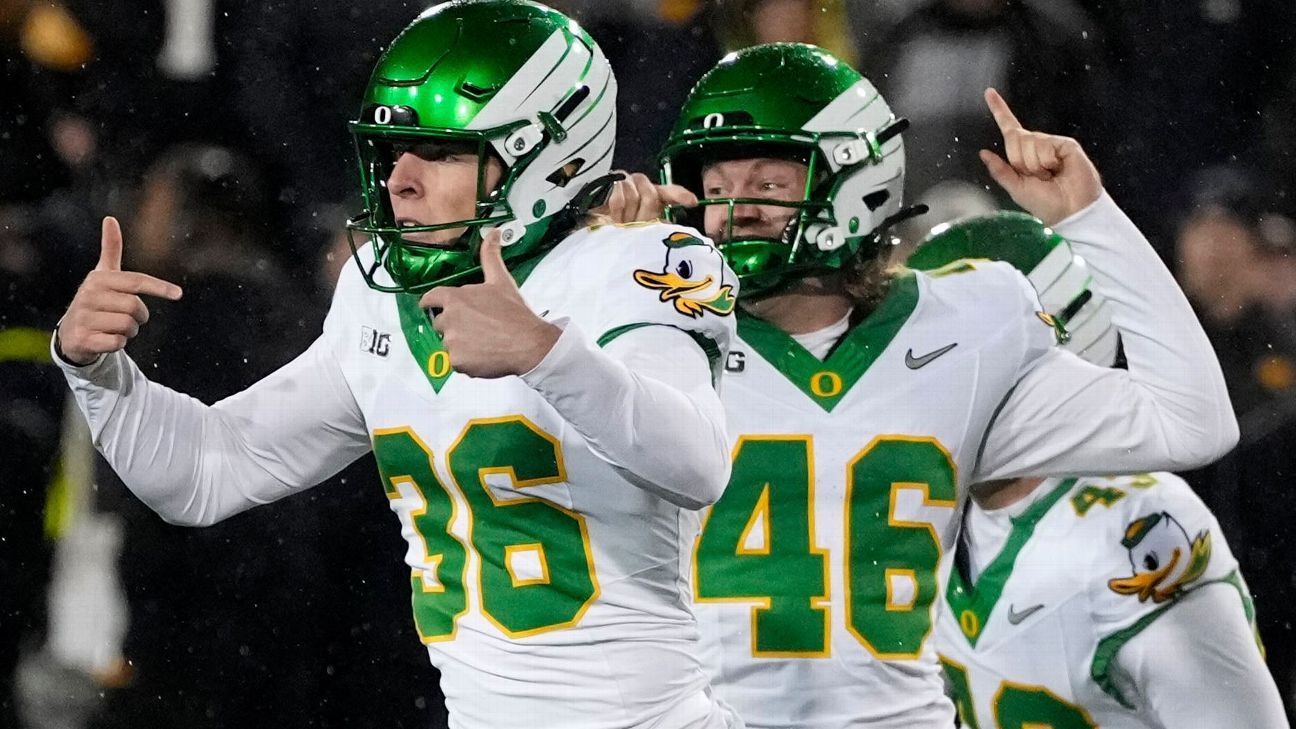
In a thrilling showdown that showcased both tenacious defense and nail-biting suspense, the No. 6 Oregon Ducks narrowly defeated the Iowa Hawkeyes 18-16 on a rainy Saturday night in a Big Ten clash. The matchup highlighted the resolve and strategy of both teams, with each side exhibiting their prowess in limiting scoring opportunities. As the rain poured down, it became clear that this game would come down to the wire.

The defining moment of the game arrived with just seconds left on the clock. After a strategic series of plays, Atticus Sappington stepped onto the field, confidence etched on his face despite the adversity. With a magnificent 39-yard field goal, he clinched the victory for the Ducks, sending the crowd into a frenzy. Coaches from both sides praised their players but notably commended the discipline and teamwork that led to such a close contest.

  • Sappington’s game-winning field goal came with only 3 seconds remaining.
  • Both defenses displayed exceptional performance, limiting scoring chances effectively.
  • This matchup marks a significant victory for the Ducks against a formidable opponent.

Highlighting the intensity of the game, Coach Mario Cristobal of the Ducks noted, “Every victory teaches us more about resilience. Our guys showed heart tonight, and that’s what Oregon football is all about.” On the other side, Coach Kirk Ferentz echoed the sentiment, emphasizing that, “We fought hard and left everything on the field. I have immense pride in my players.”

As fans celebrated and lamented in equal measure, it became evident that the scoreline was merely a fraction of the larger narrative. Each tackle, every touchdown, and that suspenseful final second encapsulated the essence of college football. Sports, in all its unpredictable glory, not only entertains but also unites diverse communities, fostering a spirit of camaraderie and sportsmanship. Whether it’s in victory or defeat, the collective heartbeat of fans and players alike serves as a reminder of the magic inherent in athletic competition. In the end, it wasn’t just about the scoreboard; it was about the triumph of the human spirit and the unforgettable moments that bind us together.

Source link

Emerging Stars Shine: High School Athletes Set New Records in State Championship!

Excitement Builds for the São Paulo Grand Prix at Interlagos

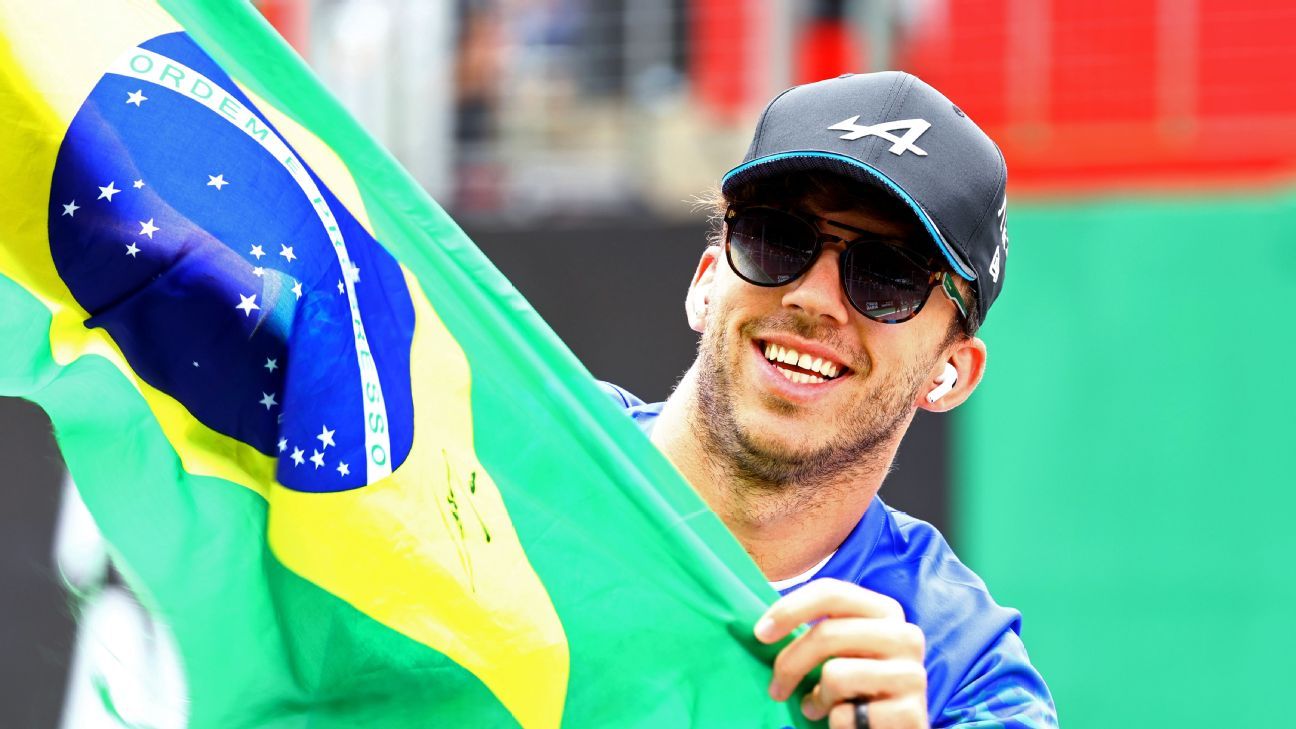
The stage is set for the São Paulo Grand PrixInterlagos Circuit

This sprint weekend will feature a full slate of action as teams prepare for a mix of qualifying and racing that brings a heightened level of unpredictability. As fans eagerly await the showdown, several key players stand out. The defending champion, Max VerstappenRed Bull Racing

  • Lewis HamiltonMercedes
  • Rising stars like Lando NorrisGeorge Russell
  • This year’s sprint race format not only presents a new challenge but also rewards teams that can adapt quickly to changing conditions on race day.

As the weekend unfolds, the ambiance in São Paulo is electric, underscoring the significance of these sporting events in uniting fans across the globe. It is moments like these where sports transcend scores and standings, bringing people together in shared passion and excitement. The São Paulo Grand Prix is not simply about which driver crosses the finish line first; it is a testament to the unifying power of competition, where national pride and personal achievement intermingle on one of the sport’s most revered stages.

As we prepare for the roaring engines and fervent cheers, it is clear that this weekend’s race will not only be a pivotal point in the championship but also a celebration of athletic prowess, resilience, and community. Sports remind us that beyond rivalry, there lies a shared humanity, sparking a connection that is both timeless and universal.

Source link

Dutch centrists under Jetten set for surprising election victory, poll indicates

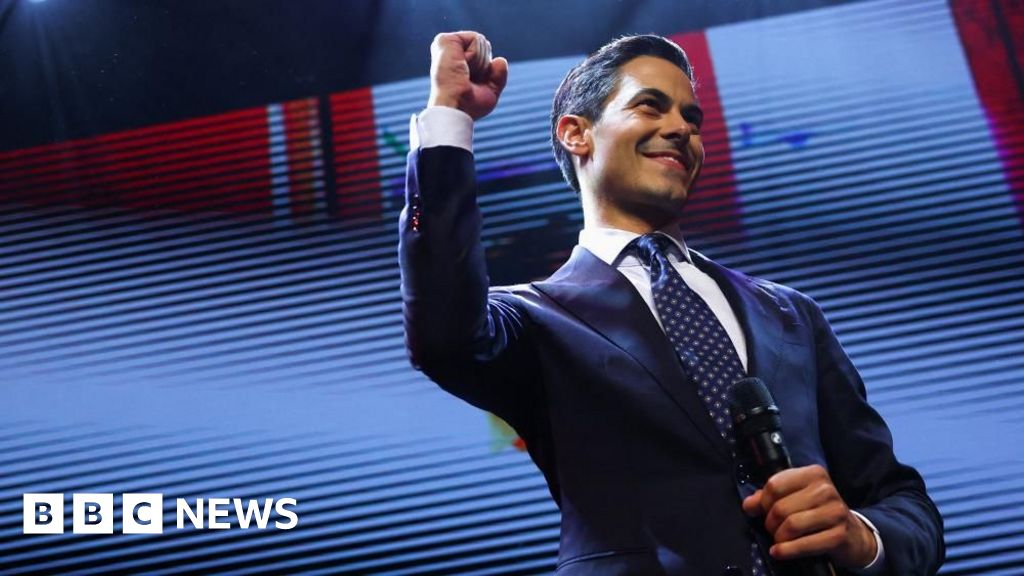
The recent Dutch parliamentary elections have charted an intriguing course in European politics, illustrating a significant shift that could ripple across the geopolitical fabric of the continent. Rob Jetten’s centrist liberals, under the banner of Democrats 66 (D66), have unexpectedly overtaken traditional political heavyweights, including Geert Wilders’ PVV and established left-wing parties. This electoral upheaval, characterized by the projected victory of Jetten’s campaign, underscores a rising public desire for pragmatic leadership and national unity amid persistent crises—chiefly housing shortages, migration concerns, and economic stability.

Historically, Netherlands has been viewed as a cornerstone of stability within the European Union. Yet, recent trends reveal a society eager to embrace change, as evidenced by Jetten’s rapid political ascendancy. Once languishing in fifth place, his party is now poised to hold 27 seats, just ahead of Wilders’ populist faction, which conceded defeat. The significance extends beyond electoral numbers; the shift signals a broader discontent with the stagnation and negativity perceived in recent years’ politics. Experts from the European Policy Institute argue that this election presents a turning point, emphasizing how societal frustrations with migration policies, housing demand, and economic strife are steering voters away from populist rhetoric towards centrist, constructive alternatives.

Meanwhile, how these decisions affect nations and societies cannot be understated. The expansion of Jetten’s coalition plans, including commitments to build ten new cities to combat housing shortages, delineates a future where national policy leans toward active social restructuring. This has profound geopolitical impact, as the Netherlands’ leadership style and policies influence broader European stability and cooperation. The UK’s House of Commons and the German Bundestag watch keenly, recognizing that shifts in Dutch politics could inspire similar realignments in other EU nations, especially as issues of migration and economic resilience dominate the continent’s agenda. The European Council itself is weighing the implications of a more centrist, pragmatist Netherlands—potentially steering EU policies toward more effective, unified responses to shared challenges.

The election results reveal a society at a crossroads, with Wilders’ debate-shown influence waning, despite his proudly bullish stance: “You won’t be rid of me until I’m 80.” The enduring question remains whether this new political climate will translate into lasting change or serve as a fleeting reaction to the ongoing crises. Nonetheless, the message is clear: the Dutch electorate is signaling a desire for a decisive break from the polarization of the past, indicating a readiness to embrace a future defined by pragmatic progress rather than populist grievances. This pivot bears a significant message for international observers—the age of reactive politics may be waning, heralding instead a period where nations prioritize stability and strategic unity.

As history continues to unfold in the quiet yet consequential corridors of Amsterdam and The Hague, the coming months will reveal whether Jetten’s vision of a rejuvenated Netherlands can serve as a beacon for Europe’s future. In a world gripped by turmoil—be it economic instability, migration waves, or geopolitical tensions—the decisions taken on this small but influential stage could echo loudly through history’s unfolding narrative. The challenge remains: can a society ravaged by decades of stagnation forge a new path forward, or will the specter of discontent cast long shadows over the Dutch horizon? The answer may determine not just the fate of an island nation but the very direction of European stability in these uncertain times.

Rising Stars Shine: High School Athletes Set to Compete in State Championships

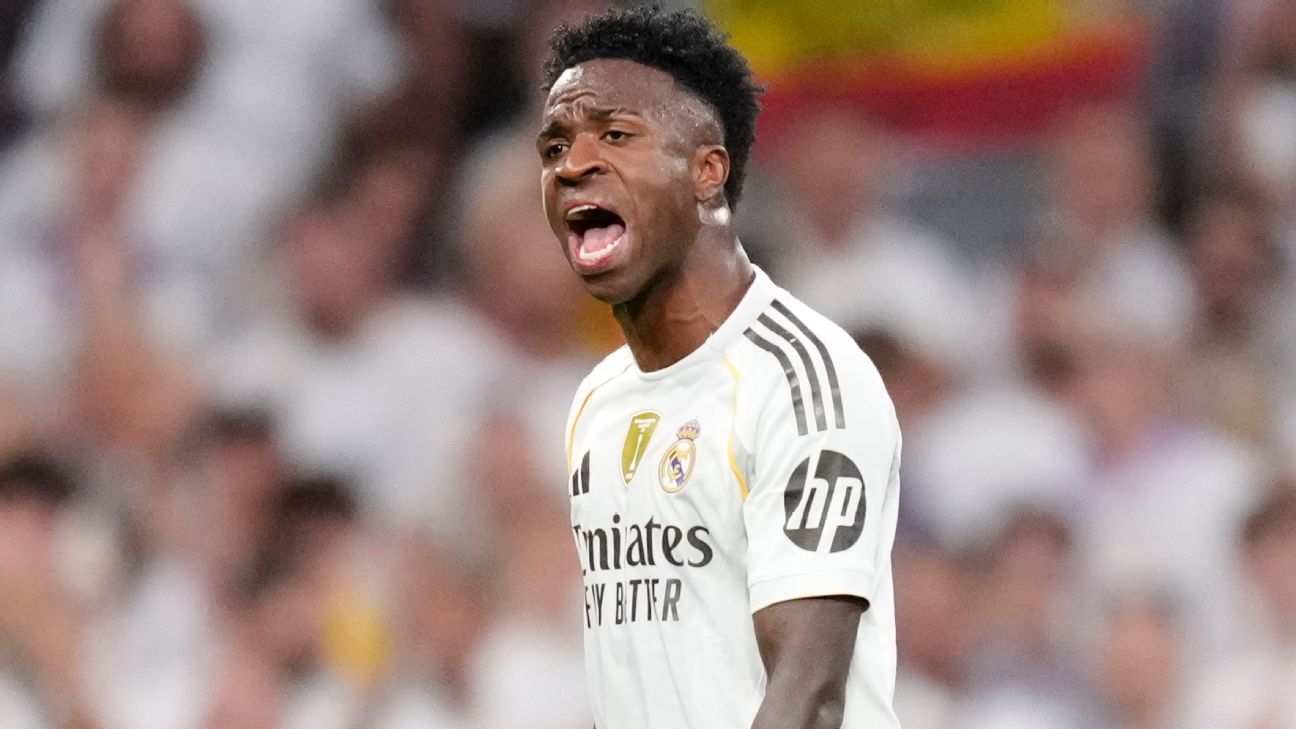
Transfer Tensions: Vinícius Júnior’s Future Uncertain

In a revelation that could shake up the domestic and international football landscape, forward Vinícius Júnior of Real Madrid is reportedly considering a move away from the illustrious club during the upcoming January transfer window. The whispers of discontent come amid mounting pressures and expectations that accompany one of Europe’s premier football institutions. Sources close to the player suggest that his current situation within the squad is less than ideal.

Vinícius has been a vital asset for Real Madrid, known for his explosive speed and remarkable dribbling skills. However, he now finds himself somewhat sidelined in terms of regular starting appearances. An unnamed club source noted, “Every player wants to feel valued. If Vinícius is not getting the playtime he deserves, it’s only natural for him to consider his options.” Such statements reflect the high stakes involved as clubs eye potential talent ahead of a competitive transfer market.

Key Highlights

  • Vinícius Júnior has made significant contributions with past seasons showcasing his prowess with 15 goals scored in the previous campaign.
  • The club’s current standing in La Liga could impact his decision. Real Madrid is in a challenging spot, placing third in the league, trailing behind rivals.
  • Speculation mounts as clubs across Europe, including teams from the Premier League and Serie A, are tracking his situation closely.

The commentary surrounding Real Madrid is intense; supporters and analysts alike are keenly observing the ramifications of this potential transfer. Renowned football commentator, Gonzalo Pérez, stated, “While transfers can be about numbers and money, they are ultimately decisions motivated by passion and ambition.” This sentiment resonates deeply in the world of sports, where every decision can alter the trajectory of a player’s career.

As January approaches, the football world will undoubtedly keep a watchful eye on the future of Vinícius Júnior. Beyond the excitement of transfer rumors, what remains clear is the unifying power of sports. Through the highs and lows, fans and players alike find common ground, showcasing the magnificent tapestry of competition, camaraderie, and hope. In this arena, every player’s journey has the potential to inspire, bridging divides and fostering a spirit of unity that transcends the scoreboard.

Source link

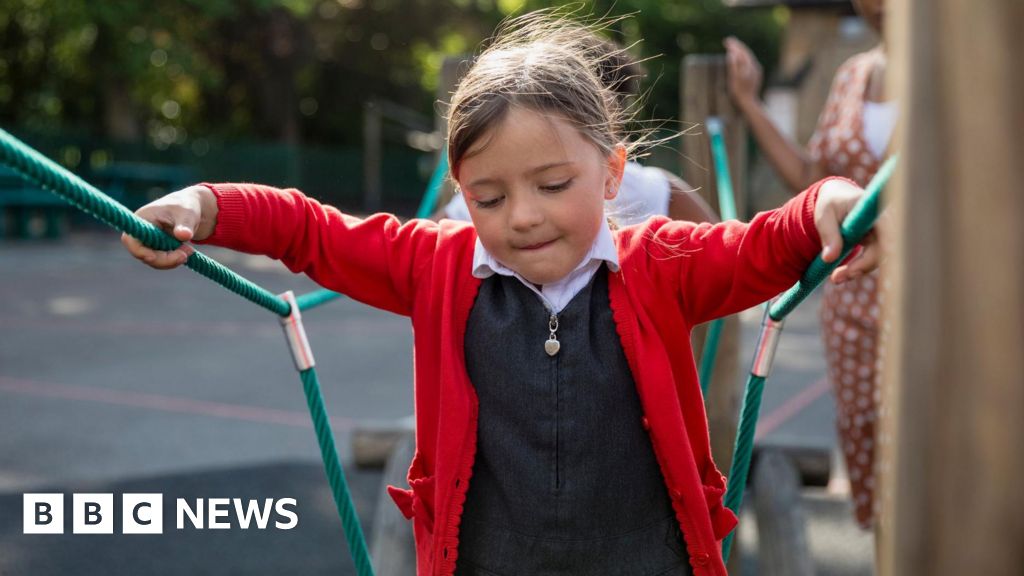
England’s reform plans delayed again—now set for 2026, fueling youth skepticism.

Society Faces Critical Crossroads in Supporting Communities with Special Educational Needs

The recent postponement of reforms to the Special Educational Needs and Disabilities (Send) system in England underscores deep-rooted social and institutional inequities that continue to afflict families and communities. Originally slated for release in the autumn, the Schools White Paper, which aimed to address pressing issues within Send provisions, has been pushed back until early next year. By delaying this vital policy overhaul, the government risks perpetuating a broken system that fails to meet the needs of vulnerable children and their families, thereby deepening societal divides.

Social commentators and historians have long argued that large-scale social shifts require systemic change rooted in active listening and genuine engagement. Yet, critics warn that the government’s decision to extend the consultation period—despite clear calls for urgent action—sends a troubling message: the needs of families with children who have Send are being sidelined. The delays compound existing frustrations among parents, educators, and advocacy groups who have described the system as “in crisis.” The National Audit Office has even declared that the Send system is “not financially sustainable” and “failing” in delivering better outcomes. As local authorities face potential deficits in the billions, this crisis underscores the urgent necessity for comprehensive reform.

Families, often caught in the crossfire of bureaucratic inertia, bear the brunt of this stagnation. According to Anna Bird, chair of the Disabled Children’s Partnership, the uncertainty surrounding Send provision leaves parents feeling overwhelmed and dismissed, with many children waiting months or years for essential support. The moral and human stakes are high: children with Send are entitled to a society that recognizes their potential, yet systemic neglect erodes that promise. Meanwhile, local authorities warn that without root-and-branch reforms, they could face insolvency, further jeopardizing services for the most vulnerable. The County Councils Network points out that inaction could lead to a £6bn deficit by next March, placing enormous pressure on already strained resources.

Opposition voices, including the Liberal Democrat spokeswoman Caroline Voaden, decry the delay as a “betrayal” that only prolongs the suffering of children and families trapped within a broken system. Meanwhile, policymakers emphasize “co-creation,” engaging stakeholders through listening sessions and ministerial meetings, in hopes of crafting more informed reforms. Yet, some suggest that this process may be too little, too late, risking further erosion of public trust and worsening disparities in support for children with Send. The ongoing battles over funding and policy direction reveal a society grappling with moral questions: how long can a nation ignore its moral imperative to protect its most vulnerable?

As society stands at this crossroads, the question remains: will it heed the call for swift, meaningful action, or allow inequity and neglect to deepen? The lingering shadows cast by delays serve as a somber reminder of society’s moral obligation to foster inclusive, equitable communities. The hope is that, despite the obstacles ahead, a renewed collective commitment will emerge—one that transforms social policy into a beacon of hope and change. Society’s true strength lies in its ability to confront its challenges with unwavering resolve, guiding future generations toward a future where every child, regardless of their needs, is embraced with dignity, support, and opportunity.

Social Media Auto Publish Powered By : XYZScripts.com