Matox News

Truth Over Trends, always!

Apple’s AI setback: Top exec departs as rivals surge ahead

Apple’s Leadership Shake-up Signals New Chapter in AI Strategy Amid Global Tech Competition

In a move that underscores the intensifying global race for dominance in artificial intelligence (AI), Apple announced the departure of its head of AI, John Giannandrea. After a seven-year tenure marked by incremental advances, Giannandrea’s exit coincides with a broader challenge facing the Silicon Valley giant: its lag behind competitors like Google and Microsoft in delivering cutting-edge generative AI features. Although Apple debuted its AI product suite, Apple Intelligence, in June 2024, industry analysts note that the company’s AI development remains significantly behind industry leaders, raising questions about its future strategic direction amid a fiercely competitive ecosystem.

Despite its long-standing reputation for innovative hardware and user-centric design, Apple appears to be playing catch-up on AI, a sector now considered pivotal for technological supremacy. The company has implemented some AI-powered features, such as real-time language translation in AirPods and a fitness app with AI-driven voice chats, yet these innovations are largely incremental rather than transformative. Notably, efforts to revamp Siri with a more personalized and robust AI interface have been repeatedly delayed, a sign that the company’s **AI ambitions** are still in development, and its previous promises have yet to materialize. During its recent developer conference, Craig Federighi, Apple’s software engineering vice president, said that “the work [on Siri] needed more time to reach our high-quality bar,” hinting at internal struggles to match the AI capabilities of rivals like Google Assistant and Amazon Alexa.

The appointment of Amar Subramanya, a veteran AI researcher with extensive experience at Microsoft and Google, signals Apple’s recognition of the need to accelerate its AI strategy. Subramanya’s background as the former head of engineering for Google’s Gemini AI Assistant and Vice President of AI at Microsoft positions him as a key figure in Apple’s quest for AI leadership. Analysts, including those from the International Institute of Technology Policy, suggest that this leadership shift represents a deliberate effort by Apple to tighten its focus on building competitive AI systems capable of competing on the global stage.

Global Geopolitical Impact: AI as the Next Warfront

In the broader context, this AI race is now viewed as the next vital battleground for global influence. China, the United States, and the European Union are investing billions into AI research, recognizing its potential to shape economies, security, and military dominance. Decisions made by corporations such as Apple inevitably ripple out, influencing national policies and international power dynamics. The United States, long considered the leader in tech innovation—with institutions like the National Institute of Standards and Technology (NIST) and private companies fiercely competing—has seen a shift in momentum with China’s rapid advancements in AI capabilities. Some analysts warn that the current delays and internal struggles at Apple reflect a broader systemic challenge: legacy tech giants are feeling pressure to innovate or fall behind in this geopolitical contest.

Furthermore, the U.S. government and European Union are increasingly calling for regulation and safeguards around AI, emphasizing the importance of maintaining technological sovereignty and ethical standards. Historically, nations that lead AI development gain unrivaled leverage in international diplomacy, military strategy, and global markets. As Apple rethinks its AI roadmap, it acts as a microcosm of the larger battle shaping the future of global influence—where decisions made today could determine the rise or fall of world powers in the coming decades.

What Lies Ahead: The Weight of History in the Making

With Apple’s strategic shift and leadership change, the unfolding narrative reflects more than corporate ambitions—it symbolizes a larger epochal shift. The coming years will reveal whether Apple can surmount internal challenges to reassert itself as a leader in AI, or if it will become a secondary player in a high-stakes global rivalry. The decisions made now by industry giants and governments will echo through history, shaping economies, societies, and international power structures for generations to come. As the drama of technological evolution unfolds on the world stage, one truth remains clear: the very definition of influence in the 21st century is being written in code, and the outcome will determine who sets the rules of the game for the world’s future.”

Sydney Sweeney Reflects on US Box Office Setback for Boxing Film: “Art Isn’t Just About the Numbers”

In an era marked by an unsettling disconnect between social aspirations and cultural expressions, the recent box office failure of Christy, a biopic about trailblazing boxer Christy Martin, underscores a broader truth about the role of culture in shaping our collective identity. Sydney Sweeney’s earnest effort to spotlight a story of survivorhood, courage, and hope resonates with a timeless human truth: culture is both memory and prophecy of humanity. Just as Ortega y Gasset emphasized the importance of the vital spirit of a people in shaping their destiny, so too does the modern cultural apparatus reflect the underlying struggles and aspirations of society. Culture, in this way, becomes more than mere entertainment; it becomes the vessel through which we understand ourselves and envision our future.

The film, despite its mixed critical reception, endeavors to echo themes deeply rooted in societal values—resilience in the face of domestic violence, the rise from humble beginnings, and the fight for recognition in a male-dominated arena. Like the Romantic movement that sought to elevate individual heroism over the mechanical monotony of industrial progress, Sweeney’s portrayal of Christy Martin symbolizes the assertion of female agency in a societal landscape often reluctant to acknowledge and nurture it. The cultural critic G.K. Chesterton famously observed that “art, like faith, must be pitched on the level of men’s highest hopes”—a reminder that true art challenges society to aspire to nobler ideals. Even if Christy struggles at the box office, its impact persists as part of a larger cultural dialogue about values and the resilience of the human spirit.

Correspondingly, the struggle of adult-oriented dramas at the box office, such as Die, My Love and Deliver Me From Nowhere, reflects a shifting cultural landscape where escapism often trumps reflection. Yet, the perseverance of these stories on festival circuits and in critical circles reminds us of Tocqueville’s warning about an enduring American bedrock: a thirst for meaning and authenticity amidst the consumer-driven pursuits of modern life. Just as T.S. Eliot wrote of the old wisdom manifesting anew in poetry and tradition, contemporary artists and storytellers serve as the custodians of cultural memory, whispering through their works what society refuses to confront openly. They affirm that culture is a continual act of forging identity amid chaos, history, and hope.

As we stand in a moment where cultural production often appears transient, fleeting, or disconnected from the core values that define us, the poetic truth remains: culture is both memory—an archive of human experience—and prophecy—a blueprint of our possible future. The stories we tell, whether triumphant or tragic, are woven into the fabric of human destiny; they hint at what we cherish and what we fear. To heed this silent song is to recognize our shared role as both creators and custodians of our cultural legacy, forging continuity from the ashes of the past and pathways toward what is yet to come. In this delicate dance of memory and prophecy, culture finds its transcendent purpose: to be the voice of our highest aspirations and the echoes of our deepest truths, long after the lights have dimmed and the curtains fall.

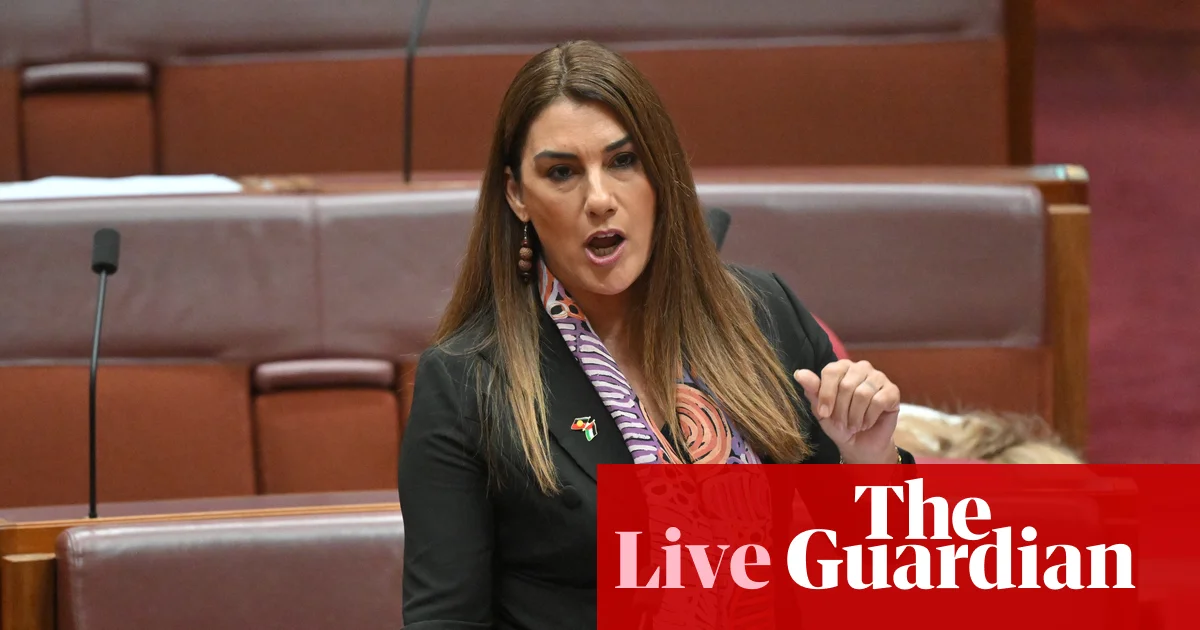
Australia News Live: Thorpe tells Albanese to move past Voice setback after Indigenous treaty clears Victorian parliament

Emerging Shifts in National Commitments and International Tensions Reshape Global Geopolitics

In a landscape steeped in rapid change, recent developments across nations reveal a profound transformation in how countries are engaging with issues of sovereignty, policy independence, and international cooperation. Australia has taken a historic step, passing its first treaty with traditional owners in a move that has sent ripples through geopolitics and Indigenous rights globally. This milestone signifies a break from past colonial frameworks and signals a potential recalibration of national identity and sovereignty. As Lidia Thorpe, a prominent Indigenous senator, asserts, this treaty marks a good start towards “real self-determination”, challenging the long-standing narrative that post-colonial states are resigned to their subordinate roles within global structures.

However, this progressive shift is not happening in isolation; it feeds into a broader contest for national sovereignty witnessed elsewhere. In Victoria, the passage of the Indigenous treaty aligns with a global increase in directly empowering indigenous and local governments—yet, critics warn that such victories could be undermined by overarching international pressures or domestic political stalls. Meanwhile, in Queensland, a tragic incident involving a young girl struck by lightning exemplifies the ongoing domestic crises rooted in local societal challenges—an inward reflection on societal resilience amid external geopolitical turbulence.

The international arena is also seeing strategic realignments. Australia and Papua New Guinea are deepening their security cooperation through new agreements designed to both enhance regional stability and counter transnational crime. These steps are emblematic of a wider surge in regional diplomacy, motivated by rising external threats from expanding powers like China and Russia. Similarly, Australia’s partnership with Papua New Guinea aims to fortify borders against illicit flows, emphasizing the importance of sovereignty while navigating the complex web of international alliances.

Within this context, debates over climate policy reflect a growing divide between economic independence and international commitments. Maria Kovacic and other members of the Liberal faction are grappling with the necessity for a feasible path toward net zero, including potential reliance on nuclear technology—a move that could alter the tectonic plates of global energy politics. Analysts warn that such policy debates are not merely domestic; they are the battlegrounds for influence over energy markets and technological dominances that will define the twenty-first century. Meanwhile, the Australian government faces accusations of opacity, with calls to improve transparency and accountability—an internal struggle that underscores tensions within the fabric of liberal democracies worldwide.

As history accelerates, we are witnessing the dismantling of old paradigms and the rise of new configurations—some peaceful, others fraught with conflict. The passage of treaties, the forging of security alliances, and the internal policy debates reflect a world that is both reshaping and being reshaped. Time will reveal whether these shifts forge a more sovereign, just, and balanced future or plunge nations into deeper crises of identity and trust, echoing the tumult of our most turbulent eras. The pages of history are turning—what will they record about this pivotal decade in global history?

Social Media Auto Publish Powered By : XYZScripts.com