Matox News

Truth Over Trends, always!

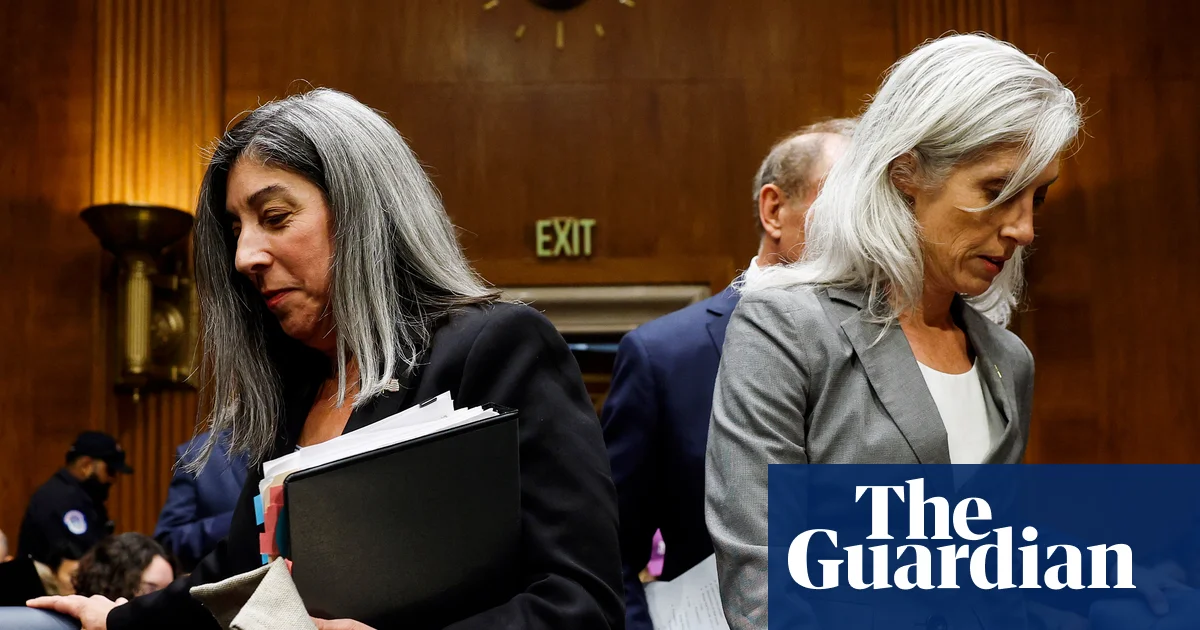
Newsom taps ex-CDC insiders to shape California’s new health defense system

California Reinvents Public Health in a Society Divided

In a decisive move emblematic of an evolving cultural shift towards scientific innovation, California’s governor Gavin Newsom has appointed two prominent former Centers for Disease Control and Prevention (CDC) officials to lead a new state initiative aimed at modernizing public health infrastructure. This initiative, known as the Public Health Network Innovation Exchange (PHNIX), seeks to bridge the divide between scientific integrity and societal trust—a challenge that resonates deeply within communities grappling with misinformation, vaccine skepticism, and the erosion of shared moral consensus. Sociologists like Richard Sennett warn that societal cohesion hinges on **trust in human institutions**, yet current social tensions threaten to fracture the fabric that holds families, education systems, and communities together.

The appointment of Dr. Susan Monarez and Dr. Debra Houry highlights California’s stance amid national debates on public health policy, particularly in the wake of conflicts with the Trump administration. Monarez, who was dismissed from her CDC leadership role less than a month into her tenure after refusing to step down, clashed with the prior administration over vaccine policy, demonstrating a broader societal tension over individual rights versus government mandates. Both Monarez and Houry voiced concerns before Congress about vaccine agendas under secretary Robert F Kennedy Jr., emphasizing the importance of *trustworthy, science-based health policies* in preserving public safety. This effort underscores a societal acknowledgment that families and communities rely on transparent leadership to navigate the moral dilemmas of modern health crises.

According to Newsom, PHNIX aims to _“bring together the best science, tools, and minds to _advance public health,”_ reinforcing the significance of **technological innovation** and **information infrastructure** in restoring societal confidence. Yet, beneath this progressive veneer lies a deeper question about how social issues like vaccine skepticism impact family health, educational stability, and community cohesion. As sociologist Charles Murray argues, societal strength depends on shared moral values that foster **trust in scientific expertise**—a principle now under scrutiny in an era marked by misinformation and cultural polarization. These social tensions threaten to destabilize the very fabric that sustains societal order, from school classrooms to neighborhood streets.

At its core, California’s bold strategic shift signals a societal effort to reclaim integrity in a fractured social landscape. As Newsom positions California as a bastion of scientific resistance against what he perceives as federal overreach, communities are placed at a crossroads—either embracing a future rooted in evidence-based policies or succumbing to the path of division and distrust. The challenge for families and youth alike is profound: how to cultivate a society where science serves as a moral anchor in a world of shifting cultural norms. As history warns us, societies that ignore this delicate balance risk unraveling their social cohesion. Yet, dreams of societal renewal also persist, nurtured by the hope that through unwavering commitment to truth and stability, communities can emerge stronger—ready to forge a future where trust is restored, and society’s moral compass is reoriented toward unity.
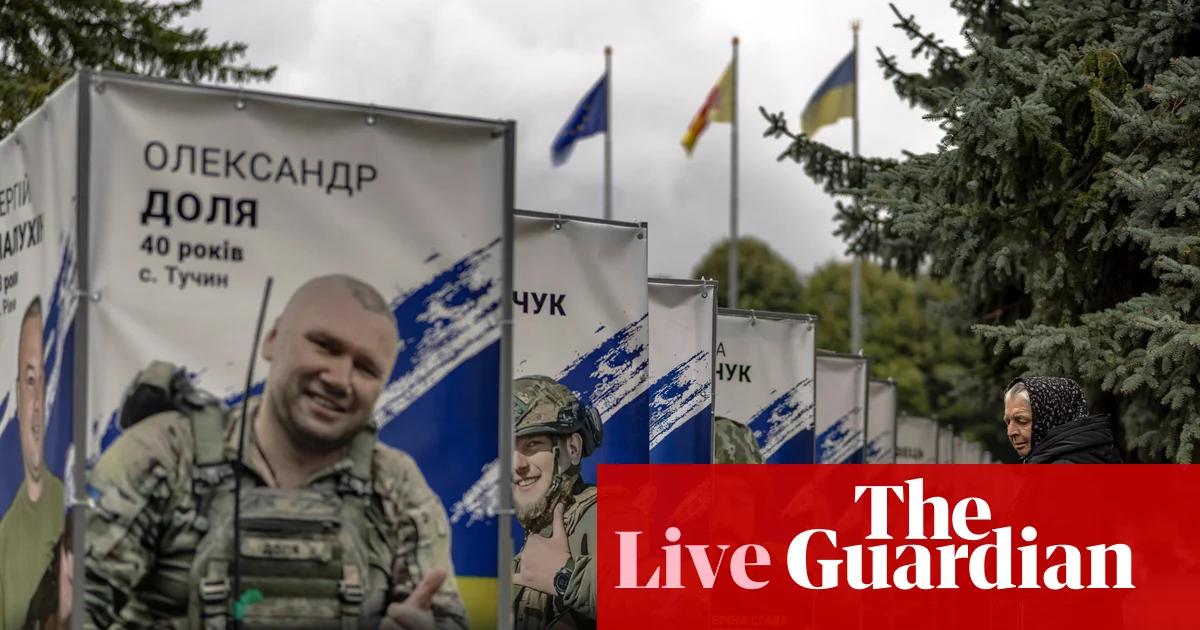
German Chancellor warns leaders: Ukraine decisions now will shape Europe's future — live updates
German Chancellor warns leaders: Ukraine decisions now will shape Europe’s future — live updates

In an era marked by escalating tensions and shifting alliances, Europe’s security landscape has been dramatically reshaped by recent developments between NATO members and Russia. The strategic move by Norway to bolster its defenses through a groundbreaking deal with the UK exemplifies the renewed focus on undersea warfare and infrastructural resilience. Norwegian Prime Minister Jonas Gahr Støre recently visited London to formalize a pact aimed at “hunting Russian submarines” and safeguarding vital undersea cables—lifelines of modern communication and energy—highlighting the mounting threat Russia poses beneath the waves. This new accord, symbolically named “Lunna House,” pays homage to covert WWII operations, but today signifies a modern response to Russia’s assertiveness in the Arctic and North Atlantic domains.

The geopolitical impact of this alliance extends beyond bilateral cooperation. It underscores a broader NATO strategy to counter Moscow’s influence, especially as Vladimir Putin describes ongoing Ukraine peace negotiations as “necessary,” yet riddled with “unacceptable” proposals. The Russian leader’s cautious endorsement of these talks reflects Moscow’s recognition of the economic and military pressures intensifying from Western allies. Meanwhile, key NATO players, particularly Germany and France, are urging unity in the face of an aggressive Russia, with German Chancellor Friedrich Merz warning that the decisions made today “will decide Europe’s future” amid fears of imperialist ambitions from the Kremlin.

Adding layers to this geopolitical chessboard, France’s Emmanuel Macron recently engaged in high-stakes diplomacy with Xi Jinping of China. During his visit to Beijing, Macron emphasized the importance of cooperation to “end the war in Ukraine” and foster economic and environmental stability. This move is part of a broader French effort to shore up its influence and secure commercial advantages in a global arena increasingly polarized by U.S.-China rivalry. Meanwhile, China, positioning itself as a “reliable partner,” seeks to navigate trade frictions with the EU while presenting an alternative global market, even amidst tensions over its subsidized electric vehicle industry. The international stage is thus set for a complex web of diplomacy, with European leaders caught in the crossfire of Russia’s eastern ambitions and China’s rising global influence, both vying for strategic dominance.

The American perspective remains sharply divided, as former President Donald Trump suggests that Moscow’s recent peace negotiations are “reasonably good,” indicating that Putin may prefer a deal under current circumstances. Yet, the uncertainty over what comes next underscores a fragile international order, with US and European policymakers unsure whether diplomacy can contain an increasingly aggressive Russia. And with the European Union embroiled in debates over the fate of frozen Russian assets—some nations, like Belgium, resisting the EU’s proposals—an internal fracture threatens to undermine collective resolve. The EU leaders are working desperately to reach consensus in the upcoming summit, aware that their decisions could have long-lasting consequences for the continent’s geopolitical future.

As the world watches these unfolding events, the shadow of history looms large. Each alliance forged, each negotiation held, echoes past conflicts and silent struggles for dominance. The relentless march of history has brought us to a precipice, where today’s choices could define generations. With Europe’s destiny hanging in the balance and the great powers maneuvering beneath the surface, one thing remains clear: the voyage through this turbulent era is far from over, and the tides of geopolitics continue to forge a new chapter—one that history will either laud or condemn.

High School Football Stars Shine Under Friday Night Lights: Playoff Picture Begins to Take Shape

Yankees’ Future Payroll in Question as Offseason Begins

As the offseason unfolds, New York Yankees owner Hal Steinbrenner is already addressing the financial landscape for the upcoming 2026 season. In a recent statement, Steinbrenner acknowledged that it is still too early to determine the exact payroll range for the team but expressed a clear preference for a reduction from the staggering $319 million committed to player salaries in 2025.

Steinbrenner’s comments reflect a strategic pivot for the franchise, which has often been labeled as relentless spenders in pursuit of championships. “We have to be responsible,” Steinbrenner pointed out, highlighting the need for a sustainable financial model that balances competitiveness with fiscal prudence. As fans and analysts ponder the implications of a reduced budget, many are turning their eyes toward potential player movements and the strategic direction of the organization.

  • Revenue Growth: The Yankees reported record revenue last season, which has fueled ongoing debates about their spending habits.
  • Strategic Signings: Expect discussion around players who may not only be impactful on the field but also financially viable.
  • Coaching Perspectives: Coaching staff, including Aaron Boone, are likely focused on maximizing player development amid potential budget constraints.

With a legacy of championships hanging in the balance, the Yankees stand at a crossroads, needing to adapt to an evolving landscape that emphasizes both talent acquisition and financial sustainability. Commentators are left to speculate not just about player signings but about how the club will prioritize its investments moving forward. As the clock ticks down to the start of the next season, the choices made during this crucial offseason will undoubtedly shape the franchise’s future.

In the grand scheme of sports, these discussions about payroll and financial strategies extend beyond mere numbers. They reflect a deep-rooted connection to community pride, unity among fans, and the resilience of a storied franchise. The upcoming months will serve as a testament to how the Yankees can transcend the scoreboard and become a symbol of hope and determination for countless fans. Indeed, while the world may keep score, it is the enduring spirit of the game that truly unifies.

Source link

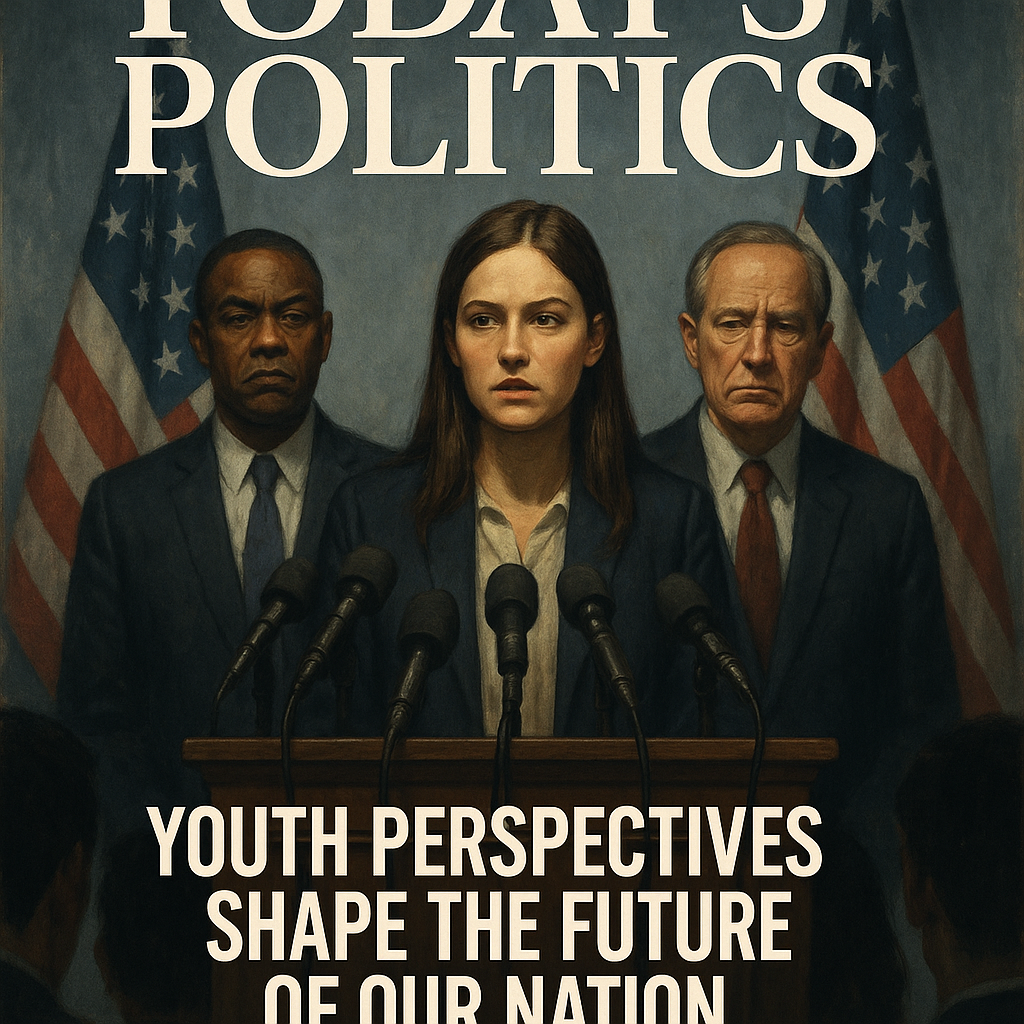
Today’s Politics: Youth Perspectives Shape the Future of Our Nation

In the current landscape of American politics, the decisive battle for the soul of the nation continues to unfold amidst mounting power struggles that determine the direction of future policy and influence. At the center of this evolving tableau is President Joe Biden, whose administration endeavors to project authority while navigating the turbulent waters of division and discontent. The confrontations between the executive branch and legislative bodies reveal much about the undercurrents shaping American governance—where policy reforms are not merely legislative acts, but battlegrounds for ideological supremacy.

The Biden administration’s push for broad reforms—ranging from economic recovery to social equity—has been marked by an ambitious agenda that echoes traditional Democratic objectives. Yet, these initiatives often encounter fierce resistance from Republican-led legislatures and conservative interest groups desperate to preserve their influence. This dynamic not only underscores the power dynamic in play, but also raises questions about who truly holds sway over the policy outcomes that will shape the lives of millions. Here, the narrative echoes the enduring philosophical debate on who determines the governance of a nation—the voters, the elites, or the institutions.

Historical parallels are instructive. Like the fierce constitutional debates during the New Deal era or the more recent battles over healthcare and executive power, today’s political climate signals a struggle over constitutional interpretation. Constitutional scholars and theorists such as **Ronald Dworkin** and **A.V. Dicey** remind us that the document—while framed in the 18th century—serves as a battleground for contemporary ideologies. The very fabric of the U.S. Constitution is being tested as executive orders clash with legislative statutes, and questions around *who* wields *ultimate authority* become increasingly contentious. When institutions clash, it becomes clear that the ruling power defines the destiny of democracy itself—placing the social contract under continuous renegotiation.

In this constant push-and-pull, the decisions of today forge the societal landscape of tomorrow. Policy shifts—be they related to immigration, economic reform, or civil liberties—are rooted in broader ideological conflicts that resist simple resolution. The stakes transcend mere legislation; they shape the identity of the nation. As political theorist **Carl Schmitt** argued, sovereignty resides in the ability to decide on the exception, and in such moments, the true supremacy of power is revealed. The question remains: who will define the narrative from this stage of history? Will it be the advocates of order or the champions of change? Ultimately, the stage is set, and history is watching—to see who will write the final chapter in this ongoing saga of power and destiny.

Social Media Auto Publish Powered By : XYZScripts.com