Matox News

Truth Over Trends, always!

Chinese Tourists Skip Japan During Lunar New Year as Tensions Rise

The ongoing diplomatic tensions between Japan and China are unraveling not just regional stability, but also deeply affecting international economic and cultural exchanges. In the context of the broader U.S.-China rivalry and Beijing’s asserted influence in the Indo-Pacific, recent developments suggest a shift that could have long-lasting consequences for global diplomacy. The sharp decline in Chinese tourists visiting Japan, especially during the crucial Lunar New Year period, exemplifies how geopolitical conflicts directly influence societal interactions and economic interests—an observable trend noted by analysts at the International Crisis Group and historians specializing in East Asian geopolitics.

Since the end of last year, Japan’s tourist numbers from China have plummeted, nearly halving compared to previous years, with an estimated 60% decrease during major holiday seasons. This downturn is closely linked to diplomatic spats over Taiwan’s security—a matter Tokyo has publicly linked to potential military support if tensions escalate. Japanese Prime Minister Sanae Takaichi’s explicit remarks about deploying self-defense forces if China attempts to invade Taiwan have elicited angry responses from Beijing, including formal protests and accusations of militarist ambitions. Such exchanges underscore the dangerous escalation in rhetoric that echoes the darker chapters of East Asian history, prompting international observers to warn of the *risks of rekindling old hostilities*.

  • China’s Foreign Minister Wang Yi’s comments at the Munich Security Conference, accusing Japan of attempting to revive militarism and warning of “self-destruction” if Japan persists, exemplify the rising tensions.
  • China’s special representative on Korean affairs, Liu Xiaoming, further fueled fears of regional conflict by referencing Japan’s WWII past and related lessons from history, suggesting the country remains haunted by its militarist legacy.
  • The historic echoes of aggression—visually reinforced by Liu’s mention of Pearl Harbor—serve as stark reminders that the currents of history are never really past, only dormant, and that future conflicts could be a mere spark away.

In economic terms, this diplomatic war is starting to leave an imprint on the global travel scene. While **South Korea** is projected to become the primary destination for Chinese tourists during this travel surge, with an estimated 250,000 travelers—1.5 times the previous year—**Japan** is seeing its share fall sharply. The decline is not isolated; regional countries like **Thailand, Singapore, Vietnam**, and even **Russia** are benefitting from the pull of China’s outbound tourism. The geopolitical impact is clear—when diplomatic relations sour, cultural exchanges and economic benefits follow suit, threatening to reshape regional dynamics and economic interdependence.

The strained geopolitical landscape reveals the harrowing choice faced by many nations: balance national security with economic engagement. Japan has officially stated that its defensive upgrades are in response to an increasingly unstable security environment—not targeted at any specific nation. Yet, the accusations from Beijing and warnings from Chinese officials about dangers in Japan highlight how intertwined security policies and societal perceptions have become. Meanwhile, the international community is watching — with analysts noting that such rhetoric risks unleashing a spiral of mutual distrust that could fuel instability across East Asia’s strategic theater.

As history continues to unfold amidst the shadows cast by ancient conflicts and modern ambitions, the weight of decisions made today will resonate through generations. The world stands at a crossroads—whether this will be a chapter of renewed diplomacy or one of inevitable confrontation remains a question that will border on history’s greatest mysteries, with each step echoing in the corridors of power long after the last words are spoken. The future of East Asia is penned in these tense exchanges, as nations grapple with their legacies and their destinies—each move a stroke on the canvas of history, the final picture yet to be revealed.

Undertone Review: A Lackluster Podcast Horror Fails to Impress — Skip It at Sundance 2026

In an era where pop culture often seems inundated with shock tactics and superficial novelty, the enduring importance of culture as the fabric of identity and tradition remains paramount. The recent release of Ian Tuason’s indie horror Undertone exemplifies this truth, not merely as a low-budget experiment but as a reflection of the ongoing cultural dialogue—one that resonates beyond the immediate scares. Though critics point to its familiar tropes—drawing from The Exorcist and Hereditary—the film underscores a deeper, almost philosophical truth: that our stories and myths, whether in horror or history, serve as echoes of our societal values, fears, and hopes.

Philosopher Ortega y Gasset famously observed that culture is both a radar and a mirror—a navigation system built from the collective memory of a civilization, guiding its future while reflecting its past. In this light, popular culture becomes a vessel for ancestral archetypes, modern anxieties, and the moral lessons embedded in our shared narratives. The horror genre, in particular, functions as an almost prophetic tool, warning us against moral failings, societal decay, or the chaos lurking just beneath the veneer of civility. Tuason’s film, with its voyeuristic podcast and spectral recordings, is less about shock for shock’s sake and more about a subconscious dialogue with centuries of folklore, superstition, and cultural fears about evil, innocence, and the unknown.

Moreover, cultural critics like G.K. Chesterton remind us that tradition is the foundation upon which modern identity is built—an innate connection to timeless stories that bind communities through shared symbols and morals. Even in its fragmented, strained narrative, Undertone subtly underscores how our response to darkness—be it in stories or in the real world—draws from this deep well of cultural inheritance. Like the great myths or the heroic epics that challenged societies throughout history, horror, as a cultural genre, becomes a mirror to societal archetypes and the moral boundaries we uphold or break. In the end, the film’s failure to fully connect these elements reminds us that culture must evolve, but not at the expense of its core.

This perspective aligns with the insights of T.S. Eliot, who argued that true cultural renewal emerges from a conscious engagement with the past—its symbols, stories, and moral frameworks—allowing tradition to inspire prophecy. As the world around us seemingly races toward sensation and superficiality, it is vital to remember that culture is the slow, deliberate weaving of memory into the fabric of society. Whether through the ancient myths that warned of hubris or contemporary narratives that grapple with the chaos of modernity, our storytelling preserves the essence of what it means to be human. These stories are not static—they are living, breathing testimonies of our collective triumphs and failures, guiding the youth and the wise alike toward future horizons.

In this ongoing dance between memory and prophecy, culture remains the enduring vessel of identity—a testament to the resilience of human tradition amidst the shifting sands of time. As we face the uncertainties of tomorrow, let us cherish the stories that have shaped us, knowing they are both the echoes of a past that informs our present and the whispers of a future yet unwritten. For in the grand symphony of human history, culture is both the memory that sustains us and the prophecy that beckons us onward—an indelible mark of what we have inherited and a beacon of what we might yet become.

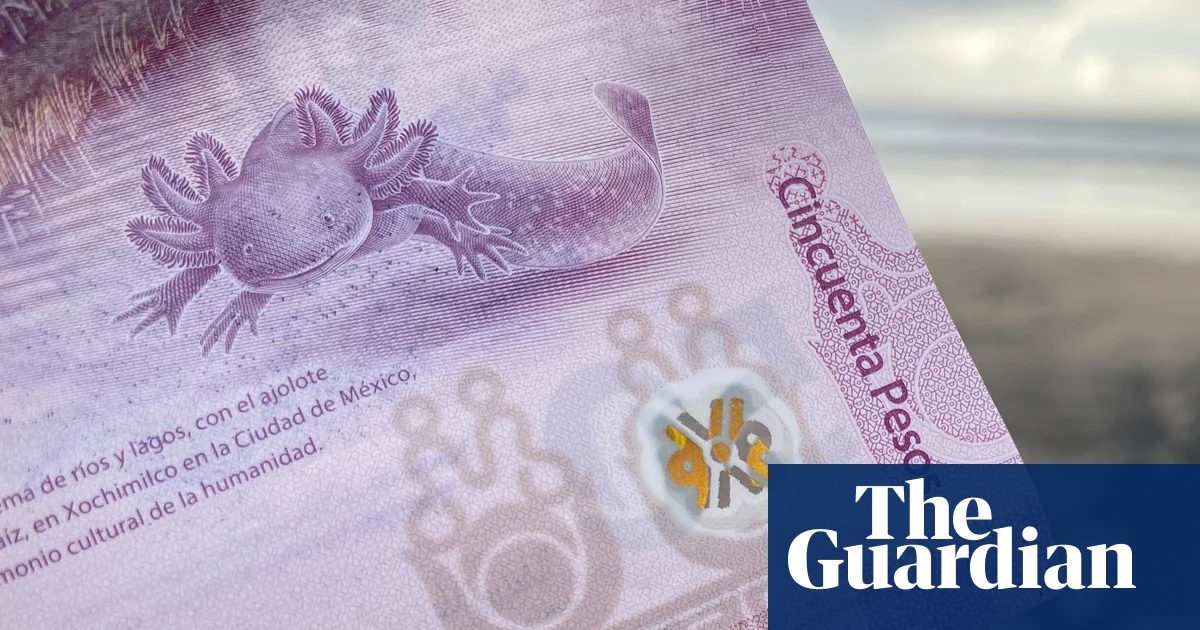
Many Mexicans skip the amphibian-themed banknote featuring axolotls they don't want to spend
Many Mexicans skip the amphibian-themed banknote featuring axolotls they don’t want to spend

The Enduring Symbol of Mexico: Gordita the Axolotl and the Fight for Nature

In a story that intertwines national identity, environmental crisis, and cultural resilience, Mexico recently spotlighted its beloved axolotl, affectionately named Gordita. Once a humble museum inhabitant, she has now become the face of Mexico’s ecological and cultural heritage, immortalized on a banknote that garnered international recognition. The depiction of Gordita as the model for the country’s iconic salamander has sparked both national pride and concern—highlighting the alarming decline of her species in the wild and raising questions about the impacts of environmental mismanagement. As the Bank of Mexico’s report shows, nearly 13 million Mexicans cling to this banknote, often valuing it far above its monetary worth, reflecting a deeper cultural connection to the species that symbolizes Mexico’s natural storytelling.

The fight to preserve the axolotl exemplifies a broader conflict that echoes across the globe: the struggle between development and conservation. Historically revered by the Aztecs—who considered the axolotl a divine creature linked to their gods—the species has now been pushed to the brink of extinction in its natural habitat. Today, fewer than 40 axolotls per square kilometer survive in Xochimilco, the last remaining natural refuge, making the species a living emblem of ecological crises faced by many Latin American countries. Historians and environmentalists warn that without urgent measures, this iconic species could soon vanish entirely from the wild, save for the controlled environments of museums and research facilities. This critical diminishing population is emblematic of how urbanization, water pollution, and habitat destruction threaten countless local species, with far-reaching consequences for Mexico’s biodiversity and cultural identity.

The cultural resonance of the axolotl extends beyond its ecological significance; it symbolizes resilience amidst adversity. As Mexican society grapples with rapid urban growth and environmental neglect, the story of Gordita reveals the importance of cultural conservation in environmental efforts. Pamela Valencia, founder of the Axolotitlán museum, underscores this connection, emphasizing that “we cannot save what we do not know exists.” The public’s attachment to Gordita on banknotes and souvenirs signifies a burgeoning awareness—yet it also highlights an urgent reality: traditional ecological knowledge and indigenous values are increasingly at risk as species like the axolotl slip toward extinction.

In an era marked by international tensions and shifting alliances, the fate of the axolotl serves as a stark reminder of the global responsibility to protect our natural heritage. The United Nations and several international environmental organizations have recognized that biodiversity loss is a crisis with geopolitical implications—an erosion of national identities and indigenous cultures. Some analysts suggest that the decline of Mexico’s native species could become a warning sign for other nations with similar biodiversity treasures under threat. The story of Gordita is more than a local concern; it underscores a critical turning point in how nations prioritize conservation, respect their natural history, and confront environmental challenges in a globalized world.

As the narrative continues to unfold, the question remains: will the world heed the cries of species like the axolotl, or will their voices be drowned out in the cacophony of development? The recent surge in hoarding and speculative trading of the banknote points to a profound emotional and cultural investment—yet the true battle lies in implementing policies that reconcile progress with preservation. The coming years will define whether Gordita and her kind will remain iconoclasts of a bygone era or symbols of a renewed commitment to environmental stewardship. The pages of history are turning—what story will be written when future generations look back on this time? Will they see a triumph of resilience or the tragic silence of extinction?

Social Media Auto Publish Powered By : XYZScripts.com