
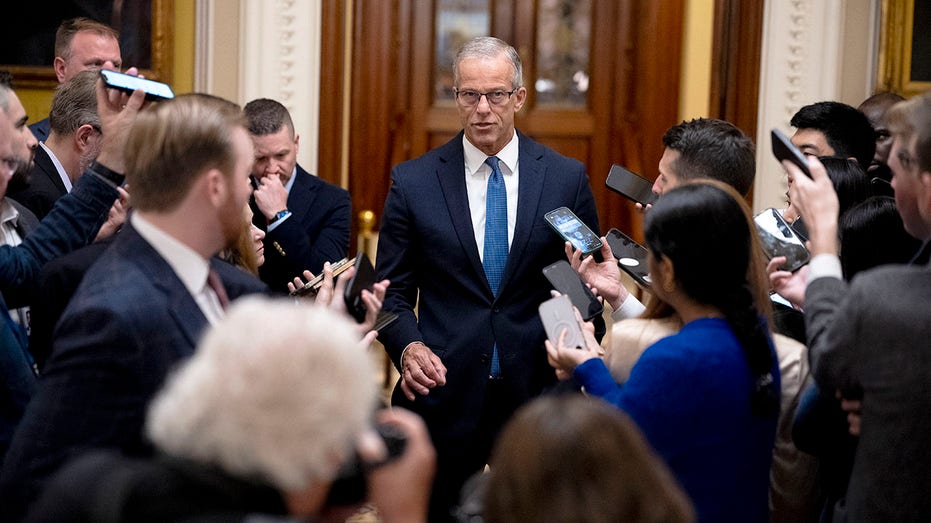

A new Department of Justice fund, intended to counter alleged “weaponization” against political opponents, faces mounting criticism from within Republican ranks for its lack of transparency and potential diversion of resources from critical agencies like ICE and Border Patrol.
Senate Republicans are openly challenging President Donald Trump’s recently announced Department of Justice fund, a nearly $1.8 billion initiative touted as an ‘anti-weaponization’ effort. Lawmakers on Capitol Hill are raising serious questions regarding the fund’s origins, its intended beneficiaries, and its potential to undermine essential government functions, including those related to border security.
Congressional Scrutiny Mounts
The controversy erupted after the Department of Justice unveiled the substantial fund, reportedly established through an agreement between the Trump administration and the Internal Revenue Service. This arrangement involved the President dropping a $10 billion lawsuit against the IRS. Following the announcement, Acting Attorney General Todd Blanche faced intense questioning from senators across the aisle.
During a Senate hearing, Democratic Senator Chris Van Hollen described the fund as an ‘outrageous, unprecedented slush fund.’ He pressed for clarity on whether individuals convicted of assaulting Capitol Hill police officers would be eligible for support. Attorney General Blanche responded that ‘Anybody in this country will be eligible to apply,’ a statement that has deepened concerns among Republicans.
Accountability and Fiscal Prudence
Several prominent Senate Republicans have voiced strong objections, highlighting the ethical and fiscal implications of the fund. Senator Thom Tillis of North Carolina expressed incredulity at the prospect of taxpayer dollars potentially compensating individuals who engaged in violence against law enforcement or even attempted to harm the President. Such scenarios, he suggested, sound ‘absurd’ and challenge fundamental principles of justice and order.
The Matox News editorial board believes that careful stewardship of taxpayer money is paramount. A fund of this magnitude, lacking clear and restrictive guidelines, risks becoming a vehicle for political patronage rather than a tool for legitimate legal defense or redress. The broad eligibility criteria raise legitimate questions about accountability and the potential for misuse.
“An ‘anti-weaponization’ fund must not become a ‘slush fund’ that rewards those who undermine law and order. Transparency and strict eligibility are non-negotiable.”
Impact on Border Security Operations
The debate over the DOJ fund unfolds amidst an ongoing push by Senate Republicans to secure multi-billion dollar funding for immigration operations, crucial for the remainder of President Trump’s term. There are concerns that resources could be diverted from these vital efforts. Another significant funding request, totaling $1 billion for security enhancements at the President’s colossal ballroom, was recently stripped out by the Senate rules referee, underscoring the broader struggle over fiscal priorities.
The potential for the ‘anti-weaponization’ fund to draw resources or attention away from the pressing needs of agencies like U.S. Immigration and Customs Enforcement (ICE) and Border Patrol is a key point of contention. Protecting our borders and ensuring national security remain top priorities for conservative lawmakers, and any initiative perceived as jeopardizing these efforts will face intense scrutiny.
As the controversy surrounding the new DOJ slush fund continues, the spotlight remains firmly on the Department of Justice and its leadership to provide greater transparency and stricter controls. The strong pushback from within the President’s own party signals a demand for fiscal responsibility and adherence to institutional integrity, particularly when dealing with substantial taxpayer allocations and the crucial work of law enforcement agencies. This ongoing debate highlights the delicate balance between political objectives and the foundational principles of governance.






