Matox News

Truth Over Trends, always!

Emergency Alerts Upgrade: Smartphones Will Sound Sirens for Major Disasters, Keeping Aussies Ready

Australia’s New Emergency Alert System: Society at a Crossroads

As Australia faces increasingly severe natural disasters influenced by *climate change*, the nation is undertaking a significant overhaul of its emergency communication infrastructure. The federal government is launching the ambitious AusAlert system, a $132 million project designed to replace the outdated state-based text messaging alerts. This technological shift aims to provide more precise, intrusive, and timely warnings that could be the difference between life and death during bushfires, floods, or other emergencies. The rollout, starting with comprehensive community trials in June and a national test scheduled for July 2026, reflects a broader societal effort to adapt to the *changing environmental landscape*, though it also raises questions about privacy, individual rights, and the impact on daily life.

Unlike traditional text alerts, AusAlert will appear directly on the home screens of smartphones within specific geographic zones, with the capability to target down to individual streets. When a high-level threat occurs, the alert will be delivered with a loud, intrusive tone that compels immediate attention. This approach underscores a societal shift towards prioritizing safety over personal convenience; however, it also prompts concerns about constant surveillance and the normalization of government intrusion in everyday life. Such measures may solidify a social fabric where communities are conditioned to accept intrusive technology as a routine part of emergency preparedness.

This initiative highlights how social issues permeate family dynamics, local communities, and educational environments. For families, especially those with young children or vulnerable members, quick access to accurate information can be lifesaving. Yet, it also introduces new challenges: the potential for false alarms, technological failures, or privacy breaches could undermine public trust. From an academic perspective, sociologists such as Timothy Mitchell have warned about the dangers of over-reliance on surveillance-based systems that, while intended for protection, may inadvertently erode societal privacy and autonomy. The implementation of AusAlert exemplifies a societal tension—balancing the need for security with the preservation of individual liberties.

  • Key facts include the system’s capability to deliver alerts for durations between 10 minutes and 24 hours, affecting an estimated 23 million smartphones, with plans for extensive testing across varied communities.
  • Opt-out options are limited to lower-priority alerts, reinforcing the government’s emphasis on proactive safety measures rather than individual choice.
  • Further concerns involve the integration of AusAlert with other personal devices such as smartwatches, cars, and home automation systems, raising questions about data collection and societal acceptance of pervasive monitoring.

Historically, societal responses to such technological interventions have been mixed. While some view these systems as essential advancements—similar to the revolutionary public health campaigns of the 20th century—others perceive them as slips towards authoritarian oversight. As social commentator Jamelle Bouie notes, the challenge lies in designing systems that respect human dignity without compromising safety. Society now stands at a crossroads, grappling with the *dual imperatives of technological progress and moral responsibility*. The hope remains that, through community engagement and transparent governance, Australia can build a society where safety does not come at the expense of freedom, and where new tools serve to *strengthen bonds rather than erode them*.

In the quiet moments of reflection, society must ask itself: Are we forging pathways toward a resilient and free community, or are we unwittingly paving the way for a surveillance state? The answer lies in collective vigilance—an unwavering belief that even amidst technological transformation, the core human values of dignity, privacy, and community must remain the ultimate guiding lights. As Australia’s society prepares to face future ecological challenges, perhaps the greatest resilience will be found not just in technology, but in the hope that society itself can transform—learning to protect and cherish its most precious bonds: families, communities, and the undying human hope for a better tomorrow.

Sony WH-CH720N: Top-tier sound that’s worth the full price—right now, an unbeatable deal for young tech fans.

Disruption in Consumer Electronics: Sony’s Budget Noise-Canceling Headphones Shift Market Dynamics

The consumer tech landscape continually evolves with innovative products that challenge established giants and redefine value. Recently, Sony has disrupted the premium headphone market segment by slashing prices on their WH-CH720N noise-canceling headphones, a move that could signal broader shifts in how value and performance are perceived in consumer audio technology. Once positioned squarely as an affordable alternative, these headphones now offer mind-blowing features—active noise cancellation, 35-hour battery life, and robust sound quality—at a fraction of previous costs.

Market analysts note that this aggressive pricing strategy exemplifies disruption at play, where established brands are forced to reevaluate their margins and value propositions. Gartner data indicates that cost-effective, feature-rich devices are increasingly favored by younger demographics, who prioritize their tech experience over traditional brand loyalty. Elon Musk’s recent ventures in AI and clean energy corpora highlight how innovation often comes from challenging the^ status quo, and Sony’s latest move echoes this philosophy within consumer electronics. The savings from $180 to under $100 on Amazon and Best Buy—thanks to offers like the one currently blowing the market away—highlight how companies are leveraging cost competitiveness to capture market share. For consumers, it’s a win; but for competitors battling to maintain margins, a warning: the era of premium pricing for feature-rich tech is under threat.

From a business perspective, Sony’s strategic price reduction will likely have industry-wide implications. Traditional audio brands that have relied on premium segmentation might need to innovate further or accept shrinking profit margins. For business leaders and startups alike, this underscores a fundamental shift: disruption no longer just comes from new entrants, but from seasoned companies pivoting boldly to redefine market norms. The trend towards accessible high-performance tech is catalyzed by consumer demand for affordable, durable, and feature-packed products. Companies that harness this trend—possibly integrating AI noise-cancellation with personalized sound profiles or extending battery life—stand to dominate in the next wave of consumer electronics.

Looking Forward: Innovation’s Role in Shaping the Future

The strategic moves by Sony exemplify how disruption fuels innovation. With giants like Apple and Samsung constantly elevating their product offerings, the pressure is mounting for all players to rethink their value propositions. Industry veterans and startups must focus on innovating beyond mere features—embedding disruption into business models that prioritize affordability without compromise. As Peter Thiel advocates, monopolize by innovating in unexpected territories; the race is on for those willing to challenge the status quo.

In the near future, expect to see more breakthroughs in adaptive sound technologies, AI-driven personalization, and integrated ecosystems. These advancements will set new standards, but only for companies that act with urgency and audacity. As markets shift, the key for stakeholders is to remain agile, continuously pushing the envelope of what’s feasible at every price point. The window to lead this transformation is now, and those who hesitate risk obsolescence in a rapidly changing tech battleground.

How Composer Marc Shaiman Brought the Heartbeat to ‘Hairspray’—A Youthful Sound of Cultural Pride

In the realm of cultural expression, musical theater stands as a testament to our societal values and collective memory. When Marc Shaiman, the distinguished composer and lyricist, sheds light on the creative process behind “Hairspray”, he offers more than just an inside look at catchy tunes; he unveils a window into the transformative power of cultural artifacts. The songbook that elevated “Hairspray” from mere entertainment to a Broadway phenomenon encapsulates the enduring human desire to reconcile the past with the present, forging identities that resonate across generations.

Such artistic endeavors exemplify how culture functions as a mirror and guide for society. As David Hume insightfully observed, “We are; therefore, we think,” emphasizing that the institutional and creative expressions of a people reveal their innermost convictions. The luminous success of “Hairspray”—a work rooted in themes of acceptance, change, and resilience—foregrounds the importance of cultural symbols in shaping societal consciousness. Like the Jazz Age of the 1920s or the Great Romantic movements, contemporary musical theater charts a course through the tumultuous waters of cultural identity, reaffirming our shared values while confronting societal contradictions.

Historically, critics such as Tocqueville pointed to the delicate balance between tradition and progress, warning that a society disconnected from its cultural roots risks losing its soul. In this regard, the arts serve as custodians of tradition, anchoring society amidst currents of change. Shaiman’s behind-the-scenes revelations remind us that beneath the veneer of modern entertainment lie stories that shape our collective personhood. When we embrace the melodies that echo our triumphs and struggles, we recognize that culture is neither static nor trivial but a vital force that informs our sense of self and our destiny.

As the philosopher G.K. Chesterton argued, “Art is the signature of man,” and in that signature resides both memory and prophecy—an enduring testament to our heritage and a foretelling of what we may become. Through the spirited harmonies of “Hairspray” and others like it, we find that culture persists as an ongoing dialogue, a living chronicle of human hopes, fears, and values. As we stand at the crossroads of tradition and innovation, let us remember that culture is both the index of our history and the compass guiding our future, a luminous thread woven into the very fabric of human existence.

Hi-Fi Vibes: How Sound System Culture is Dominating UK Art and Fashion — Peter Doig on the Beat

The Rising Cultural Power of Sound Systems in Art and Fashion

In recent years, high-end sound system culture has transcended its roots to become a defining element of contemporary art and fashion scenes. From Peter Doig’s innovative “House of Music” exhibition at the Serpentine Gallery to collaborations with iconic brands like Dior and Valentino, the integration of sophisticated audio technology is reshaping sensory experiences. Doig’s installation, which features vintage Western Electric and Bell Labs speakers alongside bespoke Klangfilm Euronor speakers acquired from Kraftwerk’s Florian Schneider, embodies this shift. His concern that visitors might question the purpose of music-enhanced art underscores a broader societal debate: is the fusion of auditory and visual culture merely a trend, or does it signal a profound cultural transformation?

This trend is aligned with a wider movement where the gallery space is no longer purely visual but becoming a listening environment. Across the UK, museums and galleries like Liverpool’s Walker Gallery and platforms such as V&A East are hosting sessions that emphasize the re-emergence of sound system culture—originally born in Jamaica in the 1950s and propelled into the UK by the Windrush generation. These sound systems are now acting as social catalysts, fostering community engagement and cultural dialogue. Sociologist Julian Henriques from Goldsmiths highlights that such initiatives are not only expanding audience reach but also challenging the traditionally male domain of sound system culture, paving the way for a more inclusive and diverse cultural landscape.

Beyond the art world, fashion houses have embraced high-fidelity audio as a symbol of modern prestige. Valentino’s flagship store in New York hosted a ten-hour listening session, while Stone Island’s collaboration with Friendly Pressure showcased the integration of sound systems into the fabric of design and retail experiences during Milan’s design week. This convergence of fashion and sound recalls Doig’s 2020 runway collaboration with Dior, where towering speaker stacks loomed over models on the runway, turning a simple walk into a sensory spectacle. As culture critic Suze Webb notes, speakers have become status symbols; “sound systems and quality hi-fi have over the last few years become cool and aspirational,” fueling a desire among the youth to embed sound into their social identities.

The Cultural Impact and Social Relevance

The increased visibility of sound system culture is not accidental but reflects a deeper social shift. More Black and Caribbean creatives are now in key roles within the global cultural economy, bringing authentic understanding and appreciation for the roots of this movement. Prof Julian Henriques emphasizes that while some of the radical roots may be fading, the widespread interest signals a positive cultural evolution. It’s about making sound a central medium of expression—reminding us that audio isn’t just background noise but a potent tool for resistance, presence, and community-building.

Influencers like Virgil Abloh, who was a DJ before transforming fashion, and emerging spaces like Devon Turnbull’s OJAS Listening Room, exemplify how deep-listening experiences are becoming mainstream. The question remains: as high-fidelity audio continues to grow in popularity, will we see a redefinition of social and cultural status centered around sound? Or will this wave of auditory innovation challenge our perceptions of art, identity, and even societal divides? In a culture obsessed with visual spectacle, one thing is clear—listening and sound are poised to become the next frontier in shaping collective identity and cultural power. The next big question might just be: how will society harness this heightened importance of sound in constructing a more unified or divided cultural future?

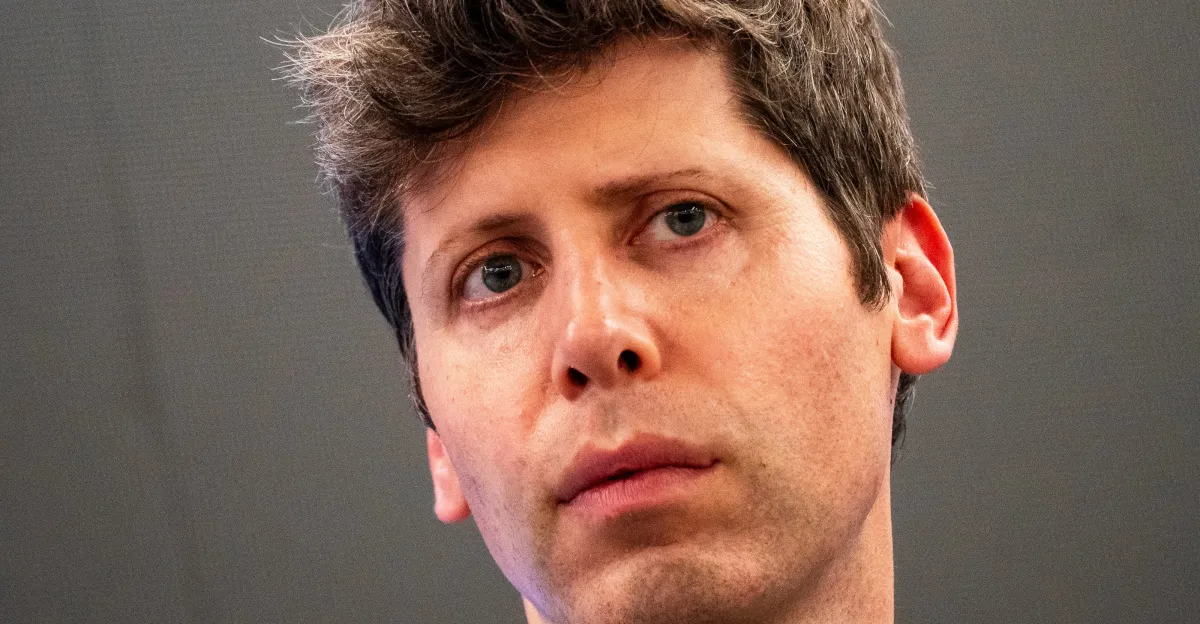
Sam Altman’s new venture aims to tap into sound waves to decode your brain signals

Tech Industry on the Brink of a Revolution: Merge Labs and the Future of Brain-Computer Interfaces

In a move that could redefine the boundary between human cognition and machine intelligence, Sam Altman, the visionary behind OpenAI, is set to unveil Merge Labs, a groundbreaking startup focused on brain-computer interfaces (BCIs). Led by biomolecular engineer Mikhail Shapiro, Merge’s strategic aims are as ambitious as they are disruptive, promising to accelerate the fusion of AI, gene therapy, and advanced neurotechnology into a unified frontier.

The core innovation driving Merge Labs is an emerging approach that sidesteps invasive electrode implantation. Instead, Shapiro’s work centers on utilizing sound waves and magnetic fields to interface with neurons through gene editing techniques. This methodology has the potential to revolutionize BCI technology by making it significantly less invasive and more scalable. As Shapiro explained during a recent presentation, “It’s easier to introduce genes into cells that modify them to respond to ultrasound,” opening new vistas for neural interfacing that could withstand regulatory and safety hurdles currently hampering traditional electrode-based systems.

Disruptive Technologies and Market Implications

This innovative strategy could turn the industry on its head, challenging entrenched players like Neuralink and advancing the race to develop safe and effective BCIs. Merge Labs’ approach aims to facilitate a seamless “brain-machine merge,” a goal that has long been a speculative dream of futurists and industry insiders alike. With plans to raise hundreds of millions of dollars from investors including OpenAI and strategic partners, the startup is positioning itself to capture a significant share of the emerging neurotech market, which analysts like Gartner project to hit $50 billion by 2030.

  • Leverages gene therapy to enable non-invasive neural modulation
  • Potential to accelerate adoption of neuro-enhancement and cognitive augmentation
  • Addresses safety and scalability issues that have hindered progress in neural interfaces

According to industry experts and MIT researchers, this leap toward bio-compatible, scalable BCIs could open countless business opportunities—not only in healthcare, but also in entertainment, education, and AI-powered cognition enhancement. Companies that can establish dominance early will have a strategic edge, especially as AI development accelerates and demands for seamless human-AI collaboration grow.

Future Outlook: A Rapidly Evolving Battlefield

While the full capabilities and commercial timelines remain under wraps, the industry already perceives this move as a significant disruption. As Sam Altman alludes, the convergence of humans and AI might become a reality as soon as 2025. With key figures like Altman and Shapiro positioning themselves at this vanguard, the question isn’t if, but when the next leap in neural technology will redefine what it means to be human.

In an era of relentless innovation, the race to integrate brain and machine will likely intensify. Investors, tech giants, and policymakers must stay vigilant, as these breakthroughs hold the power to sway societal norms and reshape industries overnight. The coming months promise a surge of breakthroughs that could fundamentally rewrite the technology landscape, making the next decade one of the most extraordinary periods in human history.

Snag the Bose QuietComfort Ultras for just $284—Save $145 for a limited time and stay ahead in style and sound!

The New Wave of Lifestyle: How Tech Deals Shape Our Cultural and Social Landscape

In a world pulsing with constant innovation, consumer technology trends continue to redefine the way younger generations connect, work, and entertain. This season, the buzz is centered around not only groundbreaking products but also a societal shift driven by massive online deals and the desire for the latest gadgets at irresistible prices. Amazon’s recent Prime Big Deal Days exemplifies this cultural phenomenon, with hundreds of deals reaching record lows and symbolizing a new form of digital lifestyle ownership that’s increasingly tied to social status and personal expression.

At the forefront of these trends are products like the Bose QuietComfort Ultra headphones. For the first time ever, the ultra-premium headphones have dipped below $300—specifically, a stunning $145 discount to just $284. The fact that this deal is available only in the Deep Plum color further highlights how brands are now cultivating a sense of exclusivity and individual style, resonating deeply with a generation eager to showcase personal identity through choice of accessories. These headphones aren’t just tools for better sound; they symbolize a societal shift toward prioritizing comfort, quality, and personalized aesthetics. As reported by influencers and tech analysts, this confluence of luxury and affordability is transforming how youth perceive their everyday tech, making it an extension of their #personalbrand and social currency.

This evolving lifestyle is underscored by a broader trend: the integration of high-tech gadgets into everyday life as social symbols. Leading sociologists argue that these tech purchases are serving a dual purpose—enhancing personal productivity while serving as a statement of modern identity in a digital age. The days of simply owning gadgets are fading; now, early adopters and trendsetters look for exclusive, stylish, and functional items that can double as conversation starters, especially amid a thriving culture of social media showcasing. As the younger demographic continues to influence market dynamics, companies like Bose are not just selling headphones—they’re selling a lifestyle rooted in tech-savviness, individualism, and social relevance.

Adding a layer of complexity, experts suggest that this consumer behavior is also reflecting a deeper societal shift toward **”digital exclusivity”** —where owning the latest tech isn’t just practical but a manifestation of social status. The review of Bose’s first-generation Ultra models highlights their comfort and battery life—the qualities favored by youngerusers. The fact that such high-end products are now more accessible than ever signals a shift in how youth engage with luxury, emphasizing entertainment, convenience, and identity expression over mere functionality. With brands tailoring limited editions and colorways to appeal to specific subcultures, we are witnessing the emergence of an entire consumer class for whom tech is not just utility but a form of cultural expression.

Yet amidst these cultural shifts, a poignant question arises: what does this evolving relationship with technology say about our future societal values? If the current trajectory suggests that possessions are becoming symbols of identity and social standing, then the next big question isn’t just about *what* we buy but how our shared consumption patterns shape societal norms. As influencers and sociologists debate whether this new tech-centric lifestyle fosters authentic self-expression or superficial status, the real puzzle remains: are we paving a future where our gadgets define us more than our actions or character? This ongoing societal experiment might redefine not only our trends but also the very fabric of social status in the digital age—nudging us toward a world where the line between lifestyle and social currency is increasingly blurred.

Social Media Auto Publish Powered By : XYZScripts.com