Matox News

Truth Over Trends, always!

Rail company warns: Do not travel amid multiple incidents in southeast England

Amidst the rolling hills and historic cityscapes of Great Britain, a critical disruption has underscored the fragile state of its national infrastructure, with direct geopolitical implications reverberating across Europe and beyond. The recent train derailment and signalling failures in south-east England, involving major operators such as Southern, Thameslink, and Gatwick Express, reveal much more than transportation glitches; they are symptomatic of deeper systemic challenges that now threaten the stability of the UK’s transport and political sovereignty. As Britain faces an ongoing process of re-nationalisation of its rail services, analysts suggest these incidents symbolize a broader struggle between market-driven deregulation and state-controlled resilience—a contest with profound transnational consequences.

Once celebrated for their efficiency, privatized rail networks in the UK are increasingly under scrutiny, with about 18% of train trips now operated directly by the government. The recent crisis, triggered by a derailment at a depot in Selhurst and a signalling fault between London Blackfriars and Norwood Junction, has led to widespread delays and cancellations across major routes, disrupting daily lives and forcing commuters to face uncertain journeys. Experts like transportation analysts argue these disruptions are a sign of the risks embedded within a privatized model that prioritizes profit over operational stability. The specter of nationalisation looms larger, with political leaders emphasizing the need to tighten control over critical infrastructure to safeguard national security and social stability.

This governmental shift, exemplified by recent moves to bring West Midlands Trains and other operators under state control, marks a decisive turn in Britain’s attempt to reassert sovereignty over its transportation arteries. Following this trajectory, the expected nationalisation of GTR in May signals a hardening stance that some see as an essential rebalancing of power—aimed at restoring reliability and sovereignty. However, critics warn that such measures must be accompanied by robust reforms to ensure the long-term resilience of Britain’s infrastructure amidst an evolving geopolitical landscape. As nations worldwide assess their dependencies on privatized systems, the UK’s experience serves as a cautionary tale that strategic control may be indispensable in the era of global uncertainties.

According to international organizations and historians tracking the decline of privatized utilities, these episodes are more than isolated events—they are indicators of a global realignment. In Europe, political leaders are reexamining the balance between liberalization and state oversight, fueled by recent crises that expose vulnerabilities within interconnected networks. The decision to re-nationalize raises fundamental questions about how societies prioritize security, economic stability, and social cohesion in a rapidly shifting geopolitical order. As London grapples with its transit failures, the message resonates outward—decision-making in transportation is ultimately a reflection of a nation’s sovereignty and the resilience of its social fabric. The unfolding saga remains a stark reminder: history is still being written, and the direction it takes will shape generations to come.

The rise of the ‘scam state’: Southeast Asia’s booming illegal industry and the new wave of cybercrime targeting youth

Unmasking the Monster: How Southeast Asia’s Scam Industry Threatens Power and Prosperity

In recent years, cryptic economic undercurrents have surged beneath the surface of southeast Asia’s vibrant landscape, revealing a dark infrastructure that is reshaping not only regional stability but also defining issues of personal security and economic freedom. The dramatic demolition of KK Park, one of the continent’s notorious “scam centres,” signifies a fragile attempt to open a window into this clandestine world—a world rooted deeply in _conflict zones_ and _lawless borders_, where opulence and impunity walk hand in hand. These hubs, often sprawling and openly visible, symbolize the extent to which corruption and illicit financial networks have become intertwined with state power, painting a narrative of *blatant impunity* that is hard to ignore.

What makes this industry particularly insidious is its *evolution* from simple phishing scams to an *industrial-scale political economy.* Experts like Jacob Sims, a Harvard fellow specializing in cybercrime, describe a shift where online fraud has transformed into a *massive illicit market*, grossing hundreds of billions annually—roughly mirroring the drug trade in scope. The industry relies heavily on _advanced technologies_ such as generative AI, deepfake video calls, mirrored websites, and *sophisticated misinformation tactics* to manipulate victims globally. Recent estimates reveal that, in 2024, cyber scams in the Mekong sub-region generate about $44 billion annually, representing 40% of the formal economy—making it not just a criminal enterprise but an *economy unto itself*. Such figures underscore a stark reality: these illicit networks are *driving regional economic shifts* and exerting *enormous influence* over policy and governance.

This rise has serious personal implications for individuals worldwide—victims entrapped in “pig-butchering” scams, where authentic relationships are cultivated online before victims are pressured into fraudulent investments, often in cryptocurrencies. The regret and financial devastation for victims are profound, with many losing *more than half of their net worth*, sometimes totaling hundreds of thousands of pounds. This *human toll* reveals how *technology* and *greed* have become tools for exploitation, fueled by scammers who harness deepfake videos and AI translation to deceive even the most cautious. From a personal health perspective, such scams foster stress, anxiety, and financial strain, reinforcing a need for better *digital literacy* and *preventive education*. To truly understand and combat this industry, awareness must extend beyond borders, involving clients worldwide and policymakers committed to rooting out these *global illicit networks*.

Despite efforts to dismantle these operations, their **publicly visible** scale and *interwoven political connections* suggest a disturbing compromise of sovereignty and law enforcement. Experts argue that visible scams are often mere *”performative”* acts—aimed at appeasing international pressure without risking the fundamental interests of powerful *criminal-elite networks*. The ongoing existence of enormous compounds, diplomatic cover-ups, and *state co-optation* signals a *systematic failure*—a reflection of a *scam industry* that has become entrenched, profiting off *conflict*, *border chaos*, and *weak governance*. This situation demands a reassessment of our *values* and *priorities*, emphasizing that the fight against such corruption must also be a personal journey—one of resilience, knowledge, and refusal to accept *an economy of exploitation*.

Reflection

As society stands at this crossroads, the path forward invites each of us to consider how our choices—whether in safeguarding our digital lives or advocating for *transparency*—connect to the broader narrative of _power, integrity,_ and _independent prosperity_. The story of Southeast Asia’s scam industry is not just about illicit money—it’s a lesson in vigilance and responsibility, urging us to embrace a lifestyle rooted in _truth_, _empowerment_, and _ethical awareness_. The challenge remains: will we continue to be passive spectators, or will we become active participants in fostering a world where *justice and integrity* hold sway? The journey of lifestyle, after all, is a reflection of our collective willingness to uphold these principles, transforming us from bystanders to builders of a resilient future.

Key Takeaways:

  • Understand the scope: The scam industry is a major economic driver in the region, comparable in size to the illicit drug market.
  • Stay vigilant: Technological advancements make scams more sophisticated—education and awareness are your best defenses.
  • Recognize the systemic issues: Many scam hubs operate with state complicity, highlighting the importance of advocacy and international pressure.
  • Personal impact matters: protection of personal wealth and mental health should be prioritized amid these evolving threats.
Flooding in Southeast Asia claims 600 lives, urgent call for action

South Asia Faces Devastating Floods and Landslides Amid Climate Unrest

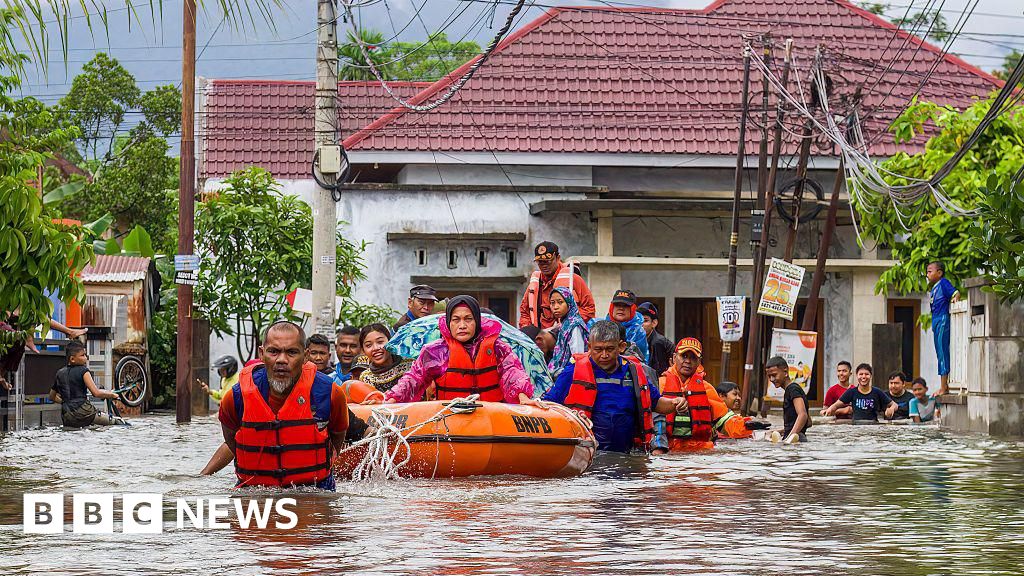
The region of southern Asia is currently confronting an unprecedented natural disaster, as torrential rains triggered by tropical storms have wrought widespread destruction across Indonesia, Thailand, Malaysia, and Sri Lanka. These devastating floods, compounded by rare cyclonic activity, have claimed the lives of approximately 600 individuals and left millions displaced, exposing the perilous intersection of climate change and geopolitical stability. As rescue operations continue amidst chaos and destruction, analysts warn that such extremes are likely to become the new norm if global actions remain delayed.

Historically, the monsoon season has been a predictable component of Southeast Asian weather patterns, yet this year’s events mark an alarming deviation. In Indonesia, the arrival of Cyclone Senyar, a once-in-a-lifetime tropical cyclone, has caused catastrophic landslides and flooding, sweeping away entire communities on the island of Sumatra. Officials report nearly 300 individuals are still missing, with some homes submerged and entire neighborhoods washed away in seconds, according to local residents and disaster agencies. Similarly, in Thailand, the city of Hat Yai faced record-breaking rainfall—over 300mm in a single day, a figure unseen in three centuries—leading to a death toll exceeding 160. Entire districts have seen infrastructure decimated, with hospitals overwhelmed and bodies needing refrigeration under emergency conditions.

Meanwhile, Sri Lanka bears the brunt of a country battered by both Cyclone Ditwah and relentless rain, with over 130 lives lost and more than 170 still missing. The government has declared a state of emergency, mobilizing emergency aid and international assistance. Climate scientists and regional analysts attribute this pattern to the interaction of Typhoon Koto in the Philippines and Cyclone Senyar in the Malacca Strait, embodying a disturbing trend of intensified and prolonged weather crises fueled by climate change. The regional climate crisis, yielding heavier than typical monsoons, underscores the geopolitical challenge: how to adapt and respond before the damage becomes irreversible. Globally, organizations such as the United Nations warn that climate-related disasters are no longer isolated incidents but a direct threat to stability and security.

Ultimately, this confluence of natural calamities is more than just a reminder of Earth’s volatile climate; it exposes how poorly prepared vulnerable nations remain to confront such upheavals. To many analysts, these incidents serve as a stark warning that the global community must act decisively to curb emissions and bolster resilience. The ongoing rescue efforts, while heroic, highlight the disparity—wealthier nations can invest in advanced infrastructure and swift aid, yet millions across South Asia continue to face the brutal impact of nature’s fury with limited resources. As the waters recede and emergency services tend to the injured and displaced, the question remains: how much longer can societies endure these relentless onslaughts before the fabric of civilization itself begins to fray? For now, the waters keep rising, and history eagerly watches to see if this crisis will inspire meaningful change or be just another chapter in a long story of neglect, leaving future generations to contend with a planet in peril.

Homemade chili paste linked to rat poisoning scare in Southeast Queensland

Arc of Danger: Homemade Chili Paste Contaminated with Rat Poison Sparks Alert in Australia

In a troubling turn of events, Queensland health authorities have identified *homemade chili paste* as the probable source behind a recent cluster of *rat poisoning* cases in south-east Queensland. The incident, which has raised alarms across local communities, underscores the hazards of unregulated food products and the potential for tragic consequences when homemade preparations are tainted with dangerous substances.

The cases, reported earlier this month, involved five individuals presenting with symptoms consistent with brodifacoum poisoning—the active ingredient in rat poison. Among these cases, three individuals admitted to consuming homemade, unlabelled chili paste, which has now tested positive for brodifacoum. Queensland Health has issued an urgent warning to the public, cautioning residents to be vigilant and to dispose of any suspected products immediately, especially those circulating within the Logan community since mid-September 2025. The decision to focus on homemade products hints at the complexities surrounding local food safety, especially in areas where informal, DIY food preparation remains prevalent.

Geopolitical Ramifications and Societal Impact

This incident extends beyond local health concerns, highlighting a broader issue of food safety in an increasingly globalized supply chain. Experts point out thattraditionally, international trade policies and stringent food safety standards serve as barriers protecting consumers from contamination—yet, in local communities, especially where homemade goods are common, these safeguards are often less effective. The geopolitical impact is palpable: nations must grapple with how to regulate informal food markets that often operate outside the bounds of formal oversight. As such, the safety of community-based food preparations becomes a fragile point in the security of international health standards.

The incident has elicited commentary from a variety of international organizations and historians specializing in public health and diplomacy. Some analysts argue that such cases compel a reevaluation of local governance and borderless threats, emphasizing the need for international cooperation in managing food safety risks. WHO and other health watchdogs have called for more robust monitoring of unregulated food products, citing that lapses in oversight could set dangerous precedents, especially as malicious actors or accidental contamination could threaten entire populations.

Historical Context and the Warning Signs

Historically, unregulated food products have played a role in major public health crises, often stemming from the clandestine use of harmful chemicals. These episodes serve as stark warnings for governments and communities to adopt more rigorous safety standards, especially as the internet and social media facilitate the unmonitored exchange of homemade recipes and food items. The current case reminds us of past outbreaks where inadequate oversight transformed simple food mishaps into national emergencies, casting long shadows over societal trust in local food traditions. As public health historians have noted, it’s often in these vulnerable moments that the fabric of community safety unravels, leading to loss of life and misplaced public confidence.

The Road Ahead: Caution and Countermeasures

While Queensland authorities maintain that the risk to the broader community remains low, their warnings serve as a stark reminder of the lingering danger posed by unregulated food products. The ongoing investigation aims to determine whether the contamination was accidental or malicious, an inquiry that could have profound implications for local food policies and community safety measures. How nations respond to these threats—through tightening regulations, public education campaigns, or even clandestine crackdown efforts—will shape the future safety landscape. The incident also highlights the challenging balance between *cultural food practices* and *public health safeguards,* a balancing act under siege in a world where the boundaries between tradition and regulation are increasingly blurred.

As history continues to unfold, the fate of this small Queensland community—and perhaps similar populations worldwide—hangs in the balance. The dangerous dance of human ingenuity and oversight confronts us yet again, reminding all that in the age of global interconnectedness, the smallest misstep can ignite a crisis of international proportions. The story is not merely about chili paste or rat poison—it is a wake-up call that echoes through the corridors of power and community alike, with the weight of history silently watching from the shadows.

Social Media Auto Publish Powered By : XYZScripts.com