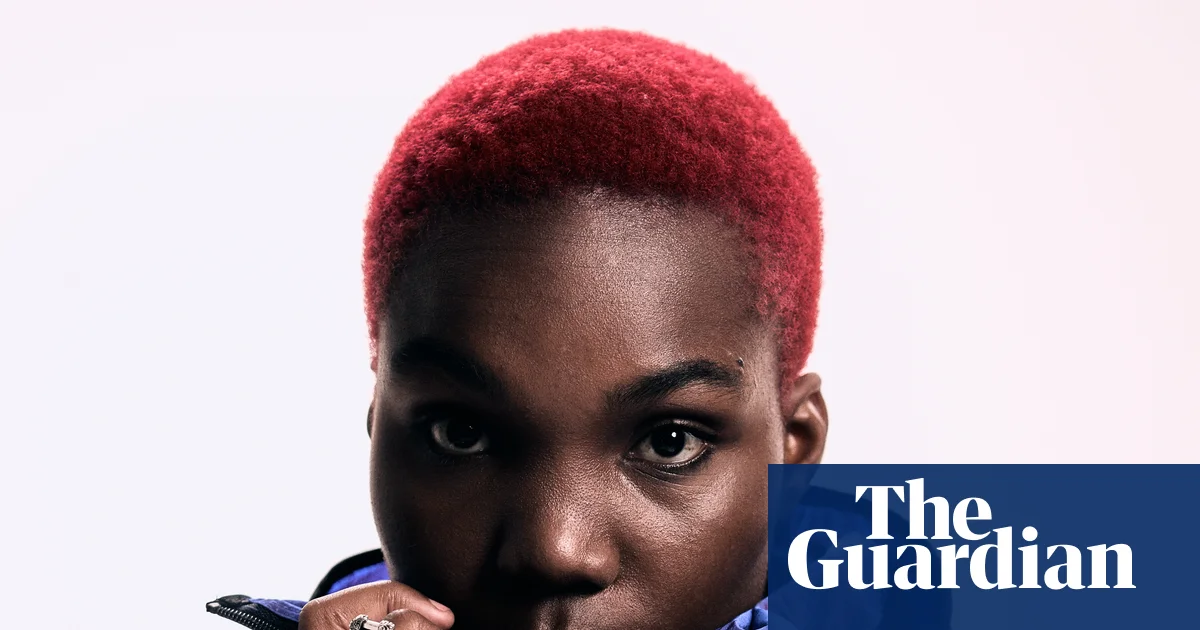

In an era where the relentless pace of modern life threatens to drown out the echoes of tradition and the deeper currents of cultural memory, Arlo Parks emerges not merely as a pop phenomenon but as a testament to the enduring power of culture as the foundation of individual and societal identity. Her journey—from an early fascination with GarageBand confessions to commanding the stage at Glastonbury—illustrates a profound truth: that beneath the surface of popular music lies a dynamic narrative about who we are, where we come from, and where we are headed. As Ortega y Gasset once noted, “Culture is not an accessory but the very substance of society”; Parks’s evolution exemplifies this, highlighting how contemporary artists continue to redefine and uphold this vital link through their works.
Throughout her career, Parks has shown an unwavering commitment to authenticity, intertwining her personal truths with a collective history of musical and cultural innovation. Her early releases, laced with references from Nick Cave to Erykah Badu, revealed a young artist unafraid of confronting the chaos of mental health struggles and romantic rejection—a mirror to the complexities of human existence. Yet, her rise is also emblematic of a broader cultural shift wherein the boundaries of societal acceptance are expanded, allowing voice to the queer community and those traditionally on the margins. Her embrace of electronic music and nightclub culture in her latest album, Ambiguous Desire, harks back to a collective quest for liberation in spaces that historically have served as sanctuaries for outsiders. Here, Parks’s work is not just entertainment but a reclaiming of cultural spaces—akin to what Tocqueville observed about America’s penchant for creating voluntary associations—as arenas where individual spirits find community, expression, and defiance against societal conformities.
Artistically, Parks embodies a necessary rebellion against superficiality, consciously distancing herself from the temptations of commercial success that often threaten to dilute genuine cultural expression. Her deliberate turn to the night-time in her latest album, capturing the euphoric surge of clubbing and rave culture, echoes Chesterton’s assertion that “art is the most beautiful of all lies,” in that it often reveals deeper truths about human longing and societal yearning. In her song Heaven, inspired by the transcendent moments of life and music, Parks taps into the eternal human pursuit: to find meaning and connection in fleeting moments. Her acknowledgment that she explores these realms not to adopt a persona but to understand herself—”who am I now?”—speaks to the philosophical inquiry that underpins genuine cultural expression: it is a mirror and a prophecy, reflecting our current realities while sketching the contours of future identities.
Ultimately, Parks’s narrative underscores a vital idea: that culture remains the living, breathing memory of our collective humanity and the prophetic voice guiding us forward. Whether through the revival of club culture or her unapologetic discussions of desire and queerness, she exemplifies an artist who recognizes that identity is both rooted in tradition and open to renewal. And as T.S. Eliot poignantly observed, “The future is always a certainty of the imagination.” In the poetic silence between her melodies and the vibrant chaos of her soundscapes lies the promise that culture, in all its forms, persists as humanity’s continuous conversation—an echo of the past and the whisper of what yet may be, shaping and being shaped by the new generations who dare to listen and create in the ever-unfolding mystery of existence.