
Italy’s Patron Saint Reappears After Decades in Sole Public Display
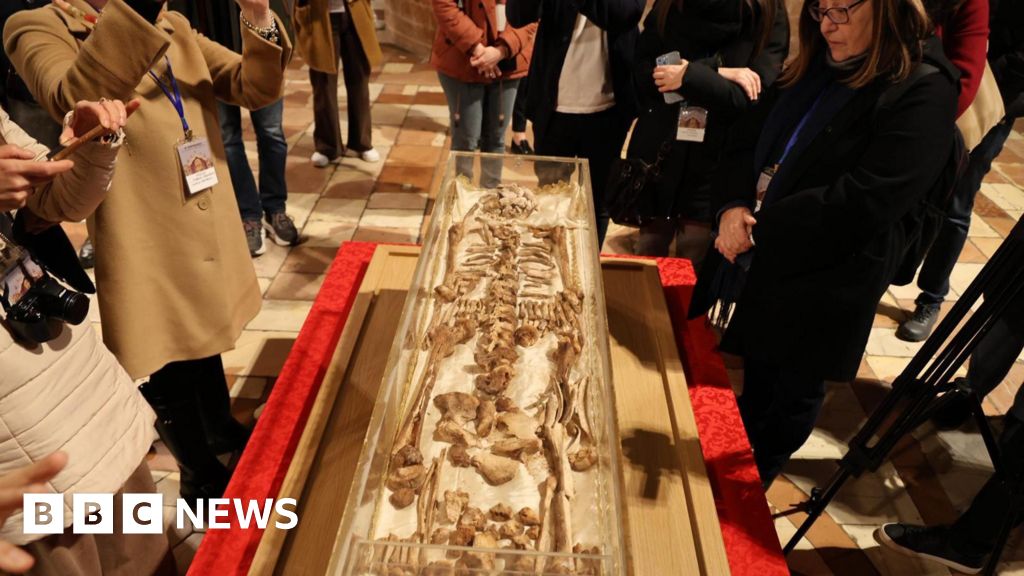
In a momentous event that has captivated the world’s attention, the remains of Italy’s patron saint were publicly displayed for only the second time in recorded history. The last occasion was in 1978, marking nearly five decades since the sacred relics last appeared for the public. This rare unveiling not only reignited religious fervor across Italy but also drew intense international scrutiny as analysts and historians contemplated the broader geopolitical implications of such a spiritual event in a world increasingly driven by political conflicts and shifting alliances.
Instituted centuries ago, the veneration of this revered relic has historically been a unifying force for the Italian people and a symbol of their enduring spiritual heritage. However, the decision to display the remains now, amidst a fragile geopolitical landscape, underscores as much a declaration of cultural resilience as a subtle assertion of national identity. The timing coincides with mounting domestic and international challenges—ranging from economic strains to regional tensions—and signals a deliberate reminder of Italy’s historical roots and sovereignty.
International organizations, such as the United Nations, and major world powers have watched keenly as this event unfolds. Scholars point out that religious symbolism, especially in Italy—a nation intertwined with the fabric of Western civilization—remains a potent tool of soft power. Some analysts suggest that this public display could serve as a strategic gesture, reaffirming Italy’s cultural independence amid rising global uncertainties. Conversely, critics argue that in an era dominated by digital communication and political upheavals, such traditional symbols may be overshadowed by more pressing geopolitical concerns.
Historians and geopolitical strategists alike have emphasized that how nations choose to preserve and memorialize their cultural and religious icons often reflects underlying shifts in power and societal cohesion. As one seasoned European diplomat noted, “Events like this are never just about faith or history—they encode deeper narratives of sovereignty, identity, and resistance against external nods to cultural erosion.” The re-emergence of Italy’s relics thus signifies more than a spiritual event; it is a living testament to a nation contemplating its place on a turbulent geopolitical stage. As history continues to be written, the world watches with bated breath, aware that moments of cultural revival can often presage significant political shifts. The symbolic relics, quiescent for needs of centuries, now carry an unspoken message: some aspects of a nation’s soul are resilient in ways that transcend borders and conflicts—reminding us that in the chaos of history’s pages, spiritual history remains an enduring, potent force.