Matox News

Truth Over Trends, always!

Reagan Ad Sparks Trade Crisis: What Blamed for U.S.-Canada Talks Breakdown?

In a dramatic turn of events that underscores the fragile fabric of international economic stability, President Donald Trump has decisively halted all trade negotiations with Canada following the release of a controversial advertisement. The ad, prominently featuring excerpts from a 1987 address to the nation by Ronald Reagan, aims to highlight the perceived dangers of tariffs and protectionist policies. However, critics argue that this move reflects a broader struggle over the future direction of global trade policies—one that could reshape the geopolitical landscape for years to come.

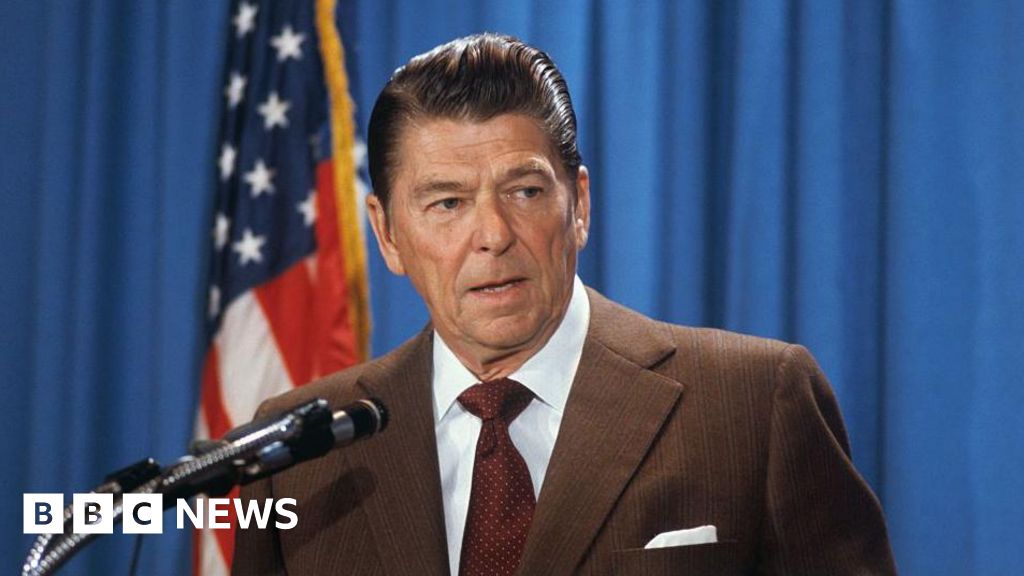
The ad, sponsored by the Canadian province of Ontario, presents transcribed snippets of Reagan’s historic speech, emphasizing his warnings about the long-term consequences of tariffs: “Over the long run, such trade barriers hurt every American, worker and consumer.” By selectively editing and rearranging these excerpts, the ad seeks to underscore Reagan’s commitment to free trade as an economic virtue—yet the controversy surrounding it has ignited fierce political debate across North America. The Ronald Reagan Foundation quickly responded, condemning the ad as a misrepresentation of Reagan’s original message, which was fundamentally rooted in the principles of free trade and economic openness. Meanwhile, Ontario announced it would cease running the ad, citing the need to resume vital trade discussions with the United States—an indication of how high-stakes the rhetoric has become in this trade war.

Esteemed analysts from the International Monetary Fund (IMF) and various economic historians have long pointed to the historic repercussions of tariffs, echoing Reagan’s warnings from decades ago. As the 1987 address makes clear, high tariffs inevitably lead to retaliation by foreign nations, triggering escalating trade wars with devastating consequences. “Markets shrink and collapse, industries shut down, and millions of jobs are lost,” Reagan warned—a stark prognosis that resonates strongly today amidst rising tensions. Many experts see President Trump’s recent actions as part of a broader trend where geopolitical instability threatens global economic cooperation, risking a repeat of the past’s economic tumult.

The geopolitical impact of this dispute extends beyond mere trade. It signals a fundamental shift in how nations approach economic sovereignty and international alliances, especially as the United States reevaluates its trade policy stance. Countries across Europe, East Asia, and beyond are watching closely, aware that the future of free trade hinges on these decisive moments. According to international relations analysts, such moves threaten to unravel decades of progress made toward economic integration and global stability. As President Biden’s administration navigates these turbulent waters, the outcome could either reinforce the post-Cold War order or push the world back toward protectionism and economic isolationism.

With history threatening to repeat itself, the unfolding narrative leaves nations and societies standing at a crossroad where every decision echoes with the weight of history. As the world watches, the question remains: will this clash of trade visions forge a new era of cooperation or plunge the globe into a protracted economic conflict? The answer may well determine the fate of prosperity in the 21st century, reminding us that in the struggle for global influence, history’s pages are still being written, with each chapter etched into the fabric of international relations—an ongoing story that demands vigilance, resolve, and perhaps a renewed commitment to free and fair trade as the cornerstones of a prosperous future.

Jamaican Citizen’s Death Sparks Urgent Calls for UK Rule Reforms in Overseas Territories

In recent weeks, a tragic incident has shone a stark light on the ongoing social and healthcare disparities within the British overseas territories. Robert Baker, a 63-year-old dual citizen of Jamaica and Montserrat, passed away after the UK government declined to assist him in accessing life-saving treatment outside of his remote island home. This heartbreaking event underscores a broader pattern of moral neglect and policy failures that jeopardize the well-being of communities living under colonial-style governance without adequate support systems.

Baker’s story is emblematic of the struggles faced by families and individuals in regions devastated by natural disasters, such as Montserrat’s 1995 volcanic eruption, which eradicated its capital and decimated essential infrastructure. Despite over 30 years passing, hospitals and emergency services on the island remain inadequately equipped, forcing residents to seek medical care abroad at great personal cost. His family’s desperate efforts and the family’s plea for equitable treatment reveal how social injustice prevents vulnerable populations from accessing healthcare equal to that of the UK mainland. For many families in these territories, the lack of proper medical infrastructure translates directly into loss of life, economic hardship, and shattered hope.

Social commentators and sociologists argue that this chain of neglect is emblematic of a broader failure to recognize the moral obligation owed to colonial subjects. Some critics equate the policies governing these territories with systemic apathy—policies that dismiss the need for adequate health services, education, and social support—for the sake of austerity and political expediency. The case of Robert Baker has also catalyzed calls from community leaders and parliamentarians like Donaldson Romeo, who describe the existing scheme as “deeply flawed” and “insufficient in relation to the scale of need”. Their stance echoes the voices of historians who argue that colonial legacies continue to shackle these populations, underlining the importance of restorative justice and policy reform.

  • Many territories, including Montserrat, lack the infrastructure to respond adequately to health crises, often leaving residents with no choice but to seek treatment abroad.
  • The current scheme allows a paltry number of patients from each territory to access NHS care annually, but the costs—travel, accommodation, and subsistence—are typically borne by families or the territories themselves, compounding hardship.
  • Advocates are calling for a fundamental overhaul of these policies to ensure equal healthcare access, dignity, and humanity to all British citizens residing in overseas territories.

As society debates questions of justice, sovereignty, and moral responsibility, the story of Montserrat’s healthcare crisis compels a profound reflection: How long can we remain indifferent to the suffering of those who live beyond the immediate reach of our societal safety nets? The future of these communities depends on an awakening—one that recognizes that social cohesion is rooted in fairness, compassion, and the unyielding pursuit of dignity for every human life. With each shared story and policy discussion, society inches closer to a landscape where no family bears the burden of neglect in silence, and where hope begins to restore the fractured promise of justice and care for all.

Starmer’s Grooming Gang Probe Sparks Chaos as Two Survivors Drop Out

The ongoing crisis surrounding Keir Starmer’s national grooming gang inquiry underscores a broader societal failure to prioritize justice for victims and to confront deeply rooted social and institutional issues. Recent revelations, including resignations from key oversight panel members such as Ellie-Ann Reynolds and Fiona Goddard, reveal a disturbing pattern of political interference and disrespect toward survivors’ voices. These developments threaten to stall an inquiry that is essential not only for uncovering truths but also for safeguarding families and communities that are victims of these heinous crimes.

In an era where social trust is fragile, and the integrity of justice institutions is often called into question, the controversy surrounding this inquiry exposes a climate of cynicism and bureaucratic opacity. Survivor advocates warn of a watering down of investigations, fearing that political interests, exemplified by local figures such as West Yorkshire’s mayor Tracy Brabin, are pushing for an expanded scope that might dilute focus and delay justice. Sociology experts argue that this approach, reminiscent of the long and painful path of the IICSA inquiry, risks once again turning a blind eye to specific victims and local realities. Consequently, communities face a heightened sense of betrayal, especially for families bearing the scars of complex social failures.

Demographic and cultural shifts continue to shape the social fabric, fueling tensions and highlighting the need for precise, community-focused investigations. Researchers such as sociologist David Brooks emphasize that while expanding the scope might appear to address larger regional issues, it also endangers targeted justice. Critics assert that efforts should be centered on proven victims and local authorities’ knowledge, rather than broad strokes that risk obscuring accountability. This debate, however, is not merely a matter of logistics but touches moral depths: how society ensures respect for victims’ dignity and accountability for systemic failures.

Embedded within these narratives are profound questions about social trust and the role of public institutions. Leaders like Gamble and Hudson face mounting scrutiny over their potential conflicts of interest, with fears that service providers may have previously concealed criminal acts or abused their authority. As social commentators remind us, history demonstrates that trust in social institutions—schools, police, social services—is vital for building resilient communities. When that trust erodes, so too does the fabric that holds societies together, leaving families isolated and vulnerable to the forces of corruption and misinformation.

  • Survivors demand genuine justice that zeroes in on localities and proven cases
  • Concerns over political interference threaten the integrity of investigations
  • Expanding inquiry scope risks delaying resolution and diluting accountability
  • Corruption and systemic failings continue to undermine public trust

Ultimately, this turbulent episode reflects a society at a crossroads—a community grappling with its past and uncertain future. The resilience of families, the integrity of our social institutions, and the recognition of victims’ rights all hinge on our collective resolve to confront uncomfortable truths. Moving forward, there lies an opportunity to forge more transparent, community-centered approaches that restore faith and foster genuine healing. Society’s greatest hope resides in its capacity to learn from its failures, to rebuild with honesty, and to ensure that every child’s voice is heard and protected. As history teaches, only through unwavering commitment to justice and accountability can society truly evolve beyond its wounds, transforming pain into a catalyst for lasting change.

Ouattara’s bid for a fourth term sparks youth-led tensions in Ivory Coast

The recent developments in Ivory Coast reveal a nation at a crossroads, where progressive infrastructure projects clash with mounting political unrest, exposing the undercurrent of underlying societal discontent. President Alassane Ouattara has long championed a narrative of growth and stability. In 2023, he proudly inaugurated a bridge named after himself in Abidjan, proclaiming it a symbol of modernity and national revival. However, beneath these achievements lies a volatile political landscape, with protests escalating and dissent brewing among the youth and opposition factions. Analysts warn that such conflicts threaten the very fabric of future stability in the country, which is already grappling with numerous socioeconomic challenges.

A Nation Divided by Politics and History

Since taking office in 2011, Ouattara has presided over rapid economic growth, built prominent infrastructure, and sought to leave behind the violent crises that once plagued the nation. Yet, his decision to run for a controversial fourth term has ignited fierce opposition, with protests turning increasingly intense. Over the past month, more than 200 protesters have been teargassed and detained, revealing a government that appears more intent on quelling dissent than addressing its root causes. Opposition leaders, including the historic figure Simone Gbagbo, have denounced the electoral process, claiming that the disqualification of candidates like Tidjane Thiam and the sidelining of figures such as Laurent Gbagbo demonstrate a descent into exclusionary politics. For many, the events echo past political upheavals—where the specter of civil conflict has loomed large—casting a shadow over recent progress.

Geopolitical Echoes and Disinformation Strategies

The internal strife within Ivory Coast is compounded by what international observers describe as a deliberate campaign of disinformation. A rising tide of fake news, often traced to pro-Russian, anti-France sources based in neighboring Burkina Faso, seeks to discredit Western influence and exacerbate divisions. As Vanessa Manessong of the African Digital Democracy Observatory notes, this information warfare aims to undermine traditional alliances, deepen suspicion, and destabilize democratic processes. Such tactics are not new; history shows how misinformation can serve as a tool of foreign actors to exploit internal vulnerabilities, especially in fragile democracies. The ongoing crisis in Mali and the chaos in eastern Burkina Faso serve as cautionary tales, illustrating how regional instability can easily spill into neighboring nations, transforming internal dissent into a broader geopolitical contest.

Decisions that Reshape Societies and the Path Forward

The choices made in Abidjan now carry profound consequences for the nation’sfuture trajectory. Domestically, economic development is undermined by rising inequality, soaring living costs, and a life expectancy that lingers at just 59 years. The government’s narrative of rural electrification and poverty reduction faces skepticism amidst reports of disenfranchised youth and widespread disillusionment. International organizations, including the United Nations, warn that suppressed dissent could ignite violence, while traditional diplomatic alliances are tested by the internal divisions and rising populist rhetoric. With over 44,000 security personnel deployed to safeguard the electoral process, and opposition factions demanding reforms, the country stands on the brink of a pivotal moment—where the actions of political leaders may either forge a resilient democracy or plunge the nation into chaos.

As the world watches, history’s pen continues to carve its narrative—its pages inscribed with the hopes and struggles of a society caught between progress and upheaval. The coming days may reveal whether Ivory Coast will forge a new path rooted in legitimacy and unity or succumb to the turbulence of unresolved grievances. The weight of history presses down, reminding us that the decisions made now are not merely about an election—they are about the very soul of a nation, and how it will be remembered in the vast story of the African continent’s unfolding story.

China’s Growth Dip Sparks Concerns Amid Rising US Trade Fight

China’s Economic Slowdown and Rising Trade Tensions: A Turning Point on the World Stage

In recent weeks, China, the world’s second-largest economy, has signaled a noteworthy deceleration in its economic growth, with official figures revealing a 4.8% expansion in the third quarter of 2025—its slowest pace in a year. This downturn, while manageable within China’s broader economic ambitions, carries profound implications for the global order, especially given the recent escalation of trade conflicts with the United States. Over the past months, Beijing has tightened restrictions on exports of rare earth minerals, crucial to advanced technologies across the globe. Analysts warn this move could sharpen the already fragile trade truce with Washington, potentially spiraling into a new era of economic confrontation.

Despite official claims of resilience, China’s economic trajectory is now increasingly shaped by geopolitical forces. The country’s leadership, amid a pivotal summit this week, aims to chart a course for its economic blueprint between 2026 and 2030. The recent data, showing a slowdown from a 5.2% growth in July, underscores the mounting pressures from both internal challenges and external conflicts. Beijing’s government attributes ongoing growth to the vitality of its technology sector and business services—sectors that are vital to China’s ambitions of technological self-sufficiency—and it remains committed to a targeted annual growth rate of around 5%. However, as US President Donald Trump swiftly reacts to the export restrictions with threats of additional tariffs, the specter of a renewed trade war looms large, threatening to ripple across global markets.

Trade tensions are now central to the unfolding geopolitical narrative. Before the recent restrictions, Chinese businesses benefitted from a brief easing of tensions, with exports to the US rising 8.4% in September. Yet, the re-imposition of export controls, combined with potential tariff hikes, risks disrupting this fragile recovery. Meanwhile, US Treasury Secretary Scott Bessent indicated ongoing efforts to ease tensions through diplomatic engagements in Malaysia, seeking to foster dialogue between Xi Jinping and Donald Trump. The margins of compromise remain narrow as international observers, including esteemed historians and economic analysts, debate whether these moves signal mere tactical adjustments or the prelude to a sustained confrontation that could redefine the geopolitical landscape.

Meanwhile, China’s industrial output and service sector continue to perform strongly—growing 6.5% last month, driven by advancements in 3D-printing, robotics, and electric vehicles. These sectors exemplify China’s strategic pursuit of technological innovation amidst external pressures. Yet, the longer-term implications remain uncertain. Historians warn that a frayed trade fabric and rising nationalism could lead to a decoupling—a splintering of the global economic order that would leave many nations reassessing alliances and strategic dependencies. As policymakers and international institutions watch, the world teeters on the brink of a new geopolitical era—one that could favor a multipolar order or plunge into a prolonged conflict that reshapes the fabric of international society. The unfolding story of China’s economic voyage is far from over; in fact, it appears to be entering a new chapter, where every decision carries the weight of history, shaping the destiny of nations and societies in ways yet to be fully understood.

Fire on the horizon: Debris sparks concerns near WA mining hub

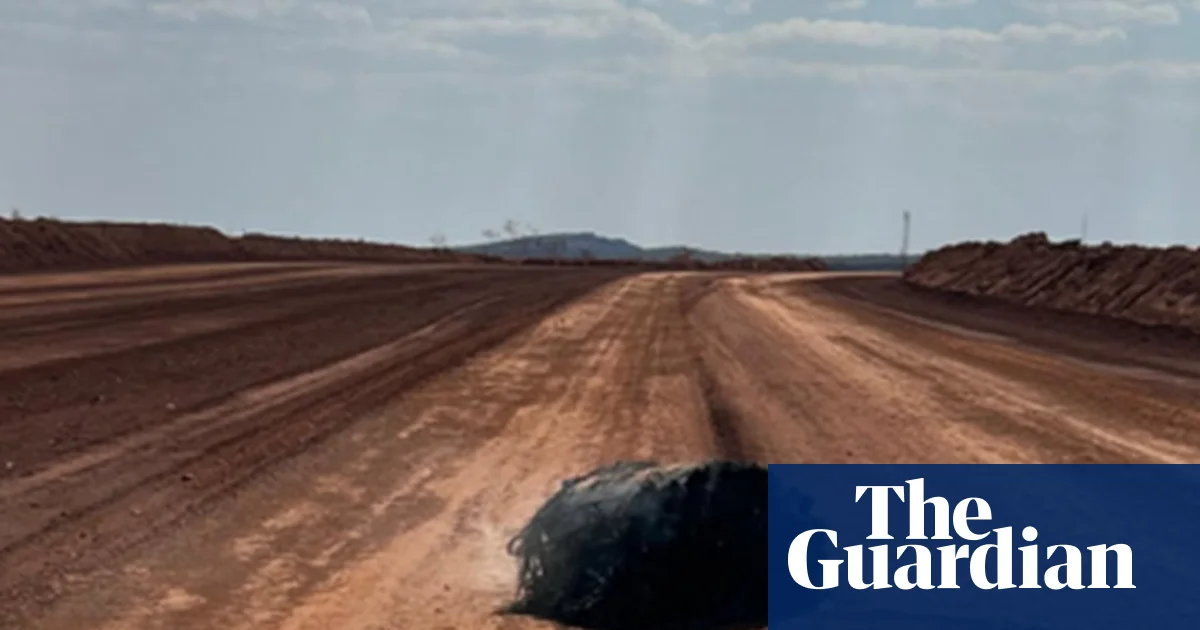
The mysterious discovery of suspected space debris in the remote outback of Australia has ignited international concerns about the increasing presence of “space junk” re-entering Earth’s atmosphere. As mine workers in Western Australia uncovered burning fragments near the town of Newman on Saturday, authorities swiftly responded, underlining the expanding complexity of managing space activities amidst the risk posed to global safety and sovereignty. The incident, while seemingly isolated, exemplifies the dangerous consequences of humanity’s prolific space exploration and satellite deployment, which continue to accelerate amidst a global race for technological dominance.

Initial analyses by police indicated that the debris was composed of carbon fibre, resembling aerospace components such as a composite-overwrapped pressure vessel or a rocket tank—a clear sign that this fragment originated beyond our atmosphere. The Australian Space Agency has been brought into the investigation, alongside other agencies like the WA Department of Fire and Emergency Services, reflecting a collaborative effort to determine the origin of this object. This incident falls within a broader narrative acknowledged by global space agencies and analysts: the mounting perils of space debris, which can threaten both terrestrial infrastructure and celestial navigation. As scientists warn about the increasing density of space junk, nations worldwide are grappling with how to regulate and mitigate this emerging hazard that could, if left unchecked, spark a new realm of geopolitical friction.

The re-entry of unidentified space debris isn’t just a technical issue—it’s a threatening reminder of the competitive, often reckless expansion of space capabilities. Experts fear that space debris could become a catalyst for international conflict, especially as key space powers like China, Russia, and the United States intensify their pursuits of commercial and military applications in orbit. The proliferation of satellites, especially under the banner of private sector ambitions like Starlink and other mega-constellations, complicates the efforts by global institutions to create effective space traffic management norms. Historian and space policy analyst Dr. Francesca Liu emphasizes that, “The unchecked growth of debris not only threatens future space missions but potentially destabilizes international relations, as nations may see this as a form of asymmetric warfare.”

Furthermore, the incident underscores a devastating irony—what goes up in space may very well come back down with unpredictable, potentially catastrophic consequences. The phrase “space junk” masks the seriousness of that debris. The risks associated with “re-entry” include the potential for harm to populated zones and critical infrastructures, calling for urgent international standards and treaties. Though currently the responsibility for tracking and mitigation largely falls to national agencies, there’s increasing pressure for global oversight, especially as nations race to secure strategic dominance both on Earth and in orbit. Critics argue that without robust treaties modeled after existing arms control agreements, the accumulation of space debris could turn Earth’s low orbit into a dangerous minefield, leading to what some analysts describe as an inevitable “space environment catastrophe”—a century-scale period of increasing orbital hazards.

As history witnesses humanity’s trail into the cosmos, a new chapter unfolds—one cloaked in geopolitical tension and unanticipated upheaval. The discovery in Australia serves as a stark warning of the tangible ramifications of neglecting space’s geopolitical implications. As international organizations labor to develop comprehensive frameworks, the choice remains to either tame this burgeoning threat or face the chaos that could ensue. In a world where the boundaries of sovereignty are no longer confined to terrestrial borders, the true battleground now extends beyond, into the void itself. What this incident signifies, ultimately, is that the stakes of space exploration are no longer theoretical—they are immediate, pressing, and potentially cataclysmic. The weight of history is on us, and the decisions made today will echo through time, shaping the future of humanity’s reach into the universe.

Fashion Shift Alert: Less Plus-Size Presence at Runway Shows Sparks Conversations Among Young Trendsetters

In recent years, the fashion industry was beginning to show signs of embracing true inclusivity. Runways were dominated by models of varied sizes, and campaigns spotlighted body diversity as a message of progress. However, new reports reveal a disturbing regression toward a predominantly thin ideal. According to a recent Vogue Business analysis, a staggering 97.1% of the 9,038 looks across 198 womenswear shows featured models measuring between US size 0-4 — hardly a sign of genuine size diversity. This trend underscores a broader societal push back, with catwalks and advertising reinforcing a narrow beauty standard that many critics argue is both unfair and unhealthy.

Among industry insiders, alarm bells are ringing. Elektra Kotsoni, Deputy Editorial Director of Vogue Business, describes the current situation as “horrible,” highlighting that in Milan alone, only 4 of 55 brands showcased models outside the straight-size range — the lowest proportion since such data collection began. This resurgence of skinny-shaming, bolstered by the widespread use of weight-loss drugs like Ozempic, signals a societal shift fueled by consumer obsession with thinness. Celebrity endorsements and a rising trend among influencers promoting extreme weight management reveal how the #bodypositivity movement is increasingly sidelined in favor of commercialized perfection. Such drugs, originally designed for diabetes treatment, are now contributing to shortages and a parallel online market that encourages rapid, often unhealthy, weight loss.

Yet, despite the industry’s flirtation with inclusion just a few years ago, the trend is veering sharply in the opposite direction. The decline of plus-size visibility on the runway is lamented by models like Felicity Hayward, who describes the previous era (2011-2017) as a “golden age” of representation. Today, plus-size models are reportedly losing ground, with some resorting to weight loss to stay relevant in a market that is increasingly favoring the ultra-thin. Designer Rick Owens exemplifies this shift; after showcasing a handful of plus-size models last season, he has now entirely excluded them. Such decisions threaten to reduce fashion to a mere product of societal standards—an unsettling placeholder for a culture that once prided itself on progress and diversity.

While this reversion to conventional standards might appear to be a superficial industry trend, it bears profound social implications. Brands are removing dedicated plus-size sections and shrinking their ranges, effectively making inclusion inaccessible outside online platforms. Meanwhile, critics like sociologist Susie Orbach argue that these developments reflect the commodification of bodies—a societal shift where physical appearance is increasingly dictated by market forces rather than individual authenticity. The unsettling reality is that the fashion world, and by extension society, may soon face a pivotal question: are we returning to a narrow definition of beauty because it’s easier to sell, or because society is truly more comfortable with it? As influencers and sociologists continue to debate, the next big question might be whether this push toward superficial uniformity is masking deeper societal anxieties about identity, health, and progress itself.

Mamdani, Cuomo, and Sliwa Clash on Housing Sparks, City Noise Battles, and Trump Talk

As urban landscapes continue to evolve, so do the *lifestyle shifts* influencing generations across the globe—particularly the younger demographics craving a blend of health, vitality, and cultural engagement. In the heart of New York City, debates may rage over politics and policy, but beneath the surface lies an unstoppable tide of \_wellness\_ and self-empowerment sweeping through the streets and neighborhoods. This movement is not just about fitness; it’s a holistic approach that encapsulates mental clarity, dynamic community intersections, and innovative ways to integrate personal health with urban living.

Today’s youthful urban explorer isn’t just looking for the *next trendy cafe* or *Instagrammable spot*—they are prioritizing **wellness** as a lifestyle core. From \_mindfulness retreats_ in \_Little Italy_ to \_burnout-busting_ fitness classes in \_Williamsburg_, the focus on *living intentionally* has become a cultural phenomenon. Wellness experts like Dr. Mark Hyman emphasize the importance of **mind-body harmony**, while holistic practices such as meditation, clean eating, and *urban outdoor activities* are now mainstream. These shifts are fundamentally transforming how young people see their environment: not just as a backdrop for socializing, but as an active partner in their quest for vitality and purpose.

Moreover, this _vitality movement_ isn’t limited to personal health—it extends to community resilience and cultural awareness. Youth-driven initiatives frequently aim to bridge social divides through _community gardens_, _local markets_, and _group fitness events_. A compelling aspect is the emphasis on \_accessible self-care\_; making fresh, organic produce available in underserved neighborhoods, advocating for **affordable** fitness programs, and fostering a culture of **empowerment** and _self-actualization_. Influential voices like author and wellness advocate Deepak Chopra underscore that true wellness is rooted in _self-awareness_ and _connection_—a message resonating strongly with younger city dwellers eager to redefine the urban experience as \_more than just hustle and grind\_.

  • Explore local outdoor spaces for **mindful walks** and **journaling sessions**—cities like New York offer lush parks and hidden gardens promising mental clarity.
  • Participate in **community-led health initiatives**—farmers markets, urban farms, or free fitness classes—making wellness an inclusive pursuit.
  • Adopt **holistic routines**—integrate meditation, nutritious eating, and tech-free zones into daily life to combat digital burnout and stress.

Ultimately, this _wellness revolution_ is about more than fleeting trends—it’s about embracing **lifestyle ownership** that fuels _resilience_ and _inspiration_. For young people stepping into the bustling world of **urban life**, the pursuit of **health, vitality, and community** becomes a conscious act of self-empowerment, transforming everyday environments into personal sanctuaries. As they navigate the twists and turns of this modern era, they discover that _lifestyle_ isn’t just a static choice, but a continuous journey—one that reflects the resilience of youth, the depth of cultural narratives, and the enduring human spirit eager to thrive amidst the concrete jungle. In this dance of progress and tradition, every step forward becomes a testament to the belief that a healthier, connected, and purpose-driven life is within reach when we choose to embrace it.

Ofcom rules broken? BBC Gaza doc sparks controversy among young conservatives

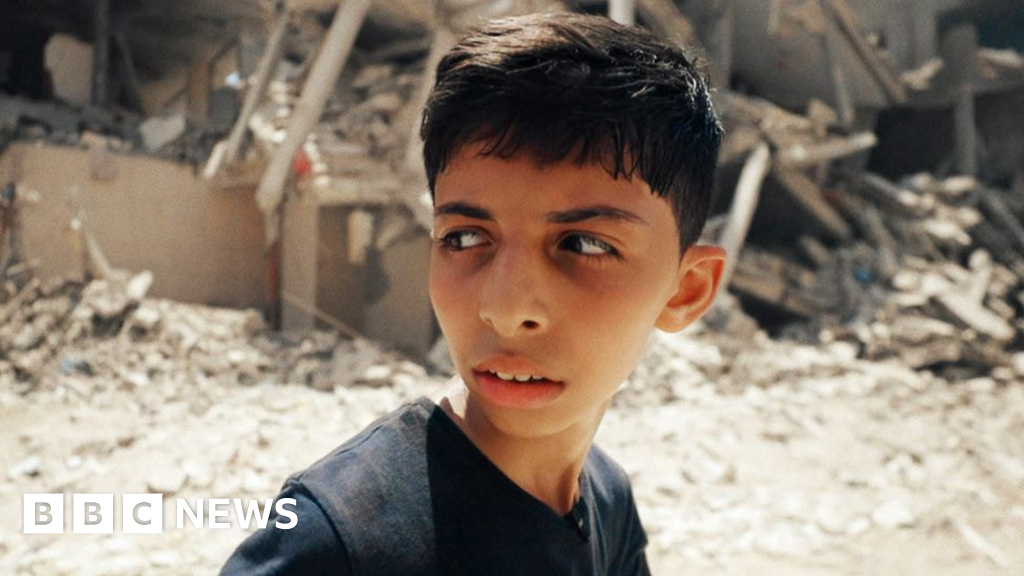
In the age of information, the struggle for truth often appears as a battleground not only of facts but also of moral authority and cultural integrity. The recent controversy surrounding the BBC’s documentary about Gaza underscores this profound reality. The revelation that the narrator was the son of a Hamas official—though ultimately uncovered after the program’s broadcast—fundamentally questions the responsibility of media to uphold transparency. As UK media regulator Ofcom declared, the broadcaster committed a “serious breach” by withholding this critical detail, a lapse that misled viewers. Herein lies a potent reminder that culture is inseparable from identity, tradition, and societal self-awareness. It acts as the repository of collective memory—our shared stories—and the prophecy of future pursuits.

Historically, the peril of concealment in the guise of neutrality is nothing new. As Tocqueville observed, democracy depends as much on the moral fabric of its institutions as on the formal structures of governance. Similarly, philosopher G.K. Chesterton championed the notion that society’s health hinges on a rooted understanding of tradition—values that provide stability amidst chaos. The failure of a reputable institution like the BBC to disclose a vital piece of information touches at the heart of this cultural fabric. It reveals how modern institutions, often caught in the currents of political correctness or ideological bias, risk reducing the complexity of truth to mere superficial narratives. This erosion of transparency and honesty feeds a cultural climate where relativity threatens the foundation of societal trust.

In reflecting on this, the words of T.S. Eliot resonate strongly: “The past is never dead; it’s not even past.” Culture is our memory—an ongoing dialogue between history and the present—and it conditions how we interpret and engage with our moral and national identities. The controversy surrounding the documentary can be viewed as a modern parable, warning of our collective tendency to obscure inconvenient truths under the guise of objective journalism. But truth remains the cornerstone of cultural integrity, which in turn sustains the moral fiber of society. Without it, we risk unraveling the sacred threads that connect us to our ancestors and our future.

The battle for authentic culture and truthful expression is ongoing, a song sung through the ages, echoing the voices of societal guardians and philosophers. It calls upon us to recognize that culture is not merely the ornamentation of society, but its very essence—a living memory and a prophetic voice. As the shadows of deception stretch across the landscape of modern media, it is our duty to uphold the integrity of that voice, for only then can we forge a future that remains grounded in the enduring truths of our human story. In this pursuit, may we never forget that culture is both the mirror of who we are and the torch guiding who we aspire to become.

F5 Hack Sparks Urgent Alert: Thousands of Networks at Risk

Nation-State Hackers Exploit F5 Software in Major Cybersecurity Breach

In an alarming development for both government agencies and Fortune 500 corporations, F5 Networks, a leading provider of networking and cybersecurity solutions headquartered in Seattle, has disclosed a significant breach indicating an advanced persistent threat (APT) campaign. According to federal government officials, hundreds of networks remain vulnerable to breaches by nation-state hacking groups. This incident underscores the growing threat landscape targeting critical infrastructure and enterprise systems, with potential disruptive implications for global digital ecosystems.

F5’s breach reveals an unprecedented level of threat sophistication, with hackers working for an undisclosed nation-state maintaining long-term access within the company’s internal network. The group had surreptitiously infiltrated the infrastructure overseeing updates for F5’s flagship product, BIG-IP, which is used by 48 of the world’s top 50 corporations for load balancing, security, and data management. The hackers exploited this position, downloading proprietary source code, including vulnerabilities that had yet to be publicly patched. This revelation signals a fundamental disruption in the traditional cybersecurity paradigm, as adversaries gain access to the very building blocks of network security—potentially enabling supply-chain attacks of a scale previously deemed unlikely.

The implications extend beyond F5’s immediate client base. By obtaining configuration details and source code, threat actors now wield a level of control and insight capable of orchestrating exploitative supply-chain compromises. Such breaches could enable the suppression or manipulation of traffic, data exfiltration, or even deployment of malicious firmware—posing grave concerns for critical infrastructure, financial institutions, and government networks. Security analysts highlight this as a stark warning: the vulnerabilities at the network’s edge—particularly those tied to sophisticated management systems—are high-value targets that can destabilize entire industries. As Peter Thiel and Elon Musk have long emphasized, technological dominance hinges on securing these crucial nodes before adversaries can establish footholds.

In the aftermath, F5 has responded by rolling out critical updates for its affected products, including BIG-IP, F5OS, BIG-IQ, and APM. Despite the company’s assurances of thorough investigations—coordinated with firms like IOActive and NCC Group—no evidence surfaced of data exfiltration or modifications to the system’s source code. Nevertheless, this incident has highlighted a pressing need for organizations to rethink cybersecurity strategies centered around disruption-resistant architectures and zero-trust frameworks. The breach’s strategic implications reinforce that disruption is no longer a future concern but an immediate reality; the next frontier of cybersecurity must prioritize resilience and rapid detection.

Looking to the future, industry analysts and security firms concur that we are standing on the brink of a new era. Major corporations and government agencies alike must accelerate efforts to adopt innovative safeguards, including real-time threat intelligence, AI-powered anomaly detection, and proactive threat hunting. As experts from MIT and Gartner warn, the cyberarms race is intensifying, and falling behind now will have catastrophic consequences. This breach serves as a stark reminder: the battle for digital dominance is being waged at the very core of our most vital networks. In this landscape of relentless disruption, rapid adaptation is the only way to defend the future of our interconnected world.

Social Media Auto Publish Powered By : XYZScripts.com