Matox News

Truth Over Trends, always!

Bose Revives ‘Lifestyle’ Brand with Fresh Home Speakers—Redefining Modern Sound

Bose’s ‘Lifestyle Collection’ Signals Disruption in the Home Audio Market

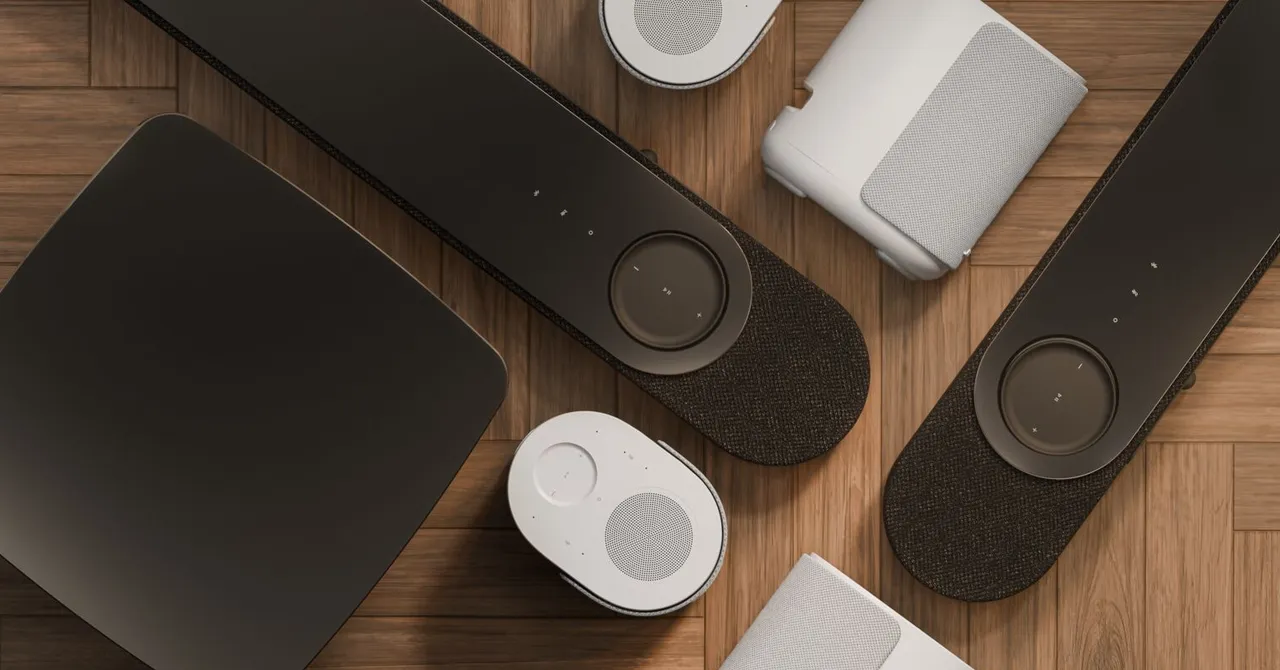
In a move to rekindle its influence and innovate amidst fierce competition, Bose has unveiled its new “Lifestyle Collection,” comprising the Lifestyle Ultra Speaker, Ultra Subwoofer, and Ultra Soundbar. This strategic relaunch marks a deliberate disruption in the home speaker space, a sector that has seen significant innovation driven by tech giants and startups alike. Characterized by sleek fabric-wrapped aesthetics and advanced multi-room connectivity, Bose’s latest offerings emphasize seamless user experience combined with cutting-edge functionality—highlighting a renewed focus on innovation and consumer engagement.

Cutting-Edge Features Promising a Business Impact

The new products underscore Bose’s strategic pivot toward integrating multi-platform compatibility with services like AirPlay, Google Cast, and Spotify Connect. Notably, the Ultra Speaker is among the first in the industry to support Amazon Alexa+ voice controls in the U.S., signifying a shift toward unified, voice-driven smart home ecosystems. With W-Fi, Bluetooth, and auxiliary inputs, Bose ensures flexibility in deployment—from traditional stereo setups to modern home theaters.

  • Innovation: Support for emerging voice assistants and native multi-room grouping for enhanced home integration.
  • Disruption potential: Challenging established players like Sonos, Apple, and Samsung who dominate the premium multi-room speaker ecosystem.
  • Business implications: Revitalizing product lines and recapturing market share through sleek design and smart functionality, leveraging Bose’s legacy for competitive differentiation.

Market Strategies and Industry Implications

The price points—starting at just $299 for the Ultra Wireless Speaker and exceeding $1,000 for the Ultra Soundbar—demonstrate Bose’s ambition to accommodate both budget-conscious consumers and audiophiles seeking premium sound. Moreover, the company’s decision to align grouping controls with Google Home and Apple’s AirPlay apps boosts interoperability—a key market trend. This shift caters to a broader consumer base, positioning Bose as a resilient disruptor in an industry marked by rapid innovation, as highlighted in recent Gartner reports emphasizing the growing dominance of integrated, cloud-connected devices.

Critics note that Bose’s reentry heralds a new phase of disruption, compelling competitors to innovate rapidly or face obsolescence. The emphasis on a redesigned onboarding process and enhanced app integration reflects industry-wide acknowledgment that consumer convenience and ecosystem synergy are now central to product success. Emerging startups and giants alike must adapt to this new paradigm where design, connectivity, and smart features will determine market leadership.

Looking Ahead: The Future of Home Audio Technology

As Bose reinvents its legacy in the context of today’s technology landscape, the implications extend beyond product launches. The company’s push for disruptive innovation portends a future where smart, interconnected, and intuitive home systems become the norm. Industry analysts like Peter Thiel and futurists at MIT warn of a technology arms race where speed, user experience, and ecosystem support will define success. The recent Bose launch exemplifies this trend—aggressive yet strategic— to capture the imagination, and wallets, of a new generation of consumers hungry for sophisticated yet accessible sound experiences.

In conclusion, Bose’s “Lifestyle Collection” deployment underscores a pivotal moment: the need for established companies to innovate relentlessly or risk losing relevance. As the industry accelerates toward smarter, more integrated solutions, businesses that prioritize disruptive innovation and anticipate industry shifts—such as the emergence of voice AI and multi-platform compatibility—will be the true winners in shaping the future of home entertainment. The clock is ticking for competitors to match Bose’s move; the next wave of home audio innovation is underway, and those who lead it will define the technological landscape of tomorrow.

Indigenous speakers jeered at Anzac Day ceremony as Ben Roberts-Smith hits separate Gold Coast event

As Australia recently commemorated the 111th anniversary of the Gallipoli landings, troubling echoes from domestic politics and social divisions threaten to tarnish the legacy of this national day of remembrance. The customary solemnity of Anzac Day has recently been marred by disruptions fueled by contentious political agendas and ideological conflicts, highlighting a broader trend seen across the Western world. In cities like Sydney, Melbourne, and Perth, attendees at dawn services experienced unanticipated disturbances—booing and heckling during significant rites such as the welcome to country. Such acts, labeled “disgraceful” by military and civic leaders, symbolize more than mere disrespect—they reflect a seismic shift in geopolitical impact and societal values. The protests echo calls from groups like Fight for Australia, which challenge traditional expressions of respect for indigenous sovereignty and national history, ostensibly driven by a nationalist desire to rewrite or diminish the significance of multicultural acknowledgment.

One of the most emblematic figures of this contentious atmosphere is Ben Roberts-Smith, Australia’s most decorated soldier, who recently attended a dawn service on the Gold Coast amid turbulent accusations of war crimes—charges that threaten to redefine his legacy and, by extension, the image of Australian military service globally. Roberts-Smith denies the allegations, which include killing unarmed civilians—an act that, if true, could fundamentally alter Australia’s international reputation. The allegations have ignited fierce debates on military accountability and national identity, with some advocates calling for a reassessment of Australia’s military interventions abroad. These charges and the ensuing controversy underscore how individual actions are entangled with national symbolism and what they reveal about societal standards. International organizations and security analysts warn that such scandals threaten to weaken Australia’s diplomatic stance, especially as other powers scrutinize Western commitments to human rights and justice.

This wave of social unrest and controversy arrives at a time when Australia, like many of its Western counterparts, is grappling with the meaning of its history and the future it wishes to forge. Historians note that these disruptions underscore a deeper ideological struggle—between those seeking to uphold traditional national values rooted in sacrifice and those pushing for progressive reinterpretations of history. The geopolitical impact extends beyond Australia’s borders, as allies and adversaries observe how internal divisions might weaken Western nations’ resolve and unity in a rapidly changing world order. International institutions, already concerned about the rising tide of nationalism in global politics, view such episodes as a sign that Western democracies are wrestling with their identity amidst an era of geopolitical upheaval. The incidents in Australia serve as a microcosm for larger shifts—where debates over history, identity, and cultural respect threaten to fracture alliances and fuel conflicts.

As history continues to be written in real time, the contrasting narratives—one of sacrifice and unity, the other of division and contestation—underscore the profound challenges faced by nations striving to reconcile their past with a complex future. The scenes of booing and protest on ANZAC Day mark more than isolated acts; they are a harbinger of ongoing societal debates that will shape Australia’s trajectory. In this tumultuous landscape, each decision, each protest, each court judgment adds a new chapter to a story that is far from over—one where the weight of history is still unfolding and the fate of national identity hangs in the balance, waiting for the next turn of the page.

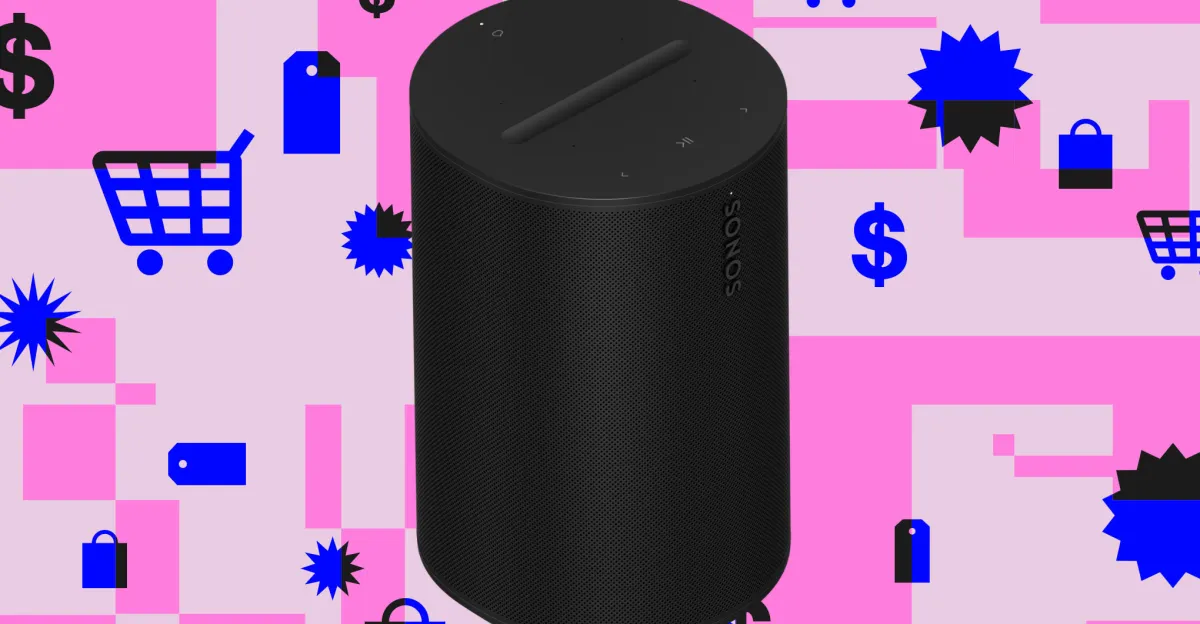
Score an $85 discount on the Sonos Era 100 — the latest refurb deal you can’t miss!

Sonos Reshapes Audio Industry with Innovative Refurbished Offerings and Next-Gen Smart Speakers

In a bold move demonstrating disruption and strategic innovation, Sonos has unveiled the Sonos Era 100 and refurbished models, significantly lowering the entry barrier for consumers seeking high-quality audio. By eliminating microphones in its standard model, Sonos strategically reduces costs and appeals to market segments wary of privacy or excessive spending, while maintaining premium sound quality. This move not only intensifies competition but stresses the importance of cost-effective innovation in an increasingly crowded smart speaker landscape.

Equipped with dual tweeters, a midwoofer, and support for Bluetooth alongside traditional Wi-Fi, the Era 100 exemplifies disruptive technology. It offers features such as Apple’s AirPlay 2 and Sonos’ proprietary Trueplay tuning, marking a clear shift towards customization and spatial sound optimization. Additionally, the model supports line-in connections via an optional USB-C adapter, an important nod to the resurgence of analog sources like turntables amidst digital dominance. Notably, paired with voice assistants like Amazon Alexa or Sonos Voice Control, the Era 100 redefines the potential of compact, yet highly capable, smart audio devices. This aligns with industry analysts’ predictions (e.g., Gartner) that intelligent audio devices will become central to the connected home.

Another key product, the Era 300, caters to audiophiles and larger spaces with six drivers, Dolby Atmos support, and spatial audio capabilities. It exemplifies the evolution of home entertainment systems into immersive experiences. As the market shifts towards next-generation audio formats, Sonos’ focus on spatial and multi-dimensional sound positions the company as a formidable disruptor capable of challenging traditional home theater giants. The simultaneous support for Bluetooth, line-in, and Wi-Fi ensures that these products are not just premium but versatile, appealing to a broad spectrum of consumers. As Peter Thiel emphasizes, “Innovation that upends the status quo is key to long-term dominance,” and Sonos seems intent on embodying this principle.

The strategic use of refurbished gear and aggressive pricing—up to 25% discounts with a one-year warranty—are signs not only of market agility but of a deliberate attempt to accelerate adoption and fend off emerging competitors in the smart speaker arena. Business implications are profound: as rising consumer demand for affordable, high-quality audio products grows, companies that leverage cost-effective innovation and broad ecosystem integration will define the industry’s future. In a landscape where disruption often shifts market leadership overnight, the firms that capitalize on these trends today will shape the smart home narrative for years to come.

Conclusion: A Future Defined by Innovation and Urgency

As the industry moves into a phase where holistic ecosystem integration and advanced spatial sound become the norm, traditional players face an uphill battle to stay relevant. Sonos’ newest offerings not only demonstrate a keen understanding of evolving consumer preferences but also reflect a broader technological shift towards cost-conscious, yet sophisticated, audio solutions. The urgency for industry leaders is clear: those who innovate rapidly and disrupt entrenched markets will secure their futures. With giants like Elon Musk and Peter Thiel emphasizing the importance of maintaining a disruptive edge, it is evident that the next decade will be pivotal — innovation is no longer optional but essential for survival in the rapidly transforming landscape of consumer tech and smart audio solutions.

Sonos Portable Speakers: The Ultimate Sound Experience for Trendsetting Youth — I Put Them to the Test

In recent years, the way young seekers of a purposeful lifestyle approach leisure and wellness has undergone a remarkable transformation. Technology-driven innovations now empower us to craft environments that not only elevate our entertainment but enrich our mental and physical well-being. Among these breakthroughs, portable speakers—especially those from Sonos—stand out as defining symbols of how tech and lifestyle coalesce seamlessly. Tested in diverse settings—from backyard hideouts to remote tropical escapes—these compact yet powerful devices exemplify a growing cultural shift: taking control of our corner of the world with incredible ease while maintaining the pursuit of _wellness_ and _leisure_.

At a Glance: The Sonos Lineup

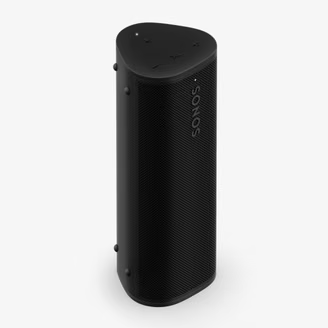
Sonos offers three stellar models that cater to different aspects of a youthful, active lifestyle. The Sonos Play is the versatile starting point, blending compact form with premium sound quality—perfect for those new to the Hermès of the living room or outdoor party. The Sonos Roam 2 takes portability to the next level, designed specifically to travel with you. It’s lightweight, waterproof (IP67 rating), and features wireless charging—a game-changer for convenience. On the other hand, the Sonos Move 2 embodies raw power, ideal for filling any space with spectacular sound—whether in your living room, park, or beach. Combining Bluetooth flexibility, Wi-Fi lossless audio, and a user-replaceable battery, it typifies the ‘lifestyle entrepreneur’ mindset of embracing control, quality, and _wellness_.

Each model aligns with the modern desire to integrate _wellness_—both mental and physical—into everyday life. The portable nature of these speakers fuels a lifestyle of _movement_, _adventure_, and _connection_, all while allowing us to fine-tune our environments for optimal leisure and peace of mind. Think of them as tools that transform mere space into an extension of your personal sanctuary, where sound becomes a catalyst for _reflection_ and _energy_.

Lifestyle Musings for the Modern Wellbeing Seeker

Today’s youth are redefining _wellness_ beyond traditional spa visits or gym routines. The latest wellness experts, such as Dr. Rangan Chatterjee or Jay Shetty, emphasize _mindful engagement_ and _purpose-driven living_, with tech playing a vital supporting role. The shift towards _wellness_ embeds itself in our daily habits—whether it’s curating the perfect playlist for meditation, outdoor yoga, or a backyard party. This cultural move toward _intentional living_ also reflects a desire to foster _community_ and _connection_, with portable speakers serving as an enabler of shared experiences that lift spirits and promote resilience.

To optimize personal impact through lifestyle choices—whether visiting natural parks, engaging in outdoor sports, or creating cozy indoor sanctuaries—consider these tips:

  • Travel with a compact, rugged wireless speaker to amplify your music, podcasts, or guided meditations, turning any environment into a _personal retreat_.
  • Use smart tech to craft _ambient_ atmospheres—think a podcast in the background during your evening wind-down or uplifting tunes for _motivation_ during workouts.
  • Complement listening devices with _wellness routines_—from mindful breathing to gratitude journaling—forming a holistic approach that balances _stress-relief_, _energy_, and _clarity_.

Embracing Lifestyle as a Journey

Choosing the right portable tech and weaving it into life’s tapestry isn’t merely about convenience but about _personal impact_—how your environment shapes your mental health, creativity, and leisure. Each product in the Sonos lineup mirrors a commitment to quality and_ _intentionality_—values at the core of a thriving, _purposeful_ youth culture. As movements like _Minimalism_ and _Biohacking_ gain traction, the aim is clear: harness technology not just for entertainment but as a tool for _self-expression_, _growth_, and _wellness_. This journey is ongoing, inviting us to step into roles where every choice becomes an act of _self-care_ and _empowerment_. Like a finely tuned playlist that moves us through different moods, lifestyle becomes a reflection of our pursuit to live meaningfully—with sound, comfort, and clarity guiding the way.

Top Deals: Motorola Razr Ultra & Marshall Emberton II Lead the Pack this Week

2025: A Year of Breakthroughs and Industry Shifts in Technology

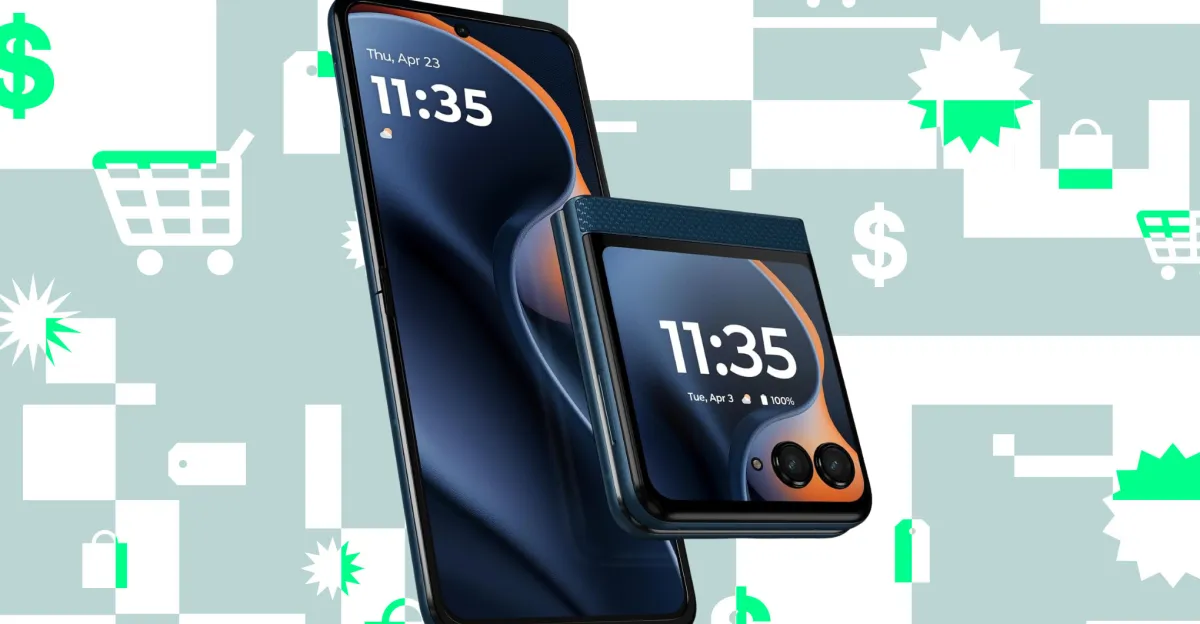
As the technological landscape accelerates into 2025, industry leaders are witnessing unprecedented waves of innovation and disruption that are fundamentally reshaping consumer markets and enterprise sectors alike. Notably, the launch of the Motorola Razr Ultra signals a renewed focus on foldable devices, integrating cutting-edge hardware with an ultra-stylish aesthetic that appeals to a youthful, style-conscious demographic. With its dual-display setup featuring a 7-inch inner screen and a 4-inch outer panel, powered by the Snapdragon 8 Elite chipset, this device exemplifies the convergence of form and function, setting a new benchmark for mobile tech that prioritizes both innovation and user experience.

The business implications of such innovations extend well beyond aesthetics; they signal a pivotal shift in how device developers incorporate AI and versatile hardware to meet the demands of next-generation consumers. The addition of a dedicated AI button for live transcriptions and notification summaries illustrates a move towards more intuitive, context-aware devices—an evolution driven by industry visionaries like Elon Musk and analysts from Gartner. Meanwhile, accessories are following suit. The Marshall Emberton II portable speaker, now more affordable at Best Buy and Amazon, showcases how iconic brands are pivoting towards rugged, outdoor-friendly designs with multi-directional stereo sound, enhancing brand relevance and consumer engagement in competitive markets.

The rapid growth of integrated peripheral solutions underscores a broader trend: hardware ecosystems are becoming more interconnected and powerful. The Ugreen 8-in-1 dock exemplifies this, bringing a wealth of connectivity—including four Thunderbolt 4 ports, gigabit Ethernet, and multiple USB-A ports—centered around an efficient 140W GaN charger. Such innovations streamline workflows, allowing professionals and power users to operate seamlessly across multiple high-resolution displays, high-speed data transfers, and legacy accessories. This level of hardware integration paves the way for more flexible, portable, and powerful computing setups, which are indispensable as remote work becomes entrenched within corporate strategies.

Looking ahead, these technological advancements demonstrate an industry eager to disrupt traditional paradigms by weaving together hardware excellence, AI sophistication, and consumer-centric design. Industry observers like Peter Thiel have long predicted that the most impactful companies will be those that leverage disruptive innovations to redefine user expectations. The combination of rugged, stylish devices like the Motorola Razr Ultra, smart accessories like the Emberton II, and comprehensive connectivity hubs suggests that 2025 may be the year where breakthrough fundamentals set the stage for a more integrated, AI-powered, and consumer-first digital ecosystem. A sense of urgency surrounds these shifts: the companies that embrace this future faster will dominate an increasingly competitive landscape driven by innovation, disruption, and relentless pursuit of future-ready tech. As the industry propels itself forward, it remains clear—those who hesitate risk falling behind in the race for technological supremacy.

Social Media Auto Publish Powered By : XYZScripts.com