
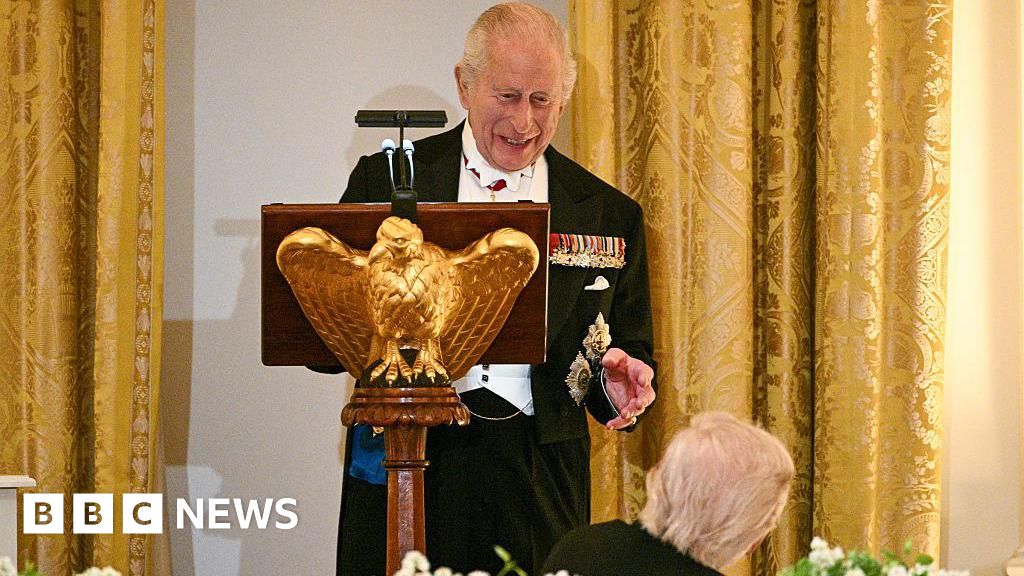

The recent state visit of King Charles III to the United States, marked by camaraderie and diplomatic banter, has cast a spotlight on the evolving landscape of international relations. During a high-profile banquet, President Donald Trump publicly lauded the King for rallying the Democrats to stand—a move that analysts view as a symbol of shifting transatlantic alignments. The exchange of jokes, notably the Queen’s jokes about the Middle East crisis and a humorous remark about France, underscored a lighter diplomatic tone but masked underlying geopolitical realities that threaten to reshape alliances and power balances.
In his speech, King Charles took the opportunity to make pointed quips about the current global unrest, including references to the Middle East crisis—a conflict that remains unresolved and is a focal point of international instability. Historians and crisis analysts warn that such conflicts are, in reality, catalysts for further upheaval that could destabilize entire regions and challenge Western interests. Meanwhile, the British monarch’s jest about Britain’s colonial history—”if it wasn’t for us, you’d be speaking French”—serves as a timely reminder of Britain’s imperial past and its ongoing influence, however diminished, in shaping global narratives and alliances.
The geopolitical impact of the visit extends beyond diplomatic exchanges. Decisions made in these high-profile moments influence social perceptions and international policy pathways. As international organizations and foreign policy experts debate these developments, a consensus emerges: the future of global power is increasingly multipolar. The U.S. and UK reflect a strategic dance—balancing tradition with emerging realities. Key events like this visit stoke new tensions, encouraging rival powers like China and Russia to reassert their influence, further complicating the geopolitical chessboard.
Many analysts warn that these diplomatic gestures are but the surface of a much more tumultuous undercurrent. As history shows, moments of friendly banter among leaders often precede significant shifts in policy or alliances. The alliances formed and broken today could dictate the global order for generations to come. This is a critical juncture—an era where decisions echo in the corridors of power and in the streets of nations. The weight of history is on the line, with the world watching as the narrative continues to unfold—an epic of shifting borders, competing visions, and the relentless pursuit of influence.






