Matox News

Truth Over Trends, always!

Audiences’ favorite influencers hit the scene: championing Britain’s legendary pubs and keeping the spirit alive

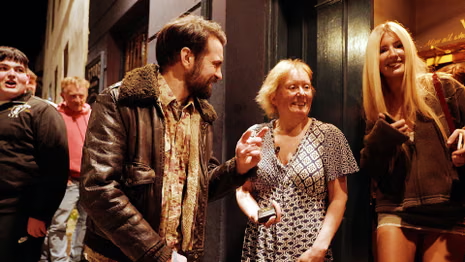
In an era where millennials and Gen Z are redefining social spaces, the humble pub remains an enduring testament to Britain’s rich social fabric. Despite the challenges posed by rising costs, urban gentrification, and changing drinking habits, a surge of fresh enthusiasm is evident in the vibrant scene of traditional wet-led boozers. Social media influencers like Niall Walsh and Jimmy McIntosh are leveraging digital platforms to showcase pubs with distinct character—places with patterned carpets, cozy fireplaces, and personal stories that exude authenticity. Their efforts highlight a cultural revival rooted in preserving community spaces while adapting to contemporary tastes.

Their advocacy underscores a broader cultural shift, one that celebrates “proper boozers,” an often romanticized concept of local pubs that prioritize atmosphere and genuine community over chain-store uniformity. Walsh and McIntosh aim to bring attention back to these establishments—many struggling with skyrocketing rent and cumbersome regulations—by creating content that emphasizes their unique aesthetic and social significance. For example, McIntosh’s detailed exploration of pubs like the Skirrid Inn in Wales or The Old Forge in Inverie demonstrates that even in the remotest corners of Britain, pubs serve as vital cultural landmarks, blending history, storytelling, and shared human experience. Their approach champions a lifestyle where leisure and wellness are intertwined, and where the act of gathering fuels personal resilience and community health.

By actively promoting pubs through Instagram accounts such as London Pub Explorer and Great British Pub Crawl, a new generation is reclaiming these spaces—not just as drinking venues but as catalysts for well-being, cultural connection, and lifestyle enrichment. Initiatives like these inspire young people to rediscover local history, support small businesses, and embrace a slower, more meaningful pace of life amid the chaos of urban existence. Whether it’s a classic pub with velvet curtains or a rugged countryside inn, these hidden gems foster a sense of belonging, making each visit a personal act of community renewal.

  • Visit a pub with historical charm—look for patterned carpets, authentic owner-operated environments, and local crowds.
  • Support social media pages that promote community-focused pubs, contributing to their visibility and survival.
  • Embrace the \”rural pub experience\”—consider exploring remote locations like the Old Forge in Inverie for a truly memorable adventure.

Ultimately, the ongoing narrative of Britain’s pubs is a story of resilience and revival. As individuals, we are invited to see these spaces not merely as places to drink but as living chronicles of our shared history, woven into the fabric of daily life. Through the lens of passionate creators and community advocates, the pub becomes a symbol of whether through tradition or contemporary innovation, a lifestyle that champions authenticity, connection, and personal impact. Their journeys serve as a reminder that embracing such cultural landmarks is more than nostalgia—it is a conscious choice to nurture the roots of our collective identity and, in doing so, find inspiration for the journeys ahead.

Arlo Parks Reflects on the Absence of Late-Night Conversations in Smoke-Filled Spaces: Embracing the Hedonistic Spirit of Her Bold New Album

In an era where the relentless pace of modern life threatens to drown out the echoes of tradition and the deeper currents of cultural memory, Arlo Parks emerges not merely as a pop phenomenon but as a testament to the enduring power of culture as the foundation of individual and societal identity. Her journey—from an early fascination with GarageBand confessions to commanding the stage at Glastonbury—illustrates a profound truth: that beneath the surface of popular music lies a dynamic narrative about who we are, where we come from, and where we are headed. As Ortega y Gasset once noted, “Culture is not an accessory but the very substance of society”; Parks’s evolution exemplifies this, highlighting how contemporary artists continue to redefine and uphold this vital link through their works.

Throughout her career, Parks has shown an unwavering commitment to authenticity, intertwining her personal truths with a collective history of musical and cultural innovation. Her early releases, laced with references from Nick Cave to Erykah Badu, revealed a young artist unafraid of confronting the chaos of mental health struggles and romantic rejection—a mirror to the complexities of human existence. Yet, her rise is also emblematic of a broader cultural shift wherein the boundaries of societal acceptance are expanded, allowing voice to the queer community and those traditionally on the margins. Her embrace of electronic music and nightclub culture in her latest album, Ambiguous Desire, harks back to a collective quest for liberation in spaces that historically have served as sanctuaries for outsiders. Here, Parks’s work is not just entertainment but a reclaiming of cultural spaces—akin to what Tocqueville observed about America’s penchant for creating voluntary associations—as arenas where individual spirits find community, expression, and defiance against societal conformities.

Artistically, Parks embodies a necessary rebellion against superficiality, consciously distancing herself from the temptations of commercial success that often threaten to dilute genuine cultural expression. Her deliberate turn to the night-time in her latest album, capturing the euphoric surge of clubbing and rave culture, echoes Chesterton’s assertion that “art is the most beautiful of all lies,” in that it often reveals deeper truths about human longing and societal yearning. In her song Heaven, inspired by the transcendent moments of life and music, Parks taps into the eternal human pursuit: to find meaning and connection in fleeting moments. Her acknowledgment that she explores these realms not to adopt a persona but to understand herself—”who am I now?”—speaks to the philosophical inquiry that underpins genuine cultural expression: it is a mirror and a prophecy, reflecting our current realities while sketching the contours of future identities.

Ultimately, Parks’s narrative underscores a vital idea: that culture remains the living, breathing memory of our collective humanity and the prophetic voice guiding us forward. Whether through the revival of club culture or her unapologetic discussions of desire and queerness, she exemplifies an artist who recognizes that identity is both rooted in tradition and open to renewal. And as T.S. Eliot poignantly observed, “The future is always a certainty of the imagination.” In the poetic silence between her melodies and the vibrant chaos of her soundscapes lies the promise that culture, in all its forms, persists as humanity’s continuous conversation—an echo of the past and the whisper of what yet may be, shaping and being shaped by the new generations who dare to listen and create in the ever-unfolding mystery of existence.

Vibrant Views, Authentic Shops & Local Pubs: Discover the Heartbeat of the Llŷn Peninsula’s Community Spirit — Wales Holidays

While many conventional travel destinations emphasize bustling cities or tourist-heavy spots, Wales’ Llŷn Peninsula offers a different perspective—one rooted in community resilience, natural beauty, and a steadfast connection to heritage. This region embodies the _renewal of rural vitality_, showcasing how local initiatives are redefining what it means to live, work, and explore in a traditionally rural setting. It is a testament to the power of community-driven revival, inspiring a new generation to see value in their collective identity and natural environment.

Throughout the area, a noteworthy trend emerges: community pubs, shops, and cultural centres are not just surviving but thriving. The revival of establishments like Tafarn y Fic and Tafarn y Plu signals a strategic shift towards _local empowerment_. These venues serve as vital social hubs, fostering *a sense of belonging* while also attracting visitors eager to experience authentic Welsh life. For instance, the ‘Fic’ pub in Llithfaen, once on the brink of closure, was revitalized by local initiative—a testament to the region’s capacity for grassroots action. Such efforts embody the growing *collective confidence* that defines contemporary Welsh rural life, showing that resilience often begins in the heart of small communities.

This spirit of revival is complemented by the region’s rich cultural and natural tapestry. The Wales Coast Path weaves nearly 100 miles along the peninsula, revealing stunning vistas reminiscent of the masterpieces by JMW Turner, who famously captured the area’s ever-changing light. From the dramatic castle ruins at Criccieth to the vibrant sandbanks of Dinas Dinlle, every step along this path underscores the importance of conserving and cherishing regional landscapes. Additionally, charming villages such as Caernarfon exemplify how heritage preservation and modern entrepreneurship—like the recent development of the Ty’n Llan community pub—can work hand in hand to create vibrant, sustainable local economies. Visitors are encouraged not only to explore the scenery but to engage with the community, whether through learning Welsh at local pubs or participating in cultural events, thus making the journey both educational and enriching.

For those seeking a lifestyle that integrates natural beauty with purposeful community engagement, Wales’ Llŷn Peninsula offers a compelling blueprint. It’s a reminder that investing in local initiatives, celebrating heritage, and embracing a _mindful appreciation of the land and its people_, can lead to a _more resilient and inspiring community_. As you walk its scenic trails and engage with its warm-hearted inhabitants, the region becomes more than a travel destination—it transforms into a mirror reflecting the potential within us all to embrace _locally rooted prosperity and shared well-being_. The journey here is not merely about viewing landscapes but about reconnecting with the essence of what makes a community truly vital and alive—values that can inspire individual wellness and collective strength.

  • Explore local pubs and shops—see how community spirit keeps traditions alive.
  • Experience the natural beauty—walk the Wales Coast Path and appreciate changing light and scenery.
  • Engage with cultural heritage—visit museums, historic sites, and participate in local events.
  • Support sustainable, community-led initiatives—buy from local businesses and participate in cultural exchanges.

In the end, the story of Wales’ Llŷn Peninsula is a tale of hope—an enduring reminder that the resilience of a community, rooted in its land and traditions, can inspire us all to embrace our own journeys. For in the pursuit of _wellness, shared experiences, and cultural preservation_, lies a profound truth: that true vitality springs from within, fueled by connections to our roots and a collective sense of purpose. As the sun sets over the rugged landscape, it leaves behind an invitation—peaceful yet powerful—to live intentionally and embrace the ongoing adventure of life.

Ross Kemp set to make a timely return to EastEnders, reigniting beloved East End spirit for a brief but impactful comeback

In the tapestry of modern entertainment, few characters have embedded themselves as indelibly into the collective consciousness as Grant Mitchell, the infamous figure portrayed by the actor Kemp in the long-running soap opera that has captivated audiences for decades. Such characters are more than mere entertainment; they are mirrors reflecting the shifting values, fears, and aspirations of society. When we observe Grant Mitchell—a creation of television’s golden age—we glimpse the enduring power of culture to shape identity, articulate societal struggles, and preserve the traditions that define a community’s soul.

Culture, in its essence, functions as both a bridge and a boundary. It connects us to our roots, anchoring us in shared stories and collective memory, while also delineating the contours of our uniqueness amidst a rapidly changing world. As Ortega y Gasset observed, “Whoever becomes the servant of a great tradition is the master of his own time.” Characters like Grant Mitchell serve as embodiments of societal archetypes—heroes, villains, or complex figures—whose narratives are woven into the cultural fabric of a generation. This is particularly vital for the youth, for whom these stories are not just entertainment but foundational texts that forge their understanding of morality, loyalty, and societal roles.

Historically, the proliferation of mass media has accelerated this exchange between tradition and innovation. Tocqueville, in his analysis of democracy’s influence on society, warned of the potential for ‘soft despotism’—a state where cultural homogenization erodes regional and historical distinctions. Yet, it is precisely through figures like Grant Mitchell—rooted in tradition yet continually reinterpreted—that we see culture’s resilience. It acts as a guardian of national identity, a vessel for shared values, and a testament to the virtues that hold societies together amidst upheaval. As cultural critic G.K. Chesterton noted, “The true purpose of art is not a rarified game but a truly social act; it serves as a mirror and a forge of our collective character.

In today’s fragmented digital landscape, where fleeting trends threaten to displace enduring customs, the importance of culture as a foundation becomes even more evident. It reminds us that identity is not an arbitrary construct but an inheritance: a story passed through generations that continues to evolve yet never abandons its core. As the character of Grant Mitchell and the stories he inhabits demonstrate, our cultural traditions are both a memory and a prophecy—reminding us of where we come from and illuminating the path toward where we might go. In this way, culture remains the eternal echo of human aspiration, a lyrical symphony of memory and prophecy that guides the soul through the dawn of each new age.

Awaken the Spirit: Dissecting the ‘Wake Up Dead Man’ Scene

In contemplating the essence of culture, one recognizes it as the living memory of existence, a tapestry woven through generations that sustains the identity of societies and shapes their moral and aesthetic fibers. Amid the accelerating tide of modernity, which often dismisses tradition as an obstacle to progress, it becomes crucial to reflect on how culture anchors us to our roots, serving as both remembrance and prophecy. As the philosopher Ortega y Gasset famously warned, “The great wound of the world is the loss of roots.” In this perspective, culture emerges not merely as entertainment or superficial ornament, but as the vital fabric that preserves our collective personality—our deep sense of who we are and where we come from.

This cultural continuity is vividly exemplified through the arts and storytelling—carriers of timeless truths and moral clarity. Consider the perennial efficacy of classical literature and philosophy: from the moral clarity of Chesterton to the poetic that beckons us to see life through a lens of transcendent meaning. Today’s filmmakers, such as Rian Johnson—a modern auteur—demonstrate a nuanced understanding of this narrative craft. His film scenes, rich with ensemble performances and layered dialogue, echo the theatrical traditions that stress the importance of human relationships and moral dilemmas. Just as the Shakespearean or Golden Age of Hollywood cinema built mythic worlds rooted in human virtue and vice, modern directors continue to remind us that storytelling remains a mirror held up to society, a vital conduit of cultural memory.

Milestones like the Enlightenment or the Renaissance serve as cultural touchstones, illustrating how societies have historically relied on their arts and ideas to define and reinforce shared virtues. Tocqueville’s analysis of American democracy highlights the importance of cultural cohesion—the “habits of the heart”—which sustains political liberty and social cohesion. Today’s cultural agents, whether in film, literature, or visual arts, wield the power to forge that same cohesion, fostering a collective spirit and moral clarity. Their work reminds us that the preservation and evolution of culture are central to community resilience and societal vitality. As fin de siècle critics warned against cultural nihilism, contemporary guardians of tradition stand as vigilant custodians of the moral compass that guides humanity through chaos toward the inevitable dawn of renewal.

In this continuous dialogue between memory and hope, culture wields its silent yet profound influence, shaping identities that anchor us in the present while pointing forward to the destiny of human civilization. As T.S. Eliot poetically asserted, “There is no pagan school of poetry but what the world is better for its existence.” Culture, then, is both the echo of the past and the prophecy of future virtues—a divine inheritance urging each generation to build on its foundations and extend the horizon of human excellence. In times of tumult, culture remains our steadfast compass, charting a course through history’s vast ocean toward a future where tradition and innovation intertwine—reminding us that who we are is always a prelude to who we shall become. Truly, amid fleeting epochs and shifting sands, culture endures as the most eloquent testament to humanity’s eternal hope and supreme memory, whispering silently that indeed, we are, and always shall be, its custodians and heirs silenced in the melody of history and destiny.

Robert Irwin crowns himself Dancing with the Stars champ, a decade after sister’s victory—showing true Aussie spirit and family legacy

In a world increasingly defined by rapid cultural shifts and intersecting geopolitical interests, recent developments underscore the enduring influence of individual leaders and international decisions on both societal values and global stability. Robert Irwin, the 21-year-old son of the legendary conservationist Steve Irwin, has captured headlines not for global diplomacy but for his triumph in the American reality TV competition Dancing with the Stars. This victory, amid emotional tributes to his late father, embodies how soft power—cultural influence—transcends borders and reshapes perceptions of national identity. As Irwin’s story resonates with audiences worldwide, it serves as a reminder of the subtle yet profound ways in which individual narratives can influence international cultural diplomacy, shaping perceptions of Australia and its values abroad.

The timing of this achievement is no coincidence. Amid tensions over climate policies, migration, and regional alliances, cultural icons like Irwin symbolize a resilient Australian identity rooted in conservation and youthful vigor—traits that many nations aspire to project on the world stage. Analysts from the International Crisis Group warn that in a shifting geopolitical landscape, nations are increasingly leveraging soft-power assets to bolster their geopolitical standing. The spectacle of the Irwin family’s ongoing legacy, woven into a narrative of environmental stewardship, subtly influences public opinion and international perception, asserting Australia’s position not merely as a regional player but as a moral voice on ecological issues. This alignment could serve as leverage in global alliances, especially at a time when the United States and China vie for narrative dominance on climate change.

Strategically, the recent decisions within U.S. foreign policy and the trajectory of European alliances reveal a complex chessboard where cultural exchanges are becoming as vital as military and economic treaties. Meanwhile, the decisive shifts regarding climate commitments, exemplified by Britain’s push for greater renewable energies and ongoing debates in the European Parliament, demonstrate how global institutions still grapple with balancing environmental imperatives against economic and geopolitical realities. International organizations like UNEP actively monitor how these decisions ripple across nations—affecting societies, influencing leadership, and reshaping societal priorities. The ongoing tension between conservation ideals championed by figures like Robert Irwin and the hard realities of geopolitical interests underscores the pivotal moment humanity faces: can cooperation on ecological issues override nationalistic competition?

History’s heavy hand reminds us that current decisions may ripple for generations. As historians analyze the age of ecological awakening and geopolitical reconfigurations, the question persists: is this era shaping a new world order or merely a transient chapter amidst unfolding chaos? With global powerhouses, regional alliances, and youthful icons intertwined, the full measure of this moment remains uncertain. Yet, one truth endures: as the narrative continues to be written in boardrooms, battlefield strategies, and cultural arenas, the weight of history presses ever harder. The collective trajectory of nations will depend on choices made today—choices that could either preserve the fragile fabric of peace or unravel it beyond repair. Humanity stands at a crossroads, watching as the unfolding saga promises that tomorrow’s history will be defined by the resilience, resolve, and sometimes, the unintended influence of those who embody the spirit of both youth and tradition.

Rising Stars Shine in Thrilling Youth Championship: A Showcase of Talent and Team Spirit

Thrilling Sunday Showdown: Papiss Cisse Shines in League Play

In a memorable display of skill and determination, Papiss Cisse captivated fans and critics alike with a standout performance for his Sunday league team last weekend. Known for his electrifying style of play, Cisse demonstrated why he remains a force to be reckoned with on the pitch. The match, which ended in a 4-3 victory for Cisse’s team, was filled with game-changing moments that left spectators on the edge of their seats.

The match exemplified the ups and downs of sports, with Cisse scoring two pivotal goals and providing an assist. His second goal, a dazzling strike from outside the box in the 75th minute, swung the momentum firmly in favor of his team and highlighted his exceptional talent. As the team’s coach noted, “When Cisse is in form, he transforms the entire match. His energy is infectious and lifts everyone around him.”

  • Papiss Cisse scored two goals and assisted in a nail-biting finish.
  • The match featured a total of seven goals, showcasing offensive skill from both sides.
  • Fans praised Cisse’s ability to create chances and rally his teammates.

In addition to his individual achievements, Cisse played a crucial role in fostering a strong team dynamic, embodying the spirit of camaraderie that is often celebrated in Sunday league play. As online commentator and former player Mike Johnson remarked, “It’s not just about the win; it’s how sports bring people together. Cisse embodies that philosophy.”

Ultimately, while the scoreboard will always reflect the outcome, the true essence of sports lies in the connections forged, the joy shared, and the resilience demonstrated on the field. The drama and excitement witnessed in this thrilling match serve as a reminder that, in sports and beyond, every rivalry and every celebration cultivates a stronger community. As we look back on this unforgettable performance by Papiss Cisse, let it resonate not only as a testament to individual prowess but as a celebration of teamwork and the unifying spirit of sportsmanship.

Source link

Late-night pub openings undermine traditional values and societal spirit

Recent government initiatives, such as extending licensing hours for pubs and alcohol sales, reveal a troubling societal shift that impacts families, education, and community cohesion. The move appears aimed at stimulating economic growth by encouraging late-night drinking, yet many analysts question whether this strategy addresses the core issues faced by our communities. At the heart of this debate lies a critical tension: how do we balance economic needs with the protection of public health and social stability? Sociologists like Frank Furedi warn that policies promoting unrestricted alcohol access may inadvertently deepen social divisions, foster unhealthy lifestyles, and erode the moral fabric that holds families together. The increase in alcohol-related harm, including the record-breaking 10,473 alcohol-specific deaths recorded in 2023 — and the society-wide cost of approximately £27.4 billion annually — serve as stark reminders of what excessive drinking engenders across generations.

The continuing trend of longer pub hours seems at odds with the NHS’s ongoing efforts to mitigate alcohol misuse, which deeply affects mental health and community stability. Alcohol misuse is associated with depression, anxiety, and violence, threatening the well-being of our youth and vulnerable populations. The social fabric frays further as families face the consequences of addiction, with children often bearing the emotional scars of parental neglect or chaos stemming from alcohol abuse. Social commentators, including Alan Walker, emphasize that these policies may serve the interests of commercial industries rather than the well-being of society, suggesting that the true solutions lie elsewhere. The challenge is ensuring that economic incentives do not overshadow moral obligations to protect vulnerable members of society and uphold the integrity of our communities.

In contemplating these policy choices, it becomes clear that the societal cost extends beyond health and economics to the core of our shared cultural values. The push for longer pub hours, coupled with efforts to introduce ID cards and restrict free speech, all signal a broader societal shift that increasingly questions the balance between individual freedoms and social responsibility. As historian Paul Johnson notes, societal health depends on strong, cohesive communities rooted in shared values and moral responsibility. When families are impacted by addiction, and communities struggle under the weight of social tensions, the promise of a resilient society seems distant. Yet, amidst these challenges, there remains hope. By fostering greater community engagement, strengthening national moral foundations, and resisting the influence of those who profit from societal harm, society can begin to repair the fractures. The future may hinge on our collective ability to prioritize *moral integrity* over short-term economic gains—an endeavor that begins with acknowledging the profound human impact of social policy decisions.

Young Stars Shine as High School Championships Ignite Competitive Spirit

Week 7 College Football: A Showcase of Talent and Team Spirit

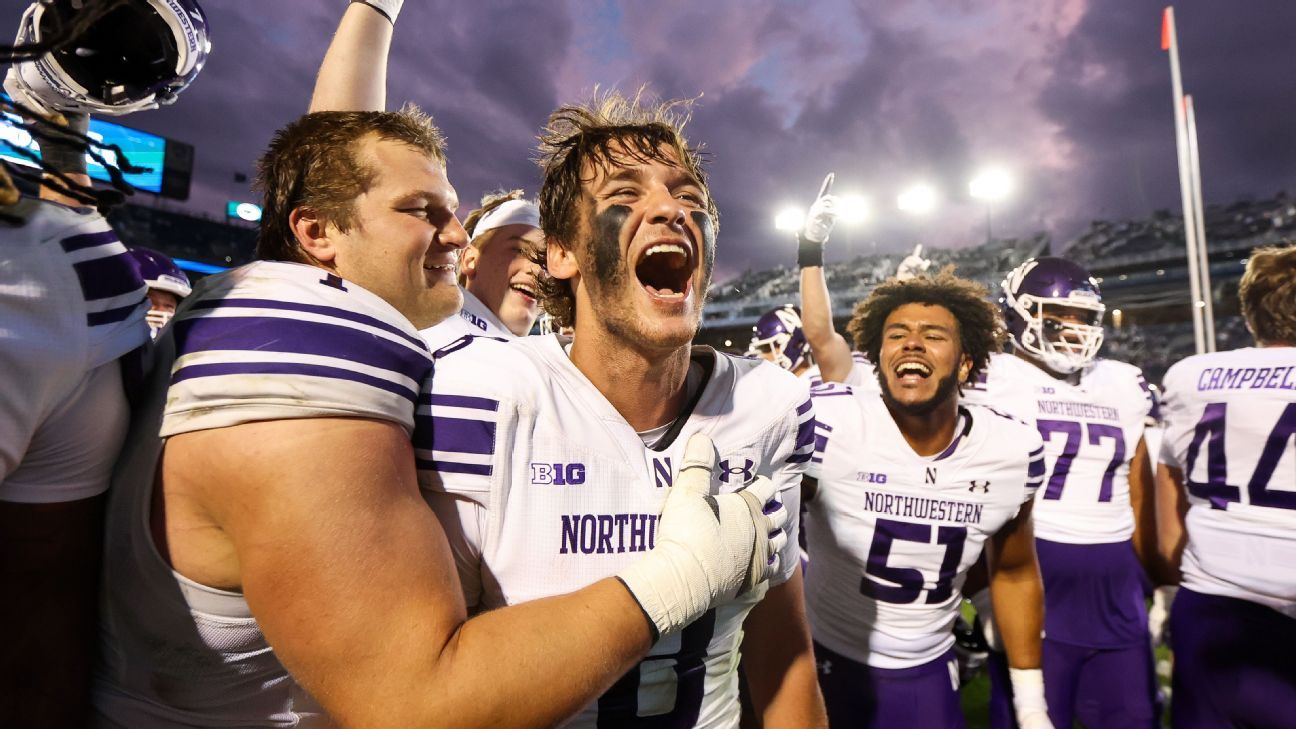
In a thrilling Week 7 of the college football season, Northwestern and Texas emerged victorious, showcasing not just their athletic prowess but also an engaging presence on social media that has sparked conversation among fans and commentators alike. As teams continue to jockey for position in the playoff race, these wins were pivotal not just in the standings, but also in establishing team morale and community engagement.

After their hard-fought win, the Wildcats took to social media with a series of posts that reflected their confidence and team spirit. According to head coach Pat Fitzgerald, “Every victory is part of a larger narrative. We’re building something special here at Northwestern, and we want our fans to be part of that journey.” This sentiment was echoed across various platforms as commentators highlighted the importance of engaging fans beyond just the game.

Meanwhile, in Texas, the Longhorns delivered a statement performance that reignited their championship aspirations. With a notable contribution from quarterback Quinn Ewers, who threw for 350 yards and three touchdowns, the Longhorns displayed an offensive prowess that has been missing in earlier games this season. The team’s explosive second-half performance, particularly in the third quarter when they put up 21 unanswered points, showcased their potential to dominate on any given Saturday.

  • Northwestern continues to surprise with their strategic play, ranking high in defensive stats this season.
  • Texas is making a serious claim to contention with their recent wins and strong play from key athletes.
  • Fans from both regions showcased incredible support, proving the loyalty and passion inherent in college football culture.

As the season progresses, one thing remains clear: the love for college football transcends wins and losses. Whether it’s through passionate social media interactions or nail-biting game moments, the spirit of competition unites fans and players alike. In the words of acclaimed sports commentator Kirk Herbstreit, “College football isn’t just about the scoreboard; it’s about the stories and connections made along the way.” Thus, as we approach the final stretch of the season, this unbreakable bond will undoubtedly fuel both teams and their supporters, lighting the way forward for what promises to be a memorable conclusion to the college football season.

Source link

Social Media Auto Publish Powered By : XYZScripts.com