Matox News

Truth Over Trends, always!

Artemis Crew Shares Bold Moon Mission and Splashdown Experience

Historic Artemis Mission Marks a New Era in Space Exploration and Geopolitics

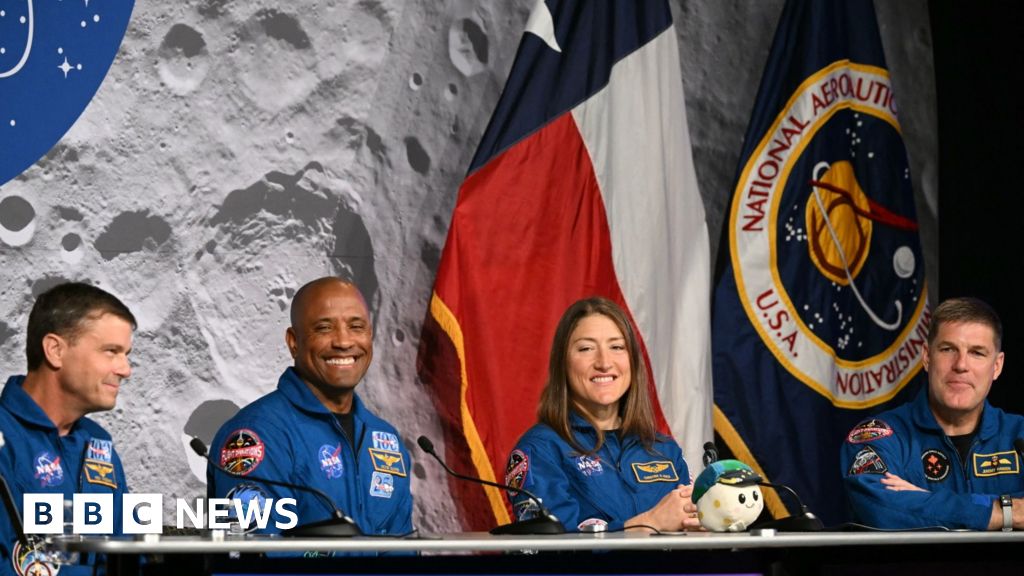
In a groundbreaking achievement that underscores the relentless drive of the United States to maintain its leadership in space exploration, the crew of the Artemis mission convened for their first press conference after completing a 10-day orbital expedition around the Moon. Launching on April 1 from NASA’s Kennedy Space Center in Florida, the crew embarked on a journey that took them beyond the far side of the lunar surface — a feat that not only highlights technical prowess but signals a cultural and geopolitical statement of intent. The mission’s objectives are ambitious: to rekindle human presence on the Moon, establish a permanent outpost, and ultimately, lay the groundwork for manned missions to Mars.

The Artemis program is more than just a quest for scientific discovery; it signifies a strategic shift in international power dynamics. As noted by numerous analysts and geopolitical strategists, the renewed U.S. push to dominate lunar space is a response to the rise of China and Russia in extraterrestrial exploration. China’s recent lunar activities and Mars ambitions, along with Russia’s renewed interest in space, threaten to fracture what was once a mostly American-dominated field. The Artemis mission, therefore, underscores a broader geopolitical contest over the future of space as the new frontier for economic and military advantage.

International organizations and foreign governments are watching closely. The European Space Agency (ESA), India’s ISRO, and others have expressed interest and have begun aligning themselves with lunar and Martian initiatives. Yet, experts warn that this renewed focus on celestial exploration could exacerbate existing international tensions and lead to a new space race. Historians cite the Cold War-era space race as a cautionary tale and emphasize that, how nations choose to collaborate or confront in space will set the tone for global stability in the decades to come. The Artemis mission, with its symbolic return to human lunar exploration, is thus imbued with profound geopolitical impact.

As the world’s eyes turn skyward once more, the unfolding chapter of lunar exploration is determining who will hold sway over the future’s final frontier. Will this herald an era of international cooperation or a new epoch of competition centered around territorial claims, resource control, and technological supremacy? The decisions made today echo beyond the vacuum of outer space— they shape the destiny of nations and societies grounded firmly on Earth. As history’s pen continues to write the story of mankind’s quest among the stars, one thing remains clear: the outcome of this new space race may very well define the geopolitical landscape of the 21st century, leaving humanity to confront the question of whether space can be a shared horizon or a battleground for dominance.”
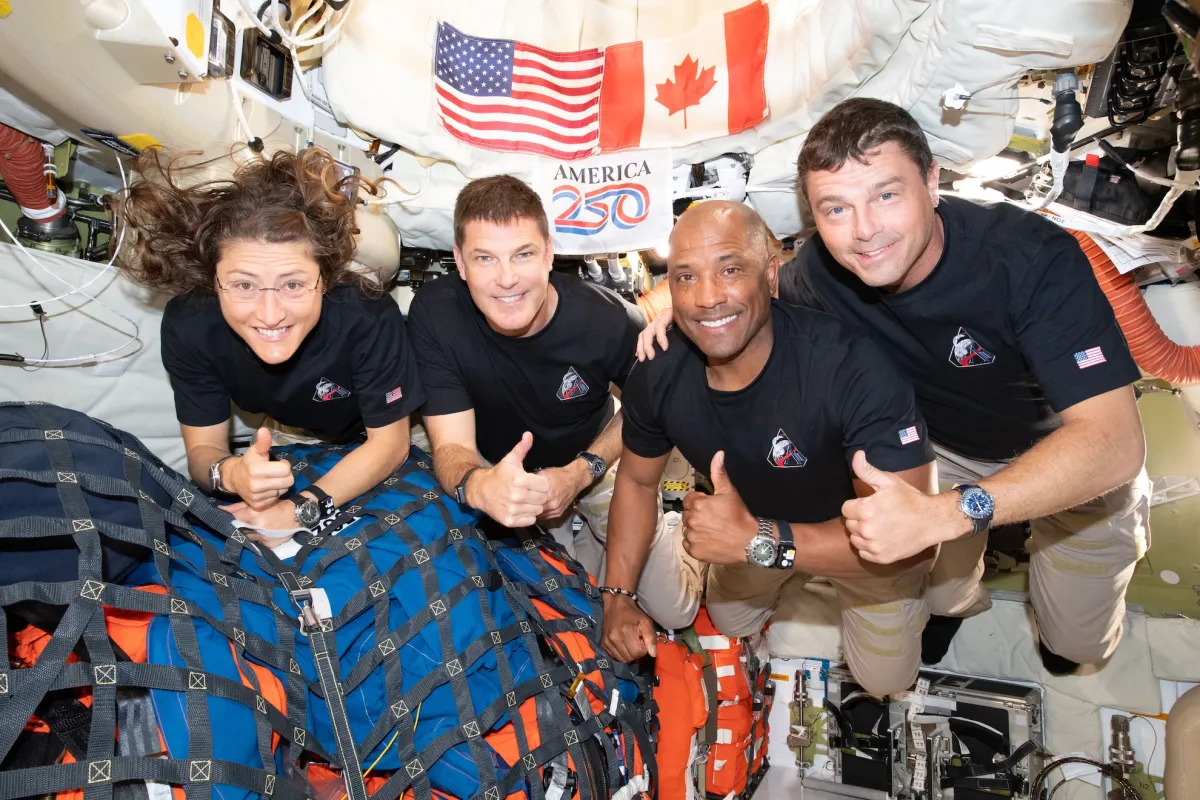
NASA’s Artemis II nails perfect splashdown in the Pacific, marking a winning step for Moon missions

NASA’s Artemis II Mission Marks a New Era in Space Exploration: Critical Business and Innovation Impacts

After a successful 10-day mission around the Moon, NASA’s Artemis II crew has safely returned to Earth, reaffirming the United States’ commitment to lunar exploration and technological innovation. The mission, which involved the first crewed flight of the Space Launch System (SLS) and Orion spacecraft in over half a century, is a clear demonstration of disruptive space technology designed to push the boundaries of humanity’s reach into deep space.

Centered on cutting-edge propulsion, navigation, and life support systems, this mission exemplifies the rising role of private-public partnerships in space endeavors. Jared Isaacman, a commercial astronaut and key figure behind the mission, emphasized that “America is back in the business of sending astronauts to the Moon”, signaling a significant shift in the industry’s landscape. By integrating commercial expertise and NASA’s strategic vision, the Artemis program is poised to accelerate the development of lunar infrastructure, including the much-anticipated Moon base, which has compelling implications for space mining, scientific research, and even future colonization efforts.

  • Innovation in propulsion and spacecraft design— Orion’s precision engineering enabled a “perfect” landing after traversing 252,760 miles from Earth, orbiting the Moon, and witnessing phenomena such as a total solar eclipse from space.
  • Market disruption— The mission’s success underscores the emerging dominance of a hybrid space economy, with NASA catalyzing investments that blur the lines between traditional government agencies and private enterprise, leading to faster, more cost-efficient breakthroughs.
  • Business implications— As industry leaders like Tesla’s Elon Musk and venture capitalists such as Peter Thiel increasingly prioritize space as the next frontier, the Artemis program signals an era where space exploration becomes a vibrant commercial venture with vast profit potential.

This trajectory is further supported by analysis from major stakeholders like Gartner and MIT, who forecast that space-based industries—ranging from lunar resource extraction to advanced satellite networks—will generate trillions in economic value over the next decades. As these innovations become tangible, the industry’s evolution demands a proactive stance from investors, policymakers, and entrepreneurs, who must recognize the unprecedented opportunities emerging from these technological milestones.

Looking ahead, the Artemis program lays the groundwork for a new era of industry disruption, where private companies and government agencies collaborate to establish a sustainable lunar economy. With more missions planned and the potential for a permanent Moon base, the pace of change is expected to accelerate rapidly. Industry experts warn that missed opportunities or complacency could cede leadership to emerging nations or private firms, emphasizing the urgency for stakeholders across the tech and space sectors to seize this momentum. The future of human spaceflight is no longer a distant horizon—it’s a dynamic, rapidly unfolding reality demanding bold innovation, strategic disruption, and aggressive investment.

Artemis II Crew Gears Up for Epic Pacific Splashdown After Historic Mission

United States space agency NASA has concluded its historic Artemis II mission, a pioneering flight around the moon that signifies a critical pivot point in humanity’s quest to explore beyond Earth. As the Orion capsule made its gentle splashdown in the Pacific Ocean—precisely as planned—on Friday night, it not only surged past the boundaries of human spaceflight since 1972, but also reaffirmed U.S. leadership in deep-space exploration amid rising international competition. The successful test flight, with four astronauts aboard—three Americans and one Canadian—marked a formidable step forward in what experts describe as a new “golden era” of lunar and extraterrestrial endeavors, setting the stage for a future human moon landing in 2028.

Additionally, the mission carried profound symbolisms and a message of unity in a fractured geopolitical landscape. The crew’s journey extended farther from Earth than any previous human—more than 252,000 miles—and included groundbreaking milestones, such as Christina Koch becoming the first woman to orbit the moon and return, as well as Jeremy Hansen representing Canada for the first time, and Victor Glover marking the first person of color to undertake such a voyage. These historic firsts have resonated globally, captured in images and video footage that have inspired countless viewers worldwide. As analysis from international space analysts highlights, the Artemis II mission exemplifies a renewed commitment among Western nations to space dominance, with implications for geopolitical influence, economic opportunities, and national prestige.

  • Key events included Orion’s lunar flyby, which provided high-resolution imagery and scientific data on the moon’s surface—information vital to constructing future lunar bases.
  • The mission successfully tested critical systems, including radiation shielding, life support, and next-generation spacesuits, laying the groundwork for the arduous journey to a sustained presence on the moon and beyond.
  • Despite technical hiccups—such as Orion’s malfunctioning toilet—the crew demonstrated resilience and adaptability, emphasizing human tenacity in these perilous environments.

Experts from institutions such as the European Space Agency and Roscosmos have noted this achievement’s geopolitical impact. It signals that America and its allies are intent on not ceding space supremacy to China or Russia, both of whom have accelerated their own lunar and planetary ambitions. The Artemis program, with its heavy investment—estimated at $20 billion—aims not only to revisit the moon but to establish a sustainable human presence, redefining frontiers and pushing the boundaries of technological innovation. This fosters a new global power dynamic, where access to outer space is now as crucial as control over key maritime chokepoints or energy corridors—an ongoing contest of influence.

As the Artemis II crew prepares to reunite with loved ones and reflect on their historic voyage, the course for humanity’s future in space remains uncertain yet undeniably compelling. Their journey underscores how decisions made today in space policy, international cooperation, and technological development will echo through the corridors of history. With each new milestone, the world witnesses the unfolding narrative of human ambition—an epic charted among stars, forever poised on the brink of a new era. The next chapter will define whether humanity’s pursuit of the cosmos will become an age of collaboration or conflict—remembering, always, that the weight of history is carried not only in the stars but in the choices of those who reach for them.

Social Media Auto Publish Powered By : XYZScripts.com