Matox News

Truth Over Trends, always!

UK Spring Sunshine Sparks ALERT Over Fake Designer Sunglasses Risks for Youth

Amid the sunny days that beckon youth worldwide, a concerning trend has emerged—not just in individual health but echoing through the corridors of international trade and economic security. Experts warn that the proliferation of counterfeit sunglasses, often masquerading as luxury brands like Chanel, Ray-Ban, or Prada, poses serious health risks due to their lack of effective UV protection. Yet this seemingly isolated health issue is emblematic of a broader global trade problem: the unchecked expansion of counterfeit goods undermines both economic stability and national sovereignty.

Recent seizures, such as the substantial confiscation of counterfeit sunglasses valued at over £38,000 at the Appleby horse fair and a £6 million stash in Rochdale, reveal a thriving black market driven by criminal syndicates exploiting gaps in international enforcement. Governments and global institutions like the World Customs Organization confront the challenge of balancing free trade with protecting consumers and legitimate manufacturers. The intellectual property theft associated with these fakes damages brand reputations, while the illicit financial flows facilitate organized crime networks that threaten societal stability. Historians note that counterfeit economies have long been intertwined with political corruption and destabilization, where the exchange of fake luxury goods often funds other darker activities.

From a geopolitical impact perspective, the infiltration of counterfeit products signals a crisis in market sovereignty—as nations struggle to control their borders and intellectual property rights in an era of rapid global trade escalation. The United Kingdom, for instance, faces ongoing challenges combating counterfeit trade, which not only threatens economic interests but also national security. Experts like Professor James Wolffsohn emphasize that the proliferation of cheap, fake goods erodes local manufacturing and innovation, prompting calls for tighter international cooperation. Conversely, political entities wary of overregulation sometimes turn a blind eye, inadvertently enabling the continuation of these illicit markets—a dangerous precedent that could destabilize economies long into the future.

In tandem with these issues, the health risks highlighted by ophthalmologists mirror risks faced by societies when international enforcement is weak. Just as counterfeit sunglasses lacking UV protection threaten individual eyesight, so too do unchecked illegal trade and piracy threaten the integrity of nations’ economies and regulatory frameworks. Yet this is more than a health concern; it is a symbol of a larger struggle for control over global markets and a wake-up call to secure the digital and physical borders of a globalized world. As history relentlessly unfolds, today’s decisions about trade security, intellectual property enforcement, and international cooperation will etch their mark on the fabric of the 21st-century geopolitical landscape, leaving generations to come to reckon with the true cost of neglecting these silent threats.”

Top Amazon Spring Deals for the Next Generation—Don’t Miss Out!

Amazon’s Big Spring Sale: A Testbed for Market Disruption and E-Commerce Innovation

In a strategic move ahead of the traditional retail slowdown, Amazon has launched its third annual Big Spring Sale, running through March 31st. This event underscores a significant shift in consumer engagement strategies, as e-commerce giants like Amazon aggressively position their platforms as the primary gateway for timely tech acquisitions and seasonal deals. While the overall discounts may not rival Black Friday or Prime Day, this initiative signals a broader trend towards continuous, digital-first shopping experiences that threaten established brick-and-mortar retail models.

Amazon’s approach illustrates the growing emphasis on innovation-driven disruption in the retail sector, leveraging data analytics, targeted marketing, and seamless supply chain logistics—tech enhancements pioneered by Amazon’s internal R&D hubs. The current sale features heavily curated deals on popular gadgets—headphones, robot vacuums, and charging accessories—highlighting the company’s focus on high-margin, tech-savvy consumers. Industry analysts from Gartner and MIT agree that such strategies are set to redefine consumer expectations, pushing competitors to accelerate their digital transformations.

Emerging Trends in Consumer Electronics and Market Shifts

The sale banner prominently features tech innovations that are shaping the future of personal and home entertainment. Streaming devices, soundbars, fitness trackers, and smartwatches are offered at prices that mark some of their lowest points to date, signaling a shift in how consumers prioritize integrated, connected lifestyles. These deals serve as a testing ground for emerging disruption opportunities in hardware, challenging traditional manufacturers to innovate faster to stay competitive. As Peter Thiel and others predict, ‘the next wave of technological value will be built around hardware-software convergence,’ which is clearly reflected in the current market offerings.

Economic implications include a narrowing of profit margins for manufacturers and retailers, forcing innovation cycles to accelerate while cutting costs. The sale’s focus on accessible entry-level devices, such as Apple’s latest iPad and JBL’s Flip 7 speaker, emphasizes the importance of lowering the barriers for mass adoption and fostering consumer loyalty. This aligns with trends identified by industry leaders, where disruption is driven by affordability coupled with advanced features, pushing incumbents to rethink product development and marketing strategies.

Implications for Business and Industry Dynamics

By orchestrating this sale, Amazon exemplifies how disruption in retail is directly correlated with innovation in logistics, artificial intelligence, and customer engagement platforms. The company’s ability to continually optimize its marketplace sets a precedent that competitors cannot ignore. As tech giants like Apple and JBL innovate in hardware, Amazon’s digital ecosystem offers a competitive advantage through personalized recommendations, dynamic pricing, and swift delivery—elements that further entrench its dominance.

Moreover, the ongoing emphasis on tech device affordability and functionality indicates a shifting landscape where consumer preferences for integrated, smart homes and wearable tech will continue to grow. This convergence hints at an epoch where hardware innovation, combined with AI-driven ecosystems, will increasingly determine market leadership. Industry analysts warn that companies slow to adapt to this rapid pace risk obsolescence, urging a sense of urgency for startups and established players alike.

Looking ahead, the unfolding digital retail paradigm is poised to challenge traditional models, urging rapid innovation and strategic disruption. As Elon Musk and other tech visionaries emphasize, those who master the synergy of hardware, AI, and logistics will shape the future of consumer markets. The current Amazon sale is not merely a promotional event—it is a blueprint for the digital economy’s next frontier, where innovation, disruption, and strategic agility will define winners and losers in a swiftly evolving landscape.

Gear Up for the Big Spring Sale: Top Blu-ray, CD, and Vinyl Deals to Elevate Your Collection

Pop Culture’s Physical Media Revival: The Bold Resurgence of Vinyl and Blu-ray

In a digital era dominated by endless streaming and instant gratification, a surprising shift in societal behavior is quietly gaining momentum among trend-setting youth: the renaissance of physical media. From vinyl records to Blu-ray collections, the current trend signals a deliberate move away from ephemeral digital files toward tangible, collectible artifacts of pop culture. As streaming giants like Netflix and Spotify offer convenience, they also foster a certain fleetingness—movies and music vanish into the cloud, rarely providing the sense of ownership that physical copies do. This cultural shift is underscored by a new generation of consumers, led by influencers such as Olivia Rodrigo and Billie Eilish, who pride themselves on curating personal spaces filled with vinyls, box sets, and vintage collectibles—an act that redefines how youth express identity nowadays.

Stores and online marketplaces are responding to this surge. Amazon’s Big Spring Sale, with discounts on Blu-ray, 4K Ultra HD, CDs, and vinyl, not only fuels the consumer frenzy but also highlights a social relevance: owning physical copies has become a statement of authenticity. Whether it’s Taylor Swift’s ‘The Art of Loving’ vinyl or collector’s editions of classics like Star Wars: The Phantom Menace, these tangible items symbolize more than just entertainment—they evoke nostalgia, prestige, and a sense of permanence. Analysts like sociologist Dr. Sarah Peterson argue that this trend taps into a collective desire to carve out meaningful experiences in a saturated digital landscape, making physical media products a form of rebellion against the fleeting nature of modern consumption.

What’s truly fascinating is how this revival extends beyond the nostalgia trip; it’s shaping lifestyle aesthetics and social behaviors. Youth influencers are showcasing their vinyl and DVD collections on platforms like TikTok and Instagram, turning them into symbols of authenticity and cultural literacy. Exclusive releases, such as M3GAN Steelbooks and Beyoncé Vinyls, are becoming coveted collectibles—opportunities to diversify personal expression and reassert ownership in a time of digital fragility. Industry analysts predict that this physical media renaissance will continue, especially as limited-edition releases and aesthetic packaging energize consumers who want to visually and tangibly connect with their favorite artists and films. This phenomenon marks a kind of countercultural movement: a tech-savvy youth reclaiming the tactile, appreciating the craftsmanship and history embedded in vinyl grooves and DVD cases.

But the next big question looms large: does this trend point toward a long-term return, or is it just a fleeting fashion? As consumer habits evolve and environmental concerns rise—given the durability of physical media—this movement could signal a profound cultural realignment where tangible ownership becomes a tool for identity and social status. Influencers and sociologists want to ask: Will the physical media revival fundamentally alter how future generations engage with popular culture, or is it merely a nostalgic anomaly riding on the coattails of fleeting trends? This quandary opens the door for further exploration—because if the trend persists, it challenges the very foundation of digital consumables and questions whether our personal digital libraries can ever replace the visceral satisfaction of holding a vinyl or DVD in hand. The ultimate mystery remains: what will the physical media culture look like in ten years—a vintage relic or the cornerstone of youth identity?

Score Big: Apple’s Top Gear Gets Cheaper During Amazon’s Spring Sale!

Apple Sets New Benchmark with the Launch of the 11-inch iPad Air Powered by M4 Chip

In a significant stride toward innovation and disruption in the mobile computing sector, Apple has announced its latest release: the 11-inch iPad Air equipped with the revolutionary M4 chip. Building on its legacy of blending power with portability, Apple aims to redefine user expectations and industry standards. The new device isn’t just an incremental update; it signals a strategic pivot towards integrating the most advanced hardware with ultra-fast wireless connectivity, positioning Apple at the forefront of the tablet market amidst fierce competition from firms like Samsung and Huawei.

At the heart of this release is the M4 chip, which marks a substantial leap in processing power and efficiency, particularly appealing to power users, creatives, and enterprise customers. The upgrade from 8GB to 12GB of RAM underscores Apple’s intent to push the envelope in multitasking and high-performance applications. Complementing this, the inclusion of Apple’s new N1 wireless chip introduces support for Bluetooth 6, Wi-Fi 7, and Thread, enabling faster, more reliable connections with wireless accessories and the burgeoning universe of smart home devices. This convergence of hardware innovation and connectivity capabilities hints at a broader trend: the seamless integration of devices into the smart ecosystem that is increasingly shaping the future of digital living.

Industry analysts, including firms like Gartner and MIT’s Media Lab, recognize this release as a pivotal moment that exemplifies disruption in mobile computing. The enhancements are poised to challenge legacy paradigms, where the focus was primarily on raw processing power, shifting instead toward wireless interoperability and AI-optimized performance. The move toward supporting Wi-Fi 7 and Bluetooth 6 particularly signifies Apple’s acknowledgment of a rapidly evolving wireless landscape, and its commitment to maintaining dominance by offering users an ecosystem that’s faster, more responsive, and more connected than ever before. For the broader market, this signals a strategic emphasis on disrupting traditional hardware cycles, and pressing the boundaries of what a portable device can achieve.

From a business implications perspective, Apple’s latest innovation underscores the escalating arms race among global tech giants to integrate hardware mastery with cutting-edge connectivity. As Elon Musk and Peter Thiel have often highlighted, technology’s true power lies in network effects, and Apple’s ecosystem-centric approach—through devices like the iPad Air—aims to dominate this space. The advancements not only bolster Apple’s competitive edge but also create new opportunities for app developers, enterprise solutions, and smart device manufacturers to leverage this robust platform. Furthermore, the launch accelerates industry-wide movement towards more intelligent, interconnected devices, transforming traditional workflows and consumer behaviors.

Looking ahead, this release invites industry watchers to consider the implications of such technological convergence. As the capabilities of consumer devices rapidly escalate, the demand for innovative ecosystems, secure wireless protocols, and AI-driven experiences will intensify. Companies that fail to adapt risk obsolescence, while those who harness these breakthroughs—like Apple—are poised to shape the digital future. The evolution of the iPad Air with M4 and Wi-Fi 7 heralds an era where the boundary between computing and connectivity dissolves, creating a landscape that promises smarter, faster, and more integrated technology solutions. In this climate of relentless innovation, the race for dominance is more urgent than ever, with tomorrow’s breakthroughs already on the horizon.

West Coast braces for intense spring heatwave—early warning sign for a tough season

In a stark manifestation of climate volatility, the United States is currently experiencing a relentless barrage of extreme weather phenomena that span from coast to coast. These conditions, characterized by scorching heat waves in the Southwest and record-breaking cold snap in the Northeast, underscore the escalating challenges confronting nations around the world. According to recent reports from the National Weather Service and climate analysts, such anomalies are not isolated incidents but signals of a broader, more destabilizing pattern driven by ongoing climate change. The societal and geopolitical implications of this phenomenon are profound, offering both a warning and an urgent call for international cooperative responses.

***U**nprecedented heat waves have swept through regions like California and Arizona, pushing temperatures well above historical averages. Simultaneously, other parts of the country, including the Midwest and Atlantic Coast, have been battered by frigid temperatures and severe winter storms. This juxtaposition of extremes is placing immense stress on infrastructure, agriculture, and public health—a trend affirmed by experts at the World Meteorological Organization. Beyond immediate impacts, these weather fluctuations threaten to exacerbate existing socio-economic disparities, impacting vulnerable communities most severely, and complicating national security considerations. The scale and frequency of such events have led many, including historian Dr. Samuel Carter, to warn that humanity stands at a critical juncture where climate resilience must become a central pillar of policy.

On the geopolitical realm, the disruption caused by extreme weather is rippling through international relations. Countries heavily dependent on stable climatic conditions for food security and resource extraction find themselves at increased risk of conflict. For instance, vulnerable regions in Africa and South Asia are already experiencing food shortages and displacement, consequences that are magnified by the erratic weather patterns originating from shifting atmospheric currents. Meanwhile, the U.S. itself faces internal pressure to prioritize climate adaptation strategies. The ongoing domestic chaos underscores how environmental disturbances are intertwined with broader issues like economic stability, migration, and even geopolitical power dynamics. The European Union and China, two major players in the international arena, have voiced commitments to climate actions, yet critics argue these pledges fall short of the scale needed to counteract the escalating crisis.

This series of weather extremes serves as a clear warning: the decisions taken today will shape the course of history. As international institutions like the United Nations call for urgent climate action, strategic alliances are being tested and formed around the reality that climate instability undermines global security. Some analysts, such as Dr. Helen Martinez of the International Crisis Group, emphasize that climate-induced upheaval could foster regional conflicts, undermine national sovereignty, and accelerate migration flows, thereby destabilizing societies worldwide. In this context, history’s most pivotal moments are often marked by responses—whether bold or complacent—that determine the future of civilizations. As the nation grapples with its own climate crises, the message is unmistakable: the time for debate has long passed, and decisive action is urgently needed, lest we allow these natural upheavals to rewrite our collective destiny.

In this unfolding saga, the United States stands at a crossroads where the past’s comfort must give way to the hard realities of the present. Every weather anomaly is a chapter in a story still being written—one shaped by decisions made not just within national borders, but across an interconnected globe. As history watches, the challenge remains: will the enduring spirit of resilience triumph over the storms of change, or will humanity become mere witnesses to an era defined by chaos? The hourglass continues to run, and the weight of history presses ever heavier as the world braces for what is yet to come.

Top 15 Amazon Spring Tech Deals Worth Your Shot — We Verified the Prices (2026)

Market Disruptions and Industry Shifts During Extended Tech Sales Wave

In an era characterized by rapid innovation and relentless competition, the recent phenomenon of an almost week-long sales event—allegedly saturated with deceptive “deals”—has sparked significant debate within the technology sector. Experts analyzing this trend emphasize that such prolonged promotional activities, often masking superficial discounts, threaten to distort the competitive landscape. The proliferation of these misleading deals underscores a pressing industry need for transparency and authenticity, particularly as consumers become increasingly savvy and discerning. The impact is profound: genuine innovation risks being overshadowed by marketing hype designed to create artificial demand.

Major players such as Amazon and Best Buy have intensified their promotional calendars, but reports indicate that many offers during this extended sales period are fabricated or heavily inflated. Tech enthusiasts and analysts, including those from Gartner and MIT’s Sloan School of Management, warn that this practice could lead to a “race to the bottom” on price competitiveness, where brands prioritize short-term consumer engagement over meaningful product differentiation. Meanwhile, the tech industry’s overarching challenge remains innovation—delivering groundbreaking products that redefine user experience and technological capabilities—not simply employing aggressive discounts to maintain market share.

Despite the criticism, some market insiders see an opportunity for disruption. Elon Musk and other industry visionaries argue that these sales events reveal the underlying fragility of current e-commerce practices—often heavily dependent on marketing gimmicks rather than true product value. The focus on superficial deals risks diverting consumer attention from the real advancements of next-generation technologies, such as artificial intelligence, quantum computing, and interconnected platforms. As industry leaders like Google and Apple accelerate their innovation pipelines, the ability to stand out will increasingly depend on transparency, product integrity, and sustained R&D investment—rather than artificially inflated discounts.

The business implications are clear: the market is at a crossroads. Companies that can differentiate themselves through genuine innovation and reliable customer value are poised to gain a competitive edge. According to research from Gartner, firms investing heavily in emerging technologies such as autonomous systems and IoT are likely to disrupt traditional retail models, which have become vulnerable to practices that prioritize short-term sales at the expense of long-term brand trust. The ongoing proliferation of misleading sales tactics risks eroding consumer confidence—a critical asset in the age of digital transparency.

Looking ahead, the industry faces an urgent imperative: to redefine what constitutes authentic value in a marketplace increasingly flooded with noise. As technology accelerates exponentially, so too must the standards for what constitutes market disruption. The winners will be those who prioritize genuine innovation, leverage cutting-edge narratives, and foster consumer trust—reinforcing the old adage that not all that glitters is gold. The next wave of technological breakthroughs—ranging from AI-driven automation to sustainable computing—will be the true catalysts for market evolution. In this climate, complacency is not an option; the future belongs to companies ready to innovate beyond superficial sales tricks and deliver transformative value.

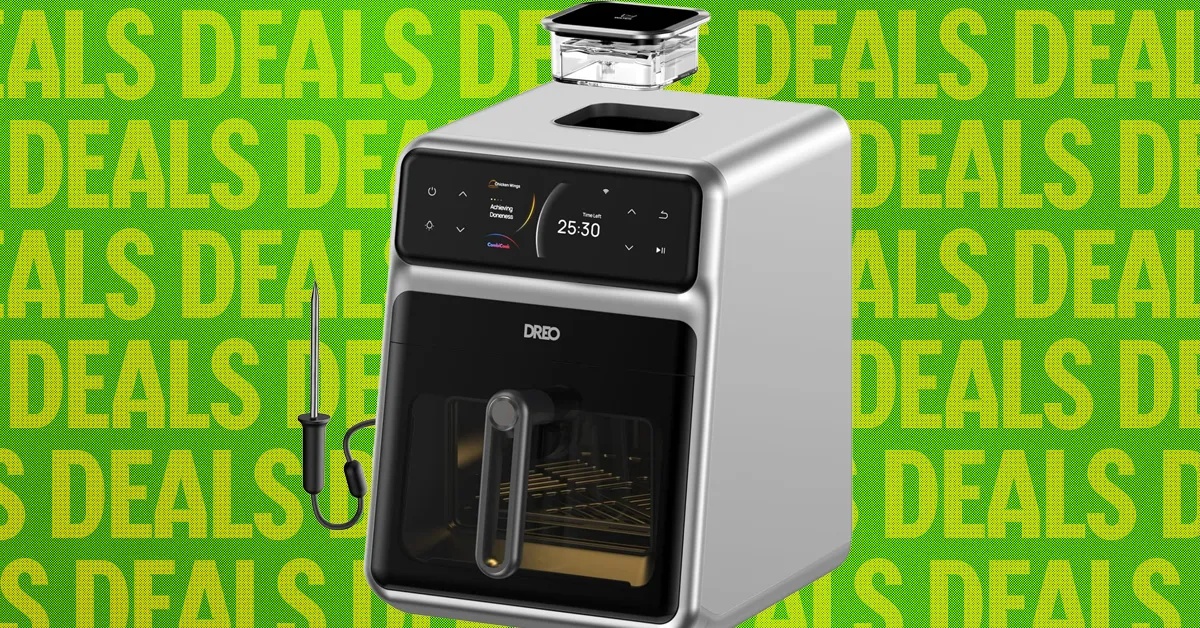
Dreo’s Spring Sale: Top Deals on Air Fryers, Heaters, Fans for the Next Generation

Innovation in the Kitchen: Dreo Unveils the Game-Changing Chefmaker Combi Fryer

In a landscape dominated by traditional appliances, disruptive innovations are redefining culinary technology. Recently, Dreo introduced the Chefmaker Combi Fryer, a device that transcends the conventional air fryer to encompass multiple functionalities—from precision meat cooking to steaming and app-controlled roasting. This development underscores a broader industry shift: the convergence of smart technology, disruption of established cooking paradigms, and the quest for convenience, precision, and quality in modern kitchens.

The Chefmaker Combi Fryer exemplifies technological innovation with its robust feature set. According to industry assessments, it offers guided, probe-assisted cooking ideal for steaks, chops, and roasts, alongside steam functions to preserve moisture on large cuts of meat. This combination drastically disrupts traditional cookware competition, positioning itself as a comprehensive solution for both amateur and professional chefs. Analysts from Gartner and industry futurists like Elon Musk underscore that this kind of multi-functional device facilitates business disruption, challenging manufacturers of standalone appliances and igniting a competitive push toward intelligent, integrated kitchen equipment.

Beyond mere innovation, the device embodies a business model shift driven by consumer appetite for smarter, more efficient products. The current market trend indicates an increasing appetite for home automation and precision cooking, propagated by the rise of app-controlled devices. The price point—nearly 44% off during Dreo’s spring sale—demonstrates an aggressive strategy to capture market share and accelerate adoption among younger, tech-savvy demographics. Industry leaders predict that such pricing strategies will intensify, forcing legacy appliance companies to adapt or risk obsolescence. From a business implications perspective, the proliferation of smart, multi-use appliances could catalyze a wave of industry consolidation centered on AI-enabled kitchen tech, with dominant players like GE, Whirlpool, and emerging startups fighting for dominance.

However, the disruption isn’t without challenges. Critics note, particularly in tech circles influenced by Peter Thiel’s emphasis on monopoly-driven innovation, that early adoption depends heavily on reliable temperature regulation—something the Chefmaker still refines. While the probe-assisted mode is precise, non-probe operations can swing ±20°C, exposing a potential flaw that could hinder widespread trust. For businesses, this signifies the importance of continued R&D investment in sensor accuracy and AI calibration to ensure consumer confidence and longevity of the product line. The device’s ecosystem, bolstered by an active app interface, could pave the way for an era of connected, intelligent kitchens—aligning with future trends predicted by MIT researchers and industry analysts, highlighting the urgency for incumbents to innovate rapidly or face obsolescence.

As this wave of innovation progresses, it is clear that the future of culinary technology will be characterized by smarter, more integrated appliances. With companies racing to embed AI, IoT connectivity, and user-friendly interfaces into everyday devices, the disruption of traditional kitchen appliances offers a preview of how entire industries—from manufacturing to retail—must pivot swiftly. For the young, tech-driven consumer, this signifies an exciting frontier where convenience meets precision, and where early investment in disruptive technologies could yield substantial competitive advantages. Overall, the industry must move at a relentless pace—embracing innovation or risking being left behind in a rapidly evolving ecosystem driven by the relentless surge of smart technology. The Chefmaker Combi Fryer not only symbolizes this shift but also heralds the beginning of a new era for the global tech and appliance markets—one marked by disruption, innovation, and the imperative to adapt.

Social Media Auto Publish Powered By : XYZScripts.com