Matox News

Truth Over Trends, always!

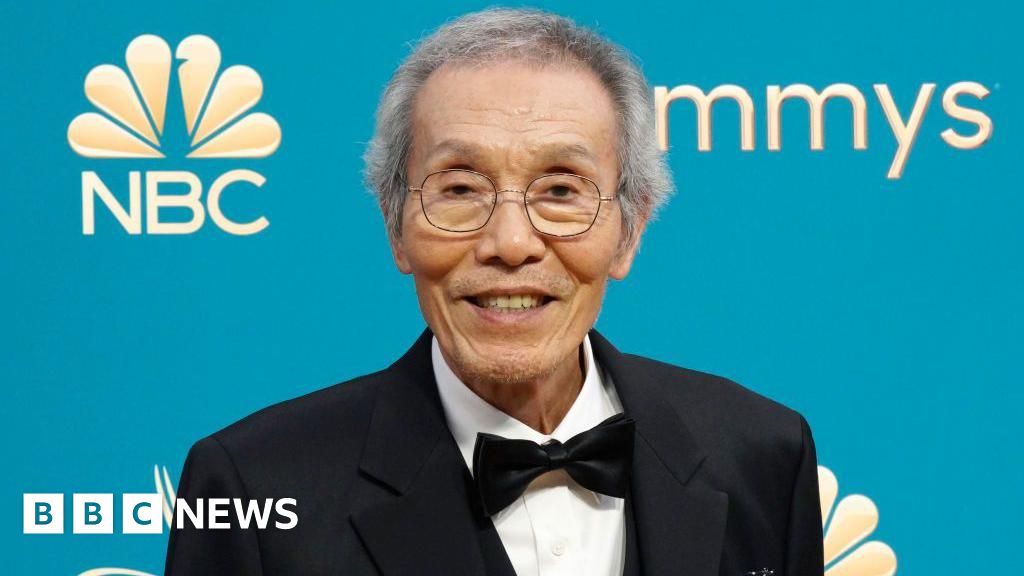
Squid Game star cleared of false misconduct allegations

The recent legal developments surrounding South Korea’s beloved actor O Yeong-Su, star of the global sensation Squid Game, underscore the complex intersection of fame, justice, and societal values in the modern era. Initially charged with allegations of sexual misconduct dating back to 2017, the case has ignited fierce debates both domestically and internationally about the boundaries of truth and the impact of social narratives. The court’s decision to overturn the guilty verdict and acquit O Yeong-Su raises vital questions about how nations grapple with accusations that threaten to tarnish cultural icons, especially when the alleged crimes are distant in time and clouded by evolving memory and societal pressures.

Turning Points in Justice and Cultural Shifts

  • In 2022, O Yeong-Su was convicted and sentenced to an eight-month suspended prison term, a verdict that immediately sparked outrage among feminist groups and social advocates who accused the justice system of shielding abuses within South Korea’s theatre and entertainment spheres.
  • However, in a dramatic turn, the Suwon District Court in South Korea overturned this conviction in 2024, citing the possibility that the victim’s memory could be distorted over time and noting her apology during the legal proceedings.
  • This decision has intensified the ongoing debate about the treatment of sexual assault allegations in a society where traditional values clash with progressive calls for accountability, especially within the arts and cultural sectors.

Distinguished **analysts** and **historians** have warned that such cases become pivotal points for the nation’s moral and judicial trajectory. They underscore the importance of safeguarding the presumption of innocence while confronting the societal undercurrents that influence public perception and legal outcomes. How South Korea balances these factors now will influence its legal worldview and societal cohesion for generations to come.

Implications for Global Perception and Social Justice

South Korea’s case is not isolated; it reflects a broader shift seen across several societies where public accountability collides with cultural sensitivities and social media’s influence. For international institutions, such as the United Nations and various human rights organizations, the verdict embodies a critical lesson: social justice must not be weaponized to silence dissent or protect the powerful. Yet, it also highlights the danger of rushing to judgment, especially when legal proceedings hinge on memories that can evolve or be tainted by societal biases.

As global eyes watch, escalating tensions could foment a precipice where justice and political correctness are misaligned. The case echoes debates about sexual violence in the *meToo* era but also reveals the potential for societal backing of such allegations to be manipulated, ultimately endangering genuine victims and fostering skepticism that undermines the very causes these movements seek to champion.

In the broader context, North Korea, China, and other authoritarian states observe these fissures cautiously. Their leadership likely perceives these controversies as opportunities to reinforce control over cultural narratives, positioning themselves as the guardians of tradition against what they portray as Western-influenced social liberalism. Conversely, Western and liberal societies risk sliding into complacency or overreach, as seen in instances where justice appears compromised or manipulated for ideological gain.

What Lies Ahead: The Weight of History

The case of O Yeong-Su is more than a trial of an individual; it embodies how nations confront their evolving moral standards amid a rapidly changing world. Historians project that the decisions made now will echo for decades, shaping how future generations perceive justice, arts, and societal accountability. With the weight of history bearing down, the ongoing tug-of-war between tradition and progress continues to carve its mark across East Asia and the globe at large. As the story unfolds, the world watches a society at a crossroads—where every verdict, every social debate, becomes a chapter in history’s relentless march towards an uncertain future.

Squid Game: The Challenge Season Two – A Stark Reflection of Today’s Cultural Tensions

In a world increasingly captivated by screens and spectacle, culture remains the vital vessel of tradition, identity, and societal coherence. Yet, in the relentless pursuit of entertainment and profit, we find ourselves confronting a spectacle that almost seems to invert this truth—a grotesque mirror held up by Netflix’s Squid Game: The Challenge. This reality television adaptation shamelessly embodies the brutal logic of hyper-competition, turning human suffering into a commodified showcase. As critics have noted, the producers deny the underlying truth—that it’s merely a reflection of the original artsy dystopian drama—yet the spectacle’s essence is painfully clear: it’s a game of survival, where humiliated contestants are pawns in a high-stakes ritual designed more for voyeuristic thrill than meaningful critique. Such moments underscore a troubling cultural turn, where the fascination with violence and desperation erodes traditional notions of dignity and community, reducing human lives to tokens in a capitalistic game of captivation.

At its core, culture is more than mere entertainment; it is the narrative of our collective memory and the prophecy of our shared future. The unabashed monetary reward of over four million dollars propels the participants into a wild frenzy that reveals much about contemporary society’s values—money as the ultimate measure of worth, competition as the sole form of identity. The contestants’ conduct, orchestrated for the grand prize, echoes Ortega y Gasset’s reflections on the “mass-man,” whose social identity dissolves into the relentless pursuit of material success. The spectacle forms a perverse theater where our societal virtues of camaraderie, sacrifice, and dignity are schnell replaced by greed, treachery, and self-interest. The staged betrayals, the mock deaths, the self-destruction—all are dramatizations of a cultural nightmare where the individual’s worth is reduced to how cheaply they can sell their humanity for a shot at riches.

This phenomenon invites a stark reflection from thinkers like Chesterton, who warned that losing one’s sense of cultural roots invites a descent into barbarism, where human life becomes mere collateral damage in a race for wealth. Tocqueville’s insights on American individualism resonate here: unchecked pursuit of self-interest, when divorced from the binding threads of shared moral and cultural tradition, results in a society that is ultimately fragmenting itself. What we witness in Squid Game: The Challenge is less a critique and more a symptom of that fracture—a society that has forgotten its roots and now celebrates the spectacle of its own moral decay. The game’s twists and sob stories are but distractions from the core truth: that modern entertainment often serves as a mirror reflecting society’s soul, which, at this moment, appears torn and longing for a deeper connection to the authentic.

In this cultural landscape, where memory and prophecy intertwine, the danger lies in mistaking the spectacle for significance, the competition for identity itself. As T.S. Eliot lamented, the true crisis of modernity lies in a loss of shared purpose—a fragmented narrative where cultural symbols become mere commodities. Yet, beneath the degradation, there remains a seed of hope—a reminder that culture is the sacred ground where humanity cultivates itself, where tradition shapes the future. We must recognize that true culture guards the sacredness of human life, fostering virtues that transcend mere monetary gain. Like the enduring words of Chesterton, our cultural task is to forge a new meaning from the chaos, reweaving the fabric of tradition with conscious will and moral clarity. For in the end, culture is both memory and prophecy; it is the echo of who we were and the blueprint of who we will become. It is, after all, the poetry of the human spirit—an ancient chorus echoing through the ages, calling us to remember and to dream anew.

Social Media Auto Publish Powered By : XYZScripts.com



