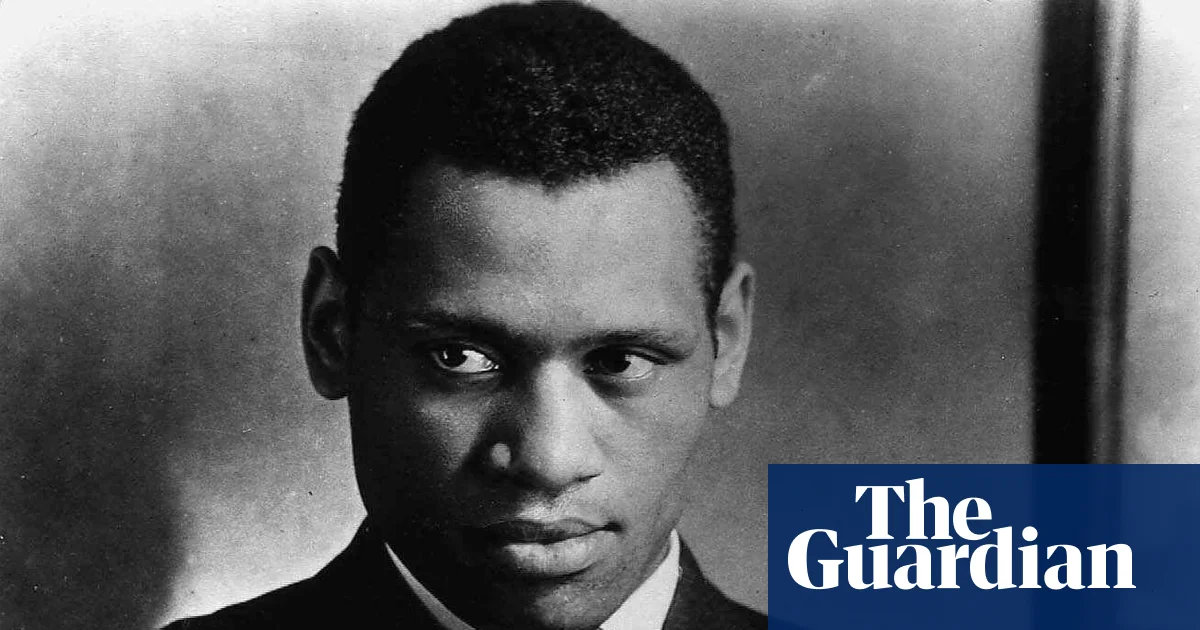

In an era where cultural memory is often manipulated for political expediency, the story of Paul Robeson stands as a testament to the profound link between culture, identity, and societal values. Robeson, a prodigious talent whose talents spanned opera, film, sports, and law, was once the most celebrated Black American in the world. His towering voice, compelling performances on Broadway—most notably as Othello—and achievements as an athlete and lawyer made him a symbol of excellence and integrity. Yet, for all his accomplishments, his legacy was systematically erased during the Cold War era, obliterated by a combination of political blackmail, ideological purges, and the self-serving silences of societal elites—an echo of historical parallels where state power sought to silence dissenters and redefine cultural memory.
Robeson’s experience reveals the dangerous potential of culture as a battleground for societal control. His refusal to denounce the Soviet Union during the Cold War, coupled with his outspoken advocacy for human rights, led to his marginalized status and the denial of his passport for nearly a decade—a stark reminder of how political conformity can threaten the very fabric of individual expression. The Great Forerunner, as he was called, was subjected to a brutal campaign of erasure that sought to diminish his influence, even removing him from textbooks and public esteem. This systematic suppression reflects a profound truth: culture functions as the embodiment of collective identity and societal memory, and whoever controls it wields immense power over the narrative of a nation’s soul.
Today’s cultural landscape echoes these struggles in ways both subtle and overt. The ongoing efforts to downplay or ban Black history in public schools, the assault on traditional narratives, and the hostility toward figures like Malcolm X—reclaimed and revered by a new generation—are reminiscent of Robeson’s own marginalization. Just as Jack Robinson and Robeson once confronted the double-edged sword of societal expectations and political loyalty, modern voices confront the distortion of history and the suppression of cultural identities that threaten to homogenize the national story. Cultural critics like G.K. Chesterton and T.S. Eliot have long argued that culture sustains the moral fabric of society; its erosion is an erosion of the very essence of community and tradition. As Tocqueville warned, democracy’s greatest danger lies not in tyranny but in the tyranny of forgetfulness, where history and culture are so manipulated that the collective memory becomes a mere echo of power.”
- Reclaiming American history entails recognizing figures like Robeson as the true architects of cultural resilience and national authenticity.
- The ongoing debate over the teaching of Black history—its suppression and revival—underscores a broader struggle for the soul of the nation.
- The ideals Robeson embodied—excellence, integrity, and republican virtue—remain vital in fostering a society rooted in shared memory and collective purpose.
In the end, culture is both the memory of humanity and its prophecy. It echoes the voices of ancestors and echoes the hopes of future generations, shaping a society that honors its roots while daring to envision a just tomorrow. As the poet T.S. Eliot reminded us, “For last year’s words belong to last year’s language, and next year’s words await another voice.” Robeson’s voice, silenced too long, beckons us to remember that true culture—like true liberty—is composed of the unyielding symphony of tradition and the brave promise of renewal, forever standing as a testament to the enduring spirit of a people who refuse to be silenced. Culture, therefore, remains humanity’s celestial compass—guiding us through darkness, illuminating our collective memory, and whispering whispers of what yet might be.