Matox News

Truth Over Trends, always!

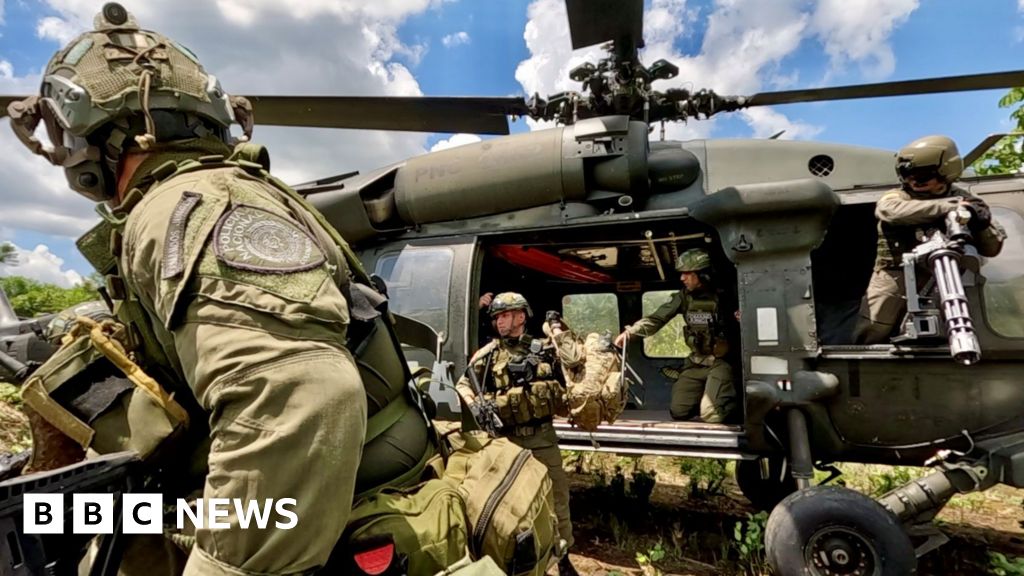
Watch: BBC Reports on Colombian Commandos Staying Strong Against Persistent Drug Gangs

US-Colombia Summit Highlights Strategic Shifts in Latin America

In a significant display of diplomacy and alliance-building, President Joe Biden of the United States and President Gustavo Petro of Colombia recently convened to address shared challenges in the region, with a particular focus on regional security and drug trafficking. These high-level talks mark a renewed commitment from two nations deeply intertwined through history, now confronting contemporary issues with strategic resolve.

The summit occurred amidst an evolving geopolitical landscape, where the U.S. aims to assert its influence in Latin America against a backdrop of rising regional powers and shifting alliances. Critics argue that the meeting underscored the importance of maintaining American dominance through strategic partnerships, especially at a time when drug trafficking remains a persistent threat to stability and public health. The leaders discussed plans to bolster cooperation, including enhanced intelligence sharing, military aid, and joint operations targeting narcotrafficking networks.

In tandem with diplomatic engagements, on-the-ground intelligence operations continue to play a critical role. Recently, journalist Orla Guerin reported from within a Colombian police unit tasked with locating and destroying clandestine jungle cocaine labs—these remote operations are emblematic of the ongoing efforts to dismantle drug trafficking infrastructure. Such units face harsh terrain and sophisticated enemy defenses, illustrating the intensity of the clandestine battle that threatens to spill over international borders. Analysts suggest that these actions are crucial, not only for regional stability but also in curbing the flow of illegal substances into the United States and beyond.

Implications for Regional Security and International Relations

  • Enhanced cooperation between the U.S. and Colombia signals a strategic pivot toward more active counter-narcotics campaigns that incorporate both military and socio-economic measures.
  • The ongoing fight against drug cartels underscores the need for a comprehensive approach—military strikes, community engagement, and international legal cooperation—to effectively weaken these criminal networks.
  • Global institutions, such as the United Nations Office on Drugs and Crime, warn that failure to address these issues could lead to increased violence, migration crises, and regional destabilization, threatening broader international stability.

Internationally, the geopolitical impact of these developments extends beyond Latin America. As the U.S. seeks to maintain influence, some observers highlight the risk of militarization fueling local unrest or empowering authoritarian tendencies, especially in countries like Colombia where government legitimacy remains fragile. Historians and regional analysts caution that the decisions made today could shape the geopolitical fabric for decades to come. Should these collaborative efforts succeed, they could serve as a model for international cooperation against transnational crime. However, failure to adapt strategies or address socio-economic root causes risks entrenching instability and chaos.

As history continues to unfold in the dense jungles and political chambers of Latin America, the weight of choice hangs heavily. The battle against narco-trafficking is more than a fight over illegal substances; it is a defining moment to demonstrate resolve, sovereignty, and the capacity to shape the future. The world watches as these nations forge a fragile path toward stability—an uncertain journey marked by perseverance, diplomacy, and the relentless pursuit of order amid chaos. The next chapter remains unwritten, but its implications will resonate across generations to come.
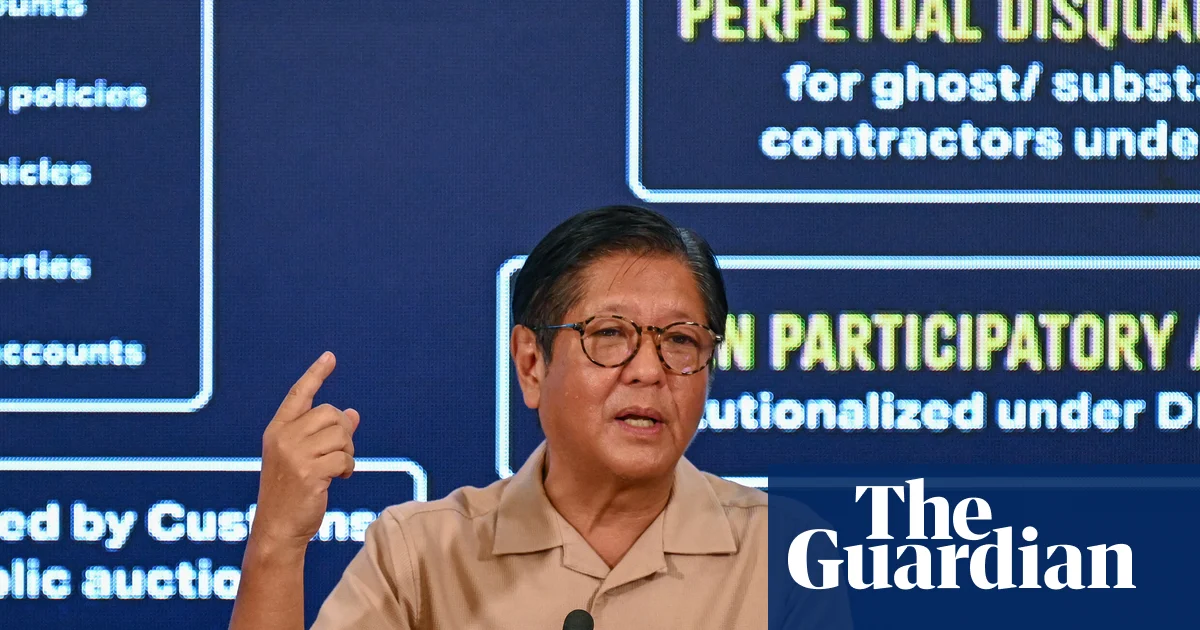

Marcos Denies Sister’s Cocaine Claims: Staying Focused as President

As Philippines grapples with a wave of political turbulence, recent statements by senator Imee Marcos have ignited a firestorm across the nation. Her unsubstantiated claims that President Ferdinand Marcos Jr. is a longtime drug addict, coupled with accusations of his supposed cocaine dependence, serve as a stark reminder of the fragile state of governance in a country plagued by endemic corruption, natural disasters, and social unrest. The allegations, rejected outright by the Marcos administration, appear to be an attempt to divert attention from a burgeoning scandal over flood-control funds that has incited mass protests in Manila.

The scandal revolves around allegations that influential members of Congress and the Senate, some linked to the Marcos family, siphoned off billions in kickbacks from construction companies responsible for flood control infrastructure. Investigations by a specially formed independent commission, alongside a Senate committee, have uncovered evidence suggesting that many of these projects were substandard or never completed at all—directly contributing to the suffering of millions during the Philippines’ deadly typhoon seasons. Historians and international organizations warn that such endemic corruption undermines national resilience, especially in a nation where flooding and natural disasters are recurrent existential threats. The geopolitical impact of this scandal extends beyond Manila, reflecting the broader destabilization of regional governance and the international distrust toward Philippine institutions.

Adding fuel to the political fire, senator Imee Marcos posited that her brother’s alleged drug dependency has hampered his capacity to lead effectively, a claim she presented during a rally after alleging that his addiction traces back to their father, a former dictator. Her remarks, which allege that Ferdinand Marcos Sr. was a drug user during his presidency, carry a symbolic weight, threatening to tarnish the legacy of the Marcos family and destabilize the current government further. Her accusation that the president’s wife and children are also involved in drug use, though unsubstantiated, demonstrates the deep divide within the family and highlights how personal conflicts are being weaponized in the national political discourse. Critics from across the spectrum warn that such accusations, lacking evidence, threaten to erode public trust in the legal and political processes at a critical juncture, where the nation’s stability hangs in the balance.

Furthermore, regional tensions are clearly rising. Rodrigo Duterte, the controversial predecessor, has been a persistent critic of Marcos, even with his own past admissions of fentanyl use, an issue now tangled in the broader narrative of drug-related allegations. His daughter, Vice President Sara Duterte, has publicly taken aim at the Marcos administration, criticizing corruption and political corruption in an echo of dissent that reflects the ongoing power struggles within the country’s elite. The global community watches with concern as the Philippines, a key strategic player in Southeast Asia, risks slipping further into instability where alleged corruption and internal disputes threaten to undermine regional security and economic recovery. Critics and analysts warn that these internal divisions could weaken the nation’s defenses against external influences and escalate regional volatility.

As this political saga unfolds, the weight of history bears heavily on the Filipino people and their institutions. From the shadowy past of authoritarian rule to the current accusations of corruption and personal downfall, the trajectory of the Philippines teeters on a historic precipice. The choices made by its leaders—whether to embrace transparency or indulge in political sabotage—will determine if the nation can withstand this storm or be lost in the turbulent tides of history yet to be written. The world watches, as the Philippines confronts its most confronting challenge yet—how to forge unity from chaos, justice from accusation, and a future from the shadows of its past.

Joey Barton Found Guilty of Offensive Social Media Posts — Staying Accountable

Global Impact of Social Media Censorship and Free Speech Laws

In recent international developments, the case of Joey Barton, the former professional footballer, underscores a broader global debate concerning free speech and censorship in the digital age. Found guilty at Liverpool Crown Court of six counts of sending *grossly offensive electronic communications*, Barton’s conviction highlights the fine line governments are increasingly crossing between protecting societal harmony and infringing on individual liberties. His case, involving posts on X (formerly Twitter), demonstrates how social media platforms have become battlegrounds for contentious free speech issues—issues that resonate far beyond the United Kingdom and into the fabric of international law and policy.

  • Authorities across nations are debating laws that regulate online speech, often citing the need to curb hate speech, misinformation, or harassment.
  • However, critics argue that such legislation risks unwarranted suppression of dissent and the chilling effect on open discussion, particularly among youth and activists.
  • Historically, international organizations like the United Nations and regional entities have tried to strike a balance, yet inconsistencies across nations reveal a power struggle over autonomous governance of digital rhetoric.

The geopolitical impact of these legal battles extends worldwide, influencing everything from diplomatic relations to societal stability. Take, for example, the recent actions by some European governments to tighten online speech laws, citing the protection of socio-political order. Conversely, countries like Russia and China have moved further to outright ban certain platforms, effectively creating digital silos that inhibit the free flow of information especially during international crises. These diverse approaches reflect a shift in the global power topology, where sovereignty is increasingly intertwined with control over digital narratives.

Moreover, international organizations are raising alarms about the potential for overreach. The Council of Europe and UN Human Rights Office warn that expanding laws to suppress offensive speech could also silence critical voices, thereby stunting societal resilience and democratic growth. Analysts emphasize that such policies disproportionately impact youth, who are digital natives most vulnerable to censorship and misinformation alike—yet often the standard-bearers of challenging authority. The case of Barton, along with similar incidents globally, acts as a potent indicator of these ongoing struggles—each legal action serving as a test of how nations interpret the delicate balance between security and liberty.

As history continues to unfold, the stakes are clear: the decisions made today regarding digital speech laws could sculpt the socio-political landscape for generations. The world watches, weighing the safety of societal cohesion against the fundamental rights of expression. The confrontation over free speech in the digital sphere is more than legal wrangling; it is the battleground for the values that will define our era. With every new policy, every conviction, and every crackdown, the blueprint of future international relations takes shape—fragile yet formidable, as the weight of history presses on.

Social Media Auto Publish Powered By : XYZScripts.com



