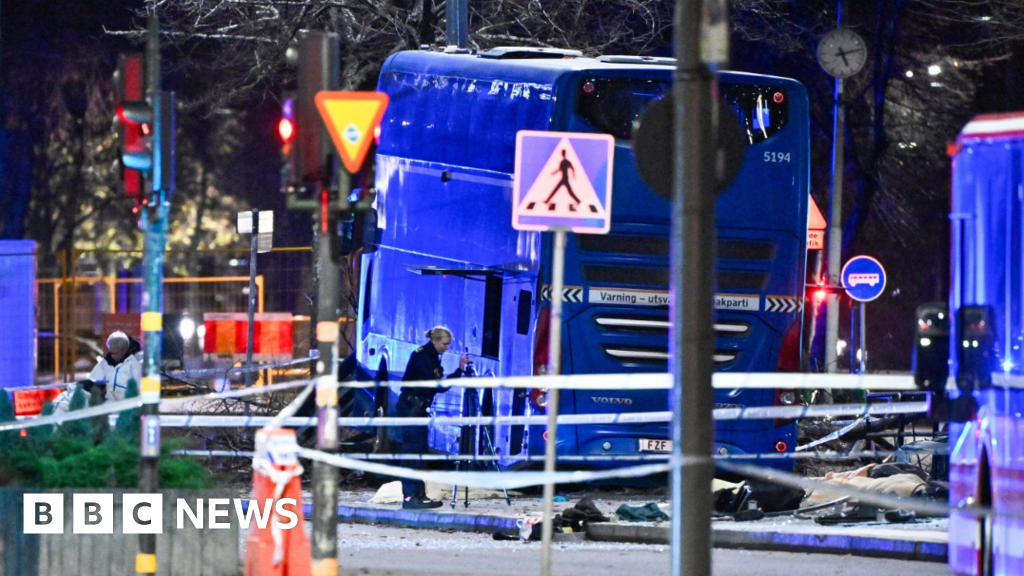

The recent bus crash in central Stockholm marks a stark reminder of how fragile safety can be amid urban modernity, even in nations often seen as paragons of stability. At approximately 15:23 local time, a double-decker bus violently collided with a bus stop on Valhallavägen, near the esteemed Royal Institute of Technology. Initial reports indicate multiple casualties, with several individuals injured or killed; the full toll remains uncertain as authorities continue their investigations. Swedish police have confirmed the arrest of the bus driver and have launched a manslaughter investigation, emphasizing the gravity of the incident and the need for thorough accountability. While authorities seek clarity, the images emerging from the scene—rescues helping trapped victims—highlight the immediate human tragedy beneath the unfolding crisis.
This incident underscores the yet-unresolved challenges faced by European nations in maintaining robustness and safety within densely populated urban centers. Analysts point out that while Sweden has traditionally boasted high standards of living and effective governance, recent episodes—be they accidents or geopolitical shifts—expose vulnerabilities that cannot be overlooked. Some experts argue this tragedy might amplify calls for stricter safety protocols and infrastructure reviews, particularly on high-traffic routes. The location near a prominent university also raises questions about urban mobility, sidewalk safety, and emergency preparedness—areas where many European cities are trying to modernize amid mounting pressure to sustain societal resilience. Meanwhile, the international community observes closely, wary of potential repercussions for public safety policies across Europe, especially in the face of broader security concerns.
Looking beyond Stockholm, this event resonates with the global significance of how decisions shape societal safety. As noted by international infrastructural watchdogs and historians, the aftermath of such crises often prompts a reassessment of transportation safety, emergency response readiness, and government accountability. Institutions like the European Union are called upon to evaluate potential vulnerabilities in member states’ urban environments, advocating for preventive measures that could avert future tragedies. Moreover, the incident sparks reflection on how societal pressures—rising immigration, urban congestion, and political stability—interact with everyday safety issues. In this context, the tragedy becomes more than a localized accident; it symbolizes broader societal tensions and the imperative for prudence in policymaking.
As the world watches projections of geopolitical shifts and national stability, the Swedish tragedy leaves an indelible mark—a stark reminder that history remains in the making, written in moments of chaos and crisis. With each unfolding detail, the shadow of uncertainty lingers, calling into question whether societies are prepared to confront these vulnerabilities or if future calamities will continue to unfold just like this: suddenly, violently, and painfully. In the end, the lessons drawn here will echo through time, emphasizing that the true strength of nations is measured not in their peaks of prosperity but in their resilience against unforeseen upheavals. The weight of history, heavy and unyielding, continues to press down on Stockholm—waiting for a response, waiting for a new chapter to begin.