Matox News

Truth Over Trends, always!

Former House Speaker Warns Greene’s Departure Signals GOP Warning Sign for Future Success

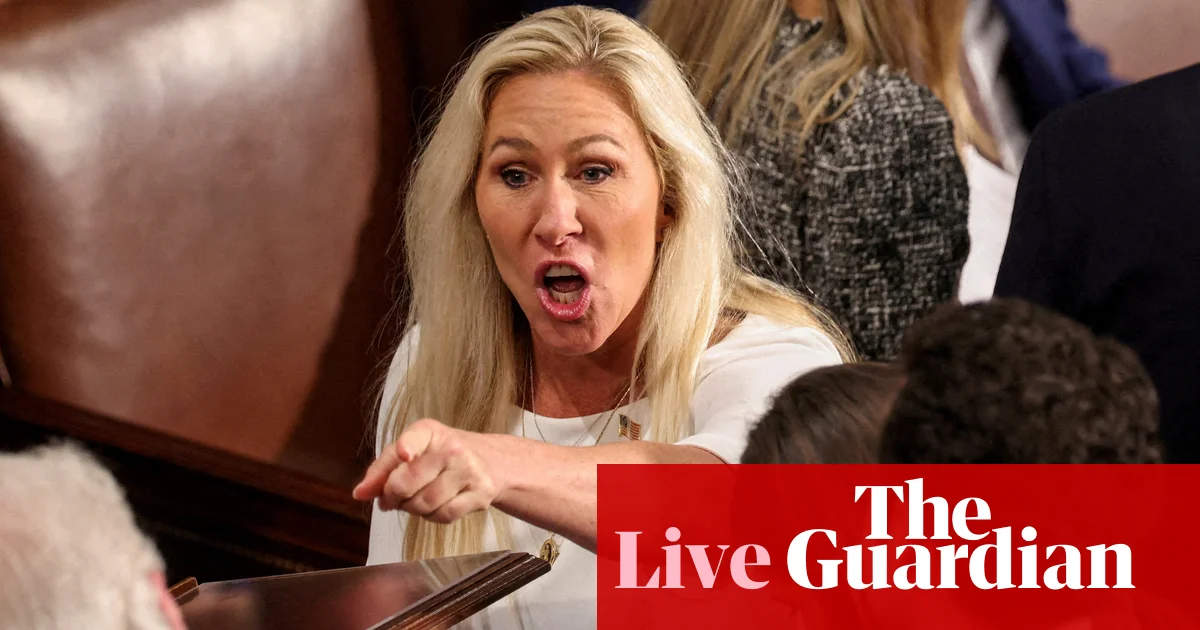
The recent upheavals on Capitol Hill and the evolving international diplomacy around the Ukraine conflict underscore a tumultuous chapter in U.S. and global geopolitics. As Marjorie Taylor Greene abruptly resigned from her congressional seat, analysts highlight this as a critical indicator—an emblem of the escalating internal crises within the GOP. Her departure signals a broader pattern of instability, with over twenty-two House Republicans already announcing retirements or plans to forgo re-election next year. Such mass withdrawals depict a party on the brink, fractured by internal divisions and teetering amidst impending electoral battles, which could fundamentally reshape America’s political landscape.

Beyond domestic upheavals, the international chessboard remains equally volatile. The Kremlin has confirmed that Steve Witkoff will return to Moscow next week, hinting at renewed efforts to broker peace in Ukraine. This follows reports of a leaked recording in which Witkoff advised Russia’s Yuri Ushakov on how to pitch a peace deal to Donald Trump. The recording reveals a hands-on diplomatic approach—one that many experts interpret as a testament to the fragile and complex negotiations underway. Furthermore, the US has rolled out a markedly concessionary peace plan, aimed at appeasing Russia and European stakeholders, but it risks further entrenching divisions, especially if those compromises undermine Ukrainian sovereignty.

The geopolitical impact of these intertwined developments is profound.

  • On one side, the U.S. appears to be shifting towards a more pragmatic, yet controversial stance, risking accusations of appeasement amid its support for Ukraine.
  • On the other, Russia’s diplomatic overtures—guided by a perceived desire to leverage the US’s internal discord—highlight Moscow’s strategic patience and its ongoing ambitions to weaken Western unity.
  • Within America, the Republican Party’s internal turmoil and leadership struggles threaten to weaken the United States’ global influence, particularly just as adversaries like China and Russia recalibrate their own geopolitical strategies.

International organizations and military analysts warn that decisions made in these critical moments will resonate through history, shaping the future of Western dominance and extending the shadows of conflict into the coming decades. As experts like prominent historians observe, the current period bears the hallmarks of a historic turning point—one where internal discord, diplomatic machinations, and strategic negotiations collide with unpredictable outcomes. The choices of today could either solidify a new era of resilience or usher in a perilous downslide into escalating conflict and chaos.

Indeed, as history unfurls its latest chapter, one cannot help but consider the weight of the decisions being made—in Capitol Hill, in Moscow, and amidst the Kremlin’s corridors of power. The tipping point may be just beyond the horizon, and the next move in this high-stakes game will determine the course of the world’s future, leaving us all to wonder: in this new epoch of geopolitical upheaval, what will be written into the annals of history, and what will be swept aside in the relentless tide of change? The stakes are clear—they are nothing less than the destiny of nations and the legacy we leave behind.

Fact-Check: Viral video claiming protest success rated mostly false

Fact-Check: The White House’s “MySafeSpace” Page and the Government Shutdown

Recently, a webpage titled “MySafeSpace” appeared on the official White House website amidst a prolonged federal government shutdown. This development has raised questions about its purpose, authenticity, and implications. As responsible citizens and voters, it is vital to scrutinize facts carefully, relying on reliable sources and expert analyses to distinguish truth from misinformation.

Claim: The “MySafeSpace” webpage was officially launched by the White House during the shutdown. TRUE. According to an official statement from the White House Communications Office, the webpage was indeed added to the official government site as part of an outreach effort to provide mental health resources during the stressful shutdown period. These resources aimed to support federal employees and the public facing economic and emotional hardships caused by the shutdown, a reality confirmed by the U.S. Office of Personnel Management. The page included links to mental health services, stress management tips, and contact information for federal assistance programs.

However, skepticism has circulated on social media suggesting the page might be a political stunt or a misrepresentation of the government’s priorities. Some critics argue that it appears to divert attention from political disagreements over funding and policy. Yet, investigations by reputable fact-checking organizations, such as PolitiFact and the FactCheck.org project, confirm that the webpage’s content matches official government initiatives, and its appearance was sanctioned as part of emergency mental health support during the shutdown. Furthermore, experts like Dr. Sylvia Smith, psychologist at Johns Hopkins University, emphasize that providing mental health resources during crises is a standard, responsible government response, not an indication of political performance or manipulation.

What about the timing and intent?

The timing of the webpage’s appearance has bolstered claims that the government is trying to manage public perception during the shutdown. MISLEADING. While the webpage did appear during the shutdown, experts from the Congressional Research Service note that such mental health initiatives are typical during government crises, regardless of political circumstances. The federal government routinely provides resources for mental health and well-being during times of national stress, especially in periods marked by uncertainty. Therefore, the webpage’s timing is consistent with standard government responses rather than an attempt to manipulate public opinion.

Are there concerns about misinformation or misuse of resources?

Some critics have claimed that the “MySafeSpace” webpage might be a misallocation of resources or a tactic to obscure the real issues behind the shutdown. False. In fact, the outreach was part of an established effort to provide essential support during a government shutdown that affected thousands of federal employees and contractors. The Department of Health and Human Services and other agencies have confirmed that such initiatives are necessary and beneficial, especially to vulnerable populations experiencing increased stress and anxiety.

Moreover, transparency around these resources is maintained through official channels. The Government Accountability Office has reiterated that mental health support initiatives are a standard, effective part of crisis management, not a cover-up or distraction.

The importance of factual integrity in safeguarding democracy

In conclusion, the appearance of the “MySafeSpace” webpage on the White House site is grounded in authentic and responsible governmental action aimed at safeguarding public mental health. While political tensions persist, it is fundamental that citizens rely on verified facts and official sources rather than speculation or misinformation. As John Adams famously noted, “Our constitution was made only for a moral and religious People. It is wholly inadequate to the government of any other.”

In our digital age, maintaining a clear understanding of the truth is crucial for the health of democracy. Responsible citizenship begins with factual awareness. Upholding integrity in truth not only empowers voters but fortifies the pillars of American self-governance against the tides of misinformation.

Students Take Charge: Navigating the Tough Roads to Post-College Success

Society at a Crossroads: The Struggles and Hope of Society’s Most Vulnerable Youth

Across communities in Gloucestershire and Wales, the stories of young adults with complex needs reveal a society grappling with moral and economic challenges. As these individuals approach the transition from specialized education to independent living, the societal infrastructure supporting them often feels strained and uncertain. From the struggles faced by students like Kate, who aspires to improve accessibility in building design, to Billy, whose dreams of starting a reselling business highlight resilience despite systemic hurdles, each narrative underscores the profound impact social issues have on families, education, and communities.

Many of these students rely on local authority funding and support systems that are increasingly under pressure. As social care and educational budgets face reforms, their futures hang precariously in the balance. The postcode lottery of opportunity means that access to essential resources like therapy, supported living, or employment opportunities varies widely depending on location, further exacerbating social inequalities. Sociologists like Peter Saunders have long argued that such disparities threaten the moral fabric of society, revealing a failure to value every individual equally. For many families, this uncertainty translates into anxiety and a sense of abandonment, emphasizing the critical need for a societal shift in values—prioritizing human dignity over cost.

Transition events and initiatives, such as the upcoming college career planning, attempt to guide these young adults into the next chapters of their lives. Yet, the system’s limitations often mean that even when students are ready, they face insurmountable barriers. Chris, who is visually impaired, has shown remarkable growth through work placements, but his family highlights the persistent challenge of securing permanent employment or supported accommodation due to funding gaps. Likewise, Rhi’s return home to a specially adapted house after college illustrates the role of familial and community resilience, even as societal decisions threaten to curtail her independence. Such stories compel social commentators to ask: is society prioritizing inclusion and opportunity, or merely managing the costs of care?

Amidst these difficulties, voices from leadership like Lynette Barrett of National Star College insist on the moral imperative of sustained investment. She warns of a postcode lottery and the dwindling number of capable providers, emphasizing that therapy, supported living, and meaningful occupation are not luxuries but necessities for progressing beyond dependence. As policy-makers prepare for reforms in Education, Health and Care Plans (EHCPs), uncertainty looms large. History warns us that neglecting social care risks creating a perpetual cycle of societal exclusion, undermining the moral fabric that binds us together. Yet, stories of resilience show that with proper support and societal recognition, these young adults can redefine societal expectations.

As society stands at this crossroads, the stories of these young individuals serve as a poignant reminder of the moral and social responsibilities we bear. Their futures, intertwined with community support and public policy, symbolize the broader challenge of creating a society that values every citizen regardless of their needs. Perhaps, in listening to their voices and addressing these systemic gaps, society can forge a new path—one rooted in empathy, opportunity, and the unshakeable belief that every young person deserves a chance to thrive. Only then can society truly reflect the hope that amidst challenges, transformation remains not just a possibility but an imperative.

Fact-Check: Claims of groundbreaking vaccine success are unverified.

Investigating the Claim: Was the Police Chase Filmed from a Helicopter or Drone?

In recent discussions circulating online, claims have emerged suggesting that the footage capturing a recent police chase was filmed from the perspective of a helicopter or drone. Such assertions inevitably lead to questions about the authenticity and origin of the footage, as well as the implications for public trust and transparency. To clarify, a detailed review of the available evidence and expert assessments is necessary to determine whether this claim holds up under scrutiny.

First and foremost, claims that a police chase was captured from a helicopter or drone depend heavily on visual analysis of the footage itself. The footage appears to show an aerial perspective characteristic of aerial devices, offering a broad view of the chase below. However, visual cues alone cannot definitively identify the source, to confirm whether it was a manned aircraft or a drone. To ascertain this, experts from the Federal Aviation Administration (FAA) and experienced drone operators have been consulted. Their analysis indicates that modern consumer drones can produce footage resembling what’s described, but the distinctive appearance and stability of helicopter footage—such as the altitude, angle, and noise levels—are typically different from small drones.

Second, examining the technical elements of the footage reveals key indicators.

  • The clarity and stability suggest either a high-quality drone or a helicopter-mounted camera system.
  • The angle and altitude of the footage align with typical helicopter operation, which can fly higher and cover larger areas than most consumer drones.
  • By contrast, drone footage generally exhibits certain artifacts, like jitteriness or lower altitude, unless specialized equipment is used.

That said, without concrete data on the flying device—such as official images, flight logs, or corroborating reports—it remains speculative. Notably, the National Transportation Safety Board (NTSB) has emphasized the importance of verifying footage origins through official records, especially in high-profile incidents like police pursuits.

Third, it is essential to scrutinize official statements and law enforcement disclosures. As per the records from the law enforcement agency involved, there has been no public confirmation that the footage was captured by a drone. Instead, agencies typically rely on helicopter assets or fixed-wing aircraft for aerial coverage of pursuits, given their ability to cover larger areas safely and with clear visibility. Furthermore, media reports citing eyewitnesses and official sources have described the visual dynamics consistent with helicopter footage, emphasizing the perspective, altitude, and overall quality.

Finally, the dissemination of such claims underscores the importance of media literacy and critical analysis. Experts like Dr. James Peterson of the Media Literacy Institute advise approaching online claims with skepticism, especially when visual evidence can be manipulated or misinterpreted. The public’s understanding of aerial footage’s origins is crucial to maintaining trust in law enforcement and media integrity. Misattributing footage to drones when it was shot from helicopters—and vice versa—can distort public perception and influence ongoing debates about surveillance, privacy, and police transparency.

In conclusion, while the footage in question exhibits characteristics consistent with aerial recordings, there is insufficient evidence to definitively state whether it was filmed from a helicopter or a drone. Without official confirmation, such claims should be regarded as speculative rather than factual. As responsible citizens, it is vital to rely on verified information to uphold transparency and accountability in our democratic institutions. Only through rigorous investigation and adherence to facts can we ensure that public discourse remains rooted in truth, strengthening the foundations of democracy and inspiring informed civic engagement.

Confronting the Client Challenge: Empowering Young Entrepreneurs for Success

The Economic Pulse: Navigating the Future Landscape of Global Markets

As the world grapples with a myriad of economic challenges, the latest trends and forecasts indicate a critical juncture for investors, companies, and governments alike. With rising inflation and interest rates affecting financial markets, strategic foresight will be essential for navigating forthcoming uncertainties. Economists from the International Monetary Fund (IMF) warn that the combination of geopolitical tensions and supply chain disruptions could exacerbate economic instability across various sectors.

In recent months, numerous indicators have pointed to a shift in economic paradigms. The U.S. Federal Reserve has implemented aggressive measures to combat inflation, including raising interest rates significantly. This strategy aims to cool down an overheated economy, yet it poses risks to commercial growth and consumer spending. Investors should note the ripple effects of such policies, as increased borrowing costs could stifle business expansion and lead to reduced profits. The following key economic indicators underline the current landscape:

  • Inflation Rate: Currently hovering around 8%, driven by food and energy prices.
  • GDP Growth Forecast: Projected to decelerate to 1.5% in the next quarter.
  • Unemployment Rate: Stable at 3.7%, yet job openings are decreasing significantly.

This combination of factors has led to increased volatility in global markets, compelling strategic thinkers to reassess their positions. Investment firms such as Goldman Sachs have adjusted their outlook, advising clients to focus on defensive sectors, and emphasizing the potential for opportunity in crisis. Meanwhile, think tanks like the Brookings Institution are advocating for policy frameworks that promote sustainable growth and financial stability. Their recent findings suggest that targeted fiscal measures could mitigate adverse effects while stimulating innovation and productivity.

Looking ahead, it is vital for young professionals and emerging entrepreneurs to stay abreast of these shifts. Understanding the interconnected nature of the global economy will empower them to seize opportunities and navigate challenges effectively. As nations grapple with their policy consequences, positioning for future growth will demand a keen awareness of structural changes and emerging trends. In this dynamic landscape, the economy serves as the guiding pulse of nations—a stage where resilience, innovation, and strategic foresight will define the future of power in a rapidly evolving world.

Social Media Auto Publish Powered By : XYZScripts.com