
Matox News

Truth Over Trends, always!

A New Beginning for Sundance: Fresh Perspectives and What’s Ahead for the 2026 Film Festival

The Evolving Spirit of Sundance: A Reflection on Culture, Identity, and the Promise of New Horizons

Once heralded as the heart of independent American cinema, the Sundance Film Festival has long embodied more than mere entertainment; it is an emblem of cultural authenticity, tradition, and societal identity. Founded by the iconic Robert Redford, Sundance was initially a celebration of the rugged frontier spirit, a platform for filmmakers who dared to challenge the mainstream and craft stories rooted in authenticity and local color. As Ortega y Gasset observed, “A culture is the incarnation of the ideals, troubles, aspirations, and contradictions of its people.” Sundance’s identity has always been intertwined with this philosophy—an ongoing dialogue between art and life, challenging the uniformity of Hollywood and fostering the distinct voices that shape a nation’s soul. As the festival shifts from Park City to Boulder, questions arise about whether this migration signifies a recalibration of cultural priorities, or a necessary evolution in an era demanding resilience and reinvention.

The festival’s historical relevance extends beyond the arts into the very fabric of societal change. It has historically celebrated films that grappled with American values, social justice, and identity politics, echoing Tocqueville’s insights on the importance of local cultures as the foundation of democracy. Films like Little Miss Sunshine or Whiplash serve as milestones—not just for their cinematic artistry but for their reflection of American resilience and the unyielding pursuit of excellence amidst adversity. Yet, today’s Sundance faces a paradox: while technological advancements have democratized film production, making independent filmmaking more accessible, access to distribution and slots in the festival are tightenings of a gate increasingly guarded by economic interests and corporate financiers. This shift underscores Gasset’s assertion that culture, once a collective expression, is now often filtered through economic and ideological lenses, risking the dilution of authentic voices in favor of market-driven narratives.

The Cultural Shift: From Authenticity to Commercial Opportunism

Recent years have witnessed a transformation, wherein the historic Sundance ideal—an incubator for raw, unpolished stories—has become entangled with the commercial pursuits of streamers and studios. The festival now often reflects a stratification: the real films that challenge convention and inspire discourse, versus those crafted within a calculated, factory-like process aimed at pleasing a broad, attention-starved audience. Philosophers like Chesterton warned of the danger of losing sight of the true in pursuit of the merely entertaining, and modern Sundance seems caught at this crossroads. The remarkable success of films like Josephine, which tackles harrowing subjects with originality, exemplifies the enduring relevance of art that speaks to the human condition beneath the veneer of commercial appeal. Such films remind us that culture is the memory of society and the prophecy of its future, a prophetic voice echoing through the shadows of contentious and uncomfortable truths.

As critics and audiences grapple with shifting tastes, the festival’s market dynamics reveal an underlying tension: the blurred lines between artistic integrity and financial viability. The absence of broad studio backing and limited sales post-festival reflect a conservative climate, where risks are minimized, and content is scrutinized through the lens of profitability. Yet, hope persists in the form of genuine cinematic art—films like Josephine—a film that not only confronts a tough subject yet does so with profound originality—embodying the quintessential Sundance spirit: challenging, daring, and purposeful.

Looking Forward: A New Horizon for Sundance and Society’s Cultural Mission

As Sundance prepares to relocate to Boulder, echoes of historical parallels resonate: just as great movements in art and thought have sought new ground—be it the Renaissance’s movement from Florence to Venice or the Harlem Renaissance’s cultural revival—so too must the festival redefine its cultural mission. The debate surrounding what Sundance should be—an incubator for authentic storytelling or a marketplace of commercially viable content—reflects a broader societal inquiry: what is the role of culture in forging identity and guiding society? To quote T.S. Eliot, “The progress of an artist is a continual self-sacrifice,” emphasizing that true cultural progress requires sacrifice, honesty, and resilience. The festival’s move offers an opportunity not merely for geographical change but for a renewal of purpose—balancing the demands of visibility and commerce with an unwavering commitment to the truthful and original voices of tomorrow.

In the end, culture remains a vital thread linking our past and future—a tapestry woven with memory, hope, and prophecy. Sundance, in its evolving form, may yet remind us that the true power of cinema lies not in its commercial success but in its ability to mirror humanity’s deepest struggles and aspirations. As we stand on the cusp of this new chapter, the enduring question remains: will we heed the wisdom of our cultural memory and listen for the prophetic voices whispering from the shadows? Perhaps, in their echoes, lies humanity’s most profound future—an enduring testament that from the ashes of change rises the future of art and identity intertwined in the sacred dance of tradition and innovation.
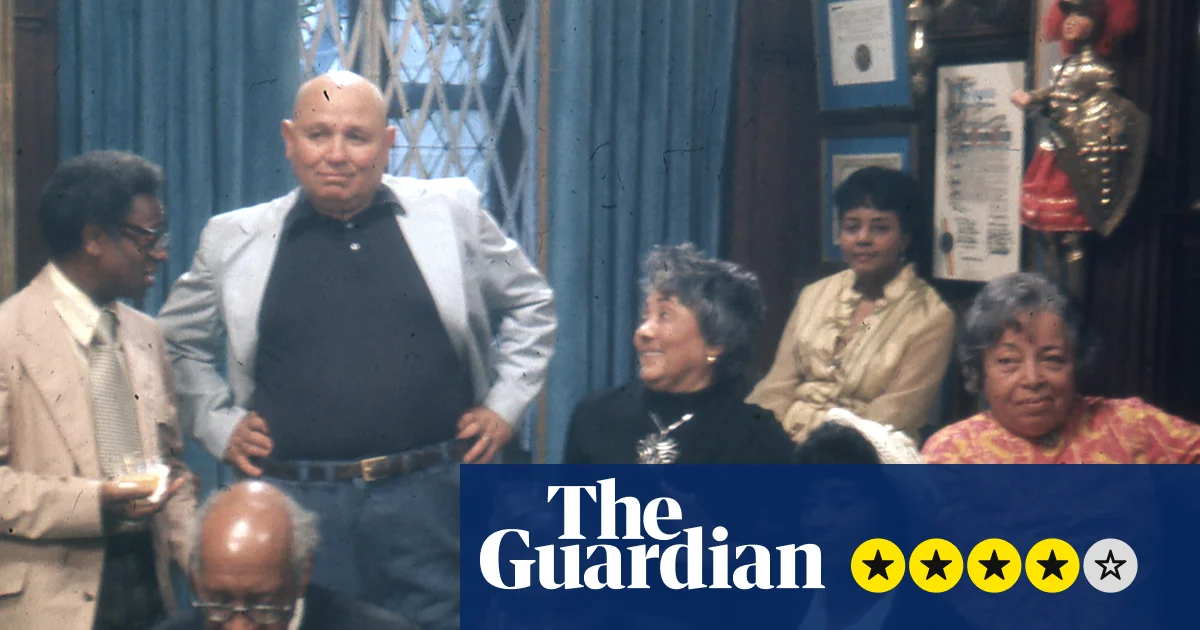

Once Upon a Time in Harlem: A Bold Tribute to the Renaissance Era | Sundance 2026

In August 1972, a remarkable gathering took place that serves as a testament to the enduring power of culture as both memory and prophecy. William Greaves, an innovative filmmaker, convened an unprecedented dinner at Duke Ellington’s Harlem townhouse—an intimate symposium of the giants of the Harlem Renaissance. This cultural movement of the 1920s, often heralded as a luminous bloom of African American artistry and intellectual thought, was captured in a rare, sprawling footage that would later be refined into the profound documentary Once Upon a Time in Harlem. This film exemplifies how the arts forge a bridge between past and present, anchoring identity rooted in history while predicting future cultural horizons. It is a vivid reminder that, as Ortega y Gasset observed, “We are the sum of our history, and history is the story we tell ourselves about who we are.”

The significance of such a gathering extends beyond mere nostalgia; it emphasizes that culture is the vessel of societal memory and a catalyst for ongoing identity. The Harlem Renaissance was not simply a fleeting artistic surge but the articulation of a collective aspiration—an awakening that challenged the narrative of marginalization and paved the way for future generations. As Tocqueville might argue, American society—especially in its multicultural complexity—requires an active consciousness of its roots to sustain its civic fabric. The film’s footage, much like Chesterton’s view of tradition as “the democracy of the dead,” demonstrates that valuing the past enables a society to navigate modern turbulence with resilience and authenticity. The voices of artists like Langston Hughes, Zora Neale Hurston, and musicians such as Duke Ellington articulate a cultural DNA that refuses to decay, insisting instead on its relevance across generations.

Within the ongoing dialogue about cultural continuity, the Harlem Renaissance embodies the quintessential struggle for cultural sovereignty. Each voice at that July evening—be they poet, historian, musician, or actor—pushed back against erasure, claiming space for the Black experience in the narrative of American progress. This struggle echoes the philosophical vision of scholars like T.S. Eliot, who urged us to see tradition as an active force, shaping current identity through a reciprocal engagement with history. The Renaissance’s awakening was, in essence, an assertion that heritage and innovation are not opposites but intertwined threads of the same tapestry. As history and culture interlace, they inspire the present to envision a future where the dignity and creativity of every people are recognized as vital to the collective well-being of society.

In this reflection, we come to understand that the African American cultural awakening of the early 20th century did not fade into obscurity; rather, it pulses through time, echoing in contemporary artistic expressions and societal debates. The film Once Upon a Time in Harlem preserves that pulse, affirming that the true culture of a people is both their history and their hope—an ever-moving combination of memory and prophecy. As Chesterton so eloquently stated, “A patriot is he who loves his country not for what it is, but for what it is becoming.” This spirit of cultural reclamation and aspiration is the true legacy of Harlem—a timeless reminder that the story of mankind is written not solely in the annals of history, but in the living, breathing arts that make us remember and inspire us to envision what humanity might yet become.

Undertone Review: A Lackluster Podcast Horror Fails to Impress — Skip It at Sundance 2026

In an era where pop culture often seems inundated with shock tactics and superficial novelty, the enduring importance of culture as the fabric of identity and tradition remains paramount. The recent release of Ian Tuason’s indie horror Undertone exemplifies this truth, not merely as a low-budget experiment but as a reflection of the ongoing cultural dialogue—one that resonates beyond the immediate scares. Though critics point to its familiar tropes—drawing from The Exorcist and Hereditary—the film underscores a deeper, almost philosophical truth: that our stories and myths, whether in horror or history, serve as echoes of our societal values, fears, and hopes.

Philosopher Ortega y Gasset famously observed that culture is both a radar and a mirror—a navigation system built from the collective memory of a civilization, guiding its future while reflecting its past. In this light, popular culture becomes a vessel for ancestral archetypes, modern anxieties, and the moral lessons embedded in our shared narratives. The horror genre, in particular, functions as an almost prophetic tool, warning us against moral failings, societal decay, or the chaos lurking just beneath the veneer of civility. Tuason’s film, with its voyeuristic podcast and spectral recordings, is less about shock for shock’s sake and more about a subconscious dialogue with centuries of folklore, superstition, and cultural fears about evil, innocence, and the unknown.

Moreover, cultural critics like G.K. Chesterton remind us that tradition is the foundation upon which modern identity is built—an innate connection to timeless stories that bind communities through shared symbols and morals. Even in its fragmented, strained narrative, Undertone subtly underscores how our response to darkness—be it in stories or in the real world—draws from this deep well of cultural inheritance. Like the great myths or the heroic epics that challenged societies throughout history, horror, as a cultural genre, becomes a mirror to societal archetypes and the moral boundaries we uphold or break. In the end, the film’s failure to fully connect these elements reminds us that culture must evolve, but not at the expense of its core.

This perspective aligns with the insights of T.S. Eliot, who argued that true cultural renewal emerges from a conscious engagement with the past—its symbols, stories, and moral frameworks—allowing tradition to inspire prophecy. As the world around us seemingly races toward sensation and superficiality, it is vital to remember that culture is the slow, deliberate weaving of memory into the fabric of society. Whether through the ancient myths that warned of hubris or contemporary narratives that grapple with the chaos of modernity, our storytelling preserves the essence of what it means to be human. These stories are not static—they are living, breathing testimonies of our collective triumphs and failures, guiding the youth and the wise alike toward future horizons.

In this ongoing dance between memory and prophecy, culture remains the enduring vessel of identity—a testament to the resilience of human tradition amidst the shifting sands of time. As we face the uncertainties of tomorrow, let us cherish the stories that have shaped us, knowing they are both the echoes of a past that informs our present and the whispers of a future yet unwritten. For in the grand symphony of human history, culture is both the memory that sustains us and the prophecy that beckons us onward—an indelible mark of what we have inherited and a beacon of what we might yet become.

Social Media Auto Publish Powered By : XYZScripts.com