
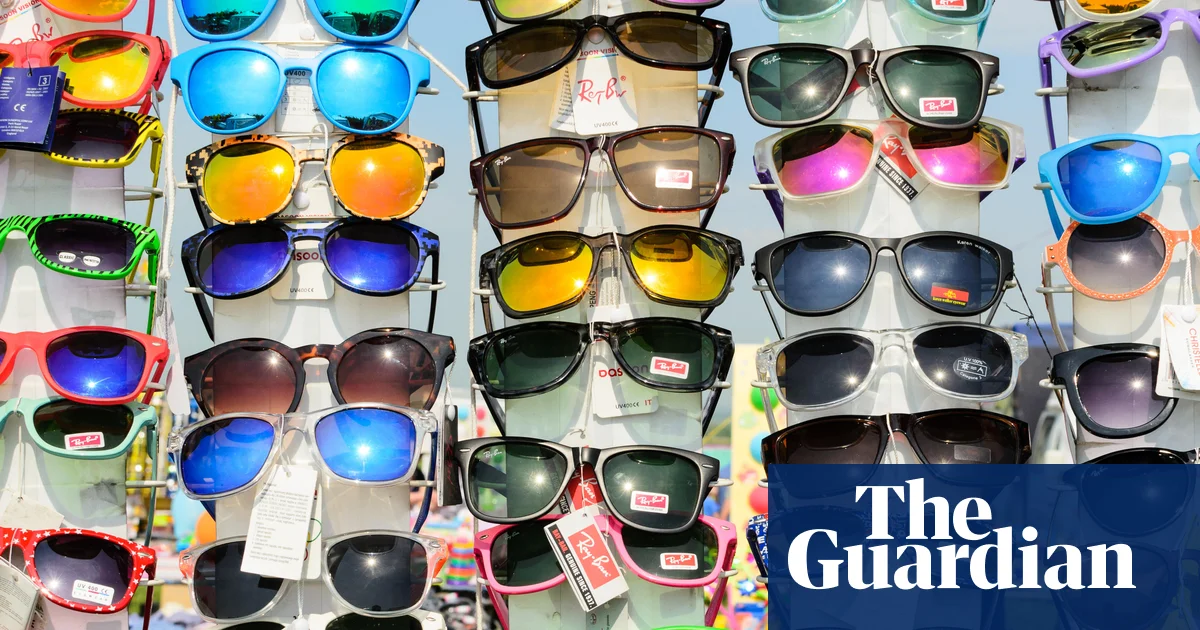

Amid the sunny days that beckon youth worldwide, a concerning trend has emerged—not just in individual health but echoing through the corridors of international trade and economic security. Experts warn that the proliferation of counterfeit sunglasses, often masquerading as luxury brands like Chanel, Ray-Ban, or Prada, poses serious health risks due to their lack of effective UV protection. Yet this seemingly isolated health issue is emblematic of a broader global trade problem: the unchecked expansion of counterfeit goods undermines both economic stability and national sovereignty.
Recent seizures, such as the substantial confiscation of counterfeit sunglasses valued at over £38,000 at the Appleby horse fair and a £6 million stash in Rochdale, reveal a thriving black market driven by criminal syndicates exploiting gaps in international enforcement. Governments and global institutions like the World Customs Organization confront the challenge of balancing free trade with protecting consumers and legitimate manufacturers. The intellectual property theft associated with these fakes damages brand reputations, while the illicit financial flows facilitate organized crime networks that threaten societal stability. Historians note that counterfeit economies have long been intertwined with political corruption and destabilization, where the exchange of fake luxury goods often funds other darker activities.
From a geopolitical impact perspective, the infiltration of counterfeit products signals a crisis in market sovereignty—as nations struggle to control their borders and intellectual property rights in an era of rapid global trade escalation. The United Kingdom, for instance, faces ongoing challenges combating counterfeit trade, which not only threatens economic interests but also national security. Experts like Professor James Wolffsohn emphasize that the proliferation of cheap, fake goods erodes local manufacturing and innovation, prompting calls for tighter international cooperation. Conversely, political entities wary of overregulation sometimes turn a blind eye, inadvertently enabling the continuation of these illicit markets—a dangerous precedent that could destabilize economies long into the future.
In tandem with these issues, the health risks highlighted by ophthalmologists mirror risks faced by societies when international enforcement is weak. Just as counterfeit sunglasses lacking UV protection threaten individual eyesight, so too do unchecked illegal trade and piracy threaten the integrity of nations’ economies and regulatory frameworks. Yet this is more than a health concern; it is a symbol of a larger struggle for control over global markets and a wake-up call to secure the digital and physical borders of a globalized world. As history relentlessly unfolds, today’s decisions about trade security, intellectual property enforcement, and international cooperation will etch their mark on the fabric of the 21st-century geopolitical landscape, leaving generations to come to reckon with the true cost of neglecting these silent threats.”






