Matox News

Truth Over Trends, always!

JudgeGPT Takes the Stand: AI’s Next Justice?

Legal Industry Faces Disruption as AI Revolutionizes Dispute Resolution and Judicial Processes

In a fast-paced technological era where innovation meets disruption, the legal industry’s landscape is undergoing a seismic shift. Leading institutions, such as the American Arbitration Association, are pioneering the integration of artificial intelligence (AI) tools like the AI Arbitrator, built upon OpenAI’s models, to streamline dispute resolution processes. This innovation promises to significantly lower costs and increase accessibility for civil litigants, especially in document-heavy cases. Unlike traditional judicial proceedings that can stretch over months—sometimes up to 75 days—these AI-driven systems are projected to cut resolution times to 30-45 days, reflecting a profound industry-wide push for efficiency and business model disruption.

Reimagining Judicial Functions with Large Language Models

The legislative and judicial sectors are still grappling with the potential and pitfalls of generative AI. Notable figures like Judge Kevin Newsom have suggested that, when appropriately assessed, LLMs (Large Language Models) could serve as auxiliary tools to analyze legal texts, interpret language, and assist in defining ambiguous contractual terms. For instance, a landmark case involving the classification of in-ground trampolines as “landscaping” demonstrated how AI could contribute a nuanced understanding of language — albeit with notable reservations about reliance and accuracy. Nonetheless, the prospect of AI providing multiple definitions and contextual insights offers a disruption of traditional textualist approaches that hinge solely on dictionaries.

  • Enhanced analysis of legal language and terminology
  • Potential reduction in bias introduced by human subjectivity
  • Facilitation of faster decision-making in routine cases

Despite these advancements, academic research warns that AI’s legal interpretations remain imperfect. Studies from institutions like Stanford have identified persistent issues such as hallucinations—the tendency of models to fabricate facts—and biases embedded within training data. The widespread concern is that over-reliance on these models could inadvertently reinforce inequalities or distort legal reasoning, thus threatening the foundational fairness of justice.

Challenges and Business Implications of AI in Justice

Leading legal tech firms like LexisNexis and Westlaw have responded to these concerns by deploying retrieval-augmented generation (RAG) systems designed to improve factual accuracy and reduce hallucinations. However, research in 2025 indicates that substantial challenges persist, especially in interpreting complex jurisprudence and case law, which continually evolve and require contextual understanding that AI has yet to master fully. These challenges underscore the need for rigorous validation and oversight, not static automation, to ensure trust and efficacy in legal AI tools.

The business implications are profound: Law firms and government agencies are increasingly investing in AI-powered systems to manage caseloads more efficiently, freeing human judges and attorneys for cases that warrant their specialized judgment. However, critics like former judge Paul Grimm emphasize that AI cannot replace human nuance and ethics, warning that these tools should serve as supplements rather than replacements. Disruption in this space is inevitable, but it hinges on careful regulation and transparent AI development that maintains the integrity of legal decision-making.

Future Outlook: The Urgency of Adaptation

The trajectory is clear: the legal industry must adapt swiftly to the AI-driven transformation, or risk obsolescence. As MIT researchers and industry leaders underscore, the time to innovate is now—especially with the potential to expand justice accessibility for under-resourced populations. Yet, the road ahead demands balancing ¬disruption with caution, ensuring AI enhances, rather than undermines, procedural fairness and societal trust. The window for policymakers, legal professionals, and tech entrepreneurs to shape this future is narrowing; delay could entrench biases and inaccuracies, prolonging the very injustices AI aims to solve.

In conclusion

With disruptive AI technologies poised to revolutionize the legal landscape, those who innovate boldly and regulate wisely will emerge as industry leaders. The coming years will determine whether AI becomes a driver of fairer, faster justice, or a threat to public confidence and the rule of law. For young entrepreneurs, tech visionaries, and policymakers alike, embracing the urgency and possibilities of this transformation is not just strategic—it’s essential for shaping the future of justice itself.

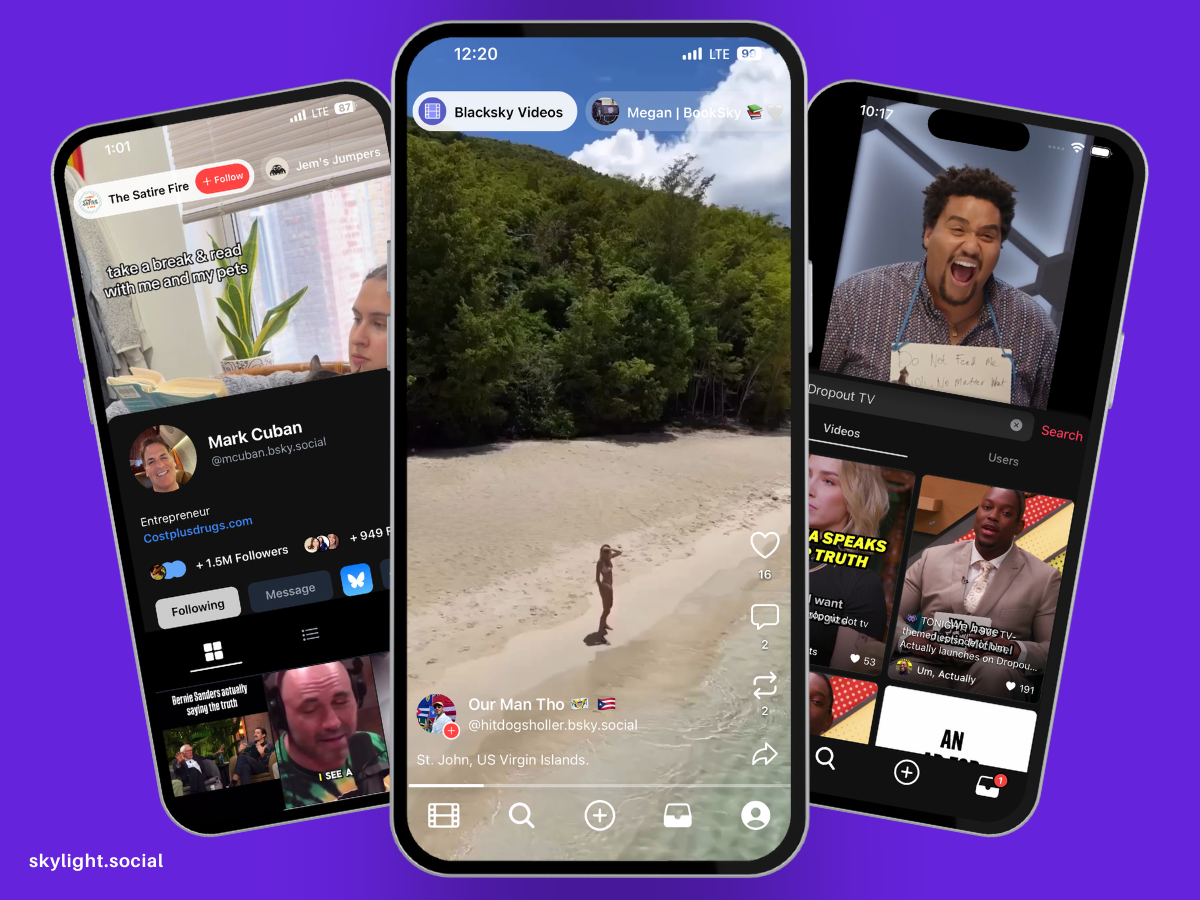
Skylight Takes Off: Over 380K Teens Flocking to TikTok Alternative as U.S. Deal Wraps Up

Innovative Disruption in the Social Media Landscape: Skylight Challenges TikTok‘s Dominance with Open-Source Technology

The rapid evolution of social media platforms is demonstrating a clear shift towards decentralization and user-centric designs, with Skylight emerging as a formidable contender against the entrenched dominance of TikTok. Built on open-source protocols such as the AT Protocol, Skylight embodies a new wave of innovation aimed at disrupting traditional siloed social networks. Since its launch last year, the startup has achieved significant growth, surpassing 380,000 registered users—highlighting a notable traction spurred by current geopolitical tensions and consumer concerns regarding privacy and national security.

The strategic leveraging of open standards signals a paradigm shift in social media architecture, fundamentally challenging the centralized control exercised by giants like ByteDance (TikTok’s parent company). Unlike conventional platforms, Skylight offers features that empower creators and users with greater control over content, data, and community engagement. Its ability to support a vibrant ecosystem—highlighted by over 150,000 videos uploaded and streaming from Bluesky through its interoperability—demonstrates the disruptive potential of decentralized technology. Industry analysts, including Gartner and MIT researchers, emphasize that such innovation could redefine the landscape by significantly reducing dependency on monopolistic algorithms, thus fostering healthy competition and user sovereignty.

The recent developments surrounding TikTok’s legal and political battles reveal both vulnerabilities in centralized models and opportunities for open-source competitors. The Biden administration’s recent efforts to establish the TikTok USDS Joint Venture LLC—a move purportedly aimed at assuaging security concerns—has, paradoxically, increased skepticism about American ownership’s true allegiance. Concerns over privacy practices, especially regarding GPS and immigration data collection, have fueled a wave of distrust among younger demographics. This environment creates fertile ground for alternatives like Skylight, which tout transparency and open standards as core differentiators. The startup’s surge over the weekend, with up to 20,000 new users and a 150% growth rate in active sign-ups, exemplifies how concerns over control and privacy are driving the next-generation social media revolution.

The implications for existing tech giants and the broader industry are profound. Traditional platforms face mounting pressure to innovate or risk obsolescence, as their business models based on data monopolization and closed ecosystems are increasingly viewed as outdated and insecure. Disruption driven by open-source protocols and decentralized networks could usher in a new era where consumer sovereignty and content creator empowerment become the norm. Industry leaders like Elon Musk and Peter Thiel have long championed the potential of open models to catalyze innovation, and Skylight’s early success underscores this movement’s momentum. As regulatory scrutiny intensifies and user demands for privacy and transparency grow, the industry must adapt swiftly, or risk losing relevance in a rapidly shifting digital landscape.

Looking ahead, the rise of platforms built on open standards signals that the ongoing battle for control over social media’s future is just beginning. Technologies that prioritize decentralization, interoperability, and user empowerment are poised to challenge the conventional giants’ dominance, ultimately fostering a more competitive and resilient ecosystem. For innovators and investors alike, this era presents an urgent call to champion disruptive technologies that unlock new business models and redefine what social media can be—more open, more secure, and ultimately more aligned with user interests. As the industry hurtles toward this future, those who embrace these changes early will set the course for the next chapter in digital communication.

Young Stars Shine as Next Generation of Athletes Takes Center Stage

2025-26 Midseason Recap: Insights from the First Half

The 2025-26 sports season has been nothing short of electrifying, showcasing a blend of emerging talent and seasoned veterans across various leagues. As we analyze the first half, it’s clear that teams are starting to establish their identities, leading to thrilling matchups and unforgettable moments.

The Los Angeles Falcons have emerged as serious contenders with their stunning offensive lineup. Led by quarterback Jake Michaels, who threw for a staggering 2,500 yards and a league-high 25 touchdown passes in the first half, the Falcons have adopted a high-octane style that keeps fans on the edge of their seats. Coach Sarah Thompson remarked, “We are just getting started. The chemistry within the team is unmatched this season.”

Meanwhile, the Chicago Bears showcased a strong defensive strategy that has kept them competitive in a tough division. Defensive coordinator Mark Ellis emphasized, “We focus on pressure. Our goal is to make quarterbacks uncomfortable.” The Bears recorded an impressive 30 sacks thus far, ranking them among the top defenses in the league. This commitment to defense could be their ticket to the playoffs.

  • Highlights from the first half of the season:
  • Top Players: Emily Carter of the Miami Rhinos has emerged as a leading scorer, averaging 28 points per game.
  • Team Performance: The New York Titans have surprised analysts with their timely three-point shooting, leading the league in efficiency.
  • Upcoming Matchups: Key games in the following months could sway playoff positions, especially clashes between division rivals.

As the season progresses, the camaraderie and rivalry weave together a narrative that transcends mere statistics. Athletes, coaches, and fans unite in shared passion, bringing communities together. Each game is a reminder that in the world of sports, triumphs and trials resonate far beyond the final score. In this journey, we see the essence of teamwork, perseverance, and the collective spirit that binds us all, making sports a true unifying force in our society.

Source link

Nex Playground Takes Over: Outpacing Xbox as the Must-Have Holiday Toy

Disruption and Innovation Drive Growth of Nex in the Gaming Industry

In an era marked by rapid technological evolution, Nex exemplifies how strategic pivots and innovative products can redefine industry benchmarks. Just two years ago, Nex was a niche player, shipping approximately 5,000 units of its flagship product, the Playground. Fast forward to today, and the company’s trajectory is nothing short of extraordinary: sales have surged to an estimated 600,000 units this year, representing a 12,000% increase within a short span. Such explosive growth not only exemplifies the disruptive potential of innovation-driven companies but also signals a significant shift in consumer engagement and market dynamics.

Underlying this ascendancy is Nex’s bold pivot from unprofitable beginnings—where it posted about $3 million in annual revenue—to a strategic focus that has yielded an anticipated over $150 million in sales this year. With smart scalability measures and breakthrough hardware design, Nex is on track to achieve profitability, a milestone that many startups in the consumer tech space aspire to but seldom reach this swiftly. Industry analysts, including Gartner and MIT experts, emphasize how such rapid scaling underscores a broader trend impacting the gaming and experiential technology sectors—namely, a move toward immersive, community-driven digital entertainment that resonates profoundly with youthful audiences.

This transformation highlights a broader market shift: consumer preference is shifting toward integrated, high-engagement hardware experiences. The Playground’s commercial success underscores how disruption fueled by innovation can turn previously niche products into mainstream catalysts. Notably, the integration of AI, extended reality, and social connectivity features in Nex’s offerings has positioned the company ahead of competitors, challenging legacy giants resistant to rapid change. Such progress echoes the strategic insights of Elon Musk and Peter Thiel, who have long championed the importance of technological turbulence as a driver of entrepreneurial advantage.

Looking ahead, the implications are profound. The rapid rise of Nex signals that businesses willing to pivot and harness emerging technologies can capture market share at an unprecedented pace. As younger generations demand more immersive digital experiences, incumbent players must innovate or face obsolescence. The success story of Nex serves as a clarion call to investors, entrepreneurs, and industry leaders: leveraging disruptive innovation is no longer a competitive advantage but an imperative for survival. The coming years promise even more dynamic shifts, as new entrants and tech giants race to harness the next wave of technological breakthroughs that will shape the future of interactive entertainment. It is a time for bold moves, swift adaptation, and relentless pursuit of breakthrough ideas.

Young Stars Shine: Emerging Talent Takes Center Stage in Latest Sports Showdown

Blue Jays Make Strategic Move Acquiring Right-Hander Chase Lee

In a significant shake-up within the realm of Major League Baseball, the Toronto Blue Jays have officially announced the acquisition of right-handed pitcher Chase Lee from the Detroit Tigers. The trade went down on Friday, with the Blue Jays sending minor league lefty Johan Simon in the opposite direction. The decision reflects Toronto’s commitment to strengthening their pitching rotation as they push for postseason success.

Chase Lee, known for his impressive velocity and control, has demonstrated significant potential during his time with the Tigers. In the past season, Lee recorded an earned run average of 3.12, striking out nearly 10 batters per nine innings. His addition is expected to bolster the Blue Jays’ bullpen and provide critical depth as they prepare for a challenging schedule ahead. Chief Baseball Officer Mark Shapiro emphasized Lee’s ability to handle high-pressure situations, stating, “He has the skills and mindset necessary to excel at this level and contribute to our team’s success.”

  • Chase Lee’s notable strikeout rate and low ERA position him as a valuable asset.
  • Toronto aims to solidify its standing in an ever-competitive American League East.
  • Johan Simon, while promising, represents the Blue Jays’ willingness to trade potential for proven talent.

The trade comes at a pivotal time for the Blue Jays, who are striving to enhance their playoff prospects. Veteran manager John Schneider has been vocal about the team’s need for reliable arms in crucial late-game scenarios, and Lee might just be the solution. Commentators throughout the league view this as a bold move, asserting that the combination of experience and youth on the roster could yield significant results.

As the season unfolds, sports fans are reminded of the power of teamwork and resilience. In every trade, every play, and every moment, the spirit of competition transcends mere statistics. The game is about more than winning or losing; it is a celebration of the relentless pursuit of greatness. Whether you root for the Blue Jays or any team under the sun, the core message rings true: sports unite communities and champion the shared dreams and aspirations of countless individuals.

Source link

Robot Takes the Mic: Melbourne Innovator Turns AI into Comedy Gold for the Next Gen

In an era where **technology** continues to reshape every facet of **lifestyle** and **entertainment**, a groundbreaking initiative from the University of Melbourne is probing the very limits of **artificial intelligence** (AI) in the realm of **comedy**. Led by Dr. Robert Walton, a dean’s research fellow in the **Faculty of Fine Arts and Music**, this project seeks to determine whether **robots** can go beyond mere **physical mishaps** and develop a genuine sense of **humor**. Unlike the stereotypical clumsiness that often elicits laughter at robots’ expense—think of those viral clips of Boston Dynamics’ malfunctioning machines—Walton’s goal is to explore the potential for **AI** to *intentionally* make us laugh, tapping into the core skills of **timing**, **reading the room**, and **visual humor**. Thanks to a substantial Australian Research Council grant of roughly $500,000, Walton will train a team of ground-based **robots**, ranging from 40 centimeters to two meters tall, to hone their *visual* comedic skills alongside human collaborators.

This initiative marks a conscious departure from memetic AI humor derived from language models like **ChatGPT**, which often mirror *underwhelming* jokes, reminiscent of those found in **Christmas crackers**. Instead, Walton emphasizes that humor rooted in **non-verbal communication**—such as **physical comedy** and **timing**—may be the key to unlocking believable **machine humor**. By observing how **robots** sense movement, establish **connection**, and respond to gestures like **head tilts** or **laughter**, Walton aims to understand how machines might eventually *adapt* to mimic human **behavioral cues**. The project’s ultimate aim isn’t merely to entertain but to garner insights on how **human-robot interactions** can evolve, with all their **risks and benefits**.

Indeed, this investigation touches on profound questions about **authenticity**, **creativity**, and the very essence of **humanity**. Notable **cultural figures** like comedian and musician **Tim Minchin** have pointed out that what makes **comedy** truly compelling is the **flaws**—the imperfections and **agency** of **the artist** behind the act. Human **comedians** bring their **personal experiences**, **struggles**, and **mistakes** into their routines, crafting a moment of **authentic connection** that technology has yet to replicate convincingly. The **Melbourne comedy festival** director, Susan Provan, echoes this sentiment, emphasizing that **originality** arises from **lived experiences** and **spontaneous interactions**—elements that many believe define the **soul** of **comedy**. Walton’s project recognizes these facets, exploring whether **robots** can simulate this **authenticity** or if they will simply be **clumsy imitators**, providing humor through their **failures** rather than their **intentions**.

  • Reflect on the blend of **technology** and **lifestyle** as an avenue for **self-improvement** and **well-being**;
  • Consider how **training** in **humor** could be applied in fields like **caregiving** or **public interaction** to foster **empathy** and **connection**;
  • Embrace the idea that **innovation** must be paired with **ethical caution**—exploring both empowering potential and **threats** associated with **AI** transforming **entertainment** and **personal interaction**.

As Walton’s work unfolds, it invites us to reflect not just on what **technology** can do but what it **should** do. The journey from **robots fall** to the potential of a **believable** comedian embodies a broader societal quest: fostering a **lifestyle** that balances **innovative progress** with **authentic human essence**. This pursuit underscores an enduring truth—**the human spirit** thrives in spontaneity, mistakes, and the genuine **connection** with others. While AI may someday learn the **timing** and **gestures**, it remains to be seen whether it can truly emulate those **imperfections** that make us *laugh*, *cry*, and *feel alive*. Perhaps, in the end, the most profound comedy—like life’s richness—resides in embracing our **flaws** and the **journey** of perpetual discovery.

Young singer takes TikTok UK’s top spot for 2025 song— redefining the cultural landscape

In an era where digital culture often shapes perceptions and influences identity, it is vital to recognize the profound connection between entertainment, tradition, and societal values. Recently, the British singer Jess Glynne experienced a remarkable resurgence not through traditional radio play or chart dominance alone, but via the viral currents of social media. Her 2015 hit, Hold My Hand, which once topped the UK singles chart, has been reborn as the TikTok song of the year—an emblem of how culture adapts and reconnects across generations. The song’s revival exemplifies Ortega y Gasset’s assertion that “man’s identity is rooted in his culture,” and now, more than ever, this root is nourished by platforms that transcend mere entertainment to become arenas of societal reflection.

The trend underscores a paradox of modernity: while some decry the superficiality of social media, others recognize its power to rejuvenate collective memory and foster a shared experience. Glynne’s song, initially an emblem of 2015, has become linked with humorous holiday mishaps, travel chaos, and family moments. Its association with the ‘nothing beats a Jet2 holiday’ trend demonstrates that the popular culture of today is a mosaic composed of nostalgia, humor, and societal zeitgeist. Such phenomena echo Chesterton’s insight that “tradition is the democracy of the dead,” where societal continuity manifests through shared narratives, even as they are refreshed in the digital age.

Historian Alexis de Tocqueville’s observations about the importance of cultural roots in fostering societal cohesion are echoed in this phenomenon. Glynne’s music, once bound to radio and exclusive concerts, now flows freely on the digital stream to over 80 billion views, connecting diverse audiences in an apparent collective memory. Meanwhile, other musical icons like Taylor Swift and Rihanna continue to shape the cultural landscape, reflecting a society that values not only the entertainment but also the identity these figures embody. The viral success of older songs, such as Connie Francis’ 1962 hit Pretty Little Baby, indicates a cyclical return to foundational melodies, where history’s echoes inform contemporary expressions. These moments affirm T.S. Eliot’s notion that a society’s “memory, tradition, and culture are the prophecy of its future,”.

In contemplating the significance of this cultural revival, it becomes clear—culture is both our heritage and our prophecy. It is through these shared stories and songs that a society molds its identity and manifests its values. As we navigate a rapidly shifting landscape of technological change, we are reminded that culture’s true power lies in its ability to preserve memory while prophesying possibility. Just as an ancient melody carried through decades to inspire a viral trend, so too does the collective memory of mankind whisper of what is yet to come—a tapestry woven with the threads of the past, forever beckoning us toward the horizon of human potential.

Jess Cartner-Morley Takes the Lead: This Holiday, Dress to Impress — Your Ultimate Christmas Style Guide

Festive Fashion Trends Reflect Societal Shifts: The Future of Christmas Style

As the holiday lights flicker on and the aroma of turkey sandwiches in Pret become our seasonal soundtrack, a cultural transformation in Christmas fashion is quietly taking hold. It’s clear that this year’s festive dressing is more than just glitz and glamour; it embodies a broader *societal shift* towards authenticity, self-expression, and a reconsideration of traditional social norms. Influencers and fashion analysts alike are signaling that what we wear during this season is now a mirror of larger cultural currents—an outward expression of our *social relevance* and personal identity in an ever-evolving society.

At the heart of this trend lies a surprisingly liberated approach to holiday fashion. Gone are the days when party attire strictly adhered to the unspoken rules of modesty or expectations of sophistication through brand-new outfits. Instead, there’s a palpable emphasis on upcycling, vintage pieces, and sartorial boldness. Wearing something pre-loved or reimagined from your own wardrobe is now a flex — a statement that challenges consumerism and celebrates individuality. Fashion experts note that this embrace of a *more sustainable and authentic* aesthetic directly responds to the *social relevance* of environmental concerns among younger generations, who see fashion as a form of social activism rather than mere trend-following.

In the realm of party presence, the *new etiquette* champions ingenuity over conformity. Influencers such as Imogen May showcase outfits that turn the dial up on typical festive decor with sequined dresses, bold accessories, and playful socks that blend nostalgia with a modern edge. Dress, £110, from Albaray, and Heels from River Island exemplify how elevated eclecticism is shaping this year’s holiday wardrobe. The key takeaway? Clothing is now a deliberate act of *self-definition* rather than blind conformity. This shift underscores a *social relevance* where fashion becomes a tool of empowerment, especially among youth who seek to carve out their place in a cultural landscape that increasingly values authenticity over tradition.

As we peer into the future, the big question remains: could this *cultural shift in festive dress* be the catalyst for a broader societal movement? Will our holiday wardrobes become less about following worn-out traditions and more about **owning your style** unapologetically — not just during Christmas, but year-round? Sociologists and fashion commentators are debating whether this trend signals a new era where dress codes are less prescribed and more personalized, or if it’s merely a temporary revolt against outdated norms. What seems certain is that as the boundaries of societal expectation continue to blur, the next big question might be: **Are we witnessing the emergence of a new cultural paradigm—one where self-expression in fashion is the ultimate measure of social relevance?** Only time will tell, but one thing is clear: the future of festive fashion is about much more than just glitter — it’s about redefining who we are in every stitch and sequin.

Thanksgiving 2025: The Bold Takes Shaping Our Holiday Scene — The New York Times

In an era where personal well-being becomes increasingly intertwined with everyday life, a _shift_ in how we approach our leisure and wellness routines is unfolding—one that champions the importance of rebalancing between productivity and genuine self-care. This new mindset invites us to reconsider the traditional schedules and expectations, emphasizing that _living intentionally_ can transform the way we experience daily routines. As wellness experts like Dr. Deepak Chopra have pointed out, _the journey toward self-awareness_ begins with simple, deliberate choices—starting with how we structure our days and the foods we consume.

One of the most significant lifestyle changes gaining momentum is the push toward eat-at-normal dinner hours. Simply put, aligning meal times with _natural circadian rhythms_ not only enhances your metabolism but also frees hours otherwise lost in hasty dining. Reports from leading food journalists like Priya Krishna highlight the benefits of eating at 7:30 PM, which paradoxically grants you extra hours to _unwind_, _prep_, and even _enjoy_ a relaxed happy hour featuring dishes like _bhel puri_. This approach encourages a _more mindful appreciation_ of food, turning meal times into daily rituals rather than rushed episodes. The core message: when we manage our schedule proactively, we create space for _meaningful leisure_, which is essential for developing resilience and _personal wellness_.

In parallel, contemporary culture is venerating the concept of _authentic connection_—whether through setting the right playlist for dinner parties or engaging in games that cultivate _shared joy_. Chef Natasha Pickowicz advocates for something as simple as saying, _“This should be the least formal scenario you can imagine,”_ urging us to dismantle the overcomplicated social scripts. Her advice emphasizes that in embracing _casual, honest interactions_, we foster communities rooted in _authenticity_. Foods and entertainment are no longer mere indulgences but tools for creating _memories_ and _meaning_, connecting us to our roots and each other on a deeper level.

  • Adopt a regular meal schedule to align with your body’s natural rhythms.
  • Prioritize _intentional_ leisure activities—like game nights or soulful playlists—over superficial social rituals.
  • Embrace _authentic connections_, whether through meaningful conversations or shared experiences that foster _resilience_.

Ultimately, this lifestyle shift is about _embracing your true self_—your instincts, your passions, your health. Figures like Andy Baraghani remind us that _the playlist_ is as vital as the food served; it sets the tone and creates an environment of _genuine enjoyment_. As Eddie Huang eloquently states, _“Thanksgiving is different when your team’s playing,”_ urging us to infuse tradition with personal passion, turning routine holidays into _celebrations of self_ and _community_. When we choose the paths aligned with _our authentic desires_, we pave the way for a life that feels less like obligation and more like _a journey we’re proud to walk_. With each deliberate choice, we write our stories—filled with health, joy, and resilience—culminating in a lifestyle that celebrates the _fullness of being_.”

Mexico’s Fatima Bosch, snubbing organizers, takes home the crown

International Tensions Rise as Miss Universe Unravels Amid Cultural and Leadership Turmoil

In what was meant to be a celebration of beauty, resilience, and cultural diversity, the recent Miss Universe pageant in Bangkok has spiraled into a spectacle of controversy, exposing deep fissures within the organization’s leadership and the cultural divides that underpin its global outreach. The pageant, venerable and historically influential since its inception in 1952, has become a mirror reflecting the increasing tensions between traditional values and progressive ideology, with Thailand hosting for the fourth time amid internal chaos. Experts and analysts suggest that these upheavals are emblematic of a broader, more alarming trend: the clash of conflicting cultural identities and the fragility of global institutions in today’s geopolitically charged environment.

The drama unfurled dramatically during a pre-pageant event when Thai media mogul Nawat Itsaragrasil, who holds the licence to organize this year’s event, publicly berated Miss Mexico, Fatima Bosch, for failing to promote products on social media. This confrontation, witnessed by dozens of competitors, saw the organizer threaten disqualification, prompting a walkout from Ms. Bosch and her supporters. Such indignities cast a shadow over the organization, prompting swift condemnation from the Miss Universe organization based in the United States. The incident underscored a deeper crisis—an organizational identity crisis driven by conflicting cultural expectations. International observers, including scholars like Thitiphong Duangkhong, warn that the disrespect shown to contestants signals a disconnect between the Thai-led event and the global audience, many of whom view the pageant as an empowering platform for women rather than a spectacle of hierarchy and authority.

Adding fuel to the fire, allegations of rigging and biased judging surfaced when two judges resigned suddenly. Lebanese-French musician Omar Harfouch accused the judges of pre-selecting finalists, suggesting an undercurrent of corruption that threatens the credibility of the event. Although the Miss Universe Organization refused these claims, asserting their process remains fair, the damage was done. Meanwhile, the leadership remains fractured, with Anne Jakrajutatip, a Thai transgender media mogul who pioneered inclusivity policies, having stepped down as CEO just prior to the competition. Her departure, following the organization’s attempt to shift towards a more socially conscious yet commercially challenged model, highlights the digitized, commercialized era the pageant now finds itself in—a far cry from its glamourous, once-a-year TV spectacle. The leadership vacuum, split between Bangkok and Mexico, exposes the vulnerabilities of a brand struggling to navigate the tumultuous terrain of modern media, as noted by industry analysts.

The Geopolitical Impact and Social Consequences

These internal developments are far more than organizational gossip; they reverberate across the international stage. The controversies expose the susceptibility of cultural diplomacy, as the pageant’s African, Asian, and Latin American fans question the legitimacy and authenticity of a contest often seen as a reflection of Western beauty standards. The rise of social media influencers—many former Miss Universe queens—demonstrates a seismic shift in how societal influence is cultivated, transcending traditional pageantry. Meanwhile, the splintering leadership hints at a larger trend: the decline of institutions rooted in outdated notions of glamour, now vulnerable to the tides of activism, social justice movements, and digital advocacy.

Veteran analysts and historians cite that the Miss Universe pageant’s turbulent transition underscores the wider cultural war playing out in global narratives. As some critics argue, the Pageant’s attempt at inclusivity—allowing transgender women, married women, and contestants with children—marked a progressive milestone, yet also stoked backlash among conservative factions, especially in Latin America and parts of Southeast Asia. The ongoing instability invites parallels with other international institutions struggling to adapt amid geopolitical shifts, where traditional authority is challenged by populist movements and social activism, reminiscent of debates over multilateral treaties and cultural sovereignty. The core question remains: can such a fractured organization preserve its relevance and moral authority as the tide of history insists on redefining societal values?

The Future Echoes in the Shadows of History

As the dust settles over Bangkok, the question lingers—what is next for Miss Universe? Will it evolve into a media empire akin to the influencers who dominate TikTok and Instagram, or will it succumb to internal disarray and irrelevance? The decisions made in these critical moments will shape not only the future of the pageant but hint at the broader fate of global cultural icons caught between tradition and modernity. The echoes of history warn us: institutions built on fleeting notions of beauty and status are inherently fragile, especially when subjected to internal betrayals and external cultural clashes. The real story remains unwritten, a narrative of transformation that could either restore its dignity or consign it to the annals of history as yet another fallen symbol of a bygone era, leaving future generations to ponder whether it was the organization’s hubris or society’s shifting morals that doomed the pageant’s reign.”

Social Media Auto Publish Powered By : XYZScripts.com