Matox News

Truth Over Trends, always!

Katherine Short, descendant of Hollywood legend Martin Short, passes away at 42–A loss for American television and culture

In recent weeks, the solemn news of Katherine Short’s passing has cast a poignant shadow over the world of culture and society. At just 42, Katherine—daughter of the illustrious actor and comedian Martin Short—embodied a life marked by quiet resilience and compassionate service. Her journey—rooted in the sanctity of tradition and the pursuit of genuine human connection—serves as a reminder that culture is more than fleeting entertainment; it is the sacred vessel of our collective identity. Her dedication to social work and mental health advocacy underscores the vital role that individuals rooted in cultural and moral values play in weaving the moral fabric of society.

While Katherine maintained a modest profile, her work exemplified a reverence for human dignity, echoing the wisdom of thinkers like G.K. Chesterton, who championed the importance of moral imagination and the reaffirmation of age-old virtues in a society increasingly consumed by superficiality. Katherine earned her degrees in psychology and social work, yet her true legacy resides in her efforts to foster empathy and understanding—values that seem ever more vital in a modern age beset by alienation. Her involvement with organizations like Bring Change 2 Mind reveals an unwavering belief that society flourishes only when rooted in genuine community and the acknowledgment of shared struggles—a truth that resonates with the classical thought that culture stems from a collective memory which guides societal morality.

Her story also brings into focus a broader cultural question: how do we confront our vulnerabilities before they become tragedies? The loss of Katherine to an apparent act of self-harm highlights the urgent need for society to nurture mental health not merely as a clinical concern but as a moral and cultural imperative. As T.S. Eliot suggested, culture is a kind of continuous purification—an ongoing effort to elevate our collective consciousness. We are reminded that beneath the glitter of Hollywood’s bright lights lies a fragile human reality—an echo of the perennial tension between individual suffering and societal understanding. The importance of recognizing and preserving this moral dimension in our collective life was well articulated by thinkers like Alexis de Tocqueville, who warned that democracy—while promising equality—demands the cultivation of civic virtue and shared values. Katherine’s life, though short, was a testament to such virtues: empathy, service, and hope.

As the cultural currents continue to shift, it is vital to remember that culture is both memory and prophecy; it is the mosaic of our past that guides us towards future generations. In honoring Katherine Short’s legacy, we acknowledge that true culture—deeply rooted in tradition and moral purpose—is the foundation upon which societies not only survive but flourish. Let us see her life not merely as an endpoint but as a call to preserve the moral imagination that breathes life into our collective story, and to remain ever vigilant in our commitment to uphold the timeless virtues that shape the human spirit—virtues that, like poetry, transcend mere words and become the very essence of what it means to be truly human.


Ryan Coogler’s X-Files Reboot Debuts with Danielle Deadwyler Leading the Charge in U.S. Television

In our rapidly shifting world, culture remains the vital foundation guiding societal identity and tradition. It is not merely entertainment, but an ongoing dialogue between history and future, a vessel carrying the collective memory of a people. The upcoming revival of the legendary series The X-Files, with directives from filmmaker Ryan Coogler, exemplifies this truth. Coogler, renowned for his groundbreaking work on Black Panther, now seeks to reawaken a cultural icon that interrogated the boundaries between belief and skepticism. His intention to craft episodes that are “really fucking scary” reveals an understanding that fears rooted in the unexplained have always served as mirror and warning—a reflection of our society’s deepest anxieties. As he collaborates with Gillian Anderson and others associated with the original series, we witness a conscious effort to preserve a cultural relic—an allegory of human curiosity and the enduring need for truth amidst chaos.

This artistic revival echoes the fundamental role of myth and symbol in shaping societal values. The original X-Files emerged during a period saturated with distrust and upheaval, capturing the zeitgeist of post-Cold War America. It embodied the cultural shift towards skepticism of authority and the quest for hidden truths, akin to the Enlightenment’s challenge to dogma. As Ortega y Gasset might observe, this series was a manifestation of society’s intrinsic “racing toward reality”, a collective pursuit of understanding in a universe riddled with mysteries. Today, Coogler’s engagement underscores that such narratives are not mere escapism but vital tools in defining what society fears, values, and aspires to become. Revisiting the unexplained is, in essence, a reaffirmation of faith in human reason and the enduring importance of tradition—an acknowledgment that the confrontation with the unknown fortifies our cultural fabric.

Moreover, the revival of The X-Files signifies a broader cultural integrity—an enduring respect for storytelling that transcends mere entertainment, anchoring societal identity in the shared pursuit of truth. As Chesterton argued, “A great nation is not only one of the greatest armies or greatest wealth,” but one where the stories and symbols that define its moral universe are preserved and renewed. The series’ initial success, with 27 million viewers at its peak and two cinematic adaptations, attested to a society hungry for stories that probe the limits of rationality. Now, with Coogler’s vision, we are reminded that culture is a living dialogue—an intergenerational conversation that keeps alive the echoes of our ancestors’ questions and our descendants’ hopes. With each story retold, society affirms that culture is both the memory of a people and the prophecy of what they may yet become.

In the silent spaces between the known and the unknown, between the seen and the unseen, lies the poetry of human existence. As T.S. Eliot suggested, “the historical sense involves a perception, not only of the pastness of the past, but of its presence.” Culture—be it through television, philosophy, or myth—is the fabric weaving our past and future into a continuous narrative. By harnessing the power of stories like The X-Files, we affirm that humanity’s pursuit of meaning is eternal, echoing through the corridors of memory and prophecy alike—reminding us that in understanding ourselves, we glimpse the infinite possibilities that lie ahead. In the end, the cultural act is a sacred act: an offering of memory and hope, guiding us both into the shadows and toward the dawn of human potential.

Top 42 Must-Watch Netflix Shows You Can’t Miss in 2025

Disruption in Streaming: The Industry’s Next Chapter

As the digital entertainment landscape continues to evolve at breakneck speeds, streaming services stand at the forefront of a transformative era driven by relentless innovation and disruptive shifts. From the departure of industry giants like Henry Cavill in The Witcher to groundbreaking animation such as Arcane, companies are redefining how stories are told and consumed. This seismic shift signals a new phase where content is not only more diverse and daring but also deeply intertwined with technological advances, forcing legacy media players and new entrants to rethink their strategies.

Innovation and the Power of Disruption

In recent years, the industry has embraced collaborations between traditional media and cutting-edge tech, exemplified by Netflix’s bold experimentation with animation styles in Love, Death + Robots and the adoption of AI-driven content curation. Market analysts like Gartner emphasize that the integration of artificial intelligence, virtual reality, and immersive storytelling will be decisive in capturing the hyper-connected, youth-oriented consumer base. These ventures aim to disrupt the static binge model, shaking up audience engagement and monetization strategies while setting new standards for interactive and personalized experiences.

Business Implications and Industry Evolution

Major entertainment firms recognize that disruption demands agility and innovation. The strategic focus on original content, innovative storytelling formats, and international markets has become more critical than ever. For example, the resurgence of regional productions like *North of North*, and international hits such as Squid Game, showcase how breaking industry norms creates global cultural phenomena. Furthermore, platforms are increasingly investing in multi-genre and diverse storytelling—ranging from gritty crime thrillers like Black Doves to speculative sci-fi in Pantheon—to appeal broadly and lock in differentiated audiences.

Industry Outlook: A Race Toward the Future

The foundation laid by current digital innovations indicates that the future belongs to those who prioritize technological disruption and emerging consumer trends. Experts from MIT and industry leaders like Elon Musk have warned that the next era of entertainment will be defined by hyper-realistic virtual worlds, AI-generated content, and enhanced viewer immersion. In this landscape, traditional content pipelines must adapt rapidly, leveraging big data and AI to anticipate viewer preferences and deliver tailor-made experiences that transcend conventional paradigms. The advent of live-action AI-driven shows, coupled with interactive narratives exemplified by Black Mirror and Arcane, signals a future where content is no longer static but a fluid, participatory experience facing an urgent need for innovative business models to stay competitive.

In conclusion, the streaming industry is entering a phase of unprecedented disruption, where innovation, technological integration, and bold storytelling will determine the winners and losers of this new digital era. The question is not if but when traditional media giants will fully embrace or be displaced by these revolutionary trends. As the digital frontier expands, stakeholders must act swiftly—embracing innovation is no longer optional but essential for survival in the fiercely competitive, fast-changing future of entertainment.

All Her Fault review – Sarah Snook’s gripping thriller delivers a thrilling and thought-provoking experience for today’s youth | Television

In an era where culture seems to tremble on the edge of fragmentation, the resilience of societal identity often manifests through the narratives we elevate and the stories we choose to tell. As Ortega y Gasset once posited, “The spirit of a nation lives in its stories,” and amidst the chaos of modern life, television dramas have become the new agora — spaces where the collective psyche is reflected, scrutinized, and subtly shaped. The recent series All Her Fault, an adaptation rooted in Andrea Mara’s bestselling thriller, exemplifies this phenomenon. It braids together the troubling realities of middle-class affluence, the darker undercurrents of modern motherhood, and the existential crises that accompany societal privilege. But more than entertainment, such works serve as mirrors and prophecy, revealing what we value, fear, and unconsciously endorse as a society.

This series not only examines the disappearance of a child within a seemingly secure suburban enclave but also unravels the complex web of human motives and societal expectations, echoing Tocqueville’s insight that “America’s greatness lies in its individualism, yet its survival depends on collective community.” Here, the affluent women, Marissa and Jenny, embody modern American ideals of success and nurturing, yet beneath their polished exteriors lie layers of guilt, repression, and moral ambiguity. These characters evoke Chesterton’s recognition that “an adventure is only an inconvenience rightly considered,” acknowledging that behind comfort and prosperity lie often unspoken, unresolved tensions. In this cultural microcosm, we see a reflection of a society wrestling with the penultimate question: what is the true cost of security? And at what point does protection devolve into paranoia? It is in this tension that the series finds its moral heartbeat, questioning whether the superficial safeguards of wealth truly shield us from the chaos lurking beneath?

Moreover, All Her Fault underscores the indelible connection between culture and identity. It probes the penalty women pay for societal roles, exposing the quiet suffering and sacrifices anchored in modern motherhood — a theme as old as the mythos of Demeter and Persephone. As T.S. Eliot wrote, “The tradition does not consist of a common inheritance but rather an ongoing dialogue between the past and present,” thus emphasizing that our cultural identity is an evolving conversation. This series chronicles that dialogue, revealing the fissures and fractures in the beautiful facade of suburban bliss, ultimately inviting viewers to ponder: are we merely characters scripted in a cultural play or authors of a new chapter? This tension makes the narrative not just compelling storytelling but cultural commentary that challenges us to reflect on how privilege isolates, isolates, and redefines our collective values.

In the end, the cultural fabric woven through television and art survives not merely to entertain but to serve as the collective memory and prophecy of mankind. Like Homer’s epics or the Great Works of classical antiquity, modern storytelling holds within its lines the echoes of human striving, fragility, and hope. As Chesterton observed, “Art, when it is most truly artistic, is the most radically conservative of all human activities,” anchoring us to our roots even as it propels us into the future. Therefore, culture becomes both a mirror illuminating our current state and a lantern lighting the path ahead — reminding us that in the harmony and dissonance of our stories, humanity’s eternal song continues. And in that song, we find not only our memory but also the prophecy of what we might yet become.

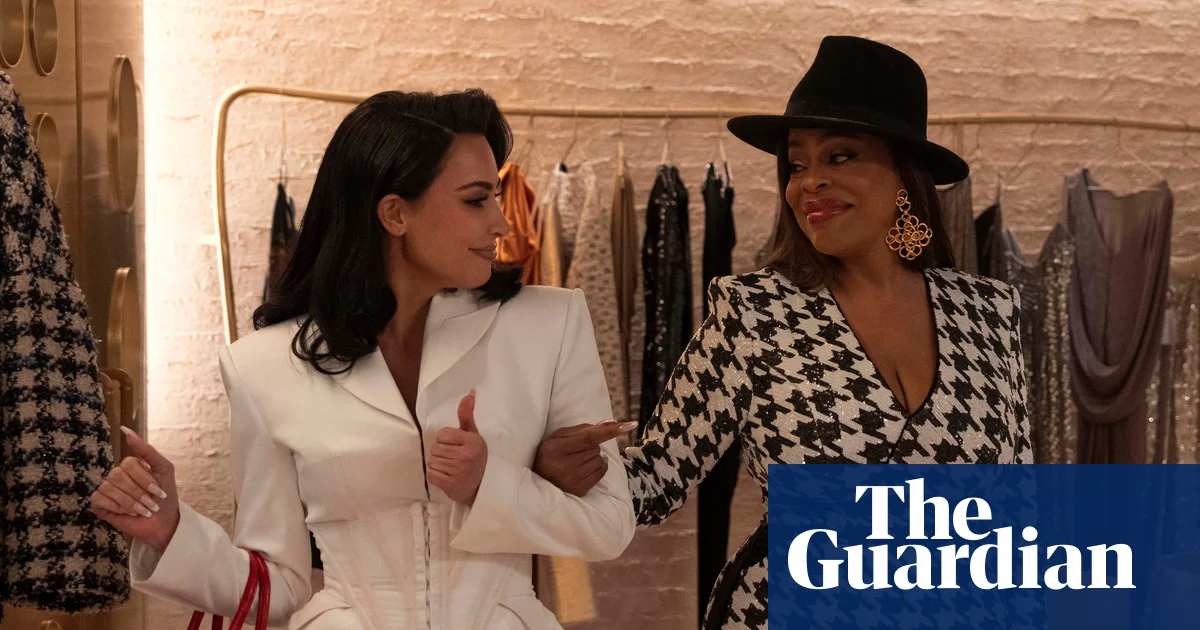
Director of Kim Kardashian’s All’s Fair addresses critics: ‘We’re hopeful opinions will shift’ | U.S. Television

In an era where cultural expression often mirrors societal shifts, the recent reception of the series “All’s Fair” highlights a crucial lesson: not everything curated for mass consumption will resonate universally, and that divergence is itself a reflection of society’s complex fabric. Directed by Anthony Hemingway, a veteran of acclaimed productions such as The Wire and True Blood, the show purports to explore themes of law, femininity, and human frailty through the lens of a female-led law firm specializing in divorce. Yet, despite its ambitious storytelling and the star power of Oscar nominees like Glenn Close and Naomi Watts, it has faced scathing criticism and has been labeled as “fascinatingly, incomprehensibly, existentially terrible” by critics. Such disparagement raises the question: in a culture increasingly obsessed with instant validation, how do we discern genuine artistry from superficiality?

The critics’ aversion to “All’s Fair” exemplifies a broader cultural tendency towards dismissiveness of ventures that challenge the conventional. Hemingway’s response—that “not everything is for everybody”—echoes the insights of thinkers like Ortega y Gasset, who lamented the commodification of culture and underscored the importance of individual aesthetic judgment. In a time preoccupied with the superficial, authentic artistry must often grapple with indifference before claiming its rightful place in the cultural dialogue. Hemingway draws a pertinent parallel between the show’s initial reception and the initial indifference that characterized revolutionary works such as Shakespeare’s or Beethoven’s. Like them, “All’s Fair” seeks to strike a chord that may not resonate immediately but holds the potential for cultural relevance over time, emphasizing that true art often requires patience and openness to new paradigms.

Furthermore, Hemingway’s defense of the show as “wish fulfillment” and a reflection of the human condition highlights an essential argument: culture’s role in shaping identity and societal understanding. In an age where cynicism often dominates, the attempt to grapple with how humans process loss, hope, and justice through storytelling remains vital. This echoes Chesterton’s assertion that “art is the signature of man,” an indelible mark of human aspiration and frailty. As history and philosophy remind us, culture is both memory and prophecy—a record of our collective past that guides and informs our future. Hemingway’s emphasis on the show’s evolving nature and his call for patience encapsulate this notion, suggesting that true cultural works are less about immediate applause and more about planting seeds for future reflection.

In the end, the enduring power of culture lies in its ability to connect us to ourselves and to the times yet to come. Like a song that echo’s through the ages or a monument carved in stone, it embodies our hopes, fears, and memories. As T.S. Eliot noted, “Our civilization is in a state of flux, but culture—true culture—is what sustains and elevates us through change.” Thus, whether “All’s Fair” finds its audience or not, it reminds us of the vital truth: culture is both our collective memory and our prophetic voice—an enduring testament to the nobility and complexity of human life, inspiring us still to dream, reflect, and forge a future rooted in our deepest human essence.

Top 5 Live TV Streams of 2025: Tested and Trusted for Young Viewers

Disruption in Streaming: Sling TV’s Modular Model Sparks Industry Shift

The live TV streaming industry continues to evolve rapidly, with Sling TV emerging as a noteworthy disruptor, despite its notorious complexity. Unlike conventional platforms such as Hulu Live TV or YouTube TV, Sling’s innovative modular approach allows consumers to customize their plans through a base package complemented by a range of affordable add-ons. This flexibility is pushing established giants to reconsider their monolithic service offerings, signaling a potential shift toward more personalized, cost-efficient streaming solutions.

However, this model introduces a new layer of “consumer sovereignty” that could redefine competitive dynamics. The industry’s traditional focus on all-inclusive packages is being challenged by Sling’s emphasis on segmentation—offering core plans at lower prices with optional extras for specific interests. This strategy is aligned with broader market trends highlighted by analysts at Gartner, emphasizing consumer empowerment and segmentation as key drivers for next-gen entertainment platforms. The result: a disruptive force that incentivizes other players to innovate or risk falling behind in an increasingly fragmented but highly tailored landscape.

From a business perspective, Sling’s approach unlocks new revenue streams while maintaining cost leadership—underscored by its ability to underprice competitors by a few dollars despite offering a narrower channel portfolio. This cost-efficiency, paired with extensive compatibility across popular devices such as Roku, Samsung Smart TVs, Apple’s ecosystem, and even Xbox, positions Sling as an agile player capable of rapid market penetration. The availability of apps across leading hardware—from TiVo to Xfinity—further enhances its accessibility, democratizing live TV and broadening its reach among younger, tech-savvy consumers looking for customizable, affordable content.

Looking ahead, industry leaders, analysts, and innovators like Elon Musk, Peter Thiel, and MIT researchers agree that the streaming wars are just beginning. As disruptive technologies like AI-driven content curation and dynamic pricing models mature, the potential for smaller, agile firms like Sling to carve out significant market share becomes increasingly apparent. Ensuring adaptability and innovation will be vital for incumbents to stay relevant in a landscape driven by consumer-centric disruption. The imminent future promises a battleground where technological innovation, strategic agility, and disruptive thinking will determine which companies lead the next era of entertainment. Those who leverage these shifts early will not just survive—they will dominate the new streaming paradigm.

Challenge Your Knowledge: Iconic Horror Novels That Made the Leap to the Screen

As we consider the enduring legacy of literature and its vital transformation through adaptation, we are reminded of the profound relationship between art, identity, and society. In an age increasingly dominated by visual spectacle, movies, television, and theatrical renditions serve not merely as entertainment but as modern reflections of our collective soul. This process echoes the timeless insights of Ortega y Gasset, who observed that culture is both a mirror and a blueprint—offering us an image of who we were and a prophecy of who we might become. Whether through the Gothic gloom of H.P. Lovecraft or the chilling fundamentals of Stephen King, horror adaptations showcase the cultural fears and moral preoccupations that define civilizations, illustrating that even in fear, there is a reflection of our deepest truths.

Throughout history, cultural shifts have often been heralded by the stories we tell each other. The transition of literary works into visually compelling media often signals a society’s evolving relationship with its history and ideals. Gothic horror, for instance, with its roots in romanticism and enlightenment fears, has morphed into a mirror for contemporary anxieties—be it the terrors of the digital age or the moral darkness lurking behind modern facades. As C.S. Lewis pointed out, art’s role is to luminate the shadows cast by human frailty; any successful adaptation manages to keep that moral tension alive, engaging new generations with questions that are as old as the human condition itself. The power of film and television to reanimate these stories reminds us that culture is less static than we often think—it is a living, breathing dialogue between memory and prophecy.

The importance of adapting works of literature into visual storytelling lies in its ability to preserve tradition while constantly rekindling societal debate. Just as the Renaissance rediscovered classical knowledge and Tocqueville warned about the tyranny of democratic equality eroding individual greatness, contemporary cultural adaptations serve as a counterbalance; they keep alive a sense of wonder and moral complexity. These stories are not just entertainment—they are the cornerstone of our cultural identity, lending purpose and continuity amid the chaos of change. By reimagining stories of darkness and light, society navigates its fears while reaffirming its aspirations, reminding us that our cultural memory is a fertile ground where history’s lessons bloom anew.

As the currents of history flow onward, the role of culture as memory and prophecy becomes ever clearer. It is both the echo of what humankind has endured and the blueprint of what might yet come to pass. The writings that become films, the stories that transform into plays—these are the threads with which we weave the fabric of our civilization. Culture, in all its forms, bears witness to the eternal human quest for meaning—to understand the shadows and to illuminate the dawn. In this delicate dance of remembrance and anticipation, we find that our shared stories are neither relics nor mere predictions but the very essence of our ongoing human journey.’

Social Media Auto Publish Powered By : XYZScripts.com