
Matox News

Truth Over Trends, always!

OpenClaw Founder Urges AI Innovators to Embrace Playfulness and Take Their Time to Improve

AI Innovation Disrupts Tech Landscape: Insights from Industry Pioneer

In an era marked by rapid technological evolution, personal AI agents are redefining the boundaries of digital interaction and productivity. Peter Steinberger, renowned as the creator of the viral AI project OpenClaw, and now associated with OpenAI, emphasizes the importance of experimentation and playful exploration in advancing AI capabilities. His insights underscore a trending shift within the industry — innovation is no longer a linear process but a dynamic journey fueled by curiosity and iterative learning.

Steinberger’s experience illustrates the disruptive potential of personalized AI solutions, especially when harnessed for real-world applications. During a recent trip to Marrakesh, he highlighted how AI-powered tools enhanced his convenience, bypassing traditional limitations, such as unreliable internet connectivity, through platforms like WhatsApp. The ease of finding restaurants, managing communications, and accessing information exemplifies how AI integration can create seamless user experiences. Market analysts, including Gartner, forecast that such context-aware AI agents are poised to become essential for redefining user engagement and establishing new revenue streams for tech giants and startups alike.

Critically, Steinberger advocates for an approach to AI development rooted in innovation through playful experimentation. He compares mastering AI prompt engineering to learning to play guitar — skill-based, requiring patience and practice. His warning against superficial “vibe-coding” reflects a broader industry concern: meaningful disruption demands genuine skill, not shortcuts. As companies like Microsoft and Google race to integrate these AI breakthroughs into cloud computing, productivity tools, and enterprise solutions, the foundational skillset becomes a competitive advantage. Industry veterans and emerging developers must embrace this shift, investing in learning curves that, while steep, promise immense strategic value.

Looking forward, the trajectory points to a fundamental transformation of the tech industry. As Steinberger advises, innovation flourishes when fueled by playful experimentation and relentless curiosity. For the youth of tomorrow, those willing to take risks and build boldly are positioned to lead the disruption. With market leaders pushing substantial investments into AI research and startups racing to commercialize new features, the tempo of technological advancement accelerates — and those who adapt quickest will shape the digital future. The cost of inaction could be losing ground in a landscape where disruption is the new normal. The imperative for today’s developers, entrepreneurs, and industry giants: harness this momentum now, or be left behind in the wake of relentless innovation.
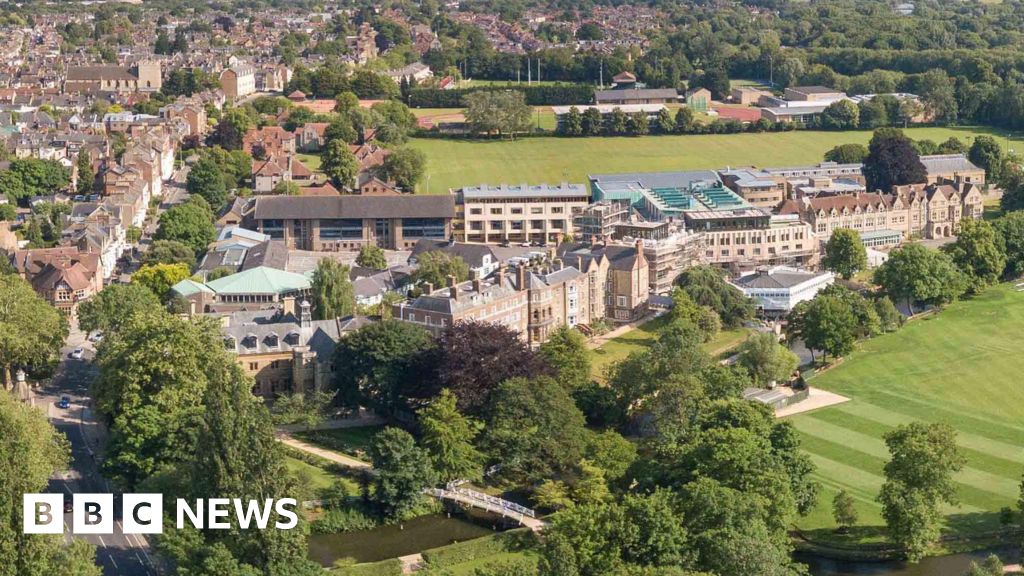
School opens its doors to girls for the first time in 500 years—historic step toward equality

Educational Institutions and the Shaping of Societal Future

Recent statements from Magdalen College School highlight a growing trend within many elite educational institutions to position themselves as agents of societal enrichment. The school asserts that their initiatives will “enrich” their community “for generations to come,” a sentiment that underscores the evolving role of education as a catalyst for social cohesion and cultural preservation. While this rhetoric may sound benign, it raises profound questions about how contemporary schools influence families, social stratification, and community identity.

Historically, schools have operated as mirrors and molders of social values. Research by prominent sociologists such as Pierre Bourdieu demonstrates that educational settings often serve as gateways to social mobility or, conversely, reinforce existing class distinctions. In regions where educational policies increasingly focus on social enrichment and cultural identity, there is a discernible shift in the fabric of families and communities. These institutions often become focal points for cultural preservation, but they also risk diverting from the core goal of fostering universal access to quality education, potentially reinforcing divisions based on socio-economic backgrounds.

Societal Tensions and Cultural Shifts

The emphasis on “enriching” communities most often involves initiatives tailored toward *specific cultural narratives*. While such efforts aim to celebrate diversity and foster inclusiveness, critics argue they can inadvertently create social tensions and cultural enclaves that fragment homogeneous societal integration. In recent years, social commentators, including sociologist Charles Murray, have warned that a focus on cultural identity may deepen divides rather than bridge gaps, especially when education becomes a battleground for ideological influence.

This phenomenon impacts families profoundly, as parents navigate the complex terrain of cultural affirmations and their implications for their children’s futures. For some, these initiatives reinforce pride and belonging; for others, they evoke concern over the potential marginalization of traditional values or the marginalization of community voices that differ from the dominant cultural narrative. Such shifts influence educational priorities, societal cohesion, and the overall health of our civic fabric.

Addressing the Social Challenges and Building Resilient Communities

  • Inclusion and equity: Schools must strive to balance cultural specificity with universal values to ensure all families feel represented and empowered.
  • Community dialogue: Open, honest conversations between educators, families, and social leaders are essential to navigate cultural shifts and address misconceptions.
  • Educational reform: Policies that emphasize critical thinking, civic education, and character development can help young people appreciate diversity while fostering shared societal bonds.
  • Investment in local communities: Strengthening local institutions and supporting families creates resilient social networks that can withstand societal change.

Sociologists like Amartya Sen emphasize that true societal progress depends on *building social capital*, where families and communities work in harmony to sustain shared values amid diversity. As society grapples with rapid cultural transformations, public discourse must focus on creating inclusive, resilient communities where every child, regardless of background, can thrive within a common social fabric. Only by recognizing the importance of foundational social bonds—those that uphold personal dignity, shared history, and collective hope—can society navigate its present challenges and forge a future grounded in genuine unity and purpose.

In the end, society’s greatest challenge lies not just in reforming institutions but in nurturing a communal heart that values every individual’s journey. As society strides forward, perhaps the most profound promise remains: that through honest engagement and unwavering commitment, hope can blossom anew—transforming societal tensions into opportunities for enduring unity.

Once Upon a Time in Harlem: A Bold Tribute to the Renaissance Era | Sundance 2026

In August 1972, a remarkable gathering took place that serves as a testament to the enduring power of culture as both memory and prophecy. William Greaves, an innovative filmmaker, convened an unprecedented dinner at Duke Ellington’s Harlem townhouse—an intimate symposium of the giants of the Harlem Renaissance. This cultural movement of the 1920s, often heralded as a luminous bloom of African American artistry and intellectual thought, was captured in a rare, sprawling footage that would later be refined into the profound documentary Once Upon a Time in Harlem. This film exemplifies how the arts forge a bridge between past and present, anchoring identity rooted in history while predicting future cultural horizons. It is a vivid reminder that, as Ortega y Gasset observed, “We are the sum of our history, and history is the story we tell ourselves about who we are.”

The significance of such a gathering extends beyond mere nostalgia; it emphasizes that culture is the vessel of societal memory and a catalyst for ongoing identity. The Harlem Renaissance was not simply a fleeting artistic surge but the articulation of a collective aspiration—an awakening that challenged the narrative of marginalization and paved the way for future generations. As Tocqueville might argue, American society—especially in its multicultural complexity—requires an active consciousness of its roots to sustain its civic fabric. The film’s footage, much like Chesterton’s view of tradition as “the democracy of the dead,” demonstrates that valuing the past enables a society to navigate modern turbulence with resilience and authenticity. The voices of artists like Langston Hughes, Zora Neale Hurston, and musicians such as Duke Ellington articulate a cultural DNA that refuses to decay, insisting instead on its relevance across generations.

Within the ongoing dialogue about cultural continuity, the Harlem Renaissance embodies the quintessential struggle for cultural sovereignty. Each voice at that July evening—be they poet, historian, musician, or actor—pushed back against erasure, claiming space for the Black experience in the narrative of American progress. This struggle echoes the philosophical vision of scholars like T.S. Eliot, who urged us to see tradition as an active force, shaping current identity through a reciprocal engagement with history. The Renaissance’s awakening was, in essence, an assertion that heritage and innovation are not opposites but intertwined threads of the same tapestry. As history and culture interlace, they inspire the present to envision a future where the dignity and creativity of every people are recognized as vital to the collective well-being of society.

In this reflection, we come to understand that the African American cultural awakening of the early 20th century did not fade into obscurity; rather, it pulses through time, echoing in contemporary artistic expressions and societal debates. The film Once Upon a Time in Harlem preserves that pulse, affirming that the true culture of a people is both their history and their hope—an ever-moving combination of memory and prophecy. As Chesterton so eloquently stated, “A patriot is he who loves his country not for what it is, but for what it is becoming.” This spirit of cultural reclamation and aspiration is the true legacy of Harlem—a timeless reminder that the story of mankind is written not solely in the annals of history, but in the living, breathing arts that make us remember and inspire us to envision what humanity might yet become.

AI Breaks New Ground, Matching Human Experts in Language Analysis for the First Time

AI-Driven Breakthrough Challenges Long-Held Beliefs on Language and Reasoning

In a landmark development that could redefine the landscape of artificial intelligence and linguistic analysis, recent research from Gašper Beguš of UC Berkeley and colleagues has demonstrated that large language models (LLMs) possess an unprecedented ability to analyze language with a sophistication previously thought impossible. Challenging the longstanding view propagated by critics such as Noam Chomsky, which claimed that AI models lack genuine reasoning capabilities in language, this breakthrough signals a radical shift in disruption potential across industries relying on natural language processing (NLP).

The core of this discovery lies in the models’ ability to understand and manipulate language structures akin to those used in advanced linguistic theory. Researchers subjected several LLMs to a comprehensive linguistic test designed around Chomsky’s Syntactic Structures, focusing on complex features such as recursion and sentence diagramming. Astonishingly, at least one model surpassed expectations by accurately generating tree diagrams, resolving ambiguous meanings, and analyzing deeply nested phrases — feats that had long been considered exclusive to human linguists. This finding is more than a scientific curiosity; it signals that AI systems are rapidly approaching human-like reasoning in language, with profound consequences for innovation and disruption.

Implications for Business and Industry

As AI models achieve an understanding of language comparable to graduate-level linguistics, the implications extend far beyond academia. Industries such as customer service, content moderation, legal analysis, and even advanced AI-driven education are poised for transformation. Companies that harness these capabilities could develop smarter, more intuitive chatbots capable of understanding context and nuance at a human level, disrupting existing tools that rely on keyword matching or superficial comprehension.

  • Enhanced Reasoning: Models can now perform sentence analysis, resolving multiple interpretations simultaneously.
  • Advanced Language Processing: Recursive structures and complex syntax are now within reach.
  • Market Disruption: Traditional NLP tools could be rendered obsolete by models capable of truly understanding language.

Notably, experts such as those from Gartner and MIT’s AI labs have predicted that this evolving capability will accelerate automation across sectors and lead to a paradigm shift in how AI interacts with humans. Such advancements will demand new standards for AI transparency and control, warning of the potential for unchecked automation if not carefully managed.

Future Trajectory and Urgency

The pace of these innovations underscores an urgent need for stakeholders — from policymakers to entrepreneurs — to recognize that the future of AI in language is now being shaped. As Elon Musk and Peter Thiel have repeatedly emphasized, disruption is accelerating at an exponential rate, and remaining complacent could lead to strategic obsolescence. The breakthrough highlighted by Beguš and his team is a testament to how disruptive innovation continues to defy traditional expectations, signaling that the era of AI understanding language at a human level may be closer than anticipated.

With industry giants and startups alike racing to leverage such advancements, competitors who invest early and prioritize innovation will dominate. The question remains: are organizations prepared to navigate the rapidly shifting landscape of AI-powered language technology, or will they be left behind in the wake of transformative disruption? As the industry moves forward, one thing is clear — the race for linguistic mastery in AI has entered a new, exhilarating phase, demanding relentless innovation and strategic foresight.

Hong Kong’s Back in Action: Is the City’s Comeback on Time for the Next Generation?

Hong Kong’s Resilient Revival: Embracing Change and Reclaiming Its Global Pulse

Once a bustling powerhouse of international commerce and vibrant street life, Hong Kong faced unprecedented challenges over the past three years. The pandemic’s relentless grip, combined with social unrest and strict quarantine measures, drastically curtailed its role as a global hub of tourism and finance. Markets shuttered, businesses shuttered, and the soul of this legendary city felt subdued. Vendors in areas like Tung Choi Street, known for its iconic night market, experienced a sharp decline in activity, and stories of resilience emerged from shopkeepers like Mr. Chan, whose once-busy stall now operates shorter hours. Yet, amidst these trials, Hong Kong’s leadership is charting a bold course to restore the city’s vibrancy — and it begins with reopening to the world.

Recent developments signal a determined push to reverse the pandemic’s damage and rekindle the city’s dynamism. The city has lifted its stringent quarantine policies, allowing international travelers to visit without the daunting 21-day hotel stay that once paid a premium. This move is more than just easing restrictions; it’s a declaration of faith that trust in the resilience of Hong Kong’s economy can prevail. Eager travelers have responded swiftly, with airlines like Cathay Pacific setting up virtual “waiting rooms” for flight bookings, and travel demand skyrocketing towards cities like Tokyo and Osaka. This renewed interest in wanderlust underpins a vital truth: our health and well-being flourish when we embrace movement and adventure, reconnecting with the world beyond our screens.

However, the path to full recovery isn’t without obstacles. While the quarantine ban is lifting, new safety protocols still impose restrictions that may dampen tourism’s comeback. A three-day ban on dining in restaurants combined with complex entry requirements can seem like hurdles, especially for visitors from abroad. Still, the initiatives like the giveaway of 500,000 airline tickets — valued at nearly $255 million — aim to ignite a *market recovery campaign* that encapsulates the spirit of innovation and opportunity. As wellness expert Dr. Emma Seppälä advocates, “Optimism and proactive efforts are key drivers in fostering resilience in challenging times.” This philosophy echoes through Hong Kong’s recent decisions to revive its global standing, exemplifying a collective trust in the city’s enduring spirit.

  • Travel Smart: Keep an eye on evolving entry policies, and pack pre-vaccination certificates and negative tests.
  • Support Local: Explore emerging neighborhoods and independent vendors to help sustain the city’s small businesses.
  • Stay Inspired: Take moments to appreciate the city’s culture, from historic cafes to modern events, fueling your sense of adventure and purpose.

In contemplating Hong Kong’s story, there lies a broader reflection about our own journeys. The city’s collective effort to bounce back — from the ashes of pandemic shutdowns to the anticipation of international gatherings like the International Rugby Sevens — serves as a powerful reminder. Our _well-being_ depends not only on health measures but on our willingness to step outside, explore, and engage with the world anew. For young adventurers and entrepreneurs alike, the message is clear: resilience is an active choice. As the city reclaims its spot on the world’s stage, each of us can draw inspiration from its unwavering spirit, using setbacks as stepping stones to growth. The journey of life is an ongoing dance with change — embracing it is how we become our best selves.

UK inflation cools for first time in five months to 3.6% ahead of crunch budget

In a notable development, the United Kingdom experienced a decline in inflation rates in October, marking a crucial moment amid ongoing economic turbulence and geopolitical uncertainty. The Office for National Statistics (ONS) reported that the annual consumer price index (CPI), which measures inflation, fell to 3.6% from a peak of 3.8% earlier in the year. While this reduction certainly offers respite to households burdened by rising costs, experts caution that the broader economic landscape remains fragile. The primary drivers of this decline were decreased gas and electricity prices, influenced by changes in the Ofgem energy price cap, and a drop in hotel prices. Yet, core inflation—excluding volatile food and energy sectors—remained stubbornly high at 3.4%, signaling that underlying price pressures persist.

Under the spotlight, Chancellor Rachel Reeves prepares for her upcoming budget, promising measures to cut living costs and foster economic stability. Her vow to “bring down inflation to smooth the path for the Bank of England to cut interest rates” underscores a strategic shift. Analysts and government officials alike recognize that easing inflation provides an opportunity to recalibrate monetary policy—potentially allowing for a reduction in borrowing costs, which have already been decreased five times since Labour’s ascension to power in July 2024. The Bank of England seems poised to act, with signals suggesting that an interest rate cut as early as next month could be on the table, contingent upon incoming economic data. The delicate balancing act involves tempering inflation without undercutting economic growth, a challenge that many view as a defining test of the UK’s economic resilience.

Despite these promising signs, the UK faces significant external pressures. It continues to register the highest inflation rate among the G7 nations, with recent data highlighting rising food prices—particularly bread, cereals, and meats—placing additional hardship on households. Critics, including the shadow chancellor, Mel Stride, argue that inflation has remained stubbornly above target, leaving working families worse off. The volatile food sector underscores ongoing supply chain issues and geopolitical disruptions, especially in the context of the East-West tensions and trade negotiations that influence global markets. As economists forecast possible rebounds in inflation during the coming months, the overarching risk remains that geopolitical shifts could hinder long-term economic stability. This unfolding drama—part economic, part geopolitical—will determine the course of Britain’s future and shape societal realities for generations to come.

Looking ahead, the crucial question for analysts and citizens alike is whether Britain’s recent economic movements are merely a brief anchor in a storm or the harbingers of a more profound transformation. The decision-makers are walking a tightrope, weighing domestic priorities against a tumultuous international backdrop that includes rising tensions with continental neighbors and global energy insecurities. As history continues to write itself, the fate of the UK’s economy—and perhaps, the stability of the wider Western order—may hinge on the choices made in the coming weeks. The weight of these decisions will echo through future generations, reminding us that even in moments of apparent calm, the currents of history are relentlessly shaping destinies in ways no one can fully predict.

Time Out names the coolest neighborhood of 2022—where young, stylish locals are redefining the city vibe

Embracing Local Vibes: The Hidden Gems Shaping Our Lifestyle

Travel isn’t just about crossing destinations off a bucket list; it’s an immersive journey into the essence of local culture, cuisine, and community. As modern explorers, we’ve brushed past the typical tourist traps, seeking instead the neighborhoods that pulse with authenticity—those that provide a deep **personal impact** on our health, leisure, and inspiration. Thanks to thought leaders like Time Out and cultural curators worldwide, a curated list of the world’s coolest neighborhoods now guides us toward these vibrant, less-trodden paths.

At the top of this list is Colonia Americana in Guadalajara, Mexico. Here, art deco terraces intertwine with warehouse venues, fuelling a **boundary-pushing creative community**. Such neighborhoods aren’t just picturesque—they become catalysts for personal growth, inviting us to indulge in local culinary innovations and revel in nightlife that invigorates the soul. Guadalajara’s burgeoning scene exemplifies how authentic, independent hotspots can transform a city’s identity, inspiring visitors to embrace new ways of living.»

Following closely is Cais do Sodré in Lisbon, Portugal. Once famed solely for its lively nightlife, this riverside neighborhood is now a **foodie’s paradise**, showcasing Lisbon’s promising young chefs and innovative dining experiences. For the youth seeking wellness and inspiration, exploring such areas means reconnecting with the vibrant energy of emerging talent and authentic cuisines—elements proven to boost *mental well-being and creative vitality*. As wellness expert Dr. John Lee emphasizes, our environment directly influences our *state of mind*—neighborhoods like Cais do Sodré remind us that vitality can be found in the simplest pleasures, like a well-crafted meal or a spirited street conversation.

Not limited to Europe and North America, the list spans global cultural tapestries. Wat Bo Village in Siem Reap, Cambodia, has undergone a **’serious glow-up**, becoming a social enterprise hub that empowers women through local organic cuisine and boutique hospitality. Such transformations highlight the importance of engaging with LOCAL initiatives that align with the \underline>shift towards conscious, wellness-driven lifestyles. They also serve as inspiration for young individuals aspiring to make meaningful *personal impacts* through travel and cultural appreciation.

  • Seek neighborhoods with independent eateries and creative spaces—these foster community connection and mental wellness.
  • Prioritize areas with local social enterprises—support small businesses that empower and uplift communities.
  • Focus on destinations that balance leisure with cultural authenticity, creating a holistic experience.

As highlighted by Times Out, exploring these less conventional neighborhoods offers a treasure trove of experiences—many within a walkable distance—that inspire adventurous spirits to immerse themselves fully in their journeys. Whether wandering through Shimokitazawa in Tokyo or strolling along Rue Julien in Marseille, travelers can unlock a renewed sense of purpose and *well-being*. Unlike homogenized tourist hubs, these neighborhoods stand as testaments to the power of local culture and independent enterprise in shaping a vibrant, healthy lifestyle for the younger generation eager to forge their own paths.

And so, the journey continues—not just across borders, but inward. To discover not only the hidden nooks of the world but also the untapped reservoirs within ourselves—where curiosity, community, and purpose intertwine. In embracing these unique neighborhoods, we embrace a lifestyle dedicated to wellness, authenticity, and *the pursuit of personal inspiration*. As the philosopher Rainer Maria Rilke once suggested, “The only journey is the one within.” Keep exploring. The world—the true one—is waiting for you to find your place in it.

Apple’s sleek M4 MacBook Air hits new lows just in time for Black Friday

Apple’s M4-Powered MacBook Air Sets New Benchmark for Portable Computing

The recent rollout of the 13-inch and 15-inch MacBook Air models featuring Apple’s cutting-edge M4 chip signifies a seismic shift in the portable computing landscape. As the industry witnesses a swell of disruption and innovation, Apple’s latest offerings—available at unprecedented discounts ahead of Black Friday—highlight its strategic focus on delivering maximum performance in ultra-slim form factors. With the base 13-inch model now retailing for just $749.99—$250 off at Amazon—Apple is not only increasing accessibility but also challenging entrenched notions of premium hardware pricing.

At the core of this tech renaissance is the Apple M4 chip, which has quickly become a critical enabler of faster performance, enhanced battery life, and seamless integration with macOS 26. Gartner analysts note that the M4’s architecture signifies a paradigm shift, promising to disrupt traditional PC segments and accelerate Apple’s market dominance. The MacBook Air now features

  • Double the RAM at 16GB
  • Expanded webcam capabilities with a 12-megapixel Center Stage camera
  • Thunderbolt 4 ports upgrade

. These enhancements reinforce Apple’s strategic move to deliver higher-value experiences, placing the new MacBook Air well ahead of competitors in the ultralight category.

The implications extend beyond Apple’s product line. Industry watchers forecast a ripple effect, with other OEMs racing to adopt advanced ARM-based architectures inspired by Apple’s disruptive approach. MIT’s computer science faculty emphasize that such shifts point towards a future where integrated, efficient, and AI-optimized chips define the standard for next-generation laptops. This aligns with broader trends where software and hardware integration become pivotal for business agility, mobility, and innovation.

For businesses and consumers alike, this evolution signals a decisive move towards ultra-portable devices that do not compromise on performance. The 15-inch variant, with a superior six-speaker system and larger display, underscores Apple’s ambitions to tap into the professional segment without sacrificing portability. Meanwhile, the industry as a whole faces a decisive question: who will lead the next wave of disruption? As Elon Musk and Peter Thiel warn of a tech arms race driven by AI and hardware innovation, such advancements could reshape entire markets within the next few years—a race that tech pioneers must engage in decisively.

In conclusion, Apple’s latest MacBook Air models exemplify how innovation and disruption drive business strategies in the technology sector. With the combined power of the M4 chip and strategic pricing falls, Apple is reaffirming its leadership in shaping the future of portable computing. For industry stakeholders, the message is clear: timing is critical to stay ahead of the curve. The coming months will be pivotal as competitors scramble to respond, and early adopters profit from the cutting-edge capabilities that define tomorrow’s standards in portable hardware. The race to dominate the AI-integrated, ultra-light device market is intensifying—making now the critical moment for strategic investment and innovation-led growth.

Senate Question Time Turns Chaotic in Last-Minute Fight for Transparency, Breaking Records

Australian Senate Sparks Political Turmoil: A Turning Point in Transparency and Tradition

In an extraordinary chapter of Australian parliamentary history, a recent Senate session has challenged long-standing conventions and signaled a potential shift in the nation’s political landscape. Over a record-breaking 210 minutes, senators engaged in a marathon question time that exceeded the previous Federation-era record of approximately 150 minutes. This unprecedented event unfolded amidst a fierce debate over transparency and government accountability, highlighting broader tensions between the ruling Labor government and opposition factions, including the Coalition, Greens, and various crossbenchers.

Led by Senator David Pocock, a notable figure in advocating for government transparency, the opposition-inspired move aimed to extend question time, forcing ministers to answer a greater number of inquiries. This effort was met with fierce resistance from the government, which criticized the procedure as a breach of convention, with Minister Murray Watt dismissing it as a “dummy spit.” Yet, in an audacious procedural move, the Labor-led Senate continued the session well beyond the mandated end, orienting the debate around a critical issue: government secrecy regarding a report on public sector appointments. The report, compiled by former public service commissioner Lynelle Briggs, has been withheld for two years under claims of cabinet confidentiality, despite persistent demands for transparency from non-governmental members.

This defiance illustrates the growing conflict over truth and accountability within Australia’s political system, with analysts warning that such disputes undermine parliamentary tradition and public trust. International organizations, including Transparency International, have expressed concern over the government’s reluctance to release key documents, asserting that the persistent secrecy could weaken democratic institutions. The Australian Senate appears to be on a brink of a constitutional crisis, with critics arguing that the prolonged question time and procedural controversy symbolize a breakdown in the balance of power and the erosion of parliamentary decorum.

The recent upheaval serves as a stark reminder of how decisions made by political leaders ripple beyond national borders, affecting international perceptions of Australia’s democratic standards. As tensions escalate over transparency, the global community watches closely—experts warn that such internal strife could diminish Australia’s influence on the international stage, especially in regions where it seeks to assert leadership amidst competing powers. This internal discord echoes a broader pattern observed in democracies worldwide, where the suppression of information often signals more profound authoritarian tendencies.

As history continues to unfold within the hallowed halls of Parliament, the strain between tradition and reform intensifies. The question now remains: will this historic confrontation serve as a catalyst for genuine transparency and reform, or will it deepen the divisions that threaten the pillars of Australian democracy? The weight of this moment remains heavy on the shoulders of those who believe that, in a nation founded on the principles of openness and accountability, the truth cannot be silenced. The answers lie ahead, as the pages of history turn and the future of Australia’s political integrity hangs in the delicate balance.

Aid Cuts Threaten to Bring Back Malaria Crisis — Time to Prioritize Our Communities

The Hidden Crisis of Malaria: A Societal Wake-up Call

Malaria, a deadly infectious disease primarily impacting communities in Africa, continues to exact an unacceptably high toll on the most vulnerable—small children and expectant mothers. Responsible for nearly 600,000 deaths annually, this disease remains a stark reminder of how neglect, environmental changes, and waning international aid converge to threaten lives and societal stability. Despite ongoing promises to eradicate malaria, recent cuts in funding and global health aid are undoing decades of progress, pushing millions closer to death and disrupting families’ pursuit of security and prosperity.

The role of families and communities in combating malaria is profound, yet they are often the first casualties of the social and economic fallout when aid dwindles. Programs run by the Global Fund to Fight AIDS, Tuberculosis, and Malaria have historically been the backbone of efforts to control the disease. However, with its recent funding shortfalls—especially significant cuts from countries such as Germany and rumoured reductions from the UK—the capacity to deliver essential prevention tools, like bed nets and vaccines, is dwindling. These aid reductions threaten to reverse gains, with the potential to cause nearly a million additional deaths by the end of the decade, according to health experts.

Environmental and Demographic Shifts: Compounding the Crisis

Environmental degradation and climate change are intensifying malaria’s reach. Altered rainfall patterns and rising temperatures are expanding mosquito habitats, making eradication increasingly difficult. The resistance of parasites such as Plasmodium falciparum to existing drugs exacerbates the challenge, echoing past cycles where previously effective medicines—chloroquine and artemisinins—lost their potency. While vaccines offer hope, their limited protective scope and inability to stop transmission mean that without sustained, comprehensive control measures, malaria’s grip will tighten. Social commentator Dr. Robert M. Kaplan warns that these environmental and biological shifts threaten a “perfect storm” that could undo decades of hard-won progress, leaving vulnerable families to face devastation once again.

Importantly, the ripple effects extend beyond health, crippling economies and undermining social cohesion. The economic analysis emphasizes that maintaining the 2030 funding targets could save 1.86 million lives and catalyze an economic surge of $231 billion in African GDP. Conversely, a 20% funding cut could lead to approximately 82,000 additional deaths and a GDP decline nearing $5 billion, underscoring how intertwined health and economic wellbeing are. Families, often already strained by poverty, are pushed further into hardship when preventable deaths occur, eroding the moral fabric of societies built on hope and resilience.

Social Reflection and the Call for Action

As nations face tight budgets and competing priorities, it is crucial to recognize that the fight against malaria is ultimately a matter of moral urgency. The ethical responsibility rests not only with governments but with global society to prioritize life-saving interventions for the voiceless—children and pregnant women—whose futures hang in the balance. Historians and social theorists like Albert O. Hirschman have long argued that societal strength depends on caring for its most vulnerable. If this principle is abandoned, the fabric of our shared humanity frays, and inequalities deepen.

In this moment of crisis, society must reflect on the true meaning of progress. Does it mean just economic growth, or does it encompass the health, dignity, and future of all its members? The challenge lies in restoring faith in collective action, rekindling a spirit of global solidarity capable of rallying resources, innovation, and moral resolve. As society stands at this crossroads, the hope remains—like a flickering flame— that through determined effort, equitable investment, and environmental stewardship, the silent sufferers of malaria can be freed from their suffering. Society’s capacity for compassion and resilience might yet turn the tide, transforming despair into hope and death into life, one village at a time.

Social Media Auto Publish Powered By : XYZScripts.com