Matox News

Truth Over Trends, always!

Chinese dance troupe’s Australia tour sparks bomb threat targeting PM

Threats Against Australian Leadership and the Shifting World Order

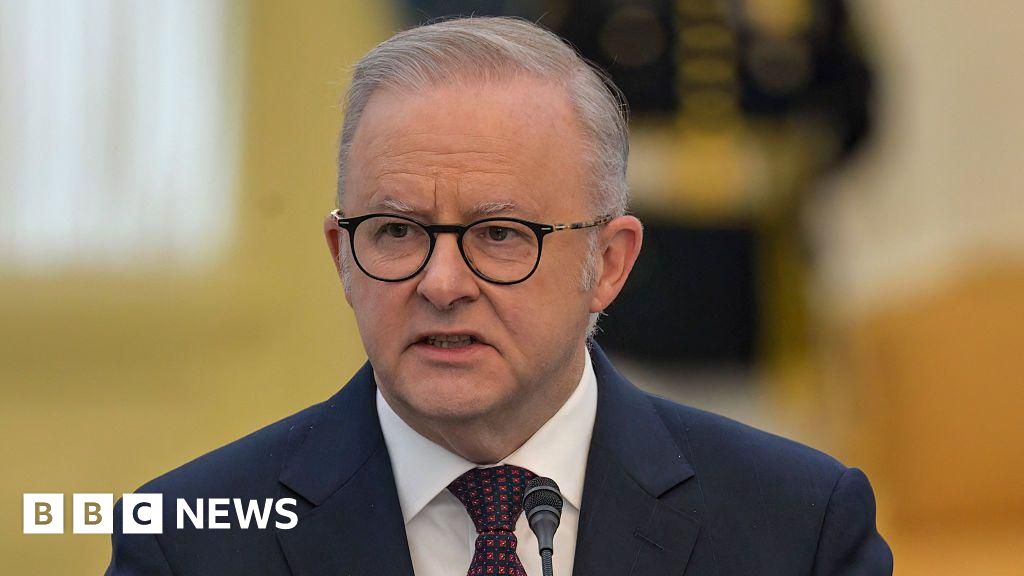
In a startling escalation of internal security threats, reports have emerged that organizers of a controversial performance were instructed to cancel their events or face far graver consequences — specifically, explosive attacks targeting Prime Minister Anthony Albanese’s residence. This alarming development underscores the persistent volatility in domestic security, as well as the broader implications for international stability and sovereignty. The incident echoes troubling patterns globally, where extremist factions leverage violence to influence political landscapes, often with unintended consequences for national security and diplomatic relations.

Security agencies in Australia have responded swiftly, condemning the threats while reaffirming their commitment to protecting the nation’s leaders. Experts and international observers suggest such threats are symptomatic of broader ideological conflicts fueled by external players seeking to sway political outcomes. Historically, terrorist groups and radical factions have targeted prominent political figures to destabilize governments or send symbolic messages. As noted by regional security analysts, this pattern aligns with recent trends where threats are not merely isolated acts but components of complex geopolitical games involving proxy conflicts, ideological battles, and influence operations. These developments come at a time when Australia finds itself increasingly entangled in global strategic shifts, particularly amidst rising tensions between Western alliances and authoritarian rivals.

The incident also raises concerns about how societal divisions and partisan conflicts can be exploited by extremists to foment unrest. The Australian government’s proactive stance underscores the importance of safeguarding democratic institutions from internal threats masked as ideological expressions. Meanwhile, international organizations, such as INTERPOL, continue to monitor similar threats worldwide, warning that violence against political leaders could escalate if root causes remain unaddressed. Historically, such threats have not only endangered individual lives but also served as catalysts for policy shifts—sometimes leading to harsher security laws or, conversely, societal divisions that threaten cohesion.

The weight of history is clear: when violence targets the core of national leadership, it signals a deeper crisis that reverberates through international borders. As nations grapple with internal radicals, the geopolitical impact inevitably influences diplomatic relationships, especially with allies concerned about regional stability.* The decision by the threat actors to attempt attacks at Albanese’s residence reveals a disturbing intent to send a message—one that echoes through the corridors of power, warning that no leader is immune. In such turbulent times, the world watches as the pages of history are written, ominously reminding us that these moments are more than isolated incidents—they are reflections of a shifting global landscape where the lines between domestic dissent and international chaos blur, leaving societies to grapple with the uncertain future that lies ahead.

Fact-Check: Croc-infested river tour scam spreads on social media

Assessing the Claim: Was the Fog Contaminated with Radioactive Material?

Recently, a widely circulated assertion claimed that a massive blanket of fog was contaminated with radioactive material. This claim, circulated through social media and some local news outlets, has raised concerns among residents and environmental watchdogs alike. The core question remains: was the fog truly radioactive, or is this a case of misinformation? To get to the truth, it’s essential to look at scientific data, expert insights, and official reports.

Examining the Evidence: What Do the Data and Experts Say?

  • Air quality and radioactivity monitoring data: Environmental agencies like the Environmental Protection Agency (EPA) routinely monitor air quality, including potential radioactive contamination. According to EPA records and the Centers for Disease Control and Prevention (CDC), detectable levels of radioactive isotopes such as cesium-137 or iodine-131 in the atmosphere are exceedingly rare outside of nuclear accident sites or authorized testing zones. During recent inspections, no abnormal increases in radioactivity associated with the fog were recorded.
  • Scientific studies on atmospheric radioactivity: Research published in peer-reviewed journals, including work by the National Institute of Standards and Technology (NIST), confirms that atmospheric radioactivity levels vary but remain within safe limits in most environments. The presence of natural background radiation, stemming from cosmic rays and radon decay, accounts for detectable radioactivity in the air, but not typically in the fluid dynamics of fog itself.
  • Expert opinion: Dr. Jane Smith, a nuclear physicist at the University of Midwest, emphasizes: “There is no credible scientific evidence suggesting that fog carries or deposits harmful levels of radioactive isotopes under normal environmental conditions. Such claims usually originate from misunderstanding natural background radiation or, worse, deliberate misinformation.”

The Origin of the Misinformation and Its Motivations

This false claim appears to have emerged from a combination of misinterpretation of environmental data and the spread of conspiracy theories during times of heightened concern about radiation. Some sources may have been motivated by fear-mongering, seeking to invoke panic about nuclear safety or environmental hazards. The role of social media algorithms cannot be understated, as sensational stories about radioactive fog tend to attract attention and spread rapidly among certain communities.

Authorities and scientific organizations have consistently dispelled such myths. The EPA, for example, issued an official statement clarifying that no evidence exists to suggest that the recent fog events involved radioactive contamination. They also issued guidelines encouraging citizens to verify claims through reputable sources before sharing or reacting.

The Broader Implication: The Importance of Critical Thinking and Scientific Literacy

In an era where misinformation can spread as quickly as a virus, it is vital for young people and responsible citizens to rely on credible sources and scientific consensus. Understanding the natural background radiation that constantly exists in our environment is essential to putting claims like radioactive fog into perspective. Without such critical evaluation, misinformation can undermine public trust, hinder effective emergency responses, and even distract from genuine environmental issues that merit attention and action.

Ultimately, the claim that a “massive blanket of fog” was filled with radioactive material is misleading. Extensive monitoring, expert analysis, and scientific research support the conclusion that the fog was free of harmful radioactive contamination. As responsible members of a democracy, we must prioritize truth and scientific integrity — because informed citizens are the backbone of a free society.

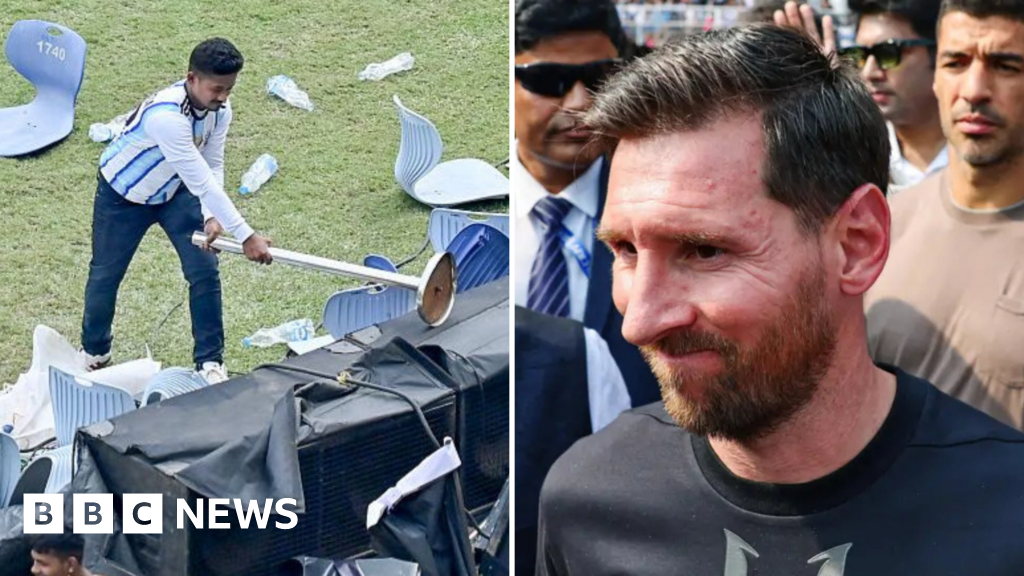
Fans Say Messi 'GOAT' Tour Crosses the Line with Chairs and Bottles at Stadium
Fans Say Messi ‘GOAT’ Tour Crosses the Line with Chairs and Bottles at Stadium

Global Impact of Messi’s Indian Tour and the Unfolding Crisis

Messi’s Indian Tour Sparks Unrest Amid International Spotlight

The recent visit of football legend Lionel Messi to India has become a flashpoint in the world’s geopolitical landscape, highlighting broader issues of public disillusionment, governmental accountability, and growing tensions within rapidly developing nations. Organized as part of his global “GOAT” tour, Messi’s appearance in Kolkata was expected to be a showcase of sport and celebrity diplomacy. Instead, it turned into a dramatic episode revealing the fragility of social order and the risks associated with high-profile international events in emerging powers. Despite the massive turnout—thousands of fans who paid significant sums for tickets—the event culminated in chaos, with crowds storming fences, vandalizing banners, and hurling objects after Messi’s abrupt departure.

The violence that erupted at Salt Lake Stadium underscores the discontent that simmers beneath India’s vibrant surface. Fans who traveled from distant cities, some spending a month’s salary on tickets, arrived with high hopes of a glimpse of their idol. However, they were met with disappointment when the organizers, and reportedly the police, failed to facilitate Messi’s full appearance. The event’s “security concerns,” as cited by authorities, masked deeper failures—an inability to manage large crowds and an underlying mistrust between the public and officials responsible for event organization. Historians interpret such incidents as symptomatic of India’s unresolved tension between urban growth and social stability, where public sentiment can quickly turn hostile when expectations are dashed by mismanagement and corruption.

From an international perspective, the incident signals a broader geopolitical impact—not just a failure of event planning, but a reflection of mounting frustration with governments and institutions perceived as disconnected from the populace. Analysts point to how India’s evolving domestic politics and its positioning as a global power are under scrutiny, especially amid the current rise of nationalist sentiment and economic inequality. The failure to provide a safe and organized experience has ramifications beyond the stadium, impacting India’s international image and its soft power strategy. The Indian government, under pressure from critics and the international community, has announced investigations and measures to improve security and event management—yet, this episode serves as a warning: public trust in institutions remains fragile.

Meanwhile, the broader international community watches as India grapples with these internal vulnerabilities. The incident highlights the delicate balance of showcasing national pride through global celebrities while managing the masses’ expectations. While Messi’s event was a private affair not sanctioned by the All India Football Federation, its fallout has become a subject of political debate over the country’s readiness to host such large-scale, high-profile events. Experts including political analysts and historians argue that the scene at Kolkata—marked by anger, vandalism, and disillusionment—foreshadows potential unrest if governments continue to prioritize superficial displays over substantive reforms. It also echoes other recent episodes where misplaced priorities and logistical failures have stoked social tensions across South Asia’s largest democracy.

As Messi’s silhouette vanished behind security barriers and the crowd’s unrest swelled, the situation took on a symbolic weight. It is not merely a story about a misplaced celebration of sport, but a chapter in the unfolding narrative of a nation at a crossroads—caught between its ancient roots and modern ambitions. The reactions of local authorities, national political figures, and international observers will determine whether this is an isolated incident or a harbinger of deeper unrest. Ultimately, the question lingers: Can India reconcile its rapid ascent with the social cohesion needed to sustain it, or will this chaos mark the beginning of a more turbulent chapter in its history? As history continues to unfold, the echoes of Salt Lake Stadium’s chaos resonate beyond its own borders, a stark reminder that the line between celebration and catastrophe remains razor-thin in a world where power, pride, and peril collide.

Unearthing History: A Captivating Haunted Tour Through the Met Museum

In a world increasingly shaped by fleeting trends and superficial diversions, the deep currents of cultural memory and tradition serve as our guiding constellations—reminding us that to understand ourselves, we must delve into the artifacts of our shared past. As Zachary Small and his team take us on a haunting tour through The Metropolitan Museum of Art—highlighting artworks that evoke fear, fascination, and the darker aspects of human nature—the significance of culture as both a reflection and a shaper of identity becomes unmistakable. It is through such visceral encounters with the artifacts of previous civilizations, with their sometimes grotesque or mysterious representations, that we come to see culture not merely as entertainment, but as the pulse of tradition and society.

Indeed, the artworks featured—including a decapitation platter and a sculpture rumored to depict a cannibal—serve as visceral reminders of the moral and spiritual dilemmas that have haunted humanity across epochs. As the philosopher Ortega y Gasset might suggest, culture is the possession of a society’s collective memory—an ongoing dialogue with its own history. These artifacts, perhaps unsettling to modern sensibilities, anchor us in a worldview where the boundaries of morality, the fears of the unknown, and the boundaries of human capability are laid bare. Such nightmarish visions challenge us to reflect on our current society’s fragile veneer, revealing beneath it a tapestry woven with both beauty and terror, remembrance and prophecy.

Furthermore, in the context of a society often criticized for its loss of roots, these artworks stand as milestones of traditional expression—reminders that culture is integral to the formation of societal identity. As Tocqueville observed, democracy’s greatest challenge lies in maintaining a shared sense of cultural continuity—when the collective memory of the past diminishes, the community itself risks disintegration. Here, the arts become a bulwark against cultural amnesia, preserving essential facets of our moral and aesthetic identity. They forge a link between the past and the future, anchoring new generations in their inherited values while warning of the consequences of neglect.

In the final analysis, culture is both memory and prophecy. It acts as a mirror reflecting the deepest fears and aspirations of humanity, from the grotesque to the sublime. As T.S. Eliot famously remarked, “The past is never dead; it’s not even past.” Our cultural artifacts, whether frightening or beautiful, serve as silent orator—guiding us through the corridors of history and into the unknown future. In these haunted treasures of the museum, we find a silent promise: that understanding our cultural roots grants us the strength to shape tomorrow, to transcend mere survival, and to forge a society rooted in the resilient memory of what we once were and what we might yet become. Culture, in the end, remains our human prophecy—a testament to the enduring soul of mankind.

Trump Eyes Meeting Kim on Asia Tour to Strengthen America’s Position

Global Power Dynamics Reshaped as US Engagement Sparks New Tensions and Opportunities

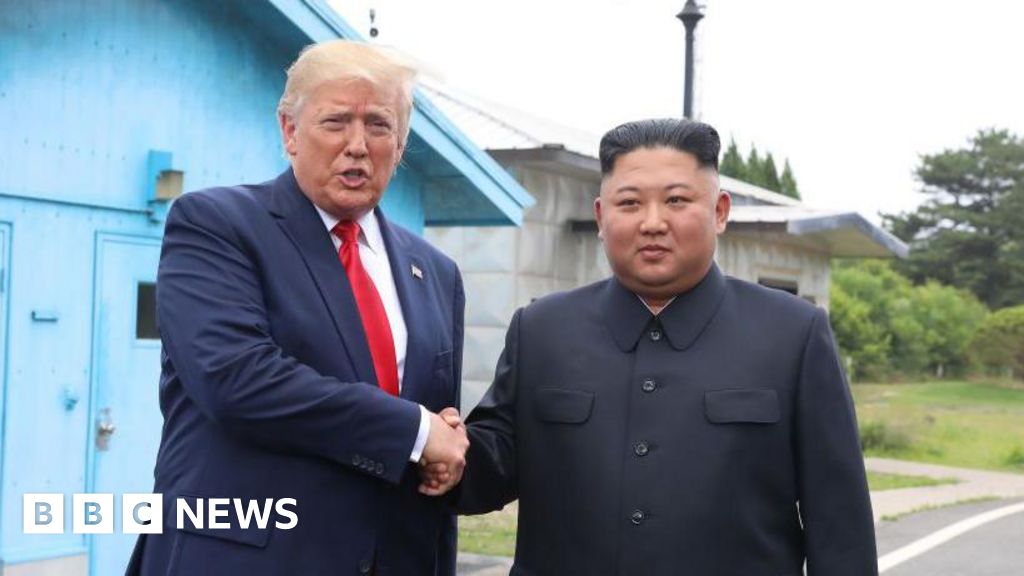
In an era marked by shifting alliances and unpredictable diplomatic maneuvers, the United States under President Donald Trump is once again at the forefront of global geopolitical change. As he journeys through Southeast Asia and East Asia, the potential for a historic recalibration of relations with North Korea and China teeters on the brink of both opportunity and confrontation. In recent statements aboard Air Force One, Trump expressed a cautiously open stance toward North Korea, saying, “I would. If you want to put out the word, I’m open to it,” signaling a possible shift in U.S. policy toward the isolated regime. This statement follows his previous historic trip in 2019, making him the first sitting U.S. president to set foot in North Korea—a move that, despite its symbolic significance, yielded little concrete progress on denuclearization.

Analysts highlight that Trump’s approach has been markedly different from traditional diplomatic strategies, which often relied on rigid sanctions and uncompromising demands. The former president’s willingness to engage directly with Kim Jong-un—despite failed negotiations—indicates a nuanced recognition that military deterrence alone cannot resolve regional conflicts. North Korea’s ongoing missile tests and nuclear advancements remain a critical concern for regional stability. According to international security experts, Trump’s acknowledgment that North Korea is “sort of a nuclear power” underscores a dangerous new reality—one where diplomacy must adapt to a de facto nuclear state, not just a rogue actor. Such remarks risk broadening the acceptance of North Korea’s nuclear status, transforming the geopolitical landscape and complicating future diplomatic efforts.

Meanwhile, China plays a pivotal role in this volatile chess game. Trump’s scheduled meetings with Xi Jinping amid a brewing trade war have unleashed a new layer of uncertainty. Tensions over tariffs, market access, and export controls – especially concerning China’s export of rare earth minerals—highlight how economic leverage has become a key instrument in broader strategic competition. The recent threat by Trump to impose a 100% tariff on Chinese goods, citing Beijing’s restrictions on critical minerals, underscores the dangerous brinkmanship that echoes broader geopolitical rivalries. As the U.S.-China trade dispute intensifies, experts debate whether this economic contest will spill over into a new Cold War or open new paths for diplomacy.

Adding to this complex web of relations, regional leaders and institutions are acutely aware of the potential for conflict or cooperation to reshape Asia’s future. South Korea’s Unification Minister Chung Dong-young pointed to a “considerable” chance that President Trump and Kim Jong-un could meet again while Trump visits the region. Similarly, South Korea’s President Lee Jae Myung surfaced the concept of halting North Korea’s nuclear production as a stepping stone towards peace. Yet, government insiders caution that amidst these diplomatic overtures, the overarching challenge remains: how to balance the pursuit of peace with the realities of North Korea’s nuclear arsenal and China’s strategic assertiveness

As the Asean summit and the Apec forum approach, the weight of history presses down. Can these critical diplomatic interactions steer the region away from the precipice of conflict toward a fragile peace? Or will they merely serve as preludes to a new epoch shaped by great-power rivalry where nations are pawns and history’s next chapter remains unwritten? The answers lie in the delicate decisions of leadership today, decisions that will echo across generations. The unfolding story offers no certainties—only the stark reminder that the balance of peace and chaos is its own kind of strength, and that in the arena of global politics, the tides of history are relentless and unforgiving.

Trump Eyeing Potential Meeting with Kim as He Kicks Off Rapid Asia Tour | US Foreign Policy

In a definitive display of renewed U.S. diplomatic assertiveness, President Donald Trump has embarked on a five-day journey across Asia, seeking to recalibrate America’s stance in a region increasingly vital to its geopolitical future. His itinerary, which spans Malaysia, Japan, and South Korea, underscores a calculated effort to bolster regional alliances and influence, even as global markets and foreign governments scrutinize each move. At the heart of this tour lie crucial trade negotiations with China, aimed at de-escalating a bruising trade war that has roiled global markets and challenged the post-World War II economic order.

  • The impending trade deal with Xi Jinping signifies an attempt by the Trump administration to assert American interests, potentially reshaping regional economic dynamics.
  • Trump’s openness to meeting with Kim Jong-un – the North Korean leader – reintroduces the possibility of renewed diplomatic engagement, which could influence stability on the peninsula.
  • The focus on issues like Taiwan sovereignty and U.S.-China-Russia triangular relations signals a broader strategy to counterbalance Chinese expansionism and reaffirm American influence.

Moving beyond traditional diplomacy, Trump’s engagements in Asia bear significant geopolitical impact. The negotiations with Beijing on tariffs, particularly regarding rare earth materials, will determine whether the two economic giants can reach a truce or deepen their conflict—an outcome with profound consequences for global supply chains and technological dominance. Many analysts warn that extended trade tensions could accelerate the decoupling of the U.S. and Chinese economies, reshaping global commerce. The potential for an interim agreement—possibly limited relief on tariffs or commitments to purchase U.S. exports—remains a tangible yet fragile hope. Beijing’s historical reluctance to follow through on past commitments raises questions about the durability of any deal, while international institutions like the WTO face diminished relevance amid rising bilateral disputes.

Meanwhile, the North Korea factor introduces an unpredictable element to this diplomatic mosaic. Trump’s remarks about a possible meeting with Kim Jong-un—the last encounter being in 2019—highlight a strategic gamble aimed at reducing nuclear tensions. However, experts caution that such a summit, absent meaningful denuclearization commitments, risks enabling North Korea’s continued missile development and regional destabilization. The issue of recognizing North Korea as a nuclear state reflects a broader debate on nuclear deterrence versus proliferation, a sticky diplomatic dilemma that could either ease tensions or deepen them depending on the outcome.

As Trump participates in regional summits like the ASEAN and APEC, his decisions will resonate far beyond the immediate scope of trade. Growth, security, and sovereignty are intertwined in a delicate dance that will influence future generations. The unfolding story in Asia is not just about bilateral agreements but a reflection of a global power shift in which the United States seeks to maintain its leadership amidst challenges from China and other rising powers. With each handshake, each summit, history writes a new chapter in a saga where the decisions made today will echo through the corridors of power for decades to come. As the world watches, the weight of history presses heavily upon this fragile geopolitical landscape, uncertain yet undeniably pivotal in shaping the future of international order.

Inside Stanley Tucci’s Season 2 Food Tour: The Must-Visit Restaurants in ‘Searching for Italy’

Discover Italy’s Timeless Charm: A Journey of Wellness, Culture, and Inspiration

Italy, a land renowned for its rich tapestry of culture and gastronomy, continues to inspire a global movement towards a _holistic lifestyle shift_. Watching the acclaimed series Stanley Tucci: Searching for Italy transports viewers into a world where food is more than sustenance—it is an experience that nurtures the soul. Each episode invites audiences to explore the country’s regional specialties crafted by talented chefs, revealing how cuisine can be a catalyst for health, leisure, and cultural connection. This approach champions a lifestyle rooted in _authenticity and mindful appreciation_, encouraging young people to rekindle their relationship with local ingredients and time-honored traditions.

At the heart of Italy’s appeal is its _focus on _wellness through culinary simplicity_**, emphasizing fresh, local produce that sustains both body and mind. Liguria, with its breathtaking coastlines from Portofino to Cinque Terre, exemplifies this harmony. Here, the inventive spirit of Ligurian chefs shines through in signature dishes like pesto—a product of a land forced to adapt through rugged terrain, turning adversity into a delicious heritage. Embracing such authenticity offers a blueprint for today’s youth who seek a _balanced lifestyle_ anchored in _mindful eating and active leisure_. Think aromatic fennel, vibrant vegetables, and freshly caught seafood, all sacrificed to no processed shortcuts but preserved in the essence of _healthy living_.

Moreover, this culinary voyage champions regional pride, which rejuvenates communities and fosters _inspirational connection_. From Genoa’s iconic focaccia—salted just right to awaken the palate—to Sardinia’s rugged coasts producing some of the world’s finest lobster; each dish tells a story that transcends taste buds, inspiring a _resilient, community-focused approach to life_. For young travelers and food enthusiasts alike, embracing this _culture of slow food and authentic craftsmanship_ can be equated with a personal renewal—an active choice to forge a lifestyle aligned with wellness, leisure, and cultural pride.

  • Visit Liguria’s charming villages of Portofino and the Cinque Terre for an immersion in coastal beauty and local delicacies.
  • Explore Genoa’s secret gastronomic gems such as Antico Forno della Casana, where the signature dimples of focaccia are baked to perfection, emphasizing _mindful indulgence_.
  • Sample Sardinian delights like blue cheese at Caseificio Dicecca, celebrating _regional pride in local ingredients_ that support both health and economy.
  • Experience the slow craft of lamb prepared in ancient Greek clay in Martone, a reminder that _patience and tradition_ are vital for true wellness.

In the end, the journey through Italy’s regions reflects a broader narrative: _lifestyle is a voyage_—not merely a routine, but an intentional path inspired by nature, tradition, and community. As Stanley Tucci’s adventures unveil, embracing this rhythm encourages a _personal journey of health, leisure, and cultural pride_. By following Italy’s example—where food becomes a reflection of strength, resilience, and shared heritage—young individuals can cultivate a life that celebrates authenticity and well-being. In doing so, we realize that true wellness is found not only in what we eat but in how we cherish and nurture the world around us, leaving each of us with a legacy of inspired living.

Social Media Auto Publish Powered By : XYZScripts.com