Matox News

Truth Over Trends, always!

Tragedy strikes as fire claims at least 44 lives, hundreds still unaccounted for in tower blaze

Map that labels China, Hong Kong and Tai Po, highlighting Wang Fuk Court

Hong Kong Blaze Unfolds: A Tragedy with Broader Geopolitical Ramifications

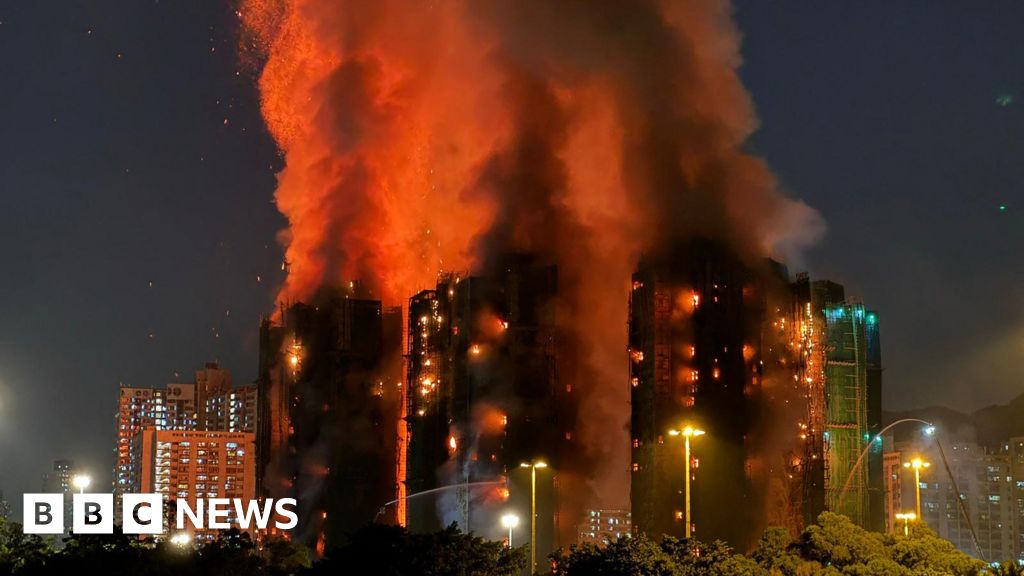
The recent inferno engulfing the Wang Fuk Court housing complex in Hong Kong’s Tai Po district has shocked the international community and cast a spotlight on the city’s ongoing safety dilemmas amid rapid urban renewal. Involving more than 760 firefighters, the fire has claimed at least 44 lives, with hundreds still missing, and has sent shockwaves through a city famed for its dense high-rise architecture and unique blend of East-West integration. While local authorities scramble to contain the blaze and investigate its causes, analysts emphasize that this tragedy extends beyond immediate rescue efforts, revealing underlying tensions regarding urban infrastructure, safety standards, and the city’s overarching geopolitical identity.

At the heart of the incident is the controversial use of bamboo scaffolding—an aged construction method still prevalent in Hong Kong, despite efforts by local authorities to phase it out in favor of modern metal alternatives due to safety concerns. The bamboo scaffolding’s role in the rapid spread of the fire has raised suspicion, with preliminary evidence suggesting the flammable material may have exacerbated the blaze. The cause remains officially unconfirmed, but Hong Kong’s security secretary Chris Tang has alluded to possible suspicious activity, including the use of polystyrene to seal windows—a practice criticized for its fire hazards. This incident not only underscores the dangers of outdated construction practices but highlights the broader challenge Hong Kong faces in balancing tradition, safety, and urban resilience amidst ongoing political and social flux.

International organizations and Western analysts interpret the tragedy as a bellwether for Hong Kong’s evolving socio-political landscape—a city caught at the crossroads of greater integration with mainland China and its own distinct identity. Experts warn that the government’s ongoing push to modernize infrastructure, coupled with the lingering use of traditional building methods, could portend more crises unless comprehensive reforms are implemented swiftly. Xi Jinping, China’s paramount leader, expressed condolences and urged action to minimize further losses, reaffirming Beijing’s emphasis on maintaining stability and asserting greater control over Hong Kong’s civic infrastructure. Such signals underscore the emerging dynamic: Hong Kong, once a global financial hub, increasingly finds itself entangled in a geopolitical chess game where safety incidents are viewed through the lens of sovereignty and national security.

Shifting Tides and Lingering Shadows

The fire at Wang Fuk Court is not an isolated event—it echoes a tragic history of urban fires, with the city facing a comparable high-rise catastrophe 17 years ago at Cornwall Court. Such recurrent incidents symbolize a city grappling with modernization while attempting to preserve its identity amid political upheaval and economic transformation. Historian and urban safety analysts note that these disasters expose vulnerabilities inherent to dense urban environments, where outdated building materials and methods clash with contemporary safety standards.

Furthermore, the incident exposes societal rifts—many residents, primarily elderly, faced peril without timely alarms or evacuation assistance. Amid ongoing debates about the adequacy of emergency protocols and infrastructure, the broader geopolitical impact becomes clear: Hong Kong’s internal struggles over safety and sovereignty manifest as a microcosm of its complex relationship with Beijing. As authorities debate solutions, including replacing bamboo scaffolding with safer materials, the city’s future hangs in precarious balance, weighed down by history and the relentless march of progress.

As darkness falls over the smoldering ruins of Wang Fuk Court, the echoes of this tragedy resonate far beyond the borders of Hong Kong. The flames threaten to ignite a larger debate—one that questions the very fabric of urban life in a city where tradition and modernity collide, and where every decision could tilt the delicate scales of stability. In this unfolding chapter of history, the world watches with bated breath, knowing that the outcome of this crisis could redefine the narrative not just of a city, but of a generation seeking to reconcile the scars of yesterday with the promise of tomorrow. The flames are dying down, but their legacy is only just beginning to flicker across the pages of history, waiting for the next act to be written in the ongoing saga of urban resilience and geopolitical authority.

Tragedy strikes: Two dead after small plane crashes during hurricane relief trip to Jamaica in Florida

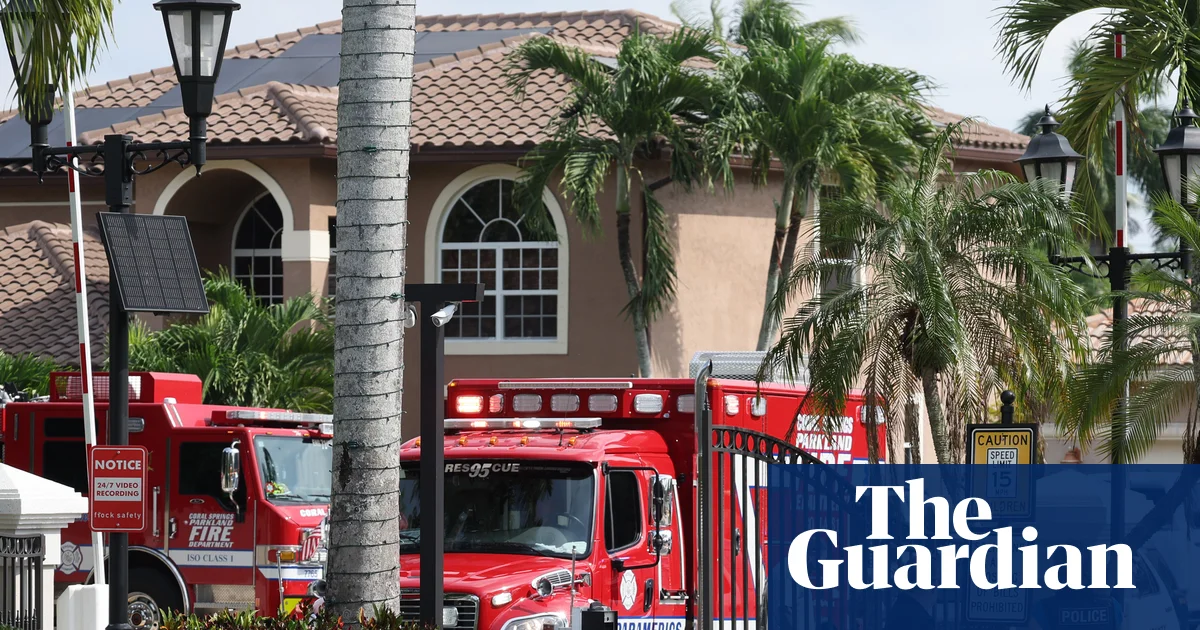
The recent crash of a small turboprop plane in Coral Springs, Florida has sent shockwaves through a region still reeling from the devastation wrought by Hurricane Melissa. The incident, which resulted in the tragic deaths of two individuals shortly after the aircraft took off on a hurricane relief mission, highlights the lingering vulnerabilities faced by communities in the Caribbean and their diaspora in the United States. While initial reports indicate no damage to nearby homes, the debris trail leading to a pond underscores the dangerous hazards associated with unregulated or poorly documented relief flights in post-disaster zones.

Analysts point out that the crash’s timing and context are significant, reflecting ongoing geopolitical realities. The plane, a vintage Beechcraft King Air registered to International Air Services, had made multiple recent trips to Jamaica—an island still recovering from the wrath of Melissa, which made landfall as one of the strongest hurricanes in Atlantic history. The fact that the aircraft operated through a company known for trust arrangements for non-US citizens indicates complex international aviation logistics, possibly aimed at circumventing regulatory oversight. This incident raises questions about how international relief operations are coordinated and the safety standards adhered to during these missions.

The geopolitical impact extends beyond mere accident statistics. Jamaica, a nation of strategic geopolitical importance amidst escalating tensions between global powers, relies heavily on international aid and diaspora support. The devastation caused by Melissa—leaving over 90,000 families displaced and thousands in shelters—has strained local resources, and aid efforts have become a focal point of regional diplomacy. The US’s role, whether through humanitarian missions or private relief contractors, becomes part of a broader contest for influence, especially as emerging nations seek to expand their footprint in Caribbean assistance and recovery. The crash consequently underscores a broader need for coordinated international oversight, lest relief efforts become entangled with geopolitical rivalries or neglect safety protocols in pursuit of quick aid delivery.

Meanwhile, local communities and international organizations are grappling with the immediate aftermath. Emergency responders, as described by officials like Mike Moser, responded swiftly, but the debris and fuel spill have created environmental and safety concerns. The ongoing investigation by federal aviation authorities aims to uncover whether mechanical failure, pilot error, or regulatory lapses contributed to the crash. Historically, experts like aviation safety analyst Dr. Raymond Chen warn that in the hurried rush to assist disaster zones, safety often takes a backseat, risking further tragedies. As authorities maintain a heavy police presence and continue evidence collection, the incident functions as a stark reminder of the fragile interface between aid, safety, and geopolitics in regions vulnerable to natural catastrophes.

As the world observes, this event underscores how aircraft, often seen as mere tools of aid, are also symbols of broader international dynamics. The hurricane’s aftermath, with Jamaica still in recovery, reflects the unending story of resilience underscored by vulnerability—a narrative that history keeps writing with each new chapter. The toll of Melissa, compounded by the tragedy in Florida, leaves a haunting question: in an era of rapid geopolitical shifts and climate turmoil, how will nations navigate aid, safety, and sovereignty? The weight of history presses heavily on the horizon, and as this unfolding drama continues, the global community watches, waiting for answers that could redefine the boundaries of international cooperation amid adversity.

Tragedy on the Streets: Street Racer Hits Crowd at Tampa Bar, 4 Dead, 13 Injured

The High Cost of Reckless Driving: A Tragedy on Tampa’s Streets

In a stark reminder of how wellness and safety can be shattered in an instant, Tampa, Florida recently faced a devastating incident resulting from reckless driving. Early Saturday morning, a police chase that initially aimed to curb street racing spiraled into tragedy when the suspect’s vehicle, after several attempts to evade authorities, lost control and collided with a beloved local bar, Bradley’s. The aftermath: four lives lost and over a dozen injured—an event that leaves the city grappling with grief and questions about justice and safety.

The Tampa Police Department described the scene as “senseless,” underscoring the destructive path that impatience and recklessness can carve through a community. After being spotted by aerial surveillance around 1 a.m., the suspect — a 22-year-old man — was relentlessly pursued across city streets. Despite attempts at a PIT manoeuvre, a police tactic often scrutinized for its danger to bystanders, the driver continued to accelerate, ultimately losing control and crashing into the outdoor patio of a popular LGBTQ+ venue, Bradley’s. The incident highlights a critical tension in law enforcement: how to balance pursuit tactics with the imperative to protect innocent lives, as outlined in recent federal safety reports advocating for less dangerous chase techniques.

While the immediate tragedy unfolded at a venue frequented for its community, the broader narrative extends beyond the specifics of this incident. It raises essential conversations about <a href=”https://portal.cops.usdoj.gov/resourcecenter/content.ashx/cops-r1134-pub.pdf” target=”_blank”>personal responsibilityurban safety, and the importance of cultivating responsible driving habits that preserve free movements$> and prevent catastrophic outcomes. Wellness experts like Dr. Michael Gervais advocate for cultivating focus and mindfulness, especially in high-stakes situations, asserting that a shift in societal mindset—from reckless thrill-seeking to conscious respect for safety—can alter outcomes and foster healthier communities.

  • Prioritize wellness initiatives that encourage responsible driving and community safety awareness.
  • Support policies and technology aimed at reducing street racing and dangerous pursuits.
  • Promote mental health resources for young adults, addressing the underlying causes of impulsive behaviors.

In reflecting on this event, one recognizes that the journey toward well-being and community integrity is ongoing, demanding both accountability and compassion. The narrative of Tampa’s tragedy is a reminder that lifestyle choices extend beyond the individual—they ripple across the fabric of society, shaping environments where resilience and responsibility can flourish. As the city mourns and seeks justice, it also reaffirms a collective commitment to embracing the values that champion life, safety, and personal growth.

In this quest for a better future, it is through hard truths and shared resolve that communities find their way back toward hope. The story of Tampa challenges each of us to be vigilant and committed to fostering environments where life and leisure can coexist safely, inspiring a new chapter where every journey is one of purpose and personal impact.

A Year On, Serbia Still Reeling from Train Station Tragedy

Serbia’s Tragedy and the Political Wake-Up Call to the World

In the heart of Europe, Serbia faces a profound moment of reckoning as the aftermath of the Novi Sad railway station disaster has ignited a wave of public outrage. A year after the catastrophic collapse of a concrete canopy claimed 16 lives—ranging from children as young as six to seniors aged 77—the nation witnesses a collective mourning that has transitioned into a powerful political statement. This tragedy, which emerged under the auspices of President Aleksandar Vučić‘s government, has cast a long shadow over Serbia’s development ambitions, exposing the deep-rooted issues of corruption, negligence, and cronyism.

Upholding the memory of the victims and condemning the government’s failure, tens of thousands gathered at Novi Sad’s station to participate in silent homage—precisely one minute per life lost. Their grief was palpable, with families crying and supporters physically supporting women, as the nation grappled with the stark reality of how infrastructure projects, hailed as symbols of progress, had succumbed to deadly lapses in safety standards. Analysts from the International Crisis Group warn that such disasters underscore how corruption may have infiltrated Serbia’s public works, impairing essential safety protocols and endangering ordinary citizens. The incident has become a catalyst for widespread protests, accusing authorities of covering up systemic flaws that threaten the fabric of Serbian society.

Major internal and international responses have further heightened alerts. The European Parliament has called for full and transparent legal proceedings, emphasizing the importance of accountability in safeguarding public safety standards. Investigations have charged several former officials, including Goran Vesić, the ex-Minister of Transport, and deepened suspicion that the tragedy was a consequence of entrenched corruption. Serbia’s youth are leading the charge with a steadfast demand for institutional reform, independent justice, and a break from the corrupt practices that have marred the nation’s progress. Their protests, unlike the discredited political opposition, have gained widespread trust among ordinary citizens, signaling a generational shift that could redefine the country’s future.

This movement has also rattled the political establishment, with President Vučić’s previously combative rhetoric softening briefly, as he issued a rare public apology for his harsh language toward protesters. Yet, the deep wounds remain, and the discourse of “color revolutions”—a term once associated with Western-backed regimes—lingers ominously over the protests. The youth-led movement seeks the formation of a technocratic government, pushing for elections that would restore faith in Serbia’s institutions and root out corruption at its core. How this unfolding story will shape not just Serbia’s domestic policy but also its international relations remains a pivotal question for global observers.

As history continues to unfold at Novi Sad, the collective memory of the victims acts as a stark reminder of the stakes involved. The decisions taken today by Serbia’s leaders—whether rooted in transparency, integrity, or heedless power—will determine the trajectory of a nation wrestling with its past and forging its future. The world watches as a new generation demands justice and honesty, their voices echoing across the corridors of power, warning that history’s pen is yet to be finished. Will Serbia emerge from this tragedy stronger, more transparent, and committed to genuine progress? Or will it succumb to the entrenched corruption that has so often shadowed its path? The answer lies in the unfolding narrative of a nation at a crossroads, where each decision could mark a new chapter—one written in the blood of the fallen, and in the hope of those determined to rebuild a broken trust.

Maine mom wins $25M in wrongful death case after leukemia tragedy involving daughter

Recent legal proceedings in Maine have rekindled a global conversation about accountability and medical standards, illustrating how individual justice can echo far beyond local borders. A civil jury awarded $25 million to Lyndsey Sutherland for her wrongful death lawsuit against Mid Coast Medical Group. This case, centered around the tragic loss of her 15-year-old daughter, Jasmine “Jazzy” Vincent, exemplifies the profound impact that a single verdict can have on societal perceptions of medical responsibility and the pursuit of justice. Although the verdict—comprising $10 million for Jazzy’s wrongful death and $15 million for pain and suffering—is subject to appeal due to jurisdictional caps, its significance reaches well beyond the State of Maine.

Historians and analysts concur that this case serves as a potent reminder that when medical professionals fail to adhere to minimum care standards, the ripple effects are destructive and far-reaching. Jazzy’s initial diagnosis of pneumonia, followed by a misinterpretation of symptoms related to a steroid-related condition, underscores how crucial accurate diagnosis and timely treatment are—especially for pediatric patients. The failure to identify her actual illness, acute lymphoblastic leukemia, led to her untimely death from cardiac arrest, illustrating the deadly cost of negligence. Such instances in the United States have prompted international observers and medical watchdogs to reassess protocols and standards—highlighting a pressing need for global reform to prevent similar tragedies.

This case also underscores how the decisions made in local courts can serve as templates for international discussions on medical accountability. International organizations such as the World Health Organization (WHO) emphasize the importance of stringent medical standards and legal recourse. Yet, critics argue that in many parts of the world, similar cases go unresolved or unnoticed due to systemic flaws or corruption. The Maine verdict becomes more than just a legal victory; it acts as a rallying point for advocates demanding justice and transparency worldwide. Countries grappling with healthcare deficiencies are now watching closely, aware that the outcome of justice in one nation can inspire change global-wide. This case may ultimately catalyze discussions on legal reforms, insurance policies, and the role of medical oversight across borders—highlighting how decisions in small localities carry the potential to influence global health policies.

As the verdict sparks debate, the broader geopolitical impact becomes increasingly evident. America’s legal case at home casts a spotlight on the broader issues related to healthcare accountability, which has tangible effects on international diplomacy and economic stability. Nations are increasingly pressured to adopt more rigorous medical and legal standards, not just to meet global benchmarks but also to shape their national identities as responsible members of the international community. How a country handles its medical negligence cases, whether through litigation, reform, or oversight, signals its commitment to safeguarding its citizens and upholding justice. Meanwhile, critics within international organizations warn that neglecting these standards could promote a pattern of complacency—a dangerous precedent with potentially devastating consequences. Ultimately, the verdict and its aftermath serve as a stark reminder that justice is the bedrock upon which societal stability is built, and that the weight of history continues to be written in moments like these.

Outback Tragedy: Man and Woman Shot Dead in NSW Wilderness

Fatal Underground Explosion at Australia Mine Shakes Community and Global Industry

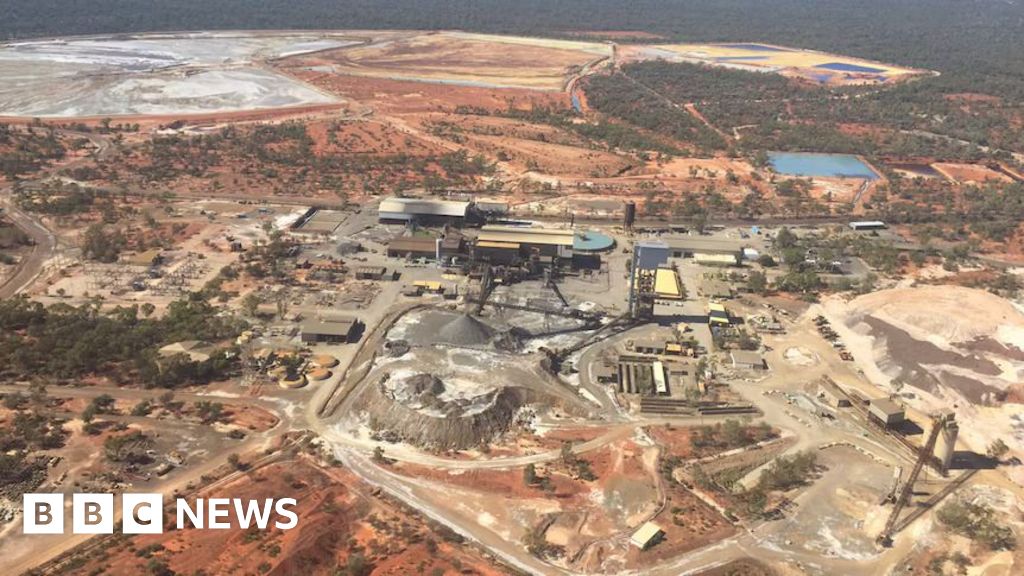
The recent tragic incident at the Endeavour mine in New South Wales marks a sobering chapter in Australia’s mining history, reminding the world of the enduring risks faced by workers in resource extraction industries. Two lives were lost in an underground explosion—an event confined to the remote town of Cobar, but one with implications that resonate far beyond the Australian continent. The incident—first since 2015—raises critical questions about safety protocols, corporate accountability, and the ongoing balance between economic development and worker protection.

According to authorities, an underground explosion claimed the lives of a man in his 60s and a woman in her 20s, with another woman sustaining minor injuries. Emergency responses revealed a community gripped by tragedy, as local officials, including Cobar Mayor Jarrod Marsden and NSW Premier Chris Minns, extended heartfelt condolences. The response from government and industry highlights an understanding that such fatalities are not only tragedies but stark reminders of the vital importance of safety standards in dangerous sectors that underpin national economies. Authorities have announced a comprehensive investigation, including a report for the coroner, emphasizing that, despite improvements in safety protocols, the risks endemic to mining remain ever-present.

Historically, Australia has maintained a generally low fatality rate in mining, with fatalities rarely occurring since the last major incident in Queensland in 2015. The Endeavour mine—with a history dating back to 1982 and now under new ownership by Polymetals Resources—had resumed operations earlier this year, focusing on precious metals such as silver, zinc, and lead. The mine’s extensive infrastructure—a 7 km decline and 300-meter shaft—underscores the scale and danger of underground extraction. As the Australian government’s Workplace Safety Authority prepares to investigate, analysts warn that the incident could serve as a temporary setback for international confidence in Australia’s mining safety reputation. Many experts point to the fact that despite technological advancements, the inherently hazardous nature of underground mining demands relentless vigilance.

From a geopolitical impact, this tragedy underscores a broader global narrative—one where the demand for critical minerals fuels international competition and economic shifts, often at the expense of worker safety. As nations like China, the United States, and Germany ramp up their resource extraction to secure supply chains for electric vehicles and renewable energy technologies, the safety of workers must remain a core concern. International organizations such as the International Labour Organization emphasize that sustainable development cannot be achieved without safeguarding lives in risky industries. Meanwhile, analysts argue this incident could potentially ripple across global markets—prompting increased regulation and safety measures—affecting how resource-dependent nations strategize their industrial growth.

In a broader, more symbolic sense, this event leaves the world at a crossroads—a place where history continues to unfold with each tragedy and triumph. As communities mourn and authorities vow accountability, the weight of the past presses heavily into the future. Will this tragedy serve as a wake-up call leading to enduring reforms, or will the relentless pursuit of resources once again overshadow the fundamental necessity of worker safety? The unfolding chapters of this incident will determine whether Australia, and by extension the global industry, can forge a safer, more responsible path forward. In the shadow of this explosion, the world is left to ponder whether the sacrifices made underground will ultimately lead to a brighter, safer dawn or whether history’s dark lessons will be ignored once more.

Uganda tragedy: Over 60 lives lost in devastating road crash

In a devastating incident that has sent shockwaves across Uganda, a catastrophic highway crash resulted in the deaths of 63 people, highlighting ongoing issues with road safety and the broader socio-economic challenges faced by the East African nation. The tragedy unfolded at approximately 00:15 local time on the Kampala-Gulu Highway, a critical artery connecting the capital with northern regions. Police reports indicate that two buses traveling in opposite directions collided head-on during an attempted overtaking maneuver—an act often driven by economic necessity and the pressures of rapid mobility in developing nations.

This incident underscores a deeper, systemic problem—the dangerous practice of overtaking on busy highways, which authorities have consistently linked to cause and consequence of fatalities. The police statement emphasizes that such reckless actions “remain one of the leading causes of crashes in the country,” revealing a societal issue intertwined with economic hardship and infrastructural deficiencies. Many analysts suggest that Uganda’s transportation infrastructure has not kept pace with population growth and urban expansion, forcing drivers into risky behaviors at the expense of safety. This tragedy echoes similar patterns seen in other developing nations, where quick economic growth often comes with a toll—an increasing number of preventable deaths and injuries that threaten to destabilize local communities and undermine development efforts.

From an international perspective, this incident is emblematic of broader regional challenges. East Africa, with countries like Kenya and Tanzania, faces infrastructural gaps that constrain economic progress and regional integration. It also raises questions about the effectiveness of governance and regulation, as governments grapple with balancing development and safety. Notable analysts, including those at the United Nations Economic Commission for Africa, warn that without targeted investments and stricter enforcement of safety protocols, such tragedies will persist, further entrenching social inequalities and hindering sustainable growth. Meanwhile, local governments are under mounting pressure to improve transport safety standards and public awareness, efforts that are often hampered by limited resources and corruption.

Historically, such events serve as poignant reminders of how decisions made today shape the future fabric of societies. The Ugandan crash is a stark symbol of the costs borne by nations in a period of rapid transition—costs that are amplified by geopolitical shifts and economic ambitions. As Uganda and other African nations seek to position themselves within the global economy, the need for resilient infrastructure and stronger institutions becomes crucial. The implications extend beyond transportation, touching on issues of governance, social justice, and national security, which are all interwoven in the quest for stability and prosperity. With international organizations calling for more comprehensive approaches, the question remains: how long can societies continue sacrificing safety in the rush towards modernization?

As history unfolds, the tragic echoes of this traffic collision leave a haunting message: the path forward is fraught with peril, and the choices made today will determine the legacy left for future generations. Will Uganda and similar nations heed the warning and prioritize safety and governance, or will they risk more preventable crises that threaten to unravel their social fabric? The weight of history presses down, reminding us that each decision—on roads, in policy, and in leadership—takes us one step closer to either progress or profound disaster. The story of Uganda’s roads is still being written, and its chapters could define the future of an entire region.”

Kenyan Youths Raise Alarm: ‘We Are Orphans’ Amid National Tragedy

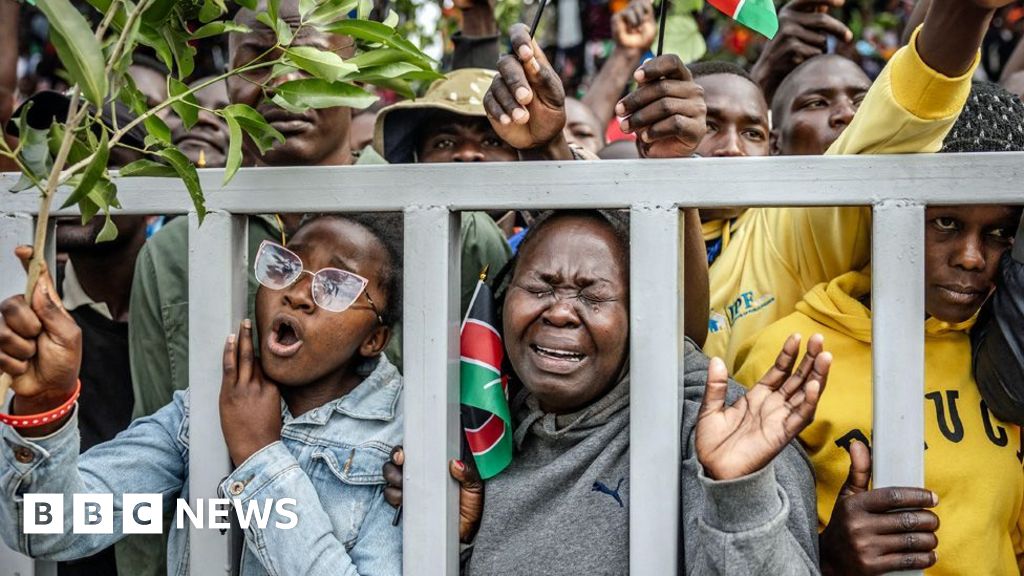
The passing of Kenyan opposition leader Raila Odinga has sent waves across the continent and beyond, highlighting the enduring influence of his political legacy in East Africa. Odinga, regarded as a symbol of resilience and democracy, drew massive crowds at his funeral in Kisumu, underscoring the deep-rooted support he cultivated over decades. His death at age 80 marks not only a personal loss but a significant juncture for Kenya’s political landscape and its position within the broader African Union. Former US President Barack Obama, echoing a sentiment shared by many, recognized Odinga as a “true champion of democracy,” a title that resonates with his hard-fought political career that spanned multiple electoral cycles, often marred by allegations of manipulation and violence.

Odinga’s political journey was characterized by his unwavering advocacy for self-governance and electoral transparency. Despite losing five presidential campaigns, he remained a potent force, embodying the aspirations of millions for democratic reform. The 2007 election crisis demonstrated his resolve, leading to a fragile but vital unity government aimed at curbing electoral violence. Analysts from respected international think tanks emphasize that Odinga’s legacy laid the groundwork for Kenya’s ongoing political reforms, even as intra-ethnic tensions persist. The geopolitical impact of his death extends beyond national borders—it underscores the fragile stability in a region frequently affected by political unrest, and the importance of regional diplomacy in fostering peace.

The death of Odinga coincides with a broader shift in African politics, where youthful populations and burgeoning economies demand greater representation and accountability. Historians such as Terence Ranger have noted that leaders like Odinga are vital in navigating post-colonial challenges, balancing traditional influences with the aspirations of new generations. The post-Odinga era presents a critical test for Kenya’s political institutions as they attempt to maintain peace and stability. The measures taken to prevent chaos during the funeral—warnings from Odinga’s family and the organization of orderly private burials—highlight the acute awareness of how fragile societal cohesion can be in times of leadership transition. The international community’s recent calls for calm stress the significance of regional stability—any upheaval risks destabilizing a vital economic hub and disrupting East African trade networks.

As history continues to unfold amidst these shadows of change, the legacy of Raila Odinga remains a powerful reminder of the thin line leaders walk between progress and chaos. His life encapsulates the ongoing story of African resilience—a continent where the struggle for justice persists amidst growing pains. While his body is laid to rest, the trajectory of Kenya’s democracy hangs in the balance. The desire for true reform, resilience, and regional stability fuels the hope that Odinga’s sacrifices will not be in vain. The echoes of his journey serve as both a warning and a source of inspiration—calling nations and societies to face the turbulent tide of history, aware that their actions today are the foundations upon which future generations will either build or unravel the complex tapestry of African nationalism and sovereignty.

British Teen Leaps from Jail to Tragedy: Dies in Car Crash Months After Dubai Release

In recent weeks, a tragic event has highlighted the geopolitical ripple effects that stem from complex international legal and cultural clashes. The death of Marcus Fakana, a British teenager previously imprisoned in the United Arab Emirates (UAE) for a controversial relationship, underscores the profound influence of sovereign legal systems on individual life and international diplomacy. Fakana’s story—marked by conviction, pardon, and ultimately, his unforeseen death in a car crash—serves as a striking reminder of how decisions made in distant capitals can resonate across global borders and society at large.

Fakana’s case, which drew international attention, exemplifies the delicate balance of justice and cultural sovereignty. Sentenced in Dubai for consensual relations with a minor—an act criminalized intensively under the UAE’s conservative legal framework—his subsequent royal pardon in July 2024 exemplifies the strategic diplomacy often employed by influential Gulf states to project soft power and manage international perceptions. Yet, his brief period of freedom, lasting only three months, was tragically cut short, raising questions about the effectiveness of international legal diplomacy and the societal costs of strict adherence to traditional laws. Security analysts suggest that such cases illuminate the ongoing tension between international human rights norms and sovereign legal codes that often clash, challenging Western nations to reconsider how their citizens navigate foreign legal landscapes.

The incident in London further demonstrates the intertwined nature of Britain’s domestic security and international influence. Following Fakana’s death in a vehicle collision in Tottenham, UK authorities confirmed that police were engaged in a pursuit involving a “vehicle of interest,” which ended in a fatal crash. The police’s statement, emphasizing the risks of illegal pursuits and dangerous driving, reignites debates about law enforcement’s capacity to uphold public safety amid rising urban crime. As foreign influences and local security measures collide, experts warn that the fragile fabric of societal order is at risk of fraying further, especially as some advocate more robust policies to deter transnational issues—ranging from immigration to criminal activity—affected by international incidents.

  • The UAE’s harsh legal stance on youth and consensual relationships manifests a broader pattern of conservative social policies aimed at maintaining cultural traditions amid global change.
  • The Britain’s law enforcement grapples with urban crime, emphasizing that even routine pursuits can escalate into tragedy if safety measures falter.
  • International organizations and historical analysts note that these incidents are increasingly shaped by geopolitical considerations, as nations assert their sovereignty while balancing international scrutiny and diplomatic obligations.

As historians, policy analysts, and international bodies interpret these events, a sobering narrative emerges: the ongoing battle to balance traditional values and modern justice continues to shape the trajectory of nations. Fakana’s tragic story underscores a broader warning—how decisions in distant capitals and local law enforcement actions can have irreversible consequences. With global instability and cultural clashes intensifying, history is once again writing a chapter full of tension, conflict, and unresolved questions. Humanity stands at a crossroads, where every choice echoes across generations, leaving an indelible mark on the course of world history.

Glasgow University Under Fire for Its Role in Tragedy on Graduation Day

University Failings and the Tragic Loss of Ethan Brown: A Broader Reflection on Society’s Duty of Care

The heartbreaking story of Ethan Scott Brown, a 23-year-old geography student from Glasgow, has ignited widespread concerns about the responsibilities universities hold in safeguarding students’ mental health and well-being. Brown’s family alleges that systemic errors in the university’s assessment process wrongly led him to believe he had failed his degree. Tragically, on his graduation day, December 13, Brown took his own life in his family home, believing he had not achieved the necessary grades to earn his degree. His death exposes not just a university’s internal deficiencies but questions society’s overarching commitment to its young people, especially during vulnerable phases of their lives.

In an internal investigation prompted by fierce pressure from Brown’s family, university officials uncovered serious miscalculations and communication failures. Despite evidence showing Brown had amassed enough marks for a 2:1 honours degree, institutional oversight failed to recognize this, primarily due to confusion surrounding assessment rules. The report revealed that errors went unnoticed by both internal and external review boards, highlighting alarming lapses in academic oversight. Furthermore, the investigation pointed out that Ethan had previously communicated struggles related to his mental health, yet staff failed to direct him towards appropriate support services. This omission underscores a troubling disconnect between academic institutions’ rhetoric about student well-being and their actual policies and practices—often reactive rather than proactive in responding to students’ mental health crises.

Implications for Society and the Erosion of Community Trust

The fallout from Ethan Brown’s death extends beyond individual tragedy, revealing a larger societal crisis that impacts families, education, and community trust. Sociologists like Dr. Michael Levin argue that educational institutions are moral agents responsible for fostering environments where students feel supported, not abandoned. When universities fail to provide essential services—especially during mental health crises—they risk fostering a climate of distrust and alienation among young people. This erosion of trust threatens the very foundation of our communities, where institutions are expected to serve as pillars of support, guidance, and moral responsibility.

Such failures ripple outward, affecting families who lose loved ones to preventable tragedies. For Ethan’s family, the failure to recognize and respond to his distress compounded their grief, leaving them to grapple with the devastating consequences of systemic neglect. Historical figures—like sociologist Émile Durkheim—warned that societal bonds weaken when institutions fail in their moral responsibilities, leading to increased social alienation and mental health crises. The story of Ethan Brown underscores that the true cost of institutional failure is human. It calls for urgent reform that puts the mental and emotional well-being of students at the center of educational policies.

Addressing Systemic Flaws: Toward a More Compassionate Future

  • Implement comprehensive mental health training for staff involved in student assessment and support.
  • Establish clear, proactive communication channels that respond swiftly when students express distress or seek extensions for mental health reasons.
  • Regularly review and audit assessment and support policies to identify and correct systemic gaps.
  • Encourage a culture where student well-being is prioritized without stigma or fear of academic penalty.

As society reflects on Ethan Brown’s story, it’s evident that a profound cultural shift is necessary. Universities must transcend their traditional focus on academic achievement alone, recognizing that the health and safety of students are moral imperatives. Inspired thinkers like sociologist Bell Hooks emphasize the importance of love and care in community building—values that institutions must embody if they hope to restore trust and foster resilience among their students. Society’s challenge lies in creating a landscape where young people are empowered, supported, and valued, ensuring that no tragedy like Ethan’s occurs again. In the quiet hope of change, society must remember that behind every statistic lies a human story—a fragile life with dreams, love, and a voice that deserves to be heard and protected.

Social Media Auto Publish Powered By : XYZScripts.com