
Matox News

Truth Over Trends, always!

Graham Linehan’s conviction for damaging trans activist’s phone overturned, sparking debate on free speech and cultural clash

In the intricate dance of justice and cultural perception, moments like recent rulings at London’s Southwark Crown Court illuminate the delicate balance between societal values and the foundational narratives that define identity. Justice Amanda Tipples’ declaration—**”Having considered all the evidence before us, we cannot be sure that the damage to the complainant’s phone was caused by Mr. Linehan… We therefore found Mr. Linehan not guilty of the offence”**—serves as a reminder that truth is often shrouded in nuance, and the machinery of law must navigate between the ebb and flow of societal beliefs and hard evidence. Yet, beyond the courtroom, this event underscores a broader cultural paradigm: the importance of defending individual expression amid prevailing assumptions, a principle rooted deeply in the **tradition of Western legal and cultural thought**.

Throughout history, culture has functioned as both a mirror and a mold for societal identities, shaping the collective memory that grounds communities in their shared heritage. The recent verdict, in its subtle affirmation of innocence, resonates with the timeless philosophy of thinkers like T.S. Eliot, who emphasized that the preservation of cultural and spiritual continuity depends on allowing space for doubt and dialogue. It is in this realm of deliberate uncertainty that societies test their values, ensuring that the pursuit of justice remains rooted in truth but open to interpretation. Such moments are emblematic of a societal stance that refuses to sacrifice nuance for the allure of absolute certainty, echoing the sentiments of Ortega y Gasset, who spoke of culture as an ongoing dialogue between tradition and the individual’s capacity for renewal.

For a youth-oriented culture increasingly shaped by rapid technological change and shifting moral frameworks, these legal and cultural debates carry enduring significance. They serve as a reminder that identity and tradition are not immutable relics but dynamic forces—fostering debate, inspiring resistance, and prompting reflection. Movements like the Renaissance or the Enlightenment demonstrated that true culture hinges on the active engagement of individuals within their historical context. These moments forge a living connection to the past, offering a blueprint for the future, even amid today’s digital revolution. It is vital that young generations recognize the power of their role in maintaining this dialogue—guardians of cultural memory who shape the ongoing narrative of society.

In the end, culture is a poetry of continuity and possibility, a living testament to both what has been and what could be. Like a mosaic of past achievements and future hopes, it reminds us that human existence is not merely contained in the fleeting present but echoed across generations, carrying within it the memory and prophecy of humanity. As Chesterton once rhapsodized, ”Culture is the wild garden of the soul”—a place where tradition and innovation bloom in perpetual harmony, guiding us through the shadows of doubt towards the dawn of understanding. In this endless process of remembering and dreaming, we find the true essence of what it means to be human: a continual rebirth of identity, inspired by the past and illuminated by the promise of tomorrow.
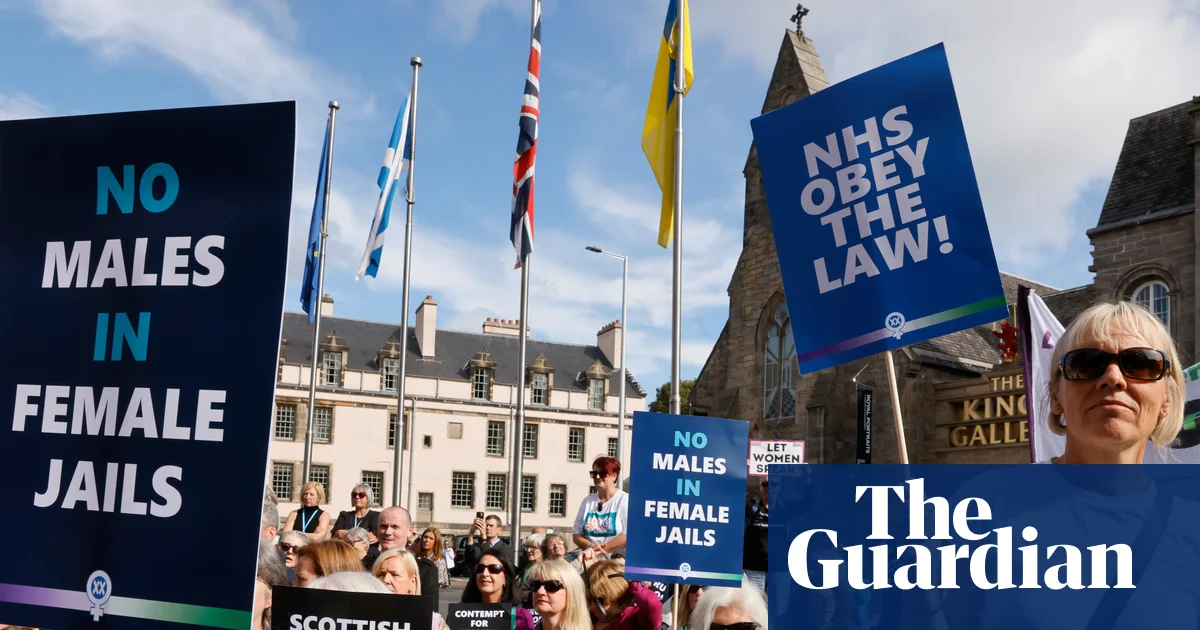
Scottish government opposes blanket prison rule, says it denies trans women's identity
Scottish government opposes blanket prison rule, says it denies trans women’s identity

Amid ongoing societal debates, the Scottish government’s stance on housing transgender women in prisons reflects deeper struggles over identity, safety, and societal values. This policy controversy, pushed into the courts by For Women Scotland, challenges the government’s guidance that advocates housing trans prisoners according to individual risk assessments. Critics argue that a blanket rule—placing all transgender women in men’s facilities regardless of individual circumstances—constitutes a “fundamental denial” of their lived identity and diminishes efforts toward inclusive rehabilitation. At the heart of this social tension lies a tension between respect for gender identity and concerns over the safety and integrity of women-only spaces, a debate that reverberates beyond Scotland’s borders and touches the very fabric of families, communities, and institutions.

Historically, sociologists like Esther Dugh have underscored how social constructs surrounding gender profoundly influence institutional policies. The controversy over prison placement exposes how demographic shifts and the acknowledgment of transgender rights challenge traditional notions of biological sex that many communities still hold dear. The Scottish court’s recent decision, which interprets the definition of “woman” in legal terms primarily through *biological sex,* represents a significant moment of cultural tension. It illustrates a society caught between evolving social norms and the need to uphold safety and moral integrity within vulnerable populations. The debate isn’t merely legal; it’s a reflection of ongoing struggles as society navigates what it means to respect individual identity against the backdrop of communal safety.

Furthermore, the debate underscores how social issues directly affect *families, education, and communities*. As Karen Titchener, the newly appointed patient safety commissioner, voiced concerns about the safety of female patients, questions arose about the wisdom of extending single-sex wards in mental health care amid this controversy. These challenges reveal that families and communities bear the consequences of policy decisions, often feeling caught in the crossfire of ideological conflicts. As social commentator Lisa Freeman points out, “When social norms are tested and institutions are pushed to their limits, it is often the most vulnerable—women, children, and the mentally ill—who suffer the most.” Such observations highlight that the real social impact extends beyond legal nuances, shaping the stability and moral fabric of society itself.

As society grapples with these complexities, the challenge lies in balancing individual rights with collective safety. Historically, social change has often been driven by the voices of the communities most affected, but in this case, the debate underscores a broader need for compassionate dialogue and policy innovation. Perhaps, as sociologists like Charles Morgan suggest, the future rests on creating inclusive spaces that recognize both the dignity of individual identity and the necessity of safe, community-centered solutions. Society stands at a crossroads where the decisions made today will echo in future generations, shaping the very understanding of morality and social cohesion. Ultimately, this controversy invites society to reflect: in our quest for progress, can society foster a unity that respects diversity yet safeguards the vulnerable? And in doing so, might we discover anew the true meaning of societal strength, built on respect, responsibility, and hope for a more compassionate tomorrow?

Social Media Auto Publish Powered By : XYZScripts.com



