
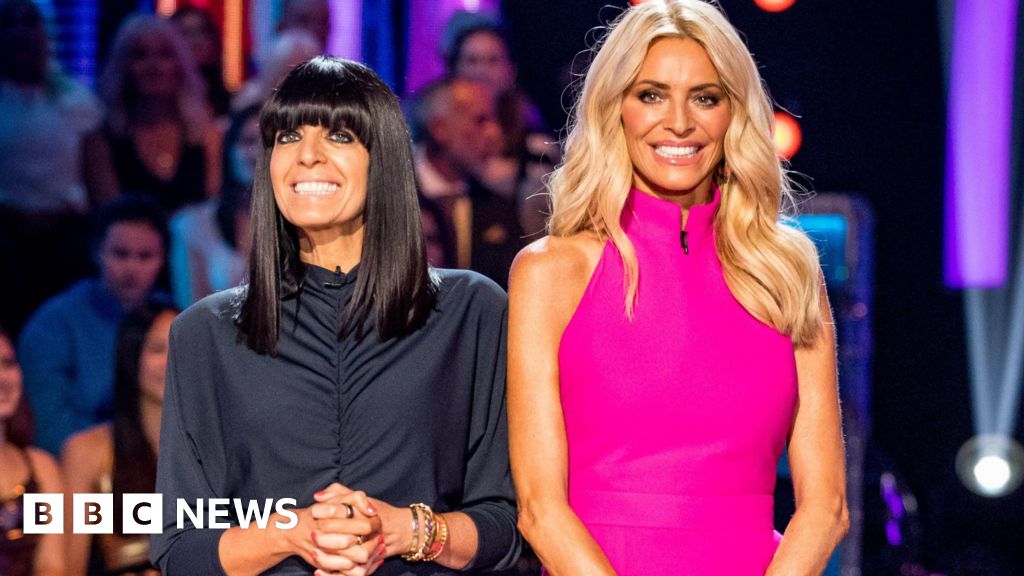

In a cultural landscape saturated with transient spectacles and fleeting trends, the BBC’s flagship dance show, Strictly Come Dancing, stands out as a testament to our enduring connection with tradition, artistry, and shared memory. As the beloved presenting duo Tess Daly and Claudia Winkleman prepare to bid farewell after two decades of guiding viewers through the glittering ballroom, we are reminded that culture is more than entertainment—it is the fabric of societal identity. Their departure marks not merely a change of faces but signifies a turning point that invites reflection on how television, and by extension our collective cultural identity, evolves amidst modern challenges.
The significance of such long-standing cultural phenomena is reminiscent of Ortega y Gasset’s notion that a society’s identity is woven through its shared narratives and cultural symbols. For twenty-one years, Daly and Winkleman became the custodians of countless memories, anchoring generations in a tradition that celebrates rhythm, dance, and human connection. Even in times of controversy or controversy, the show’s capacity to draw millions demonstrates its role as a cultural anchor. Their impending exit—highlighted by the subdued tone of the BBC’s chief content officer—suggests that even institutions deeply embedded in our social fabric are subject to the natural cycle of renewal and redefinition, echoing Tocqueville’s insights on the resilience inherent in democratic institutions that must adapt to survive.
Curiously, the inevitability of change plays into the symbolic importance of rebranded narratives, reminiscent of Chesterton’s argument that tradition is the democracy of the dead—an ongoing dialogue between past and present. The absence of Daly and Winkleman from future series leaves a gap both literally and metaphorically. Yet, it also opens a space for innovation—an acknowledgment that culture is both the memory of humanity and the prophecy of what is yet to come. Names like Fleur East, Roman Kemp, Hannah Waddingham, and others are already being whispered as potential torchbearers—figures who can carry forward the narrative of resilience, vitality, and societal cohesion. The show stands at a crossroads, where tradition and reinvention collide, reminiscent of Eliot’s notion that the future of society depends on our ability to reconcile the old with the new.
It is profound to consider that the culture of dance and storytelling is fundamentally a reflection of our identity—personal and collective. When we watch these performances, we partake in an act of shared memory, connecting us to our ancestors’ passions and aspirations. As the great cultural critics remind us, this dance with continuity and change is what sustains societies through upheavals. Whether the show rebrands or shifts its creative direction, the core truth remains that our culture—like a living organism—must continually evolve while remaining rooted in its history. This resilience is what transforms mere spectacle into a symbol of human persistence and hope amidst the chaos of modernity.
At the heart of this transition is a poetic reminder that culture is both prophecy and memory; it is the echo of the past and the whisper of the future. When the curtain falls on Daly and Winkleman’s era, it does not close the book—it writes the next chapter. Just as the dance moves to a new rhythm, so too does society find renewal through the artistry of those who dare to imagine anew. The beauty of this ongoing cultural symphony is that it reminds us: in the great hall of human achievement, our stories continue to dance, step by step, into the dawn of what is yet to come.






