Matox News

Truth Over Trends, always!

U.S. trims Germany troop count by 5,000 amid Trump-Merz clash

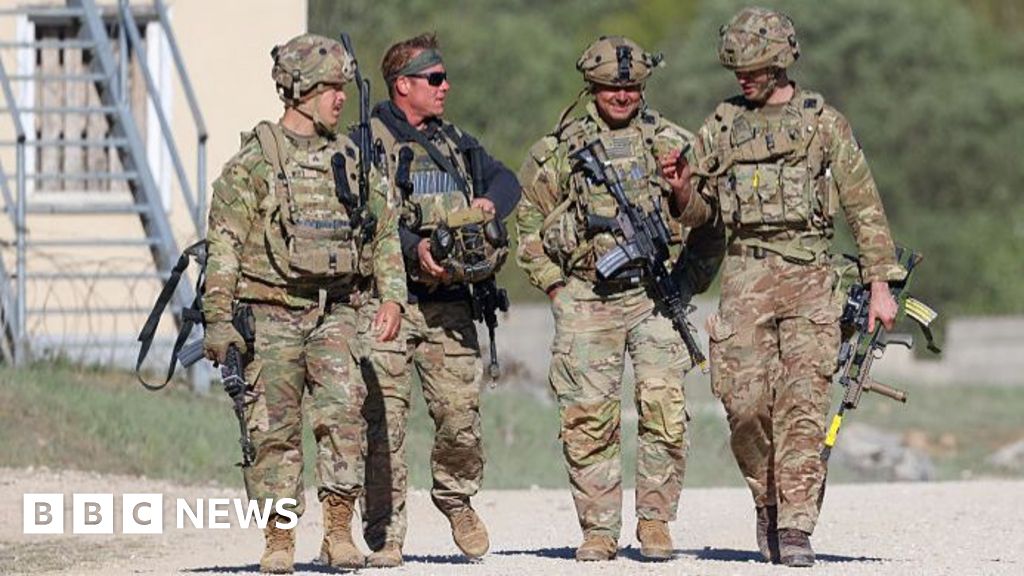
The recent decision by the United States to decrease its military deployment to Germany marks a significant shift in transatlantic relations amid an escalating dispute over Iran’s nuclear ambitions. This move, announced amidst rising tensions over Iran’s nuclear program and regional influence, signals a potential realignment of American military priorities in Europe. Analysts are closely watching this development as it underscores the complex interplay between **US foreign policy**, **NATO cohesion**, and **regional security architectures**. Historically, the stationing of American forces in Germany has been a cornerstone of Cold War geopolitics, but recent strategic recalibrations suggest a pivot toward a more conditional engagement in Europe.

The decision comes after prolonged diplomatic friction between **the US and Germany**, exacerbated by disagreements over Iran. Washington accuses Berlin of insufficient cooperation in curbing Iran’s nuclear activities and regional ambitions. These tensions are underscored by the broader context of **US efforts to apply maximum pressure on Iran**, including sanctions and diplomatic isolation, aimed at preventing nuclear proliferation. In response, **Berlin** has emphasized diplomatic engagement and has been cautious in aligning fully with Washington’s hardline stance. The divergence reflects a broader **geopolitical realignment**, where European nations are balancing their traditional alliance commitments with their own strategic interests in the Middle East.

As the United States diminishes its military footprint in Germany, the geopolitical implications are profound. The redeployment may impact NATO’s operational unity at a time when **russo-European tensions are at a peak**, and China’s expanding influence looms large. International scholars, including policy analysts from the International Institute for Strategic Studies (IISS), warn that the reduction could create power vacuums, which might embolden adversaries and weaken collective defense. Decisions made today will shape the balance of power for decades to come, and many believe it signals a shift from Europe-centered security to a more multifaceted, contested global order.

This move also sends a signal about the **future of US commitments** in Europe, and whether allied nations can sustain the defense arrangements that have underpinned European stability since the Cold War. Germany and other NATO members face mounting questions about their own defense capabilities and resolve. As the strategic landscape evolves, tumultuous challenges—ranging from the *Iranian threat* to the *rising influence of China and Russia*—demand solidarity and clarity from global powers. The stakes are enormous, and with international tensions fraught, history’s most pivotal moments often arise from the decisions made in these quiet corridors of power.

Ultimately, the decision to scale back US troops in Germany amid the Iran saga underscores a vital truth: the world stands at a crossroads of history, where the choices made today will reverberate through generations. As analysts warn of a potential reshaping of alliances and the emergence of new threat landscapes, the global community remains on the precipice of change. The echoes of the past—cold war confrontations, diplomatic crises, and shifting alliances—resound in today’s strategic calculus. The future of global security hangs in the balance, and only time will reveal whether these tentative steps toward recalibration will forge a new era of stability or unwittingly unlock Pandora’s box of chaos.

Deepwatch trims staff as it turbocharges AI push to stay ahead

Disruption in Cybersecurity: Deepwatch’s AI-Driven Layoffs Signal Industry Shift

The cybersecurity landscape is undergoing a seismic shift driven by cutting-edge AI technology. Deepwatch, a prominent player renowned for its AI-powered detection and response platform, recently announced layoffs affecting between 60 and 80 staff members—roughly one-third of its workforce. CEO John DiLullo explained that the company’s restructuring aligns with a strategic push to accelerate investments in AI and automation, underscoring a broader industry trend where innovation is often accompanied by significant operational upheaval. This move not only exemplifies the rapid integration of AI into core security functions but also signals a broader disruption impacting the entire cybersecurity sector.

In context, Deepwatch’s layoffs are not isolated but part of a larger pattern in cybersecurity. Earlier this year, industry heavyweight CrowdStrike eliminated approximately 500 jobs—around 5% of its workforce—even amid record-breaking financial performance, including a cash flow of $1.38 billion. Other firms such as Deep Instinct, Otorio, ActiveFence, and SkyBox Security have also conducted layoffs, reflecting a sector-wide recalibration driven by emerging AI capabilities and shifting market demands. These workforce reductions highlight how disruptive AI technology is transforming traditional business models and operational paradigms, compelling companies to rethink talent deployment and strategic focus.

Experts like those at Gartner emphasize that AI-driven cybersecurity solutions are poised to redefine industry standards, with innovations in real-time threat detection and autonomous response systems. This disruption brings a dual-edged promise: unmatched efficiency and operational excellence, but also the risk of upheaving existing job structures and market stability. As Peter Thiel and Elon Musk have warned, embracing transformative AI is essential to maintaining competitive advantage, yet it demands a readiness to navigate complex ethical, technical, and workforce challenges. The rapid adoption of AI not only accelerates innovation but also creates a pressing sense of urgency for cybersecurity firms to adapt swiftly or face obsolescence.

The implications for the business ecosystem are profound. Companies that successfully integrate AI-driven solutions can unlock new revenue streams—offering enhanced threat detection, incident response, and predictive analytics—while those lagging behind risk losing market relevance. As industry leaders gear up for the upcoming TechCrunch event in San Francisco (October 13-15, 2026), the message is clear: the next wave of cybersecurity innovation is here—and it is fueled by AI’s relentless advance. For forward-thinking organizations and entrepreneurs, the call to action is urgent: innovate now or be left behind in a rapidly evolving digital battleground.

Ultimately, the current layoffs at Deepwatch serve as a stark reminder that disruption in cybersecurity is accelerating, demanding unprecedented agility from industry players. The fusion of AI and automation promises to revolutionize threat mitigation, but it also mandates a proactive stance—embracing innovation while managing the risks inherent in upheaval. As the industry stands on the cusp of this new era, the future belongs to those who recognize the strategic imperative of leveraging AI for competitive advantage, setting the stage for a transformative decade in cybersecurity and beyond.

Social Media Auto Publish Powered By : XYZScripts.com



