Matox News

Truth Over Trends, always!

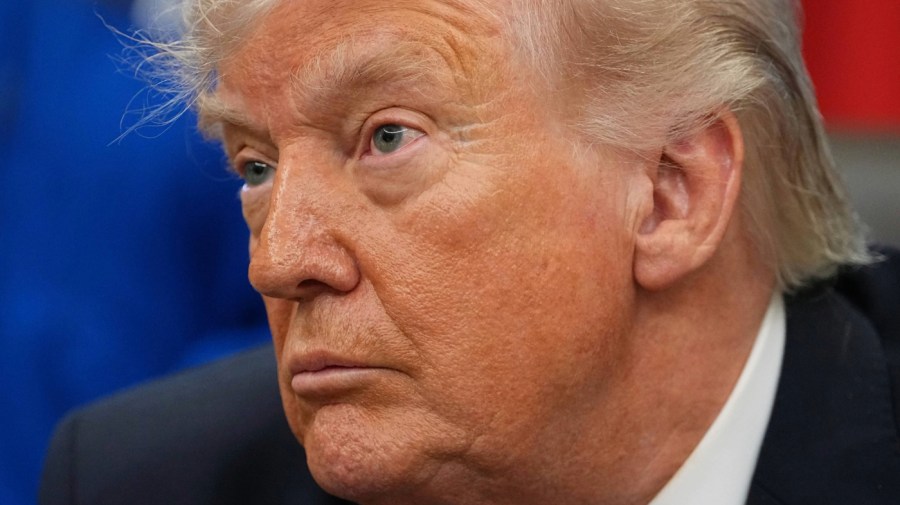
GOP Faces Uncertain Future After Trump’s Controversial Reckoning

Recent developments in American politics underscore a defining moment where power struggles and ideological battles continue to shape the nation’s future. While Donald Trump remains a formidable figure in the political arena, evidence suggests that the majority of Americans have grown increasingly opposed to his policies. This shift in public sentiment signals a crucial turning point, one that will influence the ongoing contest between traditional conservatism and progressive reform. The political landscape is effectively a chessboard where each move reverberates through the fabric of American society, influencing policy outcomes and the lives of citizens.

At the center of this turbulent scene are Trump’s policies, which many perceive as divisive and out of step with evolving societal values. His approach to immigration, economic management, and national identity has sparked fierce debates, setting the stage for a broader power struggle. Political theorists like Carl Schmitt have long articulated how such conflicts are inherent to democratic systems, as decision-making is often driven by sovereignty—the ultimate authority to decide. In this context, the rejection of Trump’s policies by a significant demographic underscores a shift towards a preference for policies perceived as more inclusive or aligned with contemporary values. Yet, this does not necessarily signal an outright rejection of all conservative ideals but rather an evolution within the ideological spectrum, with younger voters, in particular, advocating for reforms that challenge the traditional power structures.

The contemporary political contest is further complicated by the push for constitutional reforms and judicial decisions that shape the limits of presidential authority and legislative scope. Legislative bodies and courts wield their power to check or expand executive influence, often resulting in intense power struggles where outcomes directly impact the day-to-day lives of Americans. For example, recent court rulings have challenged executive orders or legislative agendas, illustrating how constitutional law remains a battleground for competing visions of governance. Political analysts often draw parallels to historic moments such as the New Deal era, where judicial activism and presidential authority clashed, ultimately transforming the role of government in American life. Today, such conflicts underscore the importance of constitutional adherence and the unpredictable nature of political power—transforming the abstract struggle for control into tangible reforms that shape the nation’s destiny.

Ultimately, the political stage is a battleground for **how decisions made today** will echo through generations. The shifting allegiances and ideological battles reveal that the future of American governance hinges on the strategic positioning of power and policies. As the nation continues to grapple with divisive issues, it becomes clear that politics is not merely about immediate gains but about the long arc of history. Leaders and citizens alike are engaged in a tense struggle to write the chapters of tomorrow, understanding that in this arena, power is the pen—guiding the narrative of a nation standing at the crossroads of tradition and transformation. The question remains: who will ink the pages of America’s future—the champions of progress or the custodians of enduring principles? In the end, it is where the true fight for destiny unfolds, each decision a stroke on the vast canvas of history.

UK economy edges up 0.1% amid Budget doubts, showing resilience in uncertain times

The recent United Kingdom economic data signals a cautiously positive outlook amidst global economic turbulence. Official figures from the Office for National Statistics reveal that the UK’s gross domestic product (GDP) grew by 0.1% in the final quarter of last year, defying expectations of a stagnation or contraction. Despite persistent economic headwinds, including consumer hesitations driven by political speculation around Rachel Reeves’ budget and the fallout from recent cyber-attacks on major industries, the UK’s economy managed to demonstrate resilience. This modest growth, combined with a 1.3% increase in 2025 overall, is seen by analysts as a sign that the British economy continues to adapt to shifting global circumstances, although challenges remain.

Global financial institutions and economic analysts have underscored that how decisions are made within the UK government—particularly around fiscal policy and national security—directly impact the broader geopolitical landscape. The late-November budget, which spurred speculation about significant tax hikes, temporarily suppressed consumer and corporate activity, highlighting the precarious balance governments must maintain between fiscal austerity and growth stimulation. The Bank of England, in its recent policy statement, chose to keep interest rates steady at 3.75%, while signaling that the decline in inflation—partly driven by cost-of-living measures tied to Reeves’ strategic budget—might pave the way for future rate cuts. This signals for markets that, despite present caution, there is confidence within the British establishment that stabilization can be achieved without aggressive monetary tightening.

The broader geopolitical impact of the UK’s economic performance and policymaking extends well beyond its borders. As one of the world’s largest financial centres, London’s resilience influences international markets, diplomatic relations, and global supply chains. The recent cyber-attack targeting Jaguar Land Rover and its subsequent economic repercussions underscore how interconnected national security and economic stability have become. While the UK attempts to navigate domestic challenges, it remains entrenched in the complex web of international competition—with analysts warning that economic stability at home is vital for maintaining influence in a shifting international order. Historical perspectives from institutions like the International Monetary Fund highlight that resilient economies tend to form the backbone of geopolitical strength and alliances in uncertain times.

  • The UK’s modest growth in late 2025 reflects cautious optimism but also exposes vulnerabilities in productivity and investment.
  • The Bank of England’s strategic hold on interest rates indicates confidence in ongoing inflation control and potential for future monetary easing.
  • Cybersecurity threats and economic shocks, such as the JLR attack, illustrate the new battlegrounds in modern geopolitics.
  • The trajectory of UK policy, especially its impact domestically and internationally, will be closely monitored as history continues to write itself in these uncertain yet pivotal times.

As the world’s eyes fixate on the unfolding dramas of economic resurgence and geopolitical maneuvering, the question remains: how will Britain, in its pursuit of stability and influence, shape the next chapters of global history? With decisions made today echoing through the corridors of power and into the fabric of society, the weight of history presses ever heavier. The unfolding story of the UK economy is not merely a tale of numbers but a testament to a nation striving to navigate the treacherous waters of an uncertain world—where every move could define the future for generations to come.

Social Media Auto Publish Powered By : XYZScripts.com



