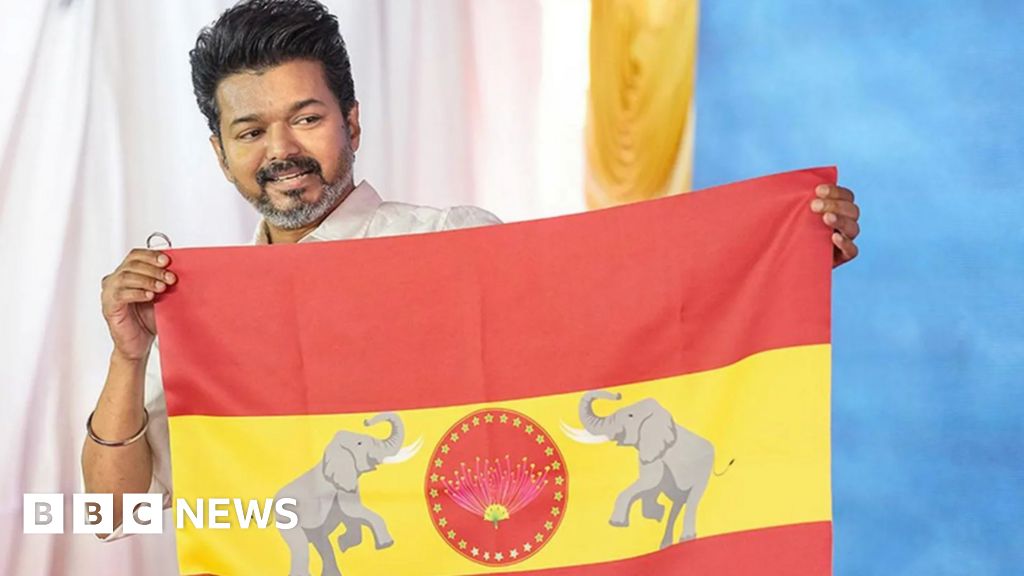

In a surprising turn of events, **film icon Vijay**, a beloved figure in Tamil Nadu, has emerged as a formidable force in the state’s recent electoral landscape. Defying longstanding political expectations, Vijay’s near-complete sweep of the region’s polls signifies a major break from traditional party dominance, challenging the established political order that has been in place for decades. This development reflects a broader shift towards celebrity-driven politics in India, with significant implications for **domestic stability and regional influence**.
Political analysts and historians have noted that Vijay’s success signals more than just a celebrity’s foray into governance; it highlights a growing distrust in conventional political parties among the youth and urban voters. As **international observers** monitor this rapidly evolving scenario, some predict that Vijay’s rise could reshape **power dynamics** within Tamil Nadu and influence how other states evaluate the role of popular figures in leadership roles. Such a change is particularly notable given the entrenched factions within regional politics, traditionally dominated by parties like **DMK** and **AIADMK**. Vijay’s unprecedented electoral performance underscores the shifting allegiances among voters seeking fresh alternatives amid economic challenges and social unrest.
Here, the geopolitical impact extends beyond India’s borders. Tamil Nadu’s pivotal location on the southeastern coast of the Indian subcontinent, adjacent to vital international trade routes, lends the state a strategic significance that cannot be overlooked. A political landscape energized by new, populist leadership like Vijay’s could lead to regional policies that either bolster or undermine stability and cooperation along maritime corridors. Major international organizations and analysts have expressed cautious optimism, emphasizing that regional political stability directly affects **border security, foreign investment**, and **trade relationships** in South Asia and the broader Indo-Pacific region. This realignment in Tamil Nadu’s political arena may also influence **India’s internal cohesion**, particularly as it navigates complex relationships with neighboring countries.
Many experts warn that this moment is a **turning point**—a potential catalyst for further upheaval in Indian politics. As historians examine the roots of celebrity politicians worldwide, such as in the United States and the Philippines, some argue that Vijay’s victory is a reflection of **global trends** where personality politics often overshadow party ideologies. The rise of such figures indicates an era where **popular culture and charisma** can challenge the traditional notions of governance, prompting international organizations like the **United Nations** to scrutinize how these shifts might influence **democratic development and social cohesion** in the region.
As the dust settles and the world looks on, one thing remains clear: the unfolding story of Vijay’s political ascent is much more than a regional upset. It’s a harbinger of an era where **populism**, **entertainment**, and **national identity** coalesce into powerful forces reshaping the fabric of society. Just as history beckons us to understand the consequences of such upheavals, the global community stands at a precipice—eyeing a future where the line between celebrity and sovereignty blurs, and the story of **India’s largest state** continues to write itself into the larger saga of geopolitical change.