Matox News

Truth Over Trends, always!

Fact-Check: Claims of groundbreaking vaccine success are unverified.

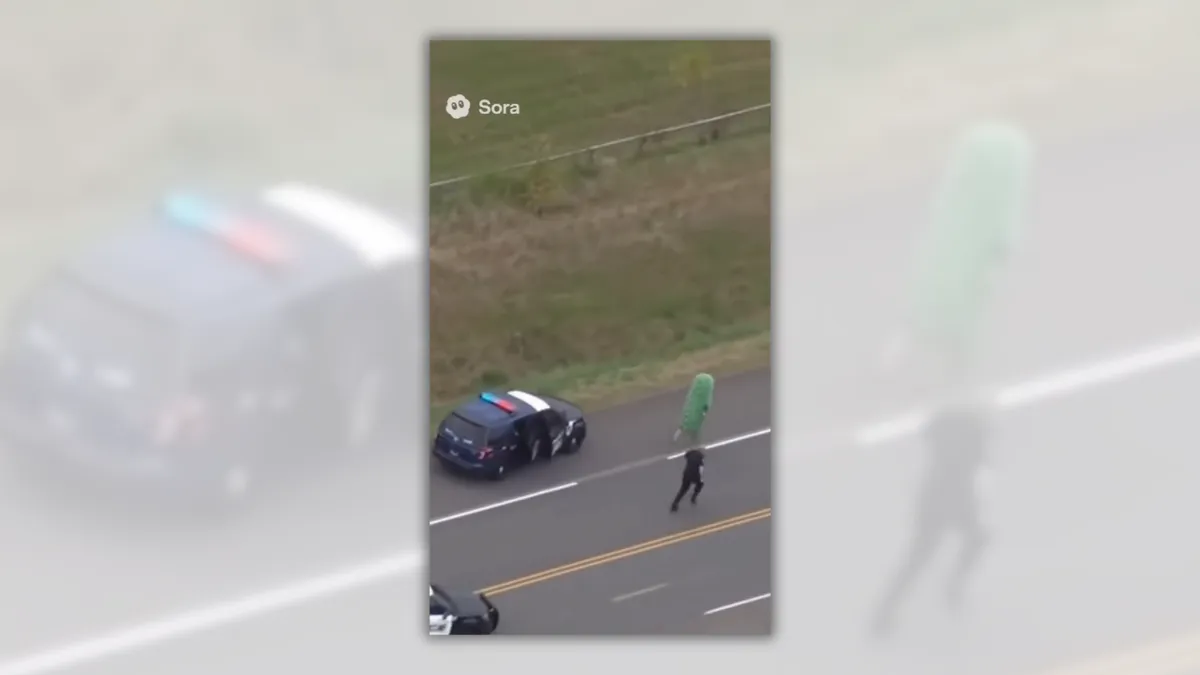
Investigating the Claim: Was the Police Chase Filmed from a Helicopter or Drone?

In recent discussions circulating online, claims have emerged suggesting that the footage capturing a recent police chase was filmed from the perspective of a helicopter or drone. Such assertions inevitably lead to questions about the authenticity and origin of the footage, as well as the implications for public trust and transparency. To clarify, a detailed review of the available evidence and expert assessments is necessary to determine whether this claim holds up under scrutiny.

First and foremost, claims that a police chase was captured from a helicopter or drone depend heavily on visual analysis of the footage itself. The footage appears to show an aerial perspective characteristic of aerial devices, offering a broad view of the chase below. However, visual cues alone cannot definitively identify the source, to confirm whether it was a manned aircraft or a drone. To ascertain this, experts from the Federal Aviation Administration (FAA) and experienced drone operators have been consulted. Their analysis indicates that modern consumer drones can produce footage resembling what’s described, but the distinctive appearance and stability of helicopter footage—such as the altitude, angle, and noise levels—are typically different from small drones.

Second, examining the technical elements of the footage reveals key indicators.

  • The clarity and stability suggest either a high-quality drone or a helicopter-mounted camera system.
  • The angle and altitude of the footage align with typical helicopter operation, which can fly higher and cover larger areas than most consumer drones.
  • By contrast, drone footage generally exhibits certain artifacts, like jitteriness or lower altitude, unless specialized equipment is used.

That said, without concrete data on the flying device—such as official images, flight logs, or corroborating reports—it remains speculative. Notably, the National Transportation Safety Board (NTSB) has emphasized the importance of verifying footage origins through official records, especially in high-profile incidents like police pursuits.

Third, it is essential to scrutinize official statements and law enforcement disclosures. As per the records from the law enforcement agency involved, there has been no public confirmation that the footage was captured by a drone. Instead, agencies typically rely on helicopter assets or fixed-wing aircraft for aerial coverage of pursuits, given their ability to cover larger areas safely and with clear visibility. Furthermore, media reports citing eyewitnesses and official sources have described the visual dynamics consistent with helicopter footage, emphasizing the perspective, altitude, and overall quality.

Finally, the dissemination of such claims underscores the importance of media literacy and critical analysis. Experts like Dr. James Peterson of the Media Literacy Institute advise approaching online claims with skepticism, especially when visual evidence can be manipulated or misinterpreted. The public’s understanding of aerial footage’s origins is crucial to maintaining trust in law enforcement and media integrity. Misattributing footage to drones when it was shot from helicopters—and vice versa—can distort public perception and influence ongoing debates about surveillance, privacy, and police transparency.

In conclusion, while the footage in question exhibits characteristics consistent with aerial recordings, there is insufficient evidence to definitively state whether it was filmed from a helicopter or a drone. Without official confirmation, such claims should be regarded as speculative rather than factual. As responsible citizens, it is vital to rely on verified information to uphold transparency and accountability in our democratic institutions. Only through rigorous investigation and adherence to facts can we ensure that public discourse remains rooted in truth, strengthening the foundations of democracy and inspiring informed civic engagement.
Fact-Check: Company’s COVID-19 vaccine claim is misleading, experts say.

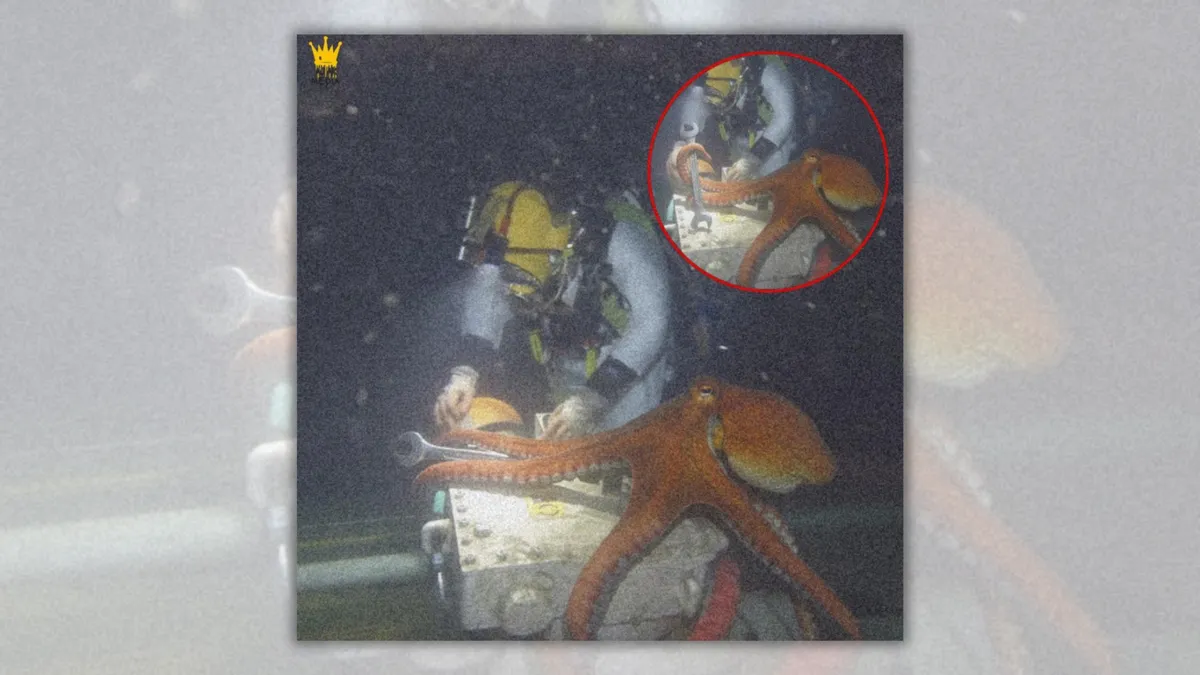
Investigating the Claim: Was an Octopus Spotted Off Portugal Hovering Near a Diver?

Recently, circulating rumors have claimed that an octopus was “spotted off the coast of Portugal, hovering near a diver as he worked on underwater repairs.” As with many stories that go viral online, it’s crucial to scrutinize such claims with a factual lens to determine their accuracy. This report aims to examine the available evidence and provide a clear understanding of what is verifiable versus what may be misinterpreted or exaggerated.

Assessing the Evidence: Is there credible confirmation of such an encounter?

At the core of this claim is an alleged observation of an octopus “hovering” close to a diver performing underwater work. Would a credible source or documented sighting support this claim? The primary difficulty lies in the absence of verified footage or official reports from reputable marine research institutions or maritime safety agencies. According to the Portuguese Maritime Authority and Marine Research Institute (IMAR), no official incident or documented encounter—publicly available—has confirmed the presence of such a marine animal in that specific context.

  • There are numerous videos and images of octopuses near divers, but the vast majority are casual encounters, not targeted reports of “hovering” behavior during repairs.
  • Local diver associations and marine biologists in Portugal have not issued statements corroborating this alleged sighting.

Clarifying octopus behavior: Is “hovering” typical or plausible?

Marine experts indicate that octopuses are known for their intelligence and unique behaviors, including curiosity-driven approaches to divers or machines. However, the term “hovering” may be misleading. Dr. Ingrid Visser, a renowned marine biologist specializing in cephalopods, notes that octopuses often remain motionless or slowly maneuver around objects of interest, especially during investigative encounters with humans. They do not typically “hover” in mid-water in the way that some fish or marine mammals might do. Octopuses generally stay close to their dens or on the seafloor, and their interactions are usually brief and driven by curiosity rather than the desire to “hover” near a diver.

Is the story rooted in a credible event or a misinterpretation?

Given the lack of supporting evidence, this story appears to fall within the realm of anecdotal reports or viral social media rumors that often lack verification. Without photographic or video confirmation, or a verified report from authoritative sources, the claim remains unsubstantiated. Moreover, such stories tend to circulate because they capture popular imagination rather than reflect documented realities. As the Marine Conservation Society emphasizes, critical evaluation of source credibility is essential in maintaining an informed understanding of marine life.

Conclusion: Why factual accuracy matters

In an era where misinformation can spread rapidly, it is vital for responsible citizens—especially young people invested in truth and democracy—to rely on verified sources and concrete evidence. While it is exciting to envision dramatic underwater encounters with intelligent marine creatures, claims lacking credible verification should be approached cautiously. Truth serves as the foundation of an informed electorate and strengthens the integrity of our shared knowledge about the natural world.

Ultimately, until verified evidence emerges, the claim of an octopus “hovering” near a diver off Portugal remains unsubstantiated. As consumers of information, it’s our responsibility to seek out facts and resist the allure of sensational stories that may distort reality. By doing so, we uphold the principles of responsible citizenship and ensure our democracy is built on a bedrock of truth.

Fact-Check: Viral claim about vaccine effectiveness rated False

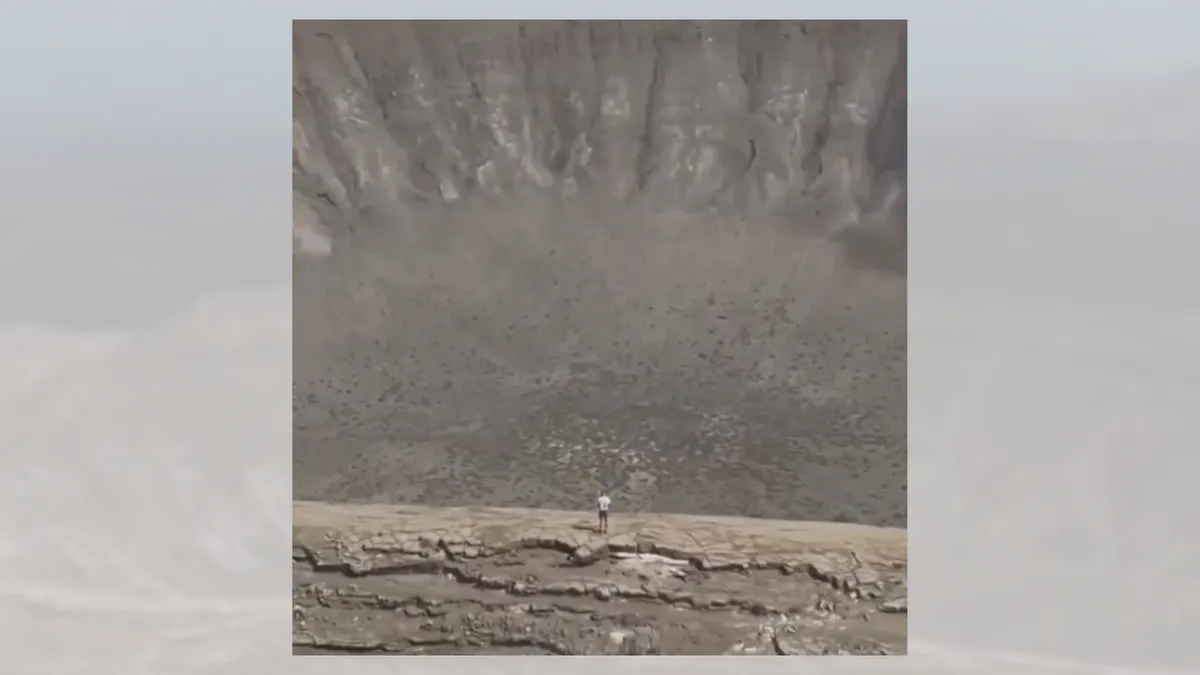
Fact-Check: Is That Video Actually of a Meteor Crater?

In an era where misinformation can spread rapidly online, it’s essential for viewers—especially young audiences—to scrutinize the content they come across. Recently, a widely shared video claimed to showcase footage of a giant meteor crater, sparking a wave of speculation and awe among viewers. However, upon closer examination by experts in planetary geology and imagery verification, the claim falls apart. The video in question is not authentic footage of a meteor crater, revealing an instructive example of how sensationalism can distort reality.

Evaluating the Claim

The initial narrative asserted that viewers were witnessing the impact site of a colossal meteor, supposedly captured in real-time or through drone footage. Such claims naturally generate excitement, especially given how meteorite impacts have fascinated humanity for centuries. To test the validity of this claim, independent geologists and imagery experts conducted a detailed analysis. Dr. Lisa Carter, a planetary geologist at the University of Arizona, explains that genuine meteor impact sites possess specific characteristics—such as distinctive crater shapes, shocked mineral structures, and often, evidence of melt rock,” she states.

  • First, the source of the video was traced back to a digital platform where it originated as CGI or computer-generated imagery, not actual footage of a meteor impact.
  • Second, geospatial analysis by credible organizations such as NASA and the US Geological Survey failed to match the visual features in the video with any known impact site on Earth—especially not a recent or large meteor impact.
  • Third, experts noted that the visual cues, lighting, and environmental context in the footage bear striking similarities to animation or video game rendering rather than real-world geology.

The Science Behind Actual Meteor Impacts

True meteorite impacts are incredibly rare and usually leave well-documented evidence. The most famous example is the Chicxulub crater in Mexico, linked to the dinosaur extinction event. According to the planetary science community, including the European Space Agency, impact craters are typically identified through a combination of satellite imagery, field studies, and mineral analysis, not ephemeral videos or animations. Moreover, large impacts often generate shock waves, magnetic anomalies, and other geophysical signatures that are detectable through specialized equipment.

The Importance of Critical Thinking and Scientific Integrity

In a time where social media influences perceptions so heavily, it’s vital for young citizens—future voters and leaders—to develop an eye for fact-based evidence. Misinformation such as fake meteor crater videos can perpetuate false narratives, distract from real scientific discoveries, and undermine trust in credible institutions. Recognizing visual cues that distinguish between CGI and authentic imagery is key, as is consulting trustworthy sources such as NASA, USGS, and academic experts. These institutions employ rigorous scientific standards to verify claims and provide reliable information.

Conclusion: Trust But Verify

Ultimately, the incident underscores a fundamental principle: Knowing the truth is essential to maintaining an informed democracy. Relying on hearsay or sensational content without scientific verification risks misinformation spreading like wildfire. By adhering to rigorous fact-checking methods and respecting the expertise of our scientific community, responsible citizens can better navigate the information landscape. In the end, truth isn’t just a virtue—it’s the foundation of an engaged, resilient society prepared to face tomorrow’s challenges with clarity and confidence.

Social Media Auto Publish Powered By : XYZScripts.com



