Matox News

Truth Over Trends, always!

Vibrant Views, Authentic Shops & Local Pubs: Discover the Heartbeat of the Llŷn Peninsula’s Community Spirit — Wales Holidays

While many conventional travel destinations emphasize bustling cities or tourist-heavy spots, Wales’ Llŷn Peninsula offers a different perspective—one rooted in community resilience, natural beauty, and a steadfast connection to heritage. This region embodies the _renewal of rural vitality_, showcasing how local initiatives are redefining what it means to live, work, and explore in a traditionally rural setting. It is a testament to the power of community-driven revival, inspiring a new generation to see value in their collective identity and natural environment.

Throughout the area, a noteworthy trend emerges: community pubs, shops, and cultural centres are not just surviving but thriving. The revival of establishments like Tafarn y Fic and Tafarn y Plu signals a strategic shift towards _local empowerment_. These venues serve as vital social hubs, fostering *a sense of belonging* while also attracting visitors eager to experience authentic Welsh life. For instance, the ‘Fic’ pub in Llithfaen, once on the brink of closure, was revitalized by local initiative—a testament to the region’s capacity for grassroots action. Such efforts embody the growing *collective confidence* that defines contemporary Welsh rural life, showing that resilience often begins in the heart of small communities.

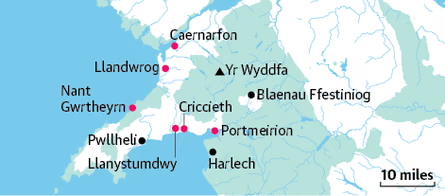
This spirit of revival is complemented by the region’s rich cultural and natural tapestry. The Wales Coast Path weaves nearly 100 miles along the peninsula, revealing stunning vistas reminiscent of the masterpieces by JMW Turner, who famously captured the area’s ever-changing light. From the dramatic castle ruins at Criccieth to the vibrant sandbanks of Dinas Dinlle, every step along this path underscores the importance of conserving and cherishing regional landscapes. Additionally, charming villages such as Caernarfon exemplify how heritage preservation and modern entrepreneurship—like the recent development of the Ty’n Llan community pub—can work hand in hand to create vibrant, sustainable local economies. Visitors are encouraged not only to explore the scenery but to engage with the community, whether through learning Welsh at local pubs or participating in cultural events, thus making the journey both educational and enriching.

For those seeking a lifestyle that integrates natural beauty with purposeful community engagement, Wales’ Llŷn Peninsula offers a compelling blueprint. It’s a reminder that investing in local initiatives, celebrating heritage, and embracing a _mindful appreciation of the land and its people_, can lead to a _more resilient and inspiring community_. As you walk its scenic trails and engage with its warm-hearted inhabitants, the region becomes more than a travel destination—it transforms into a mirror reflecting the potential within us all to embrace _locally rooted prosperity and shared well-being_. The journey here is not merely about viewing landscapes but about reconnecting with the essence of what makes a community truly vital and alive—values that can inspire individual wellness and collective strength.

  • Explore local pubs and shops—see how community spirit keeps traditions alive.
  • Experience the natural beauty—walk the Wales Coast Path and appreciate changing light and scenery.
  • Engage with cultural heritage—visit museums, historic sites, and participate in local events.
  • Support sustainable, community-led initiatives—buy from local businesses and participate in cultural exchanges.

In the end, the story of Wales’ Llŷn Peninsula is a tale of hope—an enduring reminder that the resilience of a community, rooted in its land and traditions, can inspire us all to embrace our own journeys. For in the pursuit of _wellness, shared experiences, and cultural preservation_, lies a profound truth: that true vitality springs from within, fueled by connections to our roots and a collective sense of purpose. As the sun sets over the rugged landscape, it leaves behind an invitation—peaceful yet powerful—to live intentionally and embrace the ongoing adventure of life.

“‘Wicked: For Good’ Showcases Powerful Narratives Through Vibrant Hues”

In the ongoing dialogue between culture and identity, visual storytelling remains a profound vessel for expressing the complexities of human experience. The recent release of the documentary “Wicked: For Good” exemplifies this truth by showcasing how color—that seemingly superficial element—serves as a potent language of its own. Alice Brooks, the film’s cinematographer, meticulously explains how choices in palette invoke symbolism, evoke emotions, and deepen the narrative’s moral and philosophical underpinning. Here, the careful orchestration of hues becomes a mirror reflecting society’s deepest hopes and fears, underscoring the inextricable link between aesthetic design and cultural meaning. In this context, the power of art extends beyond spectacle, becoming a moral and philosophical commentary rooted in the visual language of civilization.

Throughout history, cultures have employed symbolism through visual motifs to preserve tradition and reinforce societal cohesion. Just as the Renaissance masters wielded chiaroscuro to explore themes of providence and human frailty, contemporary filmmakers like Brooks harness color to navigate the moral landscape of modern storytelling. The deliberate use of contrasting tones—shadows and light—serves as a reminder of Ortega y Gasset’s assertion that the culture of a society is the collective memory and moral compass, guiding its sense of identity. In this prism, the cultural artifact transforms into a vessel of collective memory, a prophecy of future societal values, echoing the conservative belief that tradition anchors society amidst the chaos of an ever-changing world.

As Tocqueville observed, democracy’s strength lies in its capacity for cultural self-awareness and collective identity. The film’s visual motif underscores this cultural assertion: that the stories we tell ourselves—encoded in color, imagery, and symbolism—are fundamental to defining who we are. This cultural potency is especially salient in youth culture, where visual and aesthetic expressions serve as codified acts of resistance and affirmation. The intentional craftsmanship behind “Wicked: For Good” exemplifies how art preserves enduring values through symbolic language, reinforcing that culture is both a fabric woven from tradition and a beacon guiding future generations. In a society increasingly dominated by fleeting trends, such works remind us that authentic cultural expression remains rooted in symbols that transcend individual fleeting impulses.

Finally, embracing the philosophical grace of T.S. Eliot, we understand that culture is not merely the preservation of what was but a living vision of what can be. In this light, the final image is evocative: a superimposition of memory and prophecy, where color and form act as poetic metaphors for mankind’s ongoing quest for meaning. As Brooks’s careful calibration of hues demonstrates, the language of art continues to articulate the moral and spiritual architecture of society—an indelible testament to cultural resilience. For in the end, culture is both a mirror of our collective identity and a prophecy of our collective future, whispering that through the memory of tradition, humanity whispers its hope—hope that history’s lessons will shape a luminous horizon yet to come.

Yayoi Kusama’s iconic yellow pumpkin makes a vibrant return to Naoshima Island—Japan’s hottest art destination for young trendsetters

Amidst the serene waters of the Seto Inland Sea, Naoshima emerges once again as a beacon of resilience and artistic innovation. Known globally as Japan’s premier art island, Naoshima captivates visitors with its harmonious blend of contemporary sculptures and tranquil natural beauty. The island’s famed yellow pumpkin sculpture by Yayoi Kusama, a symbol of joyful eccentricity, recently returned to its rightful place after a tumultuous encounter with Mother Nature. Last summer, a powerful typhoon swept through the region, damaging the beloved installation and washing parts into the sea, yet the spirit of artistic boldness refused to be washed away. The festival of recovery and creativity that followed exemplifies how cultural icons can serve as anchors of community pride, inspiring a new wave of appreciation for lifestyle shifts centered on wellness and cultural connection.

This act of renewal underscores the importance of embracing wellness through cultural engagement, which experts like wellness advocate Dr. Jordan Peterson and art historian Lucy R. Lippard emphasize as vital for mental and emotional resilience. The resilience of Kusama’s sculpture was not simply a matter of replacing broken pieces; it was an affirmation of enduring creativity amid adversity. The artist’s production team crafted a new pumpkin that is 10% thicker and embedded with a hook, ensuring it can withstand future storms and wind. This thoughtful upgrade exemplifies an evolving lifestyle philosophy: embracing preparedness while remaining open to beauty and inspiration. Visitors, locals, and officials gathered in celebration when the sculpture was reinstalled, reaffirming that community and culture are intertwined in the pursuit of a balanced, inspired life.

Naoshima’s accessibility, a short ferry ride from Okayama and a 50-minute bullet train from Osaka, makes it an ideal destination for young adventurers seeking meaningful leisure. The island’s aesthetic is a testament to how blending art and environment can elevate everyday experiences, transforming a simple visit into a deliberate act of self-care and reflection. The ongoing Setouchi Art Festival invites travelers to partake in a journey of discovery, highlighting how curated cultural exposure enhances personal impact — from inspiring creativity or encouraging mindfulness to cultivating a sense of global community grounded in local beauty.

  • Plan your trip during the festival’s duration to experience fresh exhibitions and community events.
  • Take the 20-minute ferry from Okayama to fully immerse yourself in a peaceful, art-infused environment.
  • Explore nearby museums and abandoned houses turned into artistic statements, deepening your cultural engagement.

As the story of Naoshima’s yellow pumpkin exemplifies, lifestyle is an ongoing journey of embracing change, resilience, and beauty. It invites each individual to see the world not merely as a passive observer but as an active participant in a shared narrative of cultural revival, inspiring us to nurture our inner well-being while connecting with the wider world. The island’s rebirth serves as a reminder that life’s storms, whether literal or metaphorical, can forge stronger foundations — and that through art, community, and perspective, we can all navigate toward a more vibrant, meaningful existence.

Social Media Auto Publish Powered By : XYZScripts.com