Matox News

Truth Over Trends, always!

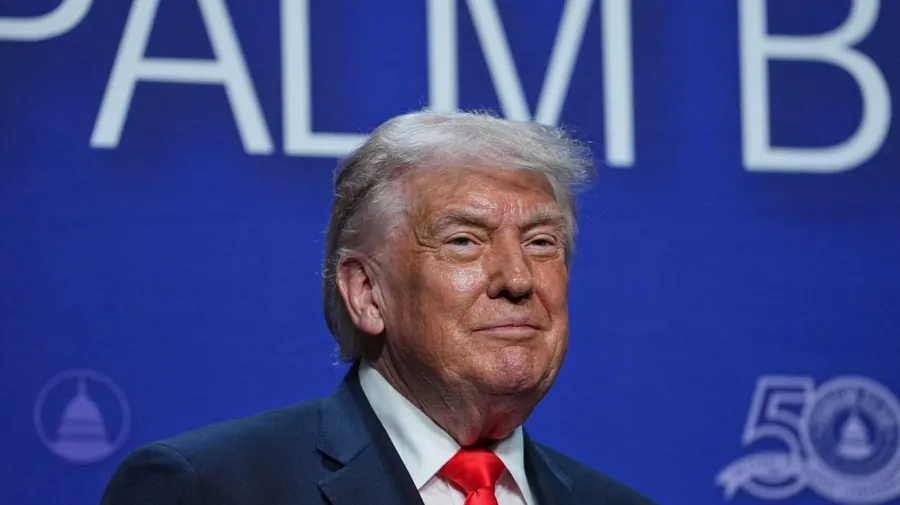
Trump challenges Jeffries over voting rights talk: “Could he face impeachment?”

In a landscape defined by fierce power struggles, recent statements from President Donald Trump reveal not only personal ambitions but also the enduring contest over the very fabric of American democracy. Trump’s attack on House Minority Leader Hakeem Jeffries following a Supreme Court decision on the Voting Rights Act underscores how political rhetoric becomes a battleground—where narratives about legitimacy and authority are manipulated to sway public perception. His labeling of Jeffries as a “Low IQ individual” and questioning of his integrity exemplifies the culture of polarization that continues to fuel ideological divides, often at the expense of informed discourse and constitutional norms.

Historically, such confrontations evoke parallels with the tumult of past eras where constitutional crises tested the resilience of the American system. Political theorists like Alexander Hamilton warned of the dangers of unchecked executive power, yet in modern politics, figures like Trump employ aggressive rhetoric to challenge perceived enemies within the institutional framework. His rhetorical question—”after saying such a thing, isn’t he subject to Impeachment?“—not only reflects a contentious view of constitutional oversight but also raises fundamental questions about how decisions by political leaders shape the people’s trust in democracy itself. These battles are no longer confined within legislative halls; they are broadcast across social media, where every provocation becomes a symbolic statement about sovereignty and the limits of institutional authority.

Moreover, the debate echoes a broader ideological conflict rooted in contrasting visions of American governance. Supporters of America First policies and conservative reformers argue that aggressive rhetoric and strategic confrontations are tools to restore national sovereignty and push back against what they perceive as judicial overreach or elite domination. Meanwhile, constitutional experts warn that such power struggles threaten the stability of constitutional principles, suggesting that these disputes are shaping the next chapter of America’s political destiny—one where the rule of law is tested against raw political expediency. As political analyst John Adams once reflected, “government must be a guarantor of stability, not a battlefield for personal vendettas.”

Indeed, the currents of this epochal contest reveal that politics is more than process—it’s a stage where the very narrative of American destiny is written. Each decision, each clash of words, forge a path that determines whether the nation proceeds toward uniting under shared constitutional values or fragmented into factions defined by their capacity to wield power. The coming months will see whether this struggle reshapes the nation or simply reaffirms its resilience. In the end, it is a stark reminder that in politics, as in history, the fate of a nation is often decided not in the halls of power but on the battlefield of ideas—where every word and act writes the future from the ink of conflict.
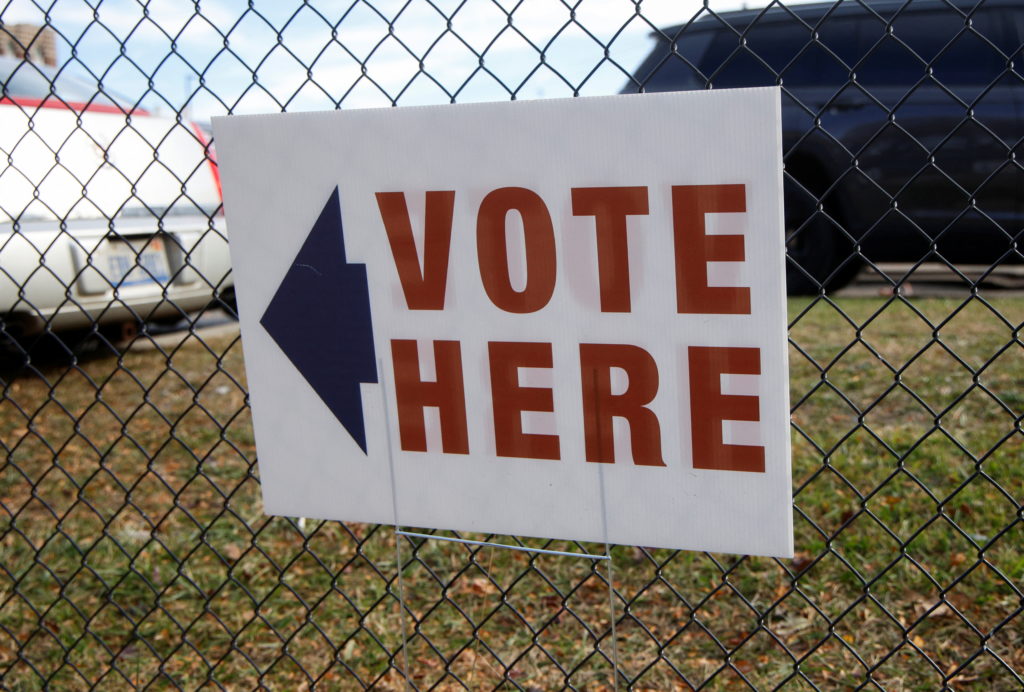
States race to redraw districts after Supreme Court curbs Voting Rights Act

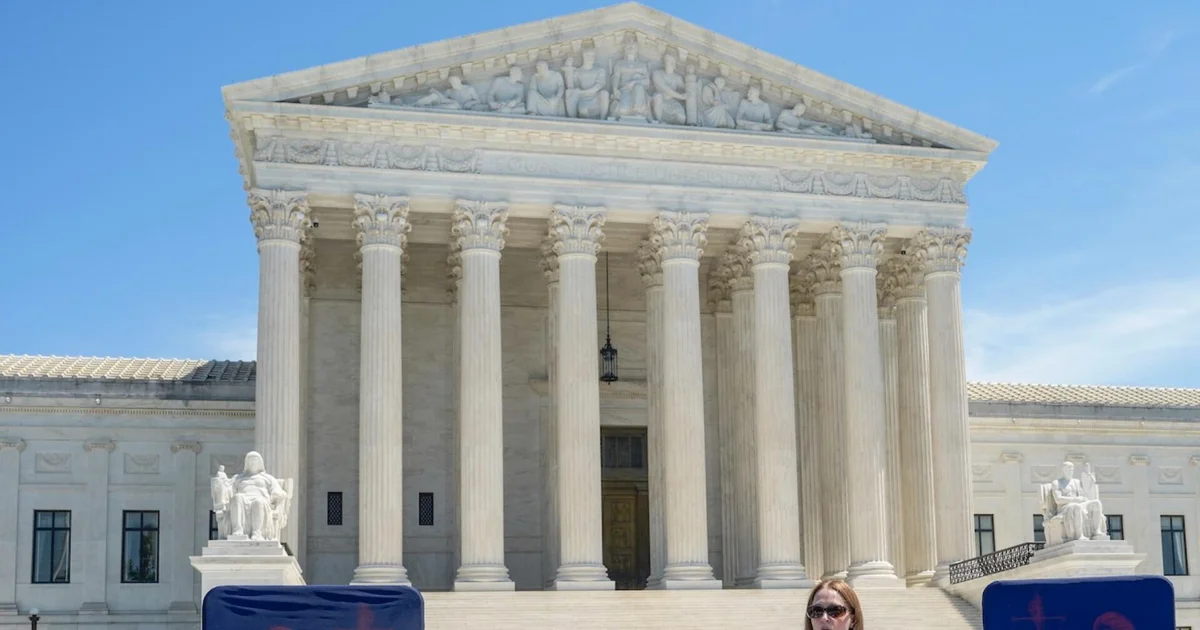
In the wake of a pivotal Supreme Court decision that further weakens the Voting Rights Act of 1965, Alabama and Tennessee are moving swiftly to redraw their congressional districts. This development exemplifies the ongoing power struggles between entrenched political entities and the constitutional frameworks that purportedly safeguard democratic fairness. As states realign their political maps, the core question arises: whose voices will be amplified, and whose will be marginalized?

The Supreme Court ruling has served as a catalyst, emboldening Republican-led state legislatures to assert greater control over electoral boundaries. Historically, the Voting Rights Act represented a landmark effort to combat racial gerrymandering—a practice that dilutes the voting power of minority populations through strategic district delineations. Yet, recent judicial decisions suggest a redefinition of permissible political mapmaking, emphasizing partisan advantage over voter representation. This shift echoes the fears of constitutional scholars who warn that the judiciary’s diminishing role in protecting minority rights could lead to an erosion of electoral fairness, reminiscent of the troubling gerrymandering strategies that aimed to undermine the civil rights advancements of the 1960s.

In Alabama and Tennessee, the political reaction is illustrative of a larger ideological battle. Conservative policymakers argue that their goal is to restore electoral integrity and uphold state sovereignty, framing the redistricting efforts as a necessary correction against alleged federal overreach. Conversely, critics—often aligned with Democratic interests—claim that these state-level moves are blatant attempts to entrench Republican dominance and suppress minority voters’ influence.

  • Alabama’s new district maps are being challenged for potentially diluting African American voting strength in the pivotal Birmingham and Montgomery areas.
  • Tennessee’s redistricting efforts threaten to consolidate rural and suburban districts, skewing representation in favor of conservative constituencies.

This dynamic reflects a broader power struggle concerning who ultimately determines the political destiny of American communities. The decisions made in state legislatures in response to the Supreme Court’s ruling echo historical parallels with the “Southern Strategy,” where political and racial boundaries were manipulated to maintain conservative dominance. Renowned political theorists like James Madison and Alexander Hamilton argued that the integrity of the republic depends on balanced representation; today, that debate is being redefined as maps are manipulated to favor partisan interests, risking the erosion of democratic legitimacy. As constitutional law experts warn, these tactics threaten to turn the ballot into a mere façade, where the outcome is predetermined by the shape of a district rather than the will of the people.

As the tapestry of American politics continues to be woven through redistricting disputes, it becomes clear that these decisions are more than administrative adjustments—they are strategic moves in a long-standing fight for control over electoral power. The question of how district boundaries are drawn directly impacts how policies are shaped, who is heard, and which communities gain or lose influence. Beneath this surface lies the profound reminder that in politics, as in history, the arena is where the battle for destiny is fought—each map a blueprint not only of representation but of the future itself.

State redistricting heats up after Supreme Court’s Voting Rights Act decision

The recent Supreme Court decision to strike down a *majority-Black congressional district* in Louisiana has sent shockwaves across the political landscape, exemplifying the fierce power struggles that define American governance. This ruling not only revisits longstanding debates about fair representation but also exposes the fragile balance of influence between different branches of government, as well as between states and the federal judiciary. It signals a pivotal moment in the ongoing fight over how demographic realities are translated into political power.

The court’s decision underscores the growing tendency among conservative justices to interpret the Voting Rights Act and related civil rights laws through a lens of *strict constitutionalism*. By ruling against Louisiana’s district maps, which were designed to ensure minority representation, the majority of justices have emphasized a strict adherence to the original intent of the Constitution, effectively challenging recent trends that aimed to rectify historical injustices through *preferential districting*. The ruling mirrors the mindset of constitutional theorists like *Alexander Bickel*, who warned against judicial overreach, and symbolizes a pushback against what conservatives perceive as judicial activism. This sets the stage for a broader ideological debate, where the judiciary becomes a battleground for determining the limits of racial considerations in electoral politics.

At the state level, reactions have varied widely, reflecting the power struggles that play out on the ground. In Louisiana, opponents argue that the decision jeopardizes gains made to diversify political representation, threatening to skew districts toward a *more homogenous* electorate aligned with conservative interests. Conversely, some states have begun to reconfigure their redistricting processes—shifting toward *nonpartisan commissions* and transparency reforms—to preempt future judicial interference and safeguard their electoral maps from ideological distortions. This divergence highlights how state sovereignty becomes the arena for contesting the future of democracy, as legislatures and courts clash over issues of racial justice, political representation, and the constitutional framework that underpins them.

The implications extend beyond immediate electoral concerns, laying bare the consequences of constitutional interpretations on how power is distributed among the people. For political theorists like *James Madison*, the structure of American government was designed to prevent tyranny by balancing various branches, but in recent years, this delicate equilibrium has shifted toward a judicialized politics. Such shifts influence who wields authority and how decisions are made — ultimately impacting the very fabric of *democratic participation*. As historians draw parallels to the struggles over civil rights in the 1960s, it becomes evident that these battles over districting are part of a larger narrative: a contest over the soul of America’s democracy, where each legal victory or defeat rewrites the script of who truly governs and how.

In this high-stakes game, politics is no longer merely the art of compromise but the forge where societal destinies are forged, weaponized, and rewritten. Whether through the courts, legislatures, or grassroots movements, the decisions made today will echo through generations—shaping a nation where power is continually contested, and the future is always uncertain. As history demonstrates, in politics, the true conquest is not just control of government but the mastery over the story of a nation itself—a narrative still being written, sentence by sentence, on the grand stage of democracy’s enduring struggle.

Right-wing provocateur’s ‘Free Palestine’ party sparks worries over Victoria’s voting integrity

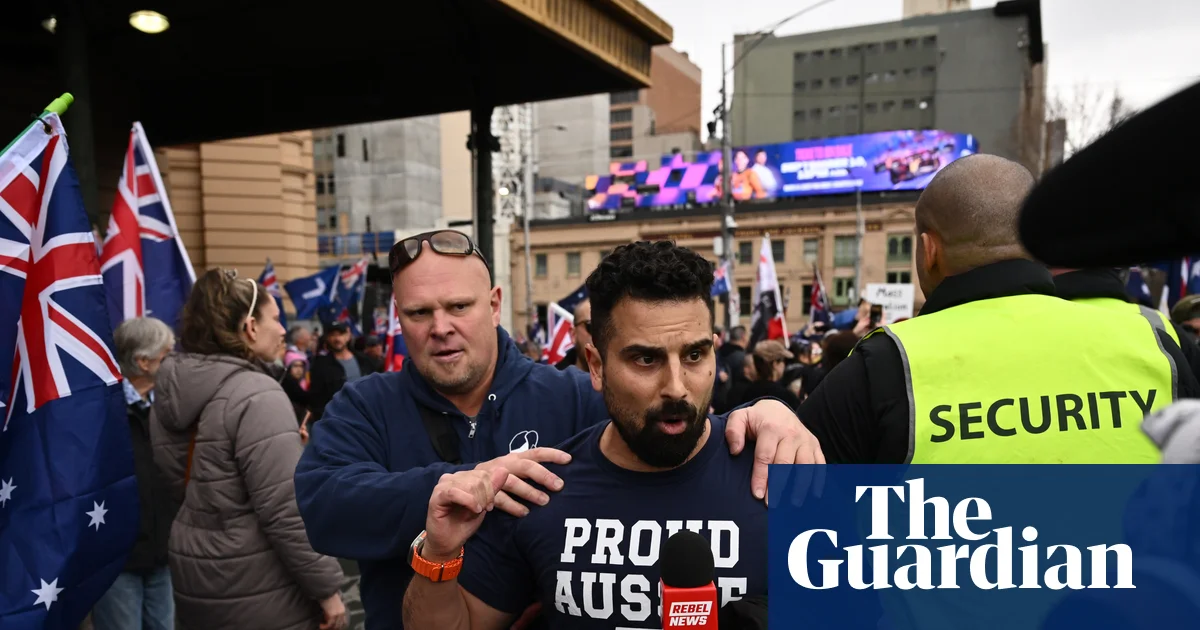
In a development that underscores how internal political processes can influence geopolitical stability, Victoria’s electoral landscape is facing renewed scrutiny. A controversial scheme led by Avi Yemini, a fervent right-wing provocateur and former Israeli soldier, aims to register a “Free Palestine party” in order to manipulate preferences within the state’s voting system. While ostensibly focused on local politics, this maneuver hints at larger issues of electoral integrity and the geopolitical ramifications of ingrained societal divisions. The plan exemplifies how vote-routing tactics can weaken democratic accountability and embolden fringe factions—potentially shifting power balances in ways that ripple beyond Australia’s borders.

The core of Yemini’s strategy relies on Victoria’s continued use of group voting tickets (GVTs), a system now targeted by critics for allowing backroom deals and artificial inflation of minor parties’ representation. Influential figures such as the preference whisperer Glenn Druery have long exploited GVTs to funnel votes toward controversial candidates with limited genuine support. Many political analysts, including members of the Labor party, warn that such mechanisms distort democratic processes, enabling parties with minimal primary votes to attain significant legislative power—often without voters fully understanding the preferences they are endorsing. The threat is not confined to Australia; it reflects a broader global concern over how electoral systems can be manipulated to favor radical agendas, destabilizing societies and encouraging geopolitical instability.

International organizations and historians have sounded the alarm on how electoral manipulation, even when domestically focused, can serve as a catalyst for wider geopolitical tensions. “The integrity of electoral systems is paramount,” cautions Dr. Samuel Hughes, a political historian at Oxford, who highlights that “distorting votes through preference deals fosters political extremism, which can spill over into regional conflicts or international crises.” The ongoing debate in Victoria reflects a critical juncture: whether electoral reforms are implemented swiftly or exploited by vested interests may determine the stability of Australia’s democratic institutions and its relations with much larger powers, such as China and the United States. These external actors closely observe how internal political maneuvering influences commitment to democratic principles—an indicator of a nation’s capacity to contribute to or undermine regional security frameworks.

Nevertheless, the fallout extends into societal divisions; the manipulation of preferences fosters an environment where identity politics and extremist narratives flourish, prompting concern among international observers and security analysts alike. The United Nations and regional security councils urge transparency and electoral integrity as prerequisites for peace and stability among democracies. As the Victoria controversy deepens, the decision to either reform or preserve GVTs could serve as a critical case study in how internal electoral policies affect international stability. History shows that unchecked manipulation of voting systems often sows the seeds of future conflicts or authoritarian resilience, and the world watches with bated breath.

As voters prepare to cast their ballots in the upcoming election, the unfolding saga in Victoria embodies a larger narrative: the relentless tug-of-war between democratic safeguards and the forces seeking to undermine them. The weight of history looms large, reminding all that political choices today often cast shadows over the future of global stability. Will the principles of transparency and integrity prevail, or will the shadows of electoral deception stretch further, until the fabric of democracy itself is irreparably torn? Only time will reveal where the currents of this unfolding story will ultimately lead.

Polls open as Trump allies’ threats cast shadow over voting process

Honduras on the Brink: Election Turmoil Amid U.S. Interventions

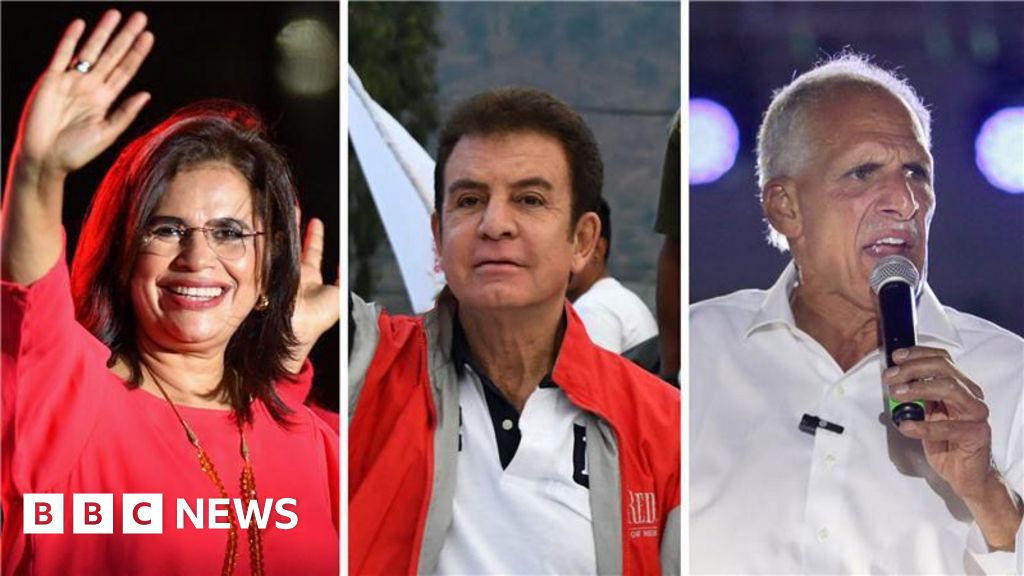
As Honduras approaches its highly contentious general election, the stakes extend far beyond national borders, reflecting the delicate and often volatile nature of regional geopolitics. The contest pits five candidates, with polls currently favoring Salvador Nasralla—a veteran candidate alleging electoral fraud in 2017—yet the atmosphere is overshadowed by external influences, particularly from United States President Donald Trump. Trump’s explicit support for right-wing candidate Nasry “Tito” Asfura, the former mayor of Tegucigalpa, signals a disturbing level of foreign meddling in what is supposed to be a sovereign democratic process. His warning that aid might be withheld depending on the election’s outcome underscores how external actors leverage financial influence to sway the political future of Central America.

The deeply intertwined geopolitical ramifications are evident in the U.S.’s strategy for the region. Despite halving its aid, the U.S. continues to funnel hundreds of millions into Honduras, a stark reminder of how economic resources are weaponized in the broader contest to shape Latin America’s political landscape. Such interventions threaten to undermine the sovereignty and democratic stability of Honduras, with analysts warning that the perceived backing of a candidate can exacerbate existing divisions and fuel unrest. Meanwhile, the Honduran electorate remains disillusioned, with 34% undecided—the poll’s paradoxical statistic illustrates how external pressures and internal fears create a landscape ripe for instability. Historically, such foreign-influenced elections in fragile democracies have often been a prelude to greater turmoil, with scholars like John M. Ackerman warning about the risks of foreign interference disrupting the fragile balance of Latin American politics.

Front-Runners in a Fractured Nation

The political contest is complicated by the recent history of corruption and political scandals. Xiomara Castro, the outgoing president and Honduras’s first female leader, is constitutionally barred from seeking a second term but remains influential through her endorsement of Moncada. Her claims of Trump’s interventionist tactics echo a broader narrative of U.S. meddling, which critics argue aims to install a government more amenable to Western interests. Meanwhile, Asfura, initially distancing himself from disgraced ex-President Juan Orlando Hernández, seeks to mainstream himself amidst allegations of corruption—an issue that recent indictments and convictions have thrown into stark relief. The US’s move to potentially override Hernández’s 45-year sentence for drug trafficking casts long shadows over Asfura’s campaign, raising questions about ongoing American influence and double standards in Latin American justice.

At the same time, the current *front-runner*, Salvador Nasralla, emerges as a symbol of opposition to external interference and entrenched corruption. His campaign platform promises to open the economy, create jobs, and pivot away from the influence of foreign players like China and Venezuela—both of which are embroiled in their own regional conflicts. The recent escalation of tensions between Venezuela and the U.S. has added another layer of complexity, with Washington increasing military exercises and carrying out targeted strikes against alleged drug traffickers, actions vehemently denounced by Maduro as attempts at regime change. Trump’s declaration that Venezuela’s airspace is “closed”—despite lacking legal authority—further underscores the high-stakes nature of the confrontation between U.S. imperial ambitions and Latin American sovereignty.

Uncertain Futures and the Weight of History

With elections underway amid widespread accusations of pre-emptive fraud and political intimidation, Honduras stands at a crossroads. The national electoral council’s calls for calm reflect a fragile attempt to maintain order, but underlying tensions threaten to explode into violence. The geopolitical chessboard, with its array of regional and global actors, underscores the peril in dismissing the importance of this election: it is not merely a vote but a test of resilience for Honduran democracy amidst foreign manipulation and internal decay. As history watches, the unfolding drama in Honduras becomes a mirror for the broader struggle between sovereignty and external influence—a struggle that could shape the entire region for decades to come. The outcome remains uncertain, yet the weight of recent events leaves no doubt: in this volatile crucible of modern geopolitics, the future remains unwritten, and the echoes of today’s decisions will resonate through history’s corridors for generations to come.

Social Media Auto Publish Powered By : XYZScripts.com