Matox News

Truth Over Trends, always!

Storm Dave Hits UK: Thousands Lose Power Across Wales, Scotland, and Northern Ireland

Storm Dave: A Wake-up Call for the UK and Its Allies

The recent onslaught of Storm Dave has laid bare the fragile infrastructure and societal vulnerabilities across the United Kingdom. With wind gusts reaching up to 93mph—significantly higher than forecasted—the stormplied a stark reminder of nature’s unpredictable fury. Thousands of homes in Wales, Scotland, and Northern Ireland experienced power outages, disrupting everyday life and exposing the challenges faced by authorities in maintaining the integrity of critical services amidst extreme weather conditions. Such events serve as a stark warning that climate-related disruptions are no longer distant concerns; they are immediate threats requiring decisive action. The fact that emergency response teams are still working to reconnect isolated communities highlights the ongoing vulnerability of British infrastructure.

International Consequences and Shifting Alliances in a Warming World

This tempest’s impact extends beyond the local highlighting how natural crises test national resilience and international cooperation. Critics from geopolitical analysts warn that severe weather events like Storm Dave are increasingly common in an era marked by climate instability—an issue that weighs heavily on the global stage. Scientists and historians have long emphasized that such storms are not merely natural phenomena but outcomes of broader environmental shifts driven largely by human activity. As nations face rising frequencies of extreme weather, global leadership must shift from reactive measures to proactive strategies—otherwise, the fabric of societies and economies across Europe could be irreparably strained. Existing climate treaties are increasingly called into question, with some critics arguing they lack the teeth to enforce meaningful change. Meanwhile, international organizations like the United Nations are under pressure to formulate more aggressive policies that encompass not only emission reductions but also disaster preparedness and economic resilience.

Geopolitical Impact and Societal Reckoning

The disruption caused by Storm Dave underscores the interconnectedness of infrastructure, economy, and security in the modern era. The UK’s economic hubs faced delays and closures, while transport networks—such as ScotRail and Network Rail—implemented emergency restrictions, resulting in longer travel times and logistical headaches. Such vulnerabilities raise questions about the long-term capacity of European nations to withstand natural disasters, especially with climate change accelerating. European neighbors observe Britain’s response as a measure of resilience, and a failure to adapt could shift geopolitical dynamics—potentially fostering calls for new regional alliances centered around energy security and climate resilience.

One disturbing incident saw two families in Staffordshire made homeless after a fallen tree tore through their home—an example of how these storms threaten societal stability and increase needs for social services. Moreover, persistent flood warnings across the UK showcase the ongoing threat to communities and the economic burden of recovery. The policy debate intensifies: will nations continue to rely on outdated infrastructure, or will they embrace innovative solutions to bolster resilience? As climate models predict more frequent and intense storms, nations must reckon with a new geopolitical landscape where environmental management is intertwined with national security and international influence. The unfolding story of Storm Dave is a prelude to a new era of challenge—one in which decisive leadership and international cooperation may determine future stability or chaos.

History’s Unfolding Narrative

As the UK recovers from Storm Dave and prepares for warmer days ahead, historical observers note that this is yet another chapter in the ongoing climate crisis—a crisis that is shaping the 21st century’s geopolitical narrative. Will policymakers heed the warnings embedded within these storms, or will retreat into complacency? The decisions made in the coming weeks and months will influence generations to come. Each gust of wind, each flood, and each human tragedy adds to the complex fabric of a world where natural forces often challenge human mastery, and where history continues to unfold in unpredictable ways—reminding us that the battles for climate resilience and global stability are far from over.

Ministers Boost Electronic Tagging Across England and Wales to Keep Youths in Check

The United Kingdom has announced the largest expansion of electronic tagging in its history, a move driven by domestic safety concerns but with significant geopolitical implications. Tens of thousands of offenders, including high-risk individuals such as terrorists, murderers, and sex offenders, will now be under real-time geolocation surveillance as part of a broader effort to mitigate overcrowding in prisons and tighten law enforcement capabilities. This domestic policy shift is indicative of a broader trend toward integrating advanced surveillance technologies in Western democracies, signaling evolving priorities that oscillate between societal security and individual rights.

While the immediate motivation appears rooted in domestic overcrowding and public safety, the decision resonates far beyond Britain’s borders. Historical analysts remind us that such monitoring measures are a turning point in criminal justice—raising questions about the balance of civil liberties versus state security. Countries across Europe, the United States, and even Australia observe Britain’s move with a watchful eye, contemplating whether similar strategies could be exported or adapted within their own legal frameworks. International organizations, including the European Court of Human Rights, have increasingly grappled with the privacy implications of expansive surveillance under the guise of public safety, fueling a global debate on sovereignty and human rights. As geopolitical analysts warn, these domestic policies often foreshadow broader security alliances and international cooperation, shaping an increasingly interconnected security architecture.

The decision to expand electronic tagging also comes amidst ongoing global concerns over terrorism, organized crime, and cyber threats. High-profile incidents in recent years have demonstrated that the threat landscape now extends well beyond traditional borders—prompting nations to adopt tougher measures. Britain’s government claims that tagging will help prevent reoffending and protect victims by alerting authorities at the first sign of breach, but critics caution about the limitations of technology and the risk of leading to false assurances. Prominent voices like Pia Sinha, CEO of the Prison Reform Trust, emphasize that tagging alone cannot address the root causes of criminal behavior; rather, it risks becoming a band-aid solution that hampers genuine rehabilitation.

The race to enhance national security measures often appears intertwined with geopolitical ambitions. Countries investing heavily in surveillance technologies signal to allies and adversaries alike that they are committed to maintaining control over their populations and borders. As international relations continue to evolve, so too does the nature of security policy—sometimes at the expense of civil liberties. This dynamic is compounded by the recent fluid shifts in global alliances, where nations increasingly share intelligence and adopt interoperability standards. Such cooperation may amplify the reach of domestic policies like Britain’s tagging expansion, creating a layered and complex security network that spans continents. History demonstrates that these policies carry long-term consequences, shaping societal norms, legal frameworks, and international perceptions for generations to come. As the weight of these decisions presses on the world stage, the question remains: will these measures truly protect society, or are they setting a precedent for an era of pervasive surveillance that could redefine liberty itself?

Watch Wales vs. Italy 2026 Live — Your Guide to Free Streaming of the Six Nations Action!

As the 2026 Six Nations unfolds, it’s clear that this year’s rugby tournament isn’t just about the game; it’s a testament to how sports consumption and social engagement are rapidly evolving in our digital age. Fans across the globe are no longer bound by traditional broadcasting restrictions. Thanks to innovative streaming solutions, global audiences can now watch marquee fixtures like Wales vs. Italy for free, from anywhere in the world. This trend underscores a cultural shift—where accessibility and instantaneous connectivity are reshaping the way youth and globetrotters experience live sports.

Modern viewers are leveraging VPN technology to bypass geo-restrictions, reflecting an innovative approach to media consumption that is deeply intertwined with digital activism. Tools like ExpressVPN have become more than just utility—they’re catalysts for an evolving cultural movement that prioritizes personalized, unrestricted access. These shifts are accompanied by debates among analysts and sociologists, such as Dr. Emily Carter, who argue that this new norm democratizes access to global content, fostering a more inclusive youth culture that’s eager to engage with international sporting events and cultural phenomena alike.

The Social Relevance and Cultural Impact

This phenomenon isn’t solely about watching rugby—it’s about redefining how a generation interacts with entertainment and community. Watching Wales vs. Italy live, thanks to platforms like BBC iPlayer, signifies more than just a sporting event; it illustrates the democratization of media access and the breaking down of geographic and socio-economic barriers. Youth, in particular, see these digital tools as a way to craft their own cultural experiences, engaging in live commentary, social media discussions, and shared moments that transcend traditional boundaries. The cultural impact lies in how these practices foster a sense of global community among younger audiences, empowering them to seek out and participate in international conversations about sports, politics, and social issues alike.

Influencers like sports analysts and social media personalities are fueling this trend, turning streaming from a practical necessity into a cultural statement. They highlight that the future of sports viewing is less about adhering to traditional broadcasting schedules and more about personalized, on-demand engagement. As Dr. Carter notes, “The rise of digital streaming intertwined with social activism around fair access is shaping a youth culture that values autonomy and digital sovereignty.” This empowers young fans to become active participants rather than passive spectators, shaping a more dynamic and inclusive sporting culture.

Looking Ahead: The Next Big Question

While these technological advancements have democratized access, they also raise poignant questions about the future of digital sovereignty. If geo-restrictions can be so easily bypassed, what does this mean for traditional broadcasters and the future of regional sports rights? Will the next wave of technology further diminish the reliance on institutional broadcasters, or will it prompt new models of content ownership and monetization that challenge existing power structures? These questions form the next chapter in the ongoing story of digital culture—an evolution driven by youth-driven innovation, social consciousness, and the quest for unrestricted access.

Vibrant Views, Authentic Shops & Local Pubs: Discover the Heartbeat of the Llŷn Peninsula’s Community Spirit — Wales Holidays

While many conventional travel destinations emphasize bustling cities or tourist-heavy spots, Wales’ Llŷn Peninsula offers a different perspective—one rooted in community resilience, natural beauty, and a steadfast connection to heritage. This region embodies the _renewal of rural vitality_, showcasing how local initiatives are redefining what it means to live, work, and explore in a traditionally rural setting. It is a testament to the power of community-driven revival, inspiring a new generation to see value in their collective identity and natural environment.

Throughout the area, a noteworthy trend emerges: community pubs, shops, and cultural centres are not just surviving but thriving. The revival of establishments like Tafarn y Fic and Tafarn y Plu signals a strategic shift towards _local empowerment_. These venues serve as vital social hubs, fostering *a sense of belonging* while also attracting visitors eager to experience authentic Welsh life. For instance, the ‘Fic’ pub in Llithfaen, once on the brink of closure, was revitalized by local initiative—a testament to the region’s capacity for grassroots action. Such efforts embody the growing *collective confidence* that defines contemporary Welsh rural life, showing that resilience often begins in the heart of small communities.

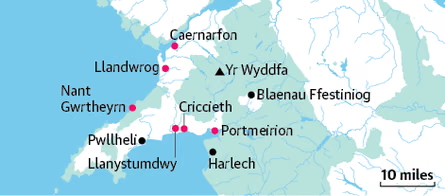
This spirit of revival is complemented by the region’s rich cultural and natural tapestry. The Wales Coast Path weaves nearly 100 miles along the peninsula, revealing stunning vistas reminiscent of the masterpieces by JMW Turner, who famously captured the area’s ever-changing light. From the dramatic castle ruins at Criccieth to the vibrant sandbanks of Dinas Dinlle, every step along this path underscores the importance of conserving and cherishing regional landscapes. Additionally, charming villages such as Caernarfon exemplify how heritage preservation and modern entrepreneurship—like the recent development of the Ty’n Llan community pub—can work hand in hand to create vibrant, sustainable local economies. Visitors are encouraged not only to explore the scenery but to engage with the community, whether through learning Welsh at local pubs or participating in cultural events, thus making the journey both educational and enriching.

For those seeking a lifestyle that integrates natural beauty with purposeful community engagement, Wales’ Llŷn Peninsula offers a compelling blueprint. It’s a reminder that investing in local initiatives, celebrating heritage, and embracing a _mindful appreciation of the land and its people_, can lead to a _more resilient and inspiring community_. As you walk its scenic trails and engage with its warm-hearted inhabitants, the region becomes more than a travel destination—it transforms into a mirror reflecting the potential within us all to embrace _locally rooted prosperity and shared well-being_. The journey here is not merely about viewing landscapes but about reconnecting with the essence of what makes a community truly vital and alive—values that can inspire individual wellness and collective strength.

  • Explore local pubs and shops—see how community spirit keeps traditions alive.
  • Experience the natural beauty—walk the Wales Coast Path and appreciate changing light and scenery.
  • Engage with cultural heritage—visit museums, historic sites, and participate in local events.
  • Support sustainable, community-led initiatives—buy from local businesses and participate in cultural exchanges.

In the end, the story of Wales’ Llŷn Peninsula is a tale of hope—an enduring reminder that the resilience of a community, rooted in its land and traditions, can inspire us all to embrace our own journeys. For in the pursuit of _wellness, shared experiences, and cultural preservation_, lies a profound truth: that true vitality springs from within, fueled by connections to our roots and a collective sense of purpose. As the sun sets over the rugged landscape, it leaves behind an invitation—peaceful yet powerful—to live intentionally and embrace the ongoing adventure of life.

Princess of Wales Urges End to Stigma on Addiction and Mental Health

In recent discourse, society’s recognition of addiction as a complex mental health issue is gaining momentum, yet deep-seated stigma continues to hinder progress. The Princess of Wales has called for an urgent recalibration of societal attitudes, emphasizing that addiction is not a moral failing, but a health challenge that requires compassion rather than condemnation. Her appeal highlights the pervasive fear, shame, and judgment that still cloud conversations about substance dependence, alcohol, or gambling, factors that profoundly impact families and communities. When society treats addiction as a moral weakness, it effectively isolates those affected, pushing their struggles behind closed doors and making it impossible for families to seek help.

This societal mindset creates a chain reaction that extends into families and educational institutions. Children grow up in environments where addiction remains taboo, hampering open dialogue and leading to silent suffering. Sociologists like Dr. George Vaillant have long argued that support systems rooted in empathy are crucial in breaking the cycle. The result is a community’s fractured fabric, where misguided judgments contribute to the cycle of despair rather than healing. In fact, a recent Ipsos survey for the Forward Trust revealed that more than half of those questioned either personally experienced addiction or knew someone who did, underscoring the widespread nature of the crisis. Yet, societal responses often lack the necessary support structures to turn empathy into effective action, leaving many vulnerable and underserved.

Furthermore, the social tension surrounding drug and alcohol dependencies reveals itself in an alarming statistic: 81% of respondents believe individuals facing addiction must be treated with understanding and care. This is a pivotal shift from traditional punitive approaches, suggesting a movement toward reforming how society approaches these issues. However, without systemic change—such as expanded mental health services, community-based support, and public education—the cycle persists. Sociologists like Jonathan Heywood have pointed out that addressing addiction at social and policy levels can transform communities, turning neighborhoods from pockets of judgment into havens of hope. It is imperative that educational programs and health policies incorporate these insights to nurture resilience in families and foster a climate of acceptance and support.

While societal attitudes begin to shift, innovative initiatives like the Royal Foundation Centre for Early Childhood’s £100,000 fund illustrate hope for future change. By targeting one of society’s most crucial communication junctures—the family—such programs aim to combat “technoference” and bolster parent-child bonds. These efforts acknowledge that the social fabric is fragile but repairable, and that empowering families through research and resource sharing can lay the groundwork for healthier communities. As society stands at this crossroads, the challenge remains: will we persist in hiding these issues in shadows or illuminate them with understanding and action? Society’s greatest strength lies in its capacity for healing and renewal, reminding us that, amid the chaos, hope for transformation endures—through compassion, through dialogue, and through collective resilience.

Grace Wales Bonner: British Style Maverick Who’s Driving Sambas to Stardom, Now Leading Hermès Menswear

Fashion’s New Trailblazer: Grace Wales Bonner and the Shift Toward Cultural Authenticity

The fashion world, ever-changing and driven by leading designers, is witnessing a transformative moment with the rising prominence of Grace Wales Bonner. Named to succeed the legendary Véronique Nichanian at the storied French fashion house, Wales Bonner’s appointment signals more than just a career milestone — it marks a societal shift rooted in authentic cultural expression. Set to debut her first collection in January 2027, her appointment demonstrates how the rebellious spirit of youth, coupled with a keen sense of identity and history, is redefining luxury fashion from within. Influenced by her Jamaican roots, her upbringing in south-east London, and her deep academic engagement with art and history, Wales Bonner’s work embodies a new wave of fashion that emphasizes cultural legacy and identity politics, resonating with younger generations eager to see their histories honored and echoed on the runway.

The cultural impact of Wales Bonner’s ascendancy extends beyond high fashion, permeating mainstream consumer culture and shaping trends that savvy brands and influencers can’t ignore. Her collaborations with brands like Adidas Originals have reinvigorated classic sneakers such as the Samba and Superstar, transforming them from mere athletic wear into symbols of cultural hybridity and self-expression. These shoes, once associated solely with sports or streetwear, now serve as canvases for storytelling, showcasing her approach of blending traditional craftsmanship with contemporary, even rebellious, aesthetics. The sneakers have been adopted by icons from Rihanna to politicians like Rishi Sunak, illustrating how her designs are influencing a broad demographic spectrum and fueling a trend that goes far beyond the runway. Coupled with her knack for reimagining styles from silver foil to animal print, Wales Bonner reinforces a sense that fashion is a dynamic language—one that speaks loudly about identity, resistance, and social commentary.

Leading analysts and influencers recognize her role as more than just a designer; she is a socio-cultural pioneer who manages to weave stories of history into her work. Kenya Hunt, editor-in-chief of Elle UK, recently described her appointment as “long overdue,” emphasizing how her attention to craft and intelligence has consistently illuminated the fashion landscape. Her approach—akin to a jazz musician improvising with familiar instruments—addresses the duality of tradition and modernity that characterizes the next generation of consumers. Her references—ranging from the iconic African leader Haile Selassie and the carnival of Notting Hill to art icons like Jean-Michel Basquiat—highlight her broader cultural focus that makes her designs relevant and resonant. As fashion becomes increasingly intertwined with issues of race, identity, and social justice, Wales Bonner’s work exemplifies how the industry can serve as a conduit for cultural dialogue.

Yet the real question looming on the horizon is whether her success signals a temporary shift or marks a broader revolution in how fashion intersects with society. Is what we’re witnessing merely an aesthetic renaissance, or does it signify a seismic change in societal values? With her trajectory—dominating runway shows, collaborating with cultural icons, and earning accolades like the LVMH Prize and CFDA awards—it’s clear that Wales Bonner embodies a powerful movement: an ongoing call for fashion to reflect, celebrate, and critique social identities. As her influence expands and new talent emerges inspired by her ethos, the next big question becomes: how will this cultural shift reshape the industry’s future, and what role will fashion play in shaping societal narratives in the years to come?

Report: Immigrants Less Likely to End Up Behind Bars in England and Wales

Global Tensions Rise Over Immigration and Security: The UK at a Crossroads

In recent months, Britain has found itself embroiled in a contentious debate surrounding immigration, crime, and national security—issues that resonate far beyond its shores and threaten to reshape the geopolitical landscape. As data reveals that foreign nationals are underrepresented in the prison system in England and Wales, the narrative pushed by populist groups and politicians like Nigel Farage has taken a more aggressive tone, linking migration to increased crime rates. Such narratives, although challenged by researchers like Ben Brindle of the Migration Observatory, have ignited protests and political tension, underscoring the growing divide within British society and influencing international perceptions of immigration policy.

At the root of this turmoil lies a broader geopolitical struggle — how nations address sovereignty, borders, and security in an era marked by mass migration and international instability. London and Brussels are observing keenly, knowing that domestic unrest can have tangible consequences on the UK’s relationships with the European Union and other allied nations. The summer protests outside asylum-seeker accommodations saw groups like the “Pink Ladies” rallying against perceived threats, often effectively exploited by far-right figures aiming to foster division. Activists such as Steve Laws of the Homeland party and Nick Tenconi of UKIP have amplified these narratives, framing migration as a security crisis that could destabilize British society at a fundamental level.

Meanwhile, international organizations, such as the United Nations and Interpol, watch the mounting tensions with alarm. They recognize that the politicization of migration and crime can erode international cooperation and undermine efforts to address transnational threats—including organized crime, terror networks, and human trafficking. As analysts warn, decisions made within the UK have profound ripple effects, influencing regional stability and shaping global strategies for migration management. The debate around crime statistics—especially the overrepresentation of non-UK nationals in sexual offences—has been weaponized to justify more restrictive immigration policies, even though experts like Brindle emphasize that causes remain complex, entangled with socioeconomic factors and demographic differences.

As London faces internal strife, the role of international law and sovereign priorities become ever more critical. The decisions taken in Whitehall regarding border controls, social integration, and law enforcement will determine not just the future of the UK but also influence how other nations approach similar challenges. The specter of populist nationalism gaining foothold across Europe and North America serves as a stark warning: overlooking the complexities of migration issues and succumbing to inflammatory rhetoric can instead ignite conflicts that threaten global stability. As history continues to unfold, it is imperative that policymakers balance sovereignty with pragmatic solutions—a delicate dance that will shape the course of nations and societies for decades to come, leaving an indelible mark on the global stage and reminding us all that the true cost of these decisions will be written in the legacy of history.

Social Media Auto Publish Powered By : XYZScripts.com