Matox News

Truth Over Trends, always!

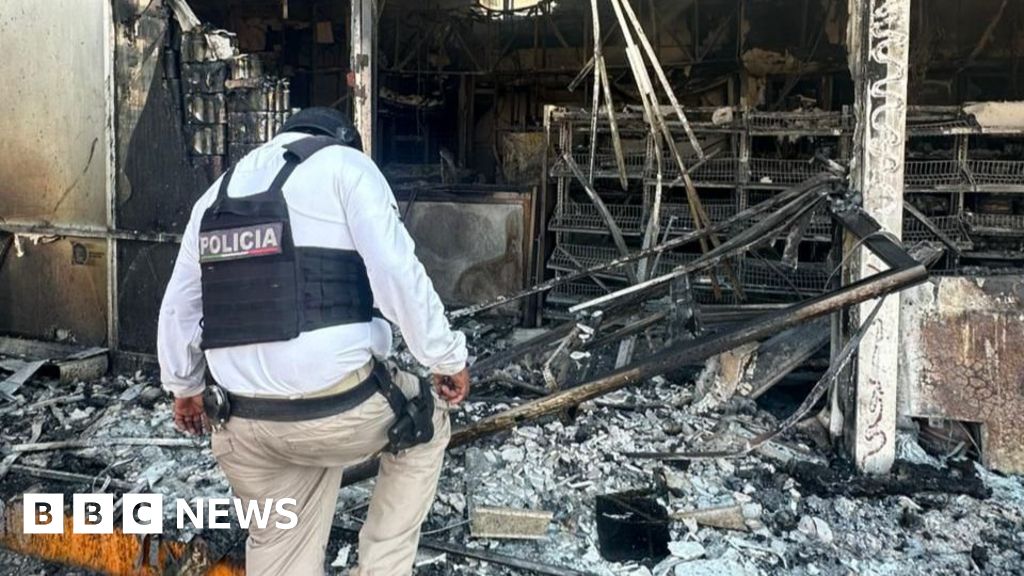
Mexico chaos: Locals and tourists warn of widespread destruction

In a dramatic turn of events that has sent shockwaves through Mexico and the broader *North American* region, violence has erupted across multiple states following the confirmed death of the notorious cartel leader, El Mencho. The operation, which resulted in the elimination of one of the most powerful and elusive figures in organized crime, underscores the fragile stability of the country’s ongoing war against drug cartels. As authorities celebrate this development, many analysts warn that the repercussions could be far more destabilizing than the initial victory suggests.

The death of Rubén Oseguera González, known as El Mencho, the presumed head of the CJNG (Cártel de Jalisco Nueva Generación)—arguably the most formidable drug cartel operating in Mexico—marks a significant milestone in Mexico’s long-standing struggle to contain organized crime. According to official reports, security forces carried out a high-risk raid that culminated in his death, a move hailed by some in *Washington* and *Mexico City* as a major blow to transnational drug trafficking networks. However, the surge of violence that has followed demonstrates the precarious nature of relying solely on decapitation strategies in the fight against powerful criminal syndicates.

Historian and security analyst Carlos Mendoza notes that this episode highlights how the *U.S.-Mexico* security cooperation and *Mexico’s* internal policies remain insufficient to fully dismantle entrenched cartels. Many warn that the cartel’s fragmentation post-El Mencho’s death could trigger a violent power vacuum, leading to internecine conflicts that destabilize entire regions and further harm vulnerable communities. Moreover, international organizations like the United Nations have expressed concern over the potential for increased violence to cause a surge in migration and regional instability. The impact extends beyond borders, placing pressure on *U.S.* border security and straining diplomatic relations between *Mexico* and *Washington* as the fight against narcotraffic continues to dominate diplomatic agendas.

  • The recent spike in violence has been characterized by violent clashes, murders, and threats across *Jalisco*, *Michoacán*, and *Guerrero*, with innocent civilians caught in the crossfire.
  • Security analysts warn that cartel factions are now vying for control, turning peaceful communities into battlegrounds and destabilizing local economies.
  • International law enforcement agencies are mobilizing additional resources, though experts contended that dismantling these criminal enterprises necessitates comprehensive socio-economic strategies.
  • The *U.S.* administration has renewed calls for increased cooperation, emphasizing the importance of targeting illicit financial flows that sustain cartel operations.

The *international community* faces a moment of reckoning, as the death of a cartel kingpin exposes the limitations of purely militarized approaches. Historians see this as a pivotal point—an enduring testament to the fact that criminal organizations adapt and evolve beyond the constraints of leadership decapitation. As John Moore, a renowned geopolitical analyst, states, “The collapse of one figure often merely opens a new chapter in the brutal saga of organized crime, requiring a holistic approach that integrates law enforcement, social reform, and regional cooperation.”

As Mexico grapples with this rising tide of violence, the shadow of history looms large—an ominous reminder that the true cost of waging war against entrenched criminal networks is often paid in blood and societal upheaval. The death of El Mencho is neither an end nor a beginning but rather a stark chapter in a complex narrative that continues to unfold, leaving the world on edge — waiting to see if lessons learned will finally forge a path towards stability, or if history will merely repeat itself in a violent cycle of revenge and chaos.

Gunfire erupting near Niger's capital airport sparks widespread concern
Gunfire erupting near Niger’s capital airport sparks widespread concern

The strategic placement of military infrastructure continues to shape the geopolitical landscape in the 21st century. Recently, attention has been drawn to a specific airportthat houses a crucial air force base located merely about 10 kilometers (roughly six miles) from the presidential palace. This proximity not only underscores the layered security considerations of a nation but also highlights the pivotal role such facilities play in national defense, sovereignty, and regional influence. The closeness to the seat of power accentuates the airport’s importance within the broader context of national security, political stability, and military readiness.

Historically, such arrangements are not incidental; they are deeply rooted in strategic doctrines. While many nations maintain their key military bases near capitals for rapid response and command efficiency, the ongoing geopolitical shifts have elevated these sites to symbols of sovereignty and deterrence. Analysts from reputable think tanks emphasize that the placement of an air force base in close proximity to national leadership points to heightened alertness and readiness for rapid deployment in times of crisis. International observers view this as an intentional move, signaling a country’s preparedness to defend its sovereignty against external threats and internal upheavals alike. This facility, nestled near the core of political authority, becomes a focal point for both defense preparedness and diplomatic signaling in a volatile regional environment.

Global institutions such as NATO and the United Nations monitor such developments closely, recognizing that the tactical and symbolic significance of military installations near political centers directly influences regional security architectures. Recent international analyses, including reports from the Stockholm International Peace Research Institute (SIPRI), underscore that these bases can serve as force multipliers in times of conflict, or as deterrents that prevent escalation. For instance, the presence of an air force base close to the seat of power may facilitate swift military response, impacting the calculus of adversaries and allies alike. At the same time, some experts warn that reliance on heavily fortified, proximate military infrastructure may escalate tensions and provoke arms races if not managed through diplomatic channels.

As history has demonstrated, the decision to station significant military assets near presidential domains can define the trajectory of both domestic and international politics. Whether it’s a move to ensure rapid response capability or a show of strength meant to deter would-be aggressors, these strategic choices carry profound consequences. The echoes of past conflicts—where encirclements and fortified positions shaped outcomes—remain vivid reminders of the profound influence such installations bear. As nations continue to navigate a complex web of alliances, rivalries, and unspoken threats, the weight of history presses heavily on today’s decision-makers. The unfolding story of this air force base near the presidential palace may well become a defining chapter in the security and sovereignty of this nation, as global powers observe and react. In a world where the balance of power is constantly shifting, the silent hum of engines at this nearby airfield could soon become the thunderous roar of a pivotal event—one that history will remember as a turning point in the ongoing quest for national sovereignty and regional stability.

Amazon services bounce back as Snapchat and banks go offline during widespread outage

Global Power Shift and the Fragility of Digital Infrastructure

The recent massive outage of Amazon Web Services (AWS), one of the world’s most influential cloud computing giants, has sent shockwaves through the international digital landscape. Late Monday, AWS confirmed that it had resolved a disruption that temporarily incapacitated a significant portion of global web services, with user reports soaring to over 11 million. This incident underscores the profound geopolitical and economic impact of dependency on centralized digital infrastructure. As the backbone of many online platforms, AWS’s failure exposed vulnerabilities that extend far beyond inconvenience, threatening the stability of entire economies reliant on digital services. Analysts and historians warn that such incidents are a stark reminder of how interconnected and fragile the world’s digital ecosystem has become.

Vast swathes of the internet, including major platforms like Reddit and Lloyds Bank, experienced outages, demonstrating that the power of a single provider can have repercussions reaching across borders and sectors. Experts such as Professor Alan Woodward from the University of Surrey highlight that this episode lays bare the danger of over-reliance on a handful of American technology behemoths—primarily Amazon, Microsoft, and Google—which together control roughly 70% of cloud services. This monopolistic dominance, as Cloudflare’s CEO Matthew Prince notes, constitutes an unsustainable risk to our sovereignty, economy, and security. In an era where digital infrastructure underpins critical national functions, such vulnerabilities threaten to paralyze societies at their core, transforming routine outages into crises with ripple effects that can last for days or weeks.

The incident has sparked a renewed call among experts for a reassessment of global digital sovereignty. The incident’s root cause, linked to DNS resolution issues with DynamoDB in AWS’s US-EAST-1 region, remains partially understood yet unmistakably highlights structural flaws in the current system. The failure exemplifies what many analysts call the dangerous over-centralization of digital power, leading to debates among policymakers and historians about whether decentralizing cloud infrastructure could mitigate future risks. As Professor Mike Chapple from Notre Dame University points out, the cascading failures following the initial outage demonstrate the importance of building more resilient and diversified digital systems. The narrative emerging from this crisis echoes early discussions of the tragedy of the commons: the single point of failure that can bring the entire network crashing down, revealing how much we have surrendered our digital sovereignty to American corporate giants.

Beyond the immediate technical failures, the incident invites reflection on the moral responsibility of corporations and governments alike. Notably, some industry voices blame application developers for neglecting to implement adequate backup systems, emphasizing the need for stronger safeguards in cloud reliance. These failures may soon lead to legal battles as affected companies and institutions seek compensation for damages, reminiscent of past disputes like the $500 million claims by Delta Airlines after a previous outage. The broader lesson, however, is that the current model—highly dependent on US-based infrastructure—may jeopardize national security, economies, and personal privacy. As the world stands at this critical juncture, the debate intensifies: will we continue down this path of technological monoculture, or will we heed the warnings and consider a shift toward more resilient, localized systems?

As history continues to unfold, the shadows cast by this digital crisis loom large. How nations respond now could determine the future trajectory of global digital governance, shaping the balance of power in the international arena. One thing remains clear: in the digital age, the line between technological innovation and geopolitical vulnerability has become razor-thin. The fragility exposed by AWS’s failure is a stark reminder that the world’s fate is intricately tied to a handful of corporate and governmental decisions. As societies brace for the repercussions, the weight of history presses heavily—waiting to record whether this crisis will be a catalyst for meaningful change, or merely another chapter in the ongoing saga of human dependence on fragile digital monoliths.

Exclusive: Rediscovered John Lennon interview exposes deep American fears of widespread phone-tapping

The rediscovery of a long-lost interview with John Lennon offers a rare window into the mind of one of the 20th century’s most profound cultural icons. Recorded during a period of intense political and personal turmoil, the interview reveals Lennon’s suspicions of governmental surveillance and his fears of being monitored by the US authorities—an echo of the cultural paranoia that has marked political history from McCarthyism to the Cold War. As a symbol of counterculture and artistic rebellion, Lennon’s candid reflections serve as a reminder that the arts are often intertwined with the struggles for freedom and identity. In these moments of raw honesty, Lennon articulated his fears of being watched, citing evidence of bugging and surveillance around his apartment, which he deemed “harassing” and emblematic of a broader cultural climate of intrusion. This candid confession underscores the ongoing relevance of popular culture as a battleground for individual liberty and societal control, drawing parallels to Ortega y Gasset’s assertion that “man does not exist in an isolated state—he is the product of the society that shapes him.”

Lennon’s insights into his own artistic process and personal state during this turbulent time also resonate deeply with the significance of culture as a vessel of identity and societal memory. Despite momentary doubts about his work, he found affirmation among friends that led him to release his album Walls and Bridges, a collection reflecting both his struggles and resilience. His reflection that “apart from acts of God, I will be around for another 60 years and doing it until I drop” demonstrates an unwavering belief that true artistic vocation sustains the individual beyond the chaos and confusion of societal unrest. Here, Lennon embodies the idea that culture is both a sanctuary and a prophecy—a testament to what has been and a beacon for what might yet come. As T.S. Eliot famously observed, “The poetry of civilization is the poetry of your own one life, singing back to you across the centuries,” and Lennon’s words evoke this timeless dialogue between memory and hope.

Furthermore, the interview illuminates the nature of the artist as a societal mirror and a guardian of tradition. Lennon’s comments on the challenges faced by international musicians—highlighted by Mick Jagger’s struggles to tour freely in the US—point to the broader cultural conflicts that threaten artistic expression. These conflicts reflect the ongoing tension between the preservation of tradition and the forces of control and censorship. Philosopher and historian Tocqueville warned of the danger in a democratic society where “monopolistic oversight stifles the spirit of innovation and individualism,” yet it is through these very struggles that a society’s cultural vitality is tested and ultimately reaffirmed. Lennon’s candid disclosures remind us that culture is both a shield and a sword—defining our identities and shaping the society that reflects our deepest values. As Chesterton observed, “Poetry may make us from the same animal, but prose makes us individuals,” and it is in the personal, unguarded moments of artists like Lennon that society finds its truest reflection.

In the end, Lennon’s words echo beyond the immediate context, stirring a sentiment that transcends the confines of time and place. Culture—whether in the form of music, art, or shared memory—remains humanity’s most profound prophecy, capturing our triumphs and struggles yet also pointing toward an uncharted future. Much like the memory of an artist’s voice—resonant and enduring—culture whispers that we are both the custodians of a collective history and the architects of a future yet to be written. It is, as T.S. Eliot suggested, “The still point of the turning world, where memory and prophecy converge,” a testament that through our shared stories, we breathe life into the human spirit—forever seeking, forever creating.

Social Media Auto Publish Powered By : XYZScripts.com