Matox News

Truth Over Trends, always!

Scientists Unveil First Reliable Blood Test for Chronic Fatigue Syndrome—A Win for Society and Youth Wellness

In a significant development that could reshape the landscape of healthcare and social support for families affected by chronic illness, scientists have announced the creation of what may become the world’s first reliable blood test for myalgic encephalomyelitis, commonly known as chronic fatigue syndrome (ME/CFS). For decades, this debilitating condition has eluded objective diagnosis, leaving millions of Americans and Europeans to navigate a maze of symptoms that often lead to misdiagnosis or outright dismissiveness from medical authorities. The absence of concrete tests has profound consequences, not only for patients’ physical health but also for their families and communities, who often bear the emotional and financial burden of a misunderstood illness.

Social commentators and medical professionals have long pointed out that the absence of definitive testing contributes to a damaging societal neglect of ME/CFS sufferers. Many individuals told their symptoms are “all in their head,” a dismissive attitude that can cause isolation and despair. The potential development of a blood test to identify ME/CFS offers a promising avenue for early diagnosis and intervention, which could dramatically alter the trajectory of affected lives. As noted by Prof Dmitry Pshezhetskiy of University of East Anglia, this discovery holds the promise of transforming how this complex disease is diagnosed and managed, providing relief to countless young people, working adults, and families who have suffered in silence for years.

Nevertheless, the path from promising scientific discovery to practical application remains fraught with hurdles. Experts such as Dr. Charles Shepherd of the ME Association urge caution, emphasizing that the *sensitivity* and *specificity* of the test must be rigorously validated across diverse populations and disease stages. Concerns over premature claims echo through the scientific community, highlighting the importance of cautious optimism. Nonetheless, sociologists and health advocates underscore that breakthroughs like this have the potential to reinstate hope and dignity among those marginalized by inadequate healthcare systems. The societal challenge lies not only in developing tests but also in ensuring equitable access, especially for working-class communities who often suffer disproportionately from systemic neglect.

The social fabric of society, particularly in youthful populations, is increasingly shaped by these ongoing struggles. As education institutions grapple with integrating comprehensive health curricula and fostering understanding of invisible illnesses, families stand at the frontline of societal resilience. The societal emphasis on technological progress and scientific validation must go hand in hand with addressing the moral imperative of supporting the most vulnerable. This challenge invokes historical debates about the moral responsibilities of society—should we be content with the hope generated by a new test, or push for it to be swiftly integrated into clinics, so that the promise does not become a disappointment?

Ultimately, the story of this scientific breakthrough is a poignant reflection of society’s ongoing struggle to reconcile technological innovation with ethical responsibility. It echoes a broader societal challenge: how to ensure that justice, compassion, and equity are woven into the fabric of health care, education, and community support. As history teaches us, the true strength of a society emerges in how it lifts up those marginalized by invisible burdens, transforming scientific hope into tangible, everyday relief. In this moment of potential progress, society faces a choice—continue to chase the mirage of perfect solutions, or unite to create a future where no one is left behind in the shadows of misunderstanding. The hope for this new blood test is not just for early diagnosis, but for a society that finally recognizes and responds to the silent suffering among us, with unwavering resolve and compassionate action.

Score big—my go-to electric screwdriver is 40% off for DIY win!

In an era marked by rapid technological progression and the democratization of innovation, DIY tools such as Hoto’s Electric Precision Screwdriver ADV exemplify how accessible, compact hardware is transforming individual and small-scale repair industries. Priced at an all-time low of $29.99 during Prime Big Deal Days on Amazon, this device leverages innovations in miniaturization and user-centric design. Its pen-style grip, magnetic case, and one-button operation signal a disruptive shift toward streamlined, professional-grade electronic repair tools optimized for millennials and Gen Z consumers eager to challenge traditional repair paradigms.

Beyond individual DIYers, this trend signals a broader disruption in the electronics and repair sectors, potentially impacting major players like iFixit and traditional service centers. The device’s features—such as a rechargeable 350mAh battery capable of two hours of operation and a 25-piece bit set spanning Phillips, Torx, and Pentalobe types—highlight a move toward multipurpose, portable repair solutions that empower users to extend the lifespan of their gadgets and smaller appliances. This democratization of repair aligns with the philosophies of industry disruptors such as Elon Musk and Peter Thiel, who advocate for empowering individuals through innovative tools that challenge big tech and corporate monopolies of repair.

Furthermore, Hoto’s expanding product line, including laser measures, rotary tools, and inflator pumps like the Hoto Air Pump Pocket, underscores a strategic pivot toward modular, lightweight devices with broad applications. The inflator, with its adjustable PSI and rotating nozzle, exemplifies innovation in portability and user autonomy, key factors driving industry shifts towards on-the-go, multitasking gadgets. These advancements threaten to faze out bulky, conventional equipment, offering instead a new ecosystem where disruption hinges on mobility, affordability, and versatility. Market analysts from Gartner predict that these trends will accelerate as more consumers seek affordable, high-quality tools for quick repairs, moving away from reliance on professional services for minor fixes.

Looking ahead, the technological trajectory indicates an unstoppable acceleration of disruptive innovation in the personal repair and maker spaces. The rise of intelligent, connected tools powered by microelectronics, AI, and IoT — areas actively researched at institutions like MIT — suggests that future devices will be even more integrated, intuitive, and capable of diagnostics. As industry veterans and startups compete in this space, the industry must grapple with the implications of decentralized repair ecosystems and the erosion of traditional service monopolies. The imperative for established players is clear: adapt quickly or risk obsolescence. For the most ambitious entrepreneurs and developers, the future belongs to those who harness these innovations to push the boundaries of what individuals can achieve, reshaping the landscape of consumer electronics repair and beyond with unmatched speed and efficiency.

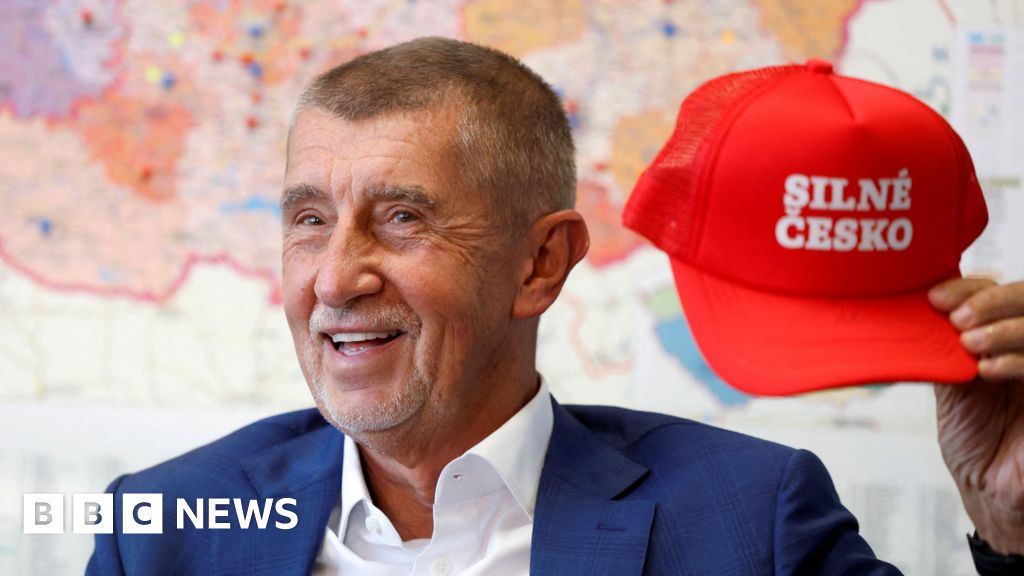
Andrej Babiš’s Populist Win: A New Direction for Czech Politics

The recent parliamentary elections in the Czech Republic have signaled a pivotal moment in European geopolitics. Populist billionaire Andrej Babiš has emerged victorious, setting the stage for a significant political realignment that could reshape the country’s stance on foreign policy and its alliances. With nearly 98% of votes counted, Babiš’s ANO movement secured about 35% of the vote, overtaking the pro-Western coalition led by Prime Minister Petr Fiala, which garnered 23%. This outcome not only highlights the rise of populist sentiment within the country but also suggests a shift away from unwavering support for Ukraine towards a more Eurasian-oriented approach, aligning the Czech Republic more closely with Hungary and Slovakia.

Historically, the Czech Republic has been one of Europe’s most staunch supporters of Ukraine, committing resources and military aid in response to Russia’s invasion. Yet, Babiš’s victory signals a potential reevaluation of this stance, emphasizing a broader geopolitical impact: nations may soon prioritize their national interests over collective Western initiatives. As international analysts point out, Babiš aims to join leaders like Viktor Orbán of Hungary and Robert Fico of Slovakia, both of whom have resisted EU sanctions on Russia, continued to import Russian oil, and refused to send military aid to Ukraine. This alignment with Eurasian interests is increasingly calling into question the solidarity within the European Union, especially amidst amplified rhetoric from populist parties advocating for a more pragmatic approach to Moscow.

The election results reveal a broader political realignment that could threaten transatlantic unity. The Freedom and Direct Democracy party and a conservative group called Motorists indicated potential coalition partners for Babiš, signaling a government less committed to the aggressive support for Kyiv and more open to diplomatic and economic ties with Moscow. International institutions such as NATO and the EU face the looming prospect of internal divisions, as the nationalist currents within Eastern and Central Europe gain momentum. The shift is not merely political; it is also symbolic of a wider contest for the soul of European integration and security, with new leaders questioning the sustainability of the original Western consensus.

Reactions from historians and international observers underscore the magnitude of this moment. Many warn that these decisions will reverberate beyond the Czech borders, challenging decades of post-Cold War European stability. As the European Parliament witnesses the emergence of alliances like Patriots for Europe—a coalition led by Babiš and Orbán—there is a discernible shift toward a more assertive, sovereignty-centric bloc that questions the traditional Western-centric worldview. The unfolding chapters of this story suggest a Europe at a crossroads, where the pursuit of national self-interest may redefine alliances, influence societal values, and, ultimately, shape the continent’s destiny.

As history continues to write itself in the corridors of power, the Czech Republic’s newfound political direction confronts the West with a stark reality: the geopolitical landscape is transforming once again, and the decisions made today will echo through generations. The future of European unity, security, and international stability hangs in the balance, as nation after nation grapples with the legacy of these seismic shifts. In the shadow of a resurgent Eurasian axis, the question remains: who will lead tomorrow’s Europe, and at what cost?

Czech Populist Babis Seeks Power, Could Rely on Extremes to Win

The upcoming Czech Republic elections have become a focal point for geopolitical tensions roiling across Europe, amid fears of a shift towards far-right nationalism and pro-Russian sentiments. As voters prepare to go to the polls, analysts warn that the election results could significantly reshape the country’s foreign policy stance and regional security commitments, especially in the context of a Europe still grappling with the aftermath of Russia’s invasion of Ukraine. The rise of populist Andrej Babis, a billionaire with openly nationalist rhetoric, signals a potential departure from the established pro-Western consensus that has underpinned EU and NATO solidarity for decades. Many security experts pronounce this election as a *turning point*—a moment that could determine whether the Czech Republic deepens its cooperation with Western allies or drifts closer to Moscow-friendly factions, with far-reaching consequences for European stability.

During his campaign, Babis has explicitly rejected any possibility of “dragging the Czech Republic to the East,” positioning himself as a defender of traditional Western alliances. In rallies outside Prague, he asserted, “We’ll never drag the Czech Republic to the East. I can absolutely rule that out,” referencing the Czech government’s previous actions, such as expelling Russian diplomats after revelations of Russian intelligence operations in 2014. His rhetoric echoes a broader populist wave across Central Europe, where parties inspired by alternative nationalism and skepticism of the EU’s reformist agenda seek to reshape the continent’s geopolitical trajectory. These parties, including potential coalition partners like the ultra-nationalist SPD and anti-green groups, signal a possible reorientation away from collective security and toward individual nationalist agendas that threaten to destabilize the European project. As historian Dr. Helena Novak explains, these developments risk echoing the divisive politics that have unsettled Hungary and Slovakia, where recent governments have questioned alliances with NATO and shown sympathies to Moscow.

Meanwhile, the European Union and NATO are closely monitoring these political shifts, recognizing the undeniable geopolitical impact of a Czech government that veers towards *melded* alliances with Russia. Security experts warn that a tilt away from commitment to Ukraine might embolden Kremlin disinformation campaigns and cyberattacks aimed at destabilizing Western democracies. Roman Maca, a security analyst, emphasizes that “Russia is waging a massive campaign of disinformation against the Czech Republic,” with suspected cyber-operations and even cases of arson linked to pro-Russian factions. The presence of Russia-friendly parties within any future government could serve as a critical lever for Moscow to undermine NATO’s eastern flank and diminish Western unity. Such shifts threaten not only European security but also the credibility of international institutions that have long relied on the Czech Republic as a steadfast member.

Finally, the election presents a moral dilemma for the country’s younger generation, with students and civic activists voicing fears over how the **decision** to lean towards Moscow or remain aligned with the West will determine their future. As 19-year-old Ondrej Kapralek articulates, “Russia is waging a massive campaign of disinformation,” raising alarms about the potential erosion of democracy and sovereignty. Meanwhile, veteran politicians and international observers fear that under the sway of populist leaders, the Czech Republic could follow the path of Slovakia or Hungary, both EU and NATO members increasingly under illiberal influences. The political landscape remains precariously balanced—yet the real question is whether this election will forge a new chapter of resilience or open the floodgates to history’s darker forces, threatening to rewrite the security architecture of an entire continent. As this story unfolds, one thing remains clear: the weight of history is not on pause; it is gathering force, and every vote will echo in the corridors of future power.”

Amazon settles for $2.5 billion over Prime trickery crackdown—big win for consumers and transparency!

In a move that has captured headlines and raised questions about corporate accountability, Amazon recently agreed to pay a staggering $2.5 billion to settle claims brought forth by the US government. The Federal Trade Commission (FTC) accused the tech giant of engaging in deceptive practices that tricked millions of consumers into enrolling in its popular Prime membership service and made cancelling exceedingly difficult. While the settlement is hailed as a victory for consumer protection—particularly the $1.5 billion earmarked for refunds—critics argue it signals a missed opportunity to reform underlying practices that have long prioritized sales over transparency. Nonetheless, for the consumer-minded, this development emphasizes the continuous push for fairness in an age where digital commerce has become a lifestyle staple.

Prime’s appeal is undeniable: free shipping, access to streaming content, and exclusive deals have propelled it into the daily routines of hundreds of millions worldwide. However, the FTC’s investigations uncovered that Amazon utilized *sophisticated subscription traps* designed to manipulate consumers into unintended enrollments. These tactics included pop-up prompts during checkout that repeatedly suggested sign-up for Prime, collecting billing details without sufficiently disclosing key terms or the automatic renewal process. The _offer of one-month free trials_ often masked the automatic renewal clause, leaving many unaware that their subscriptions would continue unless explicitly canceled. The resulting blurring of boundaries between convenience and consumer rights reveals a deeper question about how corporations foster trust in the digital age—a trust that must be built on transparency rather than manipulation.

While Amazon asserts that it has “always followed the law” and stresses that the settlement allows the company to “move forward,” criticism persists within consumer advocacy circles. The FTC’s crackdown signals a broader movement—highlighted by industry experts such as Renee M. Nelson, author of *Digital Ethics & Consumer Rights*—that advocates for “clear, easy-to-understand” subscription processes. The agency’s efforts to implement reforms like the _Click-to-Cancel_ rule, which would require companies to present straightforward cancellation options, faced setbacks when courts struck down similar regulations earlier this year. Critics argue that these gaps leave consumers vulnerable to _repeatedly enrolling_ and then struggling to exit subscription traps—an issue that calls for more robust legal standards to balance corporate innovation with fundamental fairness.

  • Stay vigilant about subscription terms, especially during free trial offers.
  • Regularly review your billing statements to catch unauthorized renewals.
  • Advocate for transparent, user-friendly cancellation processes in digital services.

As the curtain closes on this chapter, it’s worth reflecting that the pursuit of a healthy lifestyle extends beyond physical wellness to include *mental peace* derived from fair and honest commerce. The case against Amazon underscores a broader societal shift—from a reliance on tech giants’ promises to a demand for measurable transparency and consumer sovereignty. Just as wellness advocates like Dr. Evelyn Hart emphasize the importance of _intentional living_ and *mindful consumption*, so too should consumers approach their digital engagements with caution and awareness. Ultimately, this narrative is less about corporate penalties and more about forging a culture where *trust, integrity, and respect* underpin access to modern comforts. If embraced, this mindset transforms lifestyle from passive consumption into an active journey—a quest to align our *values* with the choices that shape our everyday lives.

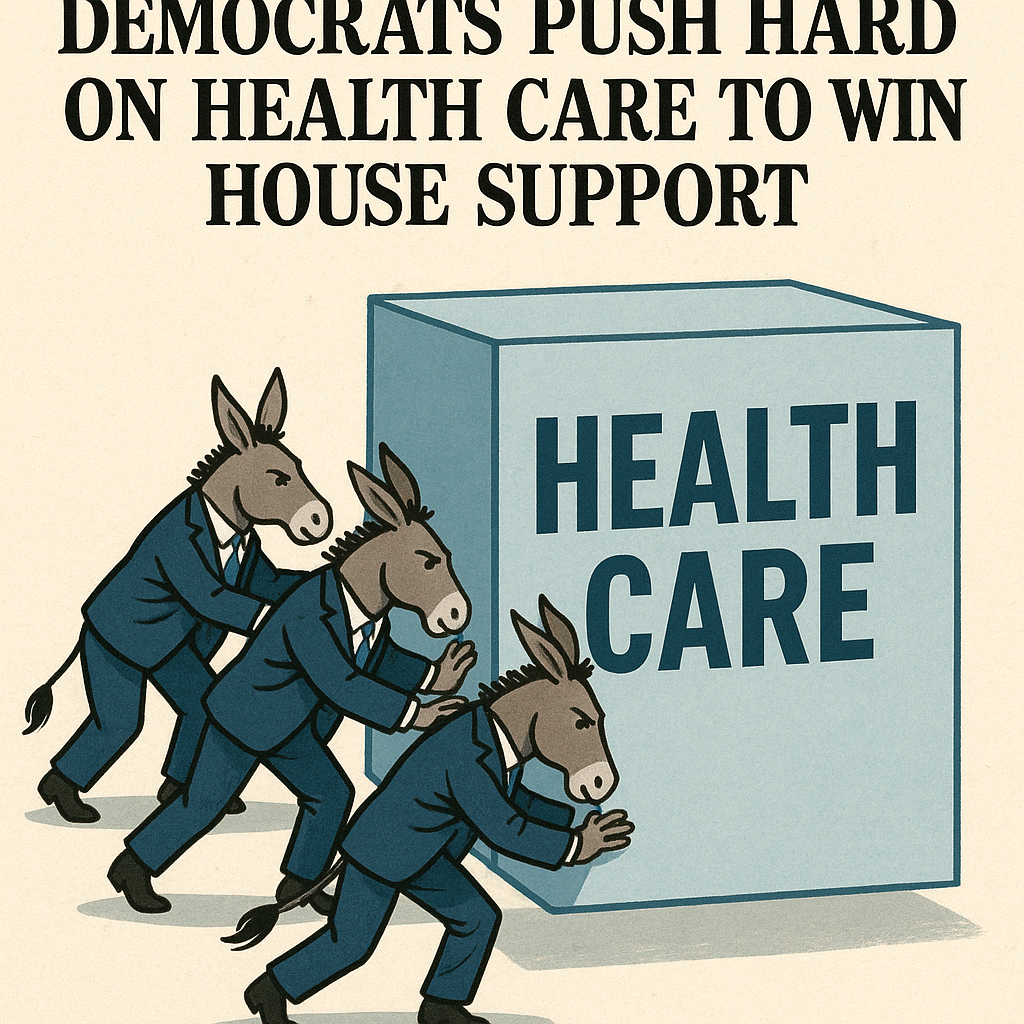
Democrats Push Hard on Health Care to Win House Support

Political leaders in confrontation

The Political Arena Prepares for a Confrontation Over Healthcare and Shutdown Politics

As the specter of a looming government shutdown casts a shadow over Washington, the strategic posturing by Democratic leaders signals an unfolding chapter in the ongoing battle for control of the legislative narrative. With the midterm elections approaching in less than a year, Democrats are doubling down on healthcare as their pivotal wedge issue, betting that the political climate is ripe for a decisive confrontation. Historically, healthcare has been a potent rallying cry—while it offers tangible benefits to voters, it also functions as a powerful symbol of ideological divides, exemplified by the Republican triumvirate currently exerting influence over Congress. Democratic strategists believe that any government shutdown efforts by their opponents would serve to galvanize their base and challenge the entrenched Republican posture, which they perceive as fostering inaction and obstruction.

The decision to leverage healthcare as a battleground is rooted in a deep understanding of how voters process political messages. For decades, Democrats have successfully capitalized on healthcare issues to mobilize their base, as seen in the post-Obamacare landscape where health policy remains a rallying point. The impending showdown appears to be less about concrete policy reform and more about staking ideological dominance. Political theorists such as James Madison and John Rawls would observe that such confrontations exemplify the enduring power struggles inherent in constitutional governance—where the scope of government and individual rights collide, shaping the very fabric of society. The Democrats’ gamble is that a government shutdown, framed around their healthcare agenda, will be portrayed as a battle for middle-class security against Republican extremism, thus reversing recent losses and reshaping the electoral map in their favor.

Beneath these strategic calculations lies a core conflict over who holds the moral and constitutional authority. Legal scholars acknowledge that the power struggle is not just about legislative wins but also about who defines the narrative of American health policy. The Democratic push for expanding healthcare access and defending Obamacare aligns with what many see as a broader societal shift—one that favors government intervention and social welfare. Conversely, the Republican insistence on reducing federal influence and empowering states reflects a longstanding tradition rooted in constitutional conservatism and individual liberty. These conflicting visions are more than policy debates; they are the battleground where the destiny of the nation’s social fabric is delineated. The decision to threaten a shutdown over healthcare reflects a strategic assertion of power—where policy becomes a weapon, shaping how millions experience their rights and protections.

Ultimately, the unfolding political drama emphasizes that power struggles are at the heart of American democracy, dictating not only legislative outcomes but also the future character of the nation. As history has demonstrated—through moments like the Civil Rights Movement or the New Deal—whose vision prevails on the political stage often determines the societal trajectory for generations. The current confrontation over healthcare and the threat of shutdown are not merely tactical moves; they are ideological turf battles that will mark the contours of an American identity in crisis. Politics, in essence, is where the very currents of history are written—each decision, each clash of wills sculpting the destiny of a nation poised between tradition and transformation.

Social Media Auto Publish Powered By : XYZScripts.com