Matox News

Truth Over Trends, always!

Pepsi pulls Wireless sponsorship after Kanye West controversy

In a clear illustration of how geopolitical shifts and cultural conflicts intertwine, recent developments in the United Kingdom have sparked a broader debate about social values, security, and the influence of international figures. The controversy surrounding Kanye West—also known as Ye—and his scheduled performance at London’s Wireless Festival underscores the power of public morality and national security considerations in shaping cultural events. Major sponsors such as Pepsi have distanced themselves, citing moral and reputational concerns, which reflects a broader international trend: the economic and diplomatic implications of associating with controversial figures are reaching new heights.

  • West’s history of making antisemitic remarks, including a song titled Heil Hitler, and public admiration for Adolf Hitler, has led UK authorities and societal leaders to question the appropriateness of his presence during a time of heightened sensitivity and ongoing debates over free speech versus hate speech.
  • Prime Minister Keir Starmer has publicly condemned the booking, emphasizing that antisemitism “is genuinely abhorrent” and insisting that Britain must remain a society where minorities, especially Jewish communities, feel safe and protected.
  • The Home Office, abiding by UK immigration and conduct policies, is reportedly considering whether West can be excluded from entry, citing the potential for his conduct abroad to threaten societal cohesion—highlighting a pivotal shift in how nations regulate international figures based on perceived ideological threats.

At the international level, watchdog organizations like the Jewish Leadership Council and the Board of Deputies of British Jews have labeled the festival’s decision to feature West as “deeply irresponsible” amidst ongoing attacks on the Jewish community. This international scrutiny exemplifies how domestic decisions on cultural figures can reverberate globally, affecting diplomatic relations, especially when intertwined with Europe’s increasing vigilance against antisemitism. Historians and analysts warn that such controversies serve as a turning point—highlighting the delicate balance between protecting societal values and preserving artistic freedom in a rapidly changing geopolitical landscape.

More broadly, the incident illuminates the escalating use of cultural and moral gatekeeping as instruments of foreign policy and social stability. Countries are progressively adopting stricter entry policies, with officials citing character, conduct, and associations as criteria for denying visas, thereby extending their sovereignty into the realm of individual morality beyond traditional security concerns. The UK’s example offers a cautionary tale: How the decisions of one nation to accept or exclude polarizing cultural figures can influence diplomatic alliances, economic investments, and societal cohesion on a global stage. As historians examine this unfolding drama, one thing remains clear—the cultural battles of today will undoubtedly shape the geopolitical landscape of tomorrow.

In the shadow of these tensions, the story of Kanye West’s potentially canceled UK appearance is more than a controversy about music or morality; it is a reflection of a world where ideological conflicts and cultural identities collide with economic interests and national security. As the dust settles, one question endures: Who writes the future of society—those who uphold the values of tolerance and security, or those who risk everything for the fleeting specter of controversy? The answer, like history itself, is still being written—yet its consequences will echo through the corridors of power for generations to come.

SteelSeries Nova Pro Wireless drops $80 — the ultimate upgrade for gaming on the go

In an era where technological innovation continually disrupts the gaming accessory landscape, SteelSeries has demonstrated formidable staying power with its Arctis Nova Pro Wireless. Released nearly four years ago, this device challenges industry norms—not just through its longevity, but through an impressive integration of features that set a high bar for competitors. Combining multi-source audio capabilities, active noise cancellation, hot-swappable batteries, and an adjustable design, the Nova Pro Wireless exemplifies disruption that redefines what gamers expect from premium headsets. Despite the rapid pace of evolution in consumer tech, SteelSeries’ commitment to innovation solidifies its position as a market leader amid the din of emerging startups and established players alike.

The headset’s staying power can be attributed to its deep understanding of user needs and technological mastery. High-profile reviews from The Verge underscored the product’s extensive feature set, emphasizing the seamless integration of multiple audio sources and ergonomic design. Such features resonate with a new wave of gamers demanding versatility, comfort, and premium sound quality—factors that are accelerating the shift toward dedicated gaming peripherals as essential components of the digital lifestyle. More recently, SteelSeries introduced the Nova Pro Elite, a premium iteration priced at $599.99, boasting an upgraded build and hi-res audio. However, industry analysts suggest that the original Nova Pro Wireless, typically retailing at around $379.99 and now discounted to under $300, offers a far more accessible yet equally effective solution that appeals to a broader audience.

This product evolution signals more than just consumer preference—it highlights a broader shift in industry dynamics. In a market increasingly influenced by big tech investments, companies like SteelSeries are proving that disruptive innovation still thrives within niche segments. The gaming peripherals industry, encompassing headsets, keyboards, and mice, is becoming a proving ground for *next-generation* technology; concepts like active noise cancellation, multi-device connectivity, and hot-swappable components are now standard expectations rather than luxury features. Such features are no longer exclusive to high-end devices, they are becoming the baseline as manufacturers innovate to outpace rivals and capture a fiercely competitive market. Experts from Gartner and MIT emphasize that this rapid pace of product refinement is characteristic of a sector where *disruption accelerates the adoption of high-tech solutions*, forcing competitors to rethink traditional models and prioritize agility and innovation.

Looking forward, the implications for the gaming headset industry—and tech markets at large—are profound. As digital ecosystems expand and consumer demands evolve, companies that leverage cutting-edge innovation and disruptive approaches will define future success. SteelSeries’ ongoing evolution with products like the Nova Pro Wireless exemplifies the importance of bridging quality, features, and affordability—a strategy that could set a precedent for tech firms aiming to lead in a congested marketplace. With industry giants, startups, and tech giants alike investing heavily in immersive, wireless, and multi-sensory experiences, the next wave of disruptive innovation is coming fast. Investors, developers, and consumers should be prepared; the future belongs to those who can balance innovation with strategic disruption, forge new standards, and quickly adapt to shifts in the digital terrain.

What Young Tech Enthusiasts Must Know About the US’s Foreign Router Crackdown

FCC Moves to Secure America’s Digital Backbone: A Deep Dive into the New Foreign-Produced Router Ban

In a bold move aimed at fortifying national security in an increasingly connected world, the Federal Communications Commission (FCC) has instituted a ban on the sale of new consumer internet routers manufactured outside of the United States. This decision signals a decisive shift in the industry landscape, emphasizing innovation with a strategic disruption that could reshape global supply chains and cybersecurity standards. While existing routers in homes and those already on the market remain unaffected, the rule overhaul has placed an emphasis on scrutinizing the origins of new hardware, potentially catalyzing a wave of innovation—particularly in domestic manufacturing and trusted supply chains.

The FCC’s rationale hinges on mounting security concerns: foreign-made routers, especially those from China, have allegedly been exploited by malicious actors for espionage and cyberattacks, targeting critical U.S. infrastructure and jeopardizing national interests. According to the agency, these devices have been linked to attacks such as the Volt, Flax, and Salt Typhoon cyber operations. By instituting a ban on new imports and sales, the FCC aims to eliminate vulnerabilities at the network’s edge, urging market players to develop homegrown, secure technologies. This policy change is disruptive for major manufacturers like Netgear, TP-Link, and Asus, forcing a reevaluation of their supply chains, especially for products manufactured abroad.

The implications extend far beyond just cybersecurity. Industry analysts from Gartner and MIT note that this move could accelerate domestic tech innovation, prompting U.S.-based companies to invest heavily in local manufacturing capabilities to meet new standards. The ban’s focus on “foreign-made” devices—particularly those designed or assembled outside the U.S.—may inadvertently spur a paradigm shift in global semiconductor and electronics manufacturing. Many of these routers, including popular brands like TP-Link and Asus, will need to secure conditional approval before entering the U.S. market anew, fueling what some experts describe as a “localization renaissance” in hardware production. This disruption not only redefines supply chain risk but might also establish a new de facto security standard—one rooted in trust, transparency, and resilience.

As market dynamics evolve, the industry’s response will be critical.

  • US-based brands like Netgear and emerging startups are poised to fill the gap with secure, domestically assembled products.
  • International manufacturers must navigate complex regulatory hurdles to continue their operations, potentially leading to a surge in mergers or rebranding efforts.
  • Consumers could ultimately see higher costs, but arguably benefit from enhanced protection against cyber threats and geopolitical risks.

Meanwhile, questions linger about the true scope of “foreign-made”—with some experts warning that manufacturers could still exploit legal loopholes involving components or assembly in the U.S. to evade restrictions. The FCC has clarified that devices fabricated with foreign components but assembled domestically are not automatically classified as “covered,” opening avenues for strategic supply chain adjustments.

Looking ahead, industry leaders and policymakers face the urgent challenge of fostering innovative, secure hardware solutions that can withstand geopolitical pressures and evolving cyber threats. This move by the FCC underscores a broader trend: the necessity for technological sovereignty in America’s digital infrastructure. If effectively executed, it could set a precedent for other critical sectors, from semiconductor fabrication to cloud computing, closing the gap between national security imperatives and technological innovation. In a rapidly shifting geopolitical landscape, those who adapt swiftly will shape the future of global tech dominance—challenging complacency and demanding a new era of resilient, homeland-crafted digital infrastructure. The clock is ticking, and the next wave of innovation is on the horizon—ready or not.

Kuxiu’s Power Bank Gets Bigger, Faster Wireless Charging – Power Up Your Way!

Next-Gen Solid-State Power Bank from Kuxiu Signals Major Disruption in Portable Energy

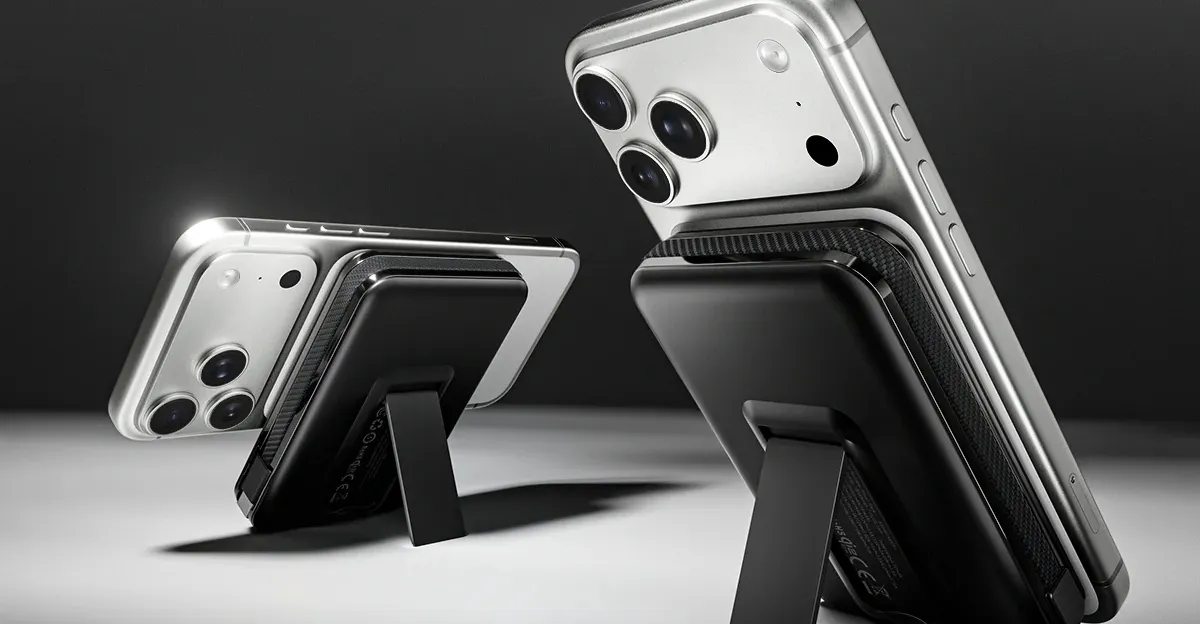
In a significant stride towards disrupting the portable power industry, Kuxiu has announced the launch of its upgraded semi-solid state power bank, the S3. Building on its innovative foundation established with the initial semi-solid electrolyte-based battery, Kuxiu’s latest offering exemplifies the pressing shift in battery technology. This groundbreaking development not only emphasizes innovation but also positions Kuxiu as a formidable challenger to traditional lithium-ion power banks, promising a future where safety, longevity, and efficiency take center stage.

The S3 model introduces a substantial doubling of capacity—now at 10,000mAh—highlighting how solid-state chemistry is evolving to meet consumer demand for high-capacity, safe, and durable portable power. With 38.5Wh, it boasts the ability to nearly double the battery life of popular smartphones, including iPhones, depending on device specifications. The incorporation of Qi2.2 certification enables wireless charging at up to 25W, signifying a push toward seamless, cable-free energy transfer. These features collectively underscore a clear trend: disruption of traditional power banks with safer, more efficient alternatives. According to industry analysts, this aligns well with Gartner’s prediction that solid-state batteries will become standard in mobile devices by the early 2030s, heralding a new era of portable energy.

Innovative Design Elements That Set the S3 Apart

The S3’s design improvements extend beyond raw capacity. Increasing the number of N52 magnets from 16 to 18 enhances magnetic coupling, reducing accidental disconnections—an often overlooked risk in portable power devices. Additionally, the integrated kickstand and on-device display streamline user experience, providing real-time remaining capacity and charging status. The built-in USB-C cable, supporting power delivery rated at 35W, offers flexible multi-device charging, exemplifying a shift toward more versatile and user-friendly hardware. Such innovations demonstrate how Kuxiu is leveraging advanced materials and smart design to amplify the practical value of portable power supplies, essentially setting new industry standards.

Business and Industry Implications

  • Disruption of the Power Bank Market: As solid-state batteries boast longer lifespan, increased safety, and higher efficiency, existing lithium-ion power banks face significant obsolescence. This shift threatens traditional manufacturers reliant on older battery chemistries, forcing a technological overhaul.
  • Opportunity for Innovation-Driven Companies: Firms embracing solid-state technology, as exemplified by Kuxiu, could capture major market segments—particularly among younger consumers seeking reliable, sleek, and eco-friendly solutions. As such, innovation becomes not only a technical priority but a strategic business imperative.
  • Potential for Broader Impact: Enhanced power backup solutions will accelerate the adoption of wireless and portable energy, impacting markets such as consumer electronics, wearables, and IoT devices. According to MIT research, these advancements could reduce reliance on traditional power sources, fostering a more sustainable and interconnected digital ecosystem.

The Road Ahead: A New Era in Portable Power

The launch of the Kuxiu S3 underscores a pivotal moment: the next wave of battery innovation is here, with solid-state solutions leading the charge. Industry giants and startups alike are racing to commercialize safer, higher-capacity, and more reliable power sources, driven by advances in materials science and smart design. Experts like Elon Musk and Peter Thiel emphasize that such innovations are critical for solving the world’s energy challenges while unlocking new market opportunities. Looking ahead, the industry must prepare for a transformative shift—one where disruption is not just inevitable, but necessary. Forward-thinking organizations that embrace these technological trends now will shape the future landscape, positioning themselves at the forefront of the portable power revolution and redefining the potential of mobile energy solutions.

Social Media Auto Publish Powered By : XYZScripts.com