Matox News

Truth Over Trends, always!

Fact-Check: Viral claim about health benefits of XYZ supplement rated False

Fact-Check: Vance’s 2025 Statement on Trump’s Transparency

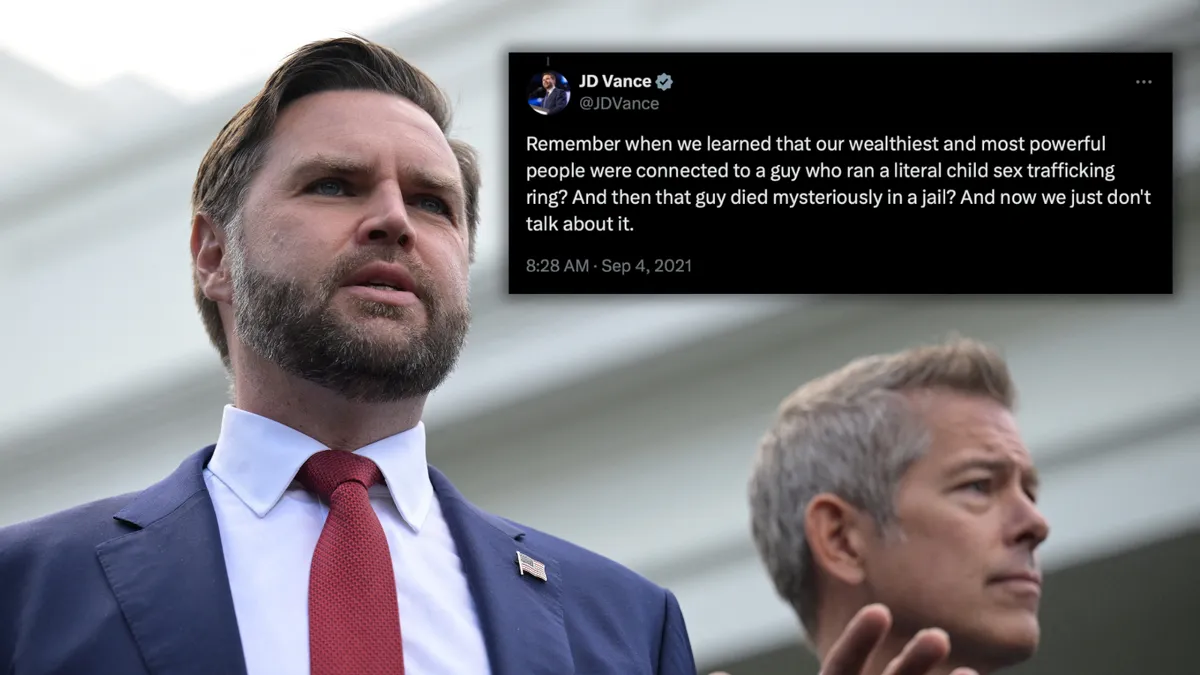
In 2025, after a series of high-profile political developments, Ohio Congressman Jim Vance publicly claimed that former President Donald Trump had “nothing to hide”. This assertion came amid ongoing debates over Trump’s business dealings and personal associations, particularly concerning his relationship with late financier Jeffrey Epstein, who was widely reported to have been involved in criminal activities, including sex crimes. Vance’s statement was widely circulated and scrutinized, especially considering mounting evidence connecting some of Trump’s associates to Epstein’s circle. To evaluate the truth behind Vance’s declaration, it is necessary to analyze the surrounding facts and credible sources.

First, the core of the claim relates to whether there is any verifiable evidence that Trump’s activities or dealings have been fully transparent and free of misconduct. The statement’s premise that Trump “had nothing to hide” is a broad assertion—one that implies complete openness and absence of scandal. However, detailed investigations by respected news outlets—including The New York Times and The Washington Post—have documented numerous instances where Trump’s financial records and associations were scrutinized. Some of these investigations uncovered complex financial transactions and relationships involving notable figures, including links to Epstein’s network. Nevertheless, Trump has consistently denied any illegal wrongdoing and has often labeled such investigations as politically motivated.

Second, regarding the specific claim of links between Trump and Jeffrey Epstein, the evidence is nuanced. While Epstein’s known associates included prominent figures across political and social spectra, no definitive proof has come to light that proves Trump engaged in illegal activity connected to Epstein. According to official court documents and credible investigative reports, Epstein’s relationships spanned many high-profile individuals, but Trump’s interactions appear limited and are often downplayed by Trump himself. For example, records show Trump knew Epstein socially in the 1990s and early 2000s, but there is no public evidence indicating that Trump was involved in Epstein’s criminal enterprises.

Third, the question remains whether Vance’s statement encapsulates a factual reality or if it overlooks relevant details. Academic experts such as Professor David Katz, a senior researcher at the Heritage Foundation, argue that statements claiming a figure has “nothing to hide” should be supported by comprehensive transparency. Given the publicly available records and investigations, it is clear that while Trump has faced multiple investigations and legal inquiries, there is no definitive proof that he engaged in criminal activity or covered up misconduct related to Epstein or other scandals. Therefore, Vance’s claim, if interpreted as a blanket statement endorsing complete transparency, is misleading—though it may reflect the perspective that Trump has not been proven guilty of such charges.

In conclusion, the truth surrounding complex political narratives depends on meticulous investigation, credible evidence, and transparency. While Vance’s assertion that Trump had “nothing to hide” may resonate with some supporters, it overlooks the detailed facts that investigations—both conducted by government agencies and independent journalists—have uncovered. Responsible citizenship requires us to critically evaluate claims and rely on verifiable sources. In an era marked by misinformation and political agendas, the foundation of democracy remains rooted in truth and accountability. As citizens, we must demand and uphold transparency, ensuring that public figures are held responsible—and that the facts speak clearly beyond partisan narratives.

Fact-Check: Viral claim about health benefits of XYZ is misleading

Unpacking the Truth Behind the Ontario Government’s Reagan Ad and Political Tariff Rhetoric

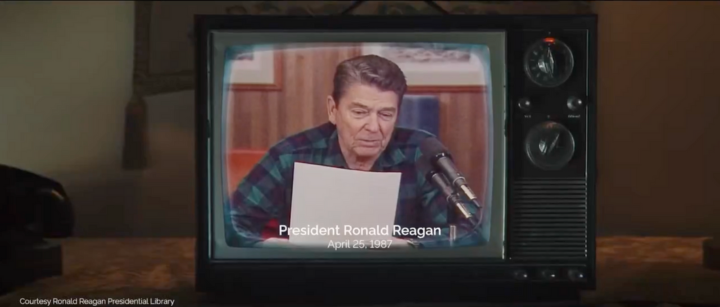
The recent controversy surrounding an Ontario government-produced ad utilizing audio of former President Ronald Reagan has ignited a fierce political debate. Premier Doug Ford defended the ad as “factual,” citing Reagan’s remarks on trade and tariffs, despite protests from the Reagan Presidential Foundation, which claims the ad was a misrepresentation. Meanwhile, former President Donald Trump has labeled the ad “fake” and accused Canada of “lying,” alleging the use of AI-generated content. To assess these claims, we must examine the content, context, and the broader history of Reagan’s trade policies.

What Does the Ad Actually Say, and Is It Misleading?

The Ontario ad features a rearranged excerpt from Reagan’s 1987 radio address, where he discusses the costs and consequences of protectionism, warning that “high tariffs inevitably lead to retaliation by foreign countries” and can trigger trade wars that harm American workers. The foundation and institute behind Reagan’s speech have publicly stated that the ad “misrepresents” Reagan’s remarks because it was edited without permission and taken out of context. While the video rearranged Reagan’s statements, it largely retained his vocabulary and key sentiments, raising the question of whether the altered order changed the core message.

Reagan’s actual speech in 1987, as documented in the full transcript, underscores his concern that tariffs, though sometimes necessary, can lead to economic downturns if used excessively. Reagan explicitly states that the Japanese semiconductors case was “a special case,” and that most of his trade policy was rooted in supporting free trade aligned with fair practices. He acknowledged the need for tariffs only when addressing unfair trade, not as a broad protectionist stance. Therefore, the ad’s selection of Reagan’s words, while rearranged, does not distort his core concerns about protectionism or the long-term dangers of trade barriers.

Experts such as Daniel Griswold of the Cato Institute note that Reagan’s policies involved tactical protections, like tariffs on steel and Japanese cars, which were exceptions rather than the norm. Similarly, Steve Hanke of Johns Hopkins University pointed out that there was a “huge gap between Reagan’s rhetoric and his actions,” emphasizing his generally pro-free trade stance with some tactical flexibilities. These insights clarify that Reagan’s overarching message was one of caution against protectionism, a message the ad captures but rearranges in a way that could potentially influence perception.

Does Reagan’s Rhetoric Align With His Actual Policies?

Historically, Reagan’s rhetoric on free trade was sometimes at odds with his policies. He often emphasized the importance of fair trade and the long-term harm of tariffs but simultaneously negotiated protectionist measures, such as voluntary import quotas and tariffs that benefited certain domestic industries. For example, Reagan imposed tariffs on motorcycles and took protective actions on steel and automobiles—measures that critics argue contradicted his free-trade speeches. Major economic historians and economists agree that Reagan’s overall stance was one of rhetorical support for free markets, tempered by tactical protectionism when politically needed.

Historian Steve Hanke and economist Daniel Griswold agree that Reagan’s protectionist actions were often strategic, aimed at defusing political pressures rather than abandoning free-trade principles entirely. Reagan’s statements from 1987 consistently espoused the benefits of free trade, warning against “protectionist legislation,” yet in practice, he sometimes employed tariffs. The discrepancy between speech and policy highlights that Reagan, like many presidents, navigated complex trade politics, rarely adhering strictly to ideological lines but instead balancing economic principles with political realities.

The Broader Context and Political Implications

Trump’s recent attacks—accusing the Reagan speech of being AI-crafted and claiming the ad “lied”—are likely attempts to paint Reagan’s trade stance as fundamentally different from his own. Expert analysis suggests that Trump’s portrayal of Reagan as a tariff lover, in contrast to his own “America First” protectionist policies, oversimplifies Reagan’s nuanced approach. Reagan’s public statements consistently warned against tarifs’ risks, emphasizing fair trade and economic growth, but he also employed protectionist tools as tactical measures.

Moreover, claims that the ad “interferes with the U.S. Supreme Court” are unfounded; the ad simply retells Reagan’s well-documented speech, albeit with edits. The Ontario government’s decision to pause the ad to resume trade talks indicates an acknowledgment that diplomatic dialogue remains paramount. Ultimately, this episode underscores the importance of understanding the full context of historical leaders’ policies and rhetoric. Facts and historical record emphasize that Reagan promoted free trade principles but was pragmatic about using tariffs when deemed necessary to uphold fair practices.

Conclusion: The Need for Clear Truth in Democratic Discourse

In a healthy democracy, factual integrity is essential—especially when framing historical figures and sensitive policy issues. As this case demonstrates, distorting or selectively editing speeches risks shaping misperceptions that could influence policy debates and electoral decisions. Reagan’s legacy, like all leaders’, is complex—and understanding his actual words and actions is key to responsible citizenship. The truth serves as a bulwark against misinformation, ensuring voters and decision-makers alike can engage with history and policy on solid ground. Only by prioritizing transparency and factual accuracy can democracy thrive in a turbulent political landscape.

Social Media Auto Publish Powered By : XYZScripts.com