Matox News

Truth Over Trends, always!

Woman sentenced to 20 years for deadly attack on Aussie surfers and American in Mexico

The recent tragic murders of three international tourists in Baja California have sent shockwaves through global communities and ignited debates on security and geopolitical stability in the region. The victims—Australian brothers Jake and Callum Robinson, aged 30 and 33, and American Jack Carter Rhoad, 30—symbolize the increasing vulnerability faced by tourists crossing international borders, especially in areas plagued by organized crime. Mexican judicial authorities announced that Ary Gisell Silva, a 23-year-old woman, received a 20-year prison sentence for her direct involvement in instigating and participating in the robbery that ultimately led to their death. This heinous crime underscores a persistent issue: how uncontrolled criminal activity in border regions threatens international security and the reputation of Mexico as a tourist destination.

The geopolitical impact of this incident extends beyond the borders of Mexico. The tragedy intensifies a broader concern among Western nations regarding safety in their citizens’ travel zones, especially in regions bordering the United States. International organizations like the United Nations Office on Drugs and Crime have long warned about the proliferation of violence and organized crime in Mexico, which often spills over into neighboring countries. Analysts suggest that such violent outbreaks not only discourage tourism but also weaken diplomatic relations, prompting governments to reconsider their travel advisories and security cooperation strategies. These developments jeopardize economic and diplomatic ties, emphasizing that violence in regions like Baja California is not just a local issue but a matter of global concern.

Recent history documents a pattern of violence, with other foreign tourists falling victim to criminal activity in Mexico’s Pacific coast regions. In 2015, a notorious attack saw two Australian surfers, Dean Lucas and Adam Coleman, murdered and later burned in Sinaloa. Such incidents serve as stark warnings that criminal enterprises have entrenched themselves deeply within parts of Mexico, intentionally targeting tourists to promote fear and chaos. International observers argue that these recurring tragedies expose underlying geopolitical vulnerabilities and demand urgent action. International organizations and security analysts warn that unchecked violence fuels instability, with ramifications that could reverberate globally if coordinated efforts are not prioritized.

As authorities aim to bring justice for the victims, the broader challenge remains: protecting life and restoring confidence in regions marred by crime. The Mexican government faces mounting pressure to clamp down on organized crime and demonstrate its commitment to safety, not only for its citizens but for international visitors whose livelihoods and families depend on secure borders. Meanwhile, the incident underscores the importance of a strategic reassessment by global actors, emphasizing cooperation and intelligence-sharing to combat transnational criminal networks. The unfolding story leaves us pondering whether the tide can truly be turned or if this is only the beginning of a darker chapter that will reshape how nations view security and sovereignty in the 21st century. Ultimately, the weight of history presses heavily on the collective conscience, reminding us that the choices made today will profoundly influence the safety and stability of future generations.


First in 320 Years: Lost Pieces Make Historic Return

Historical Discovery Reshapes the Legacy of Johann Sebastian Bach

In an extraordinary revelation that transcends centuries, two previously unknown organ compositions by Johann Sebastian Bach have been unveiled in Germany for the first time in over 320 years. This discovery has not only thrilled music historians and enthusiasts worldwide but also holds significant geopolitical impact by reaffirming Germany’s stature as the cradle of classical Western music. These works—titled Chaconne in D minor BWV 1178 and Chaconne in G minor BWV 1179—were first identified in 1992 during a cataloging effort by researcher Peter Wollny, who, after three decades of investigation, confirmed their authenticity.

The pieces were hidden within the archives of the Royal Library of Belgium, their untitled and unsigned status cloaking them in mystery. As historians and analysts study their stylistic nuances, it is clear they echo Bach’s early composition style, likely created during his tenure as an organ teacher in Thuringia, around 1705. The confirmation that they were written by Bach raises profound questions about the scope of his earlier catalog of works and the artistic mysteries still lurking beneath historical obscurities. Such revelations bolster Germany’s cultural prominence, drawing renewed global attention to its musical heritage amidst contemporary geopolitical tensions.

Global Significance of the Discovery and Cultural Legacy

Performed at the St Thomas Church in Leipzig—an enduring monument to Bach’s legacy—these works were brought to life for audiences thanks to the masterful Dutch organist Ton Koopman. His rendition illuminated the high artistry of these compositions, described as “of a very high quality” and adaptable to smaller organs—making them accessible for both historical and modern performances. The unveiling of these works is not merely a local achievement but a cultural milestone, acknowledged by Germany’s Cultural Minister, Wolfram Weimer, who called it a “great moment for the world of music.”

Many international scholars—including the Bach Archive in Leipzig—have underscored the unique stylistic characteristics that distinguish these works from Bach’s other compositions.

  • They underscore Bach’s evolving compositional techniques during his early years—an era little understood until now.
  • They also offer new insights into the pedagogical environment of Bach’s youth, shedding light on the influence of his pupils, such as Salomon Günther John.

Furthermore, the discovery serves as a stark reminder of how intertwined the cultural heritage of Germany is with its broader national identity, especially amidst threats to global stability. As international organizations warn of ongoing geopolitical shifts, the continued preservation and celebration of classical traditions serve as anchors of cultural resilience. Historians warn that such heritage, if lost or overlooked, diminishes the collective memory of a civilization.

Unfolding Threads of History in a World on the Brink

As the world watches these revelations unfold, one must consider how such discoveries animate the ongoing narrative of history—reminding us that the past is never truly dead but constantly evolving. The uncertainties of international diplomacy and the shifting alliances threaten to reshape the geopolitical landscape, yet cultural achievements like this echo across nations, reinforcing the enduring power of shared human achievement.

Indeed, as the legacy of Johann Sebastian Bach continues to influence generations, today’s societies find themselves at a crossroads—where decisions made in quiet archives or sunlit concert halls can echo through history’s halls. The unfolding story of these newly discovered works is a testament to our perpetual search for understanding and the unyielding resilience of cultural identity amidst the chaos of global politics. It is a poignant reminder that, in the shadows of conflict and upheaval, the timeless melodies and the stories they carry still have the power to shape the future—a future still being written, note by note, in the grand symphony of history.

Germany moves toward conscription amid EU’s strongest army push in years

Germany’s Strategic Shift: Reintroducing Conscription in the Face of Rising Threats

In a decisive move emblematic of its shifting geopolitical posture, Germany has announced a comprehensive overhaul of its military policy, aiming to bolster its defenses and position itself as Europe’s most potent conventional force. After months of political debate and strategic recalibration, Berlin committed to reintroduce voluntary military service, starting with a mandatory assessment phase for 18-year-olds. From 2027, all eligible men will also undergo medical screenings, signaling a clear intention to expand the Bundeswehr’s active troop strength to between 255,000 and 260,000 over the next decade. This development underscores a broader realization within the German establishment: the continent’s peace cannot be taken for granted, especially with the evolving specter of conflict in Eastern Europe.

Underlying Drivers: The Geopolitical Chessboard

  • Earlier this year, German Defense Minister Boris Pistorius emphasized that there was “no cause for concern” despite the escalation of military readiness, yet international experts remain skeptical. Analyses from NATO allies warn that Russia could launch an attack within the next four years, according to top military officials like Gen Carsten Breuer. This stark warning has prompted Berlin’s ambitious drive to deepen its military capabilities, aligned with President Friedrich Merz’s assertion that “whatever it takes” is now the rule for German defense—an unprecedented stance considering Germany’s Cold War-era reluctance to show military might.
  • In tandem, Rheinmetall, Germany’s flagship defense firm, forecasts that the country’s goal to establish Europe’s strongest army is achievable within five years, largely due to soaring demand for military technology, ammunition, and satellite capabilities—driven by the ongoing crisis in Ukraine. Its CEO, Armin Papperger, highlights a rapidly expanding market for military hardware, fueled by rearmament initiatives across NATO nations, many of which have faced increased pressure from the White House to raise defense spending. Such moves not only reshape Europe’s military balance but also position Germany as a critical player in the new era of hybrid warfare.

Societal Reactions and Consequences

However, strong societal currents oppose these reforms. Surveys suggest that while a slight majority of Germans support a reintroduction of military service, opposition among young adults is significant. A recent Forsa poll indicates that 63% of 18- to 29-year-olds oppose compulsory conscription, citing fears of war and a desire for peace. Students like Jimi voice profound reservations: “I don’t want to go to war because I don’t want to die or be shot at,” he explains, reflecting a deep-rooted aversion to violence. Conversely, young recruits like Jason see the military as a means to defend democracy and impose a deterrent effect on potential adversaries, illustrating a divided societal stance that could shape Germany’s future security policies.

Impacts Beyond Germany: A New Geopolitical Arena

The decision to ramp up military strength in Germany resonates far beyond its borders, significantly affecting the European security landscape and altering the fabric of international relations. With NATO’s adversarial dialogue sharpening and Russian territorial ambitions expanding, Germany’s military revival acts as a key strategic pivot—balancing the scales of power among Western alliances and potentially igniting a new arms race on the continent. Historically cautious and post-Cold War reluctant to display its military power, Berlin now faces a pivotal moment in history—one where the choices made today will echo through generations as the continent trembles on the edge of an uncertain future.

As historians and analysts observe, the unfolding trajectory of Germany’s rearmament reflects a broader truth: in a geopolitical chess game dominated by shifting alliances, emerging threats, and the enduring legacy of past conflicts, the decisions made now could determine the course of 21st-century history. Will Europe see peace restored, or will the shadows of conflict lengthen anew? Only time will tell, but the weight of history presses relentlessly forward as nations grapple with the dawn of a new dangerous era.

Turkey calls for over 2,000 years in prison for Istanbul’s popular Mayor Imamoglu

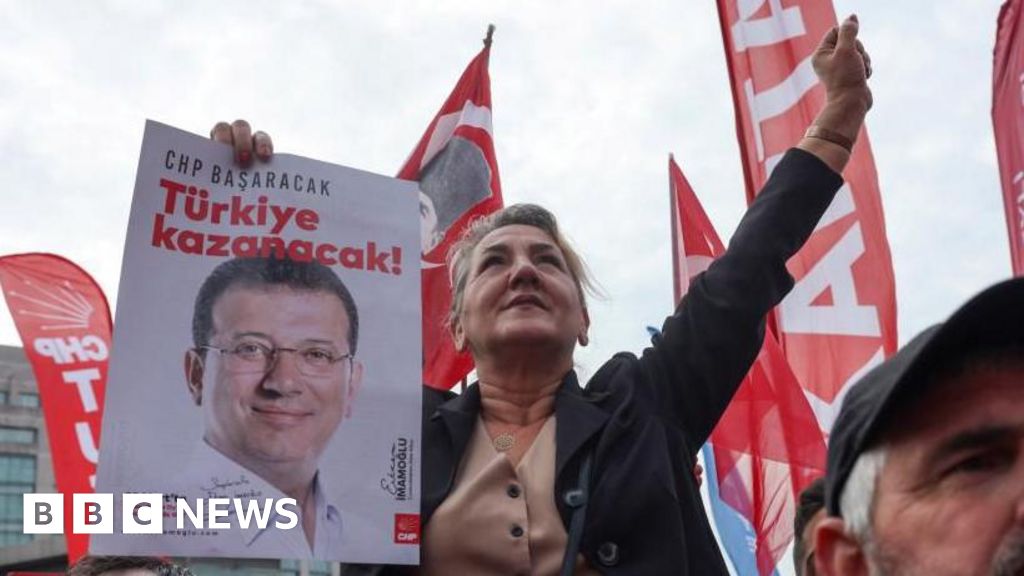
In a move that has sent shockwaves through Turkey’s political landscape, the mayor of Istanbul, Ekrem Imamoglu, faces a barrage of serious charges that threaten to reshape the nation’s trajectory. The prosecutor’s office in Istanbul has leveled accusations of 142 counts of corruption, bribery, and money laundering, claiming that Imamoglu was at the helm of a sprawling criminal network. Such allegations, if proven, could lead to a combined jail sentence exceeding 2,400 years — a staggering figure that underscores the gravity of what some analysts are calling an attempt to quash Turkey’s most prominent opposition figure.

The charges against Imamoglu, who achieved national prominence by defeating President Recep Tayyip Erdogan’s allies in the 2019 mayoral race and securing a landslide victory in April 2024, are widely viewed as a politically motivated crackdown. His supporters and opposition leaders alike argue that this move is aimed at dismantling the secular CHP’s strongest presidential contender for 2028. The Turkish government denies political bias, insisting that the judiciary operates independently and that these prosecutions are based on concrete evidence of corruption. Yet, many international observers, including analysts from the European Union and human rights watchdogs, see this as part of a broader pattern of eroding judicial independence under Erdogan’s increasingly authoritarian rule.

What makes Imamoglu’s case particularly significant is how it exemplifies the *turning point* in Turkey’s domestic politics — a nation increasingly polarized, with political rivals retreating into entrenched factions. Imamoglu, a figure representing secularism and democratic principles, has articulated a vision of reform that resonates with millions of Turks weary of authoritarian overreach. His detention, coupled with accusations of espionage, forging documents, and engaging in a criminal conspiracy, frames a critical geopolitical impact: Turkey’s internal political turmoil could ripple outward, unsettling regional stability and complicating its relations with Western allies. As society watches, the President’s supporters argue that this is a necessary step to root out deep-seated corruption, while opponents warn of the rise of a political witch-hunt disguised as justice.

Historically, such tactics — where judiciary processes are weaponized against opposition leaders — have been observed in other regimes transitioning from democratic ideals towards authoritarian consolidation. The United Nations and European Union have both expressed cautious concern over the increasing politicization of Turkey’s judiciary. Meanwhile, regional powers such as Greece and Europe are keenly monitoring the unfolding crisis, aware that Turkey’s internal stability directly influences broader geopolitical fluidity, especially in the context of conflicts in the Middle East and NATO dynamics.

As Imamoglu faces what many see as an orchestrated attempt to eliminate the opposition, the future of Turkey’s democracy hangs in the balance. His case has ignited protests across Istanbul and beyond, underscoring a profound societal divide. The decision of the courts next will forever shape the historical narrative of the nation: whether Turkey will regain its democratic footing or spiral further into a dangerous era of political repression. With history’s pen poised on the edge of a new chapter, the world remains watchful — for in Turkey’s fate lies a commentary on the resilience of democracy itself. The echoes of this tumult are sure to resonate, leaving a legacy that future generations will scrutinize — a story still being written with every bold step and every heavy silence in the corridors of power.

Black Musical Theater: Celebrating 200 Years of Cultural Resilience and Innovation

In the great tapestry of human civilization, culture functions as both the mirror of our collective identity and the canvas upon which we project our future aspirations. On the cusp of pivotal moments in history, artists and cultural pioneers have often assumed the mantle of societal architects, shaping and reflecting the values, struggles, and triumphs of their epoch. The founding of Amas Musical Theater in 1968 by LeLaine LeNoire exemplifies this parallel—it was not merely an act of artistic enterprise but a declarative stance on the importance of cultural diversity and representation in American society. Her initiative, infused with purpose, sought to elevate multiethnic casting, thereby enriching the cultural dialogue and affirming the integral role of identity within the American narrative.

Much like the Greeks of ancient times, who consecrated myth and drama as essential facets of civic life, modern cultural innovators understand that the arts serve as repositories of memory and beacons of prophecy. The success of productions like “Mama, I Want to Sing!” and “Bubbling Brown Sugar” signals a turning point—a recognition that authentic stories rooted in diverse experiences contribute to the moral and aesthetic fabric of society. These works, born amidst tumultuous social change, echo the timeless insight of thinkers like G.K. Chesterton: that tradition, which preserves the best of our collective past, must evolve to include the voices previously marginalized. In this context, cultural renaissance is intertwined with the assertion of rightful identity, a vital act of cultural self-preservation amid an ever-changing world.

The importance of such cultural endeavors extends beyond entertainment; they forge a profound connection between society’s fabric and the individuals anchoring it. A nation’s cultural output, as Tocqueville observed, reveals the undercurrents of its democracy, exposing the virtues and flaws woven into its institutions. In this regard, Amas Musical Theater and similar initiatives symbolize a democratization of culture—a recognition that art is not just a luxury, but a vital expression of societal sovereignty. They remind us that by celebrating roots and forging new traditions, society cultivates resilience and continuity, allowing forgotten histories to reemerge and guiding humanity towards a future mindful of its heritage.

Ultimately, culture emerges as both memory and prophecy: a living archive charting the human journey and a visionary force shaping what is yet to come. As the poet T.S. Eliot might have suggested, in our pursuit of harmony between past and future, we discover “the still point of the turning world”—a place where the echoes of tradition inform the aspirations of tomorrow. Our shared cultural history is a testament to our resilience, an ongoing dialogue that sustains not merely individual identities but the spirit of civilization itself. To engage with this heritage is to participate in a sacred act of rebirth, forging a path where the memory of yesterday guides the prophecy of tomorrow, reflecting the eternal human endeavor to find meaning and coherence amid chaos.

Rising Stars Ignite Passion at This Year’s Youth Sports Championships

Fernando Mendoza Leads the Pack in 2026 NFL Draft Projections

As the anticipation for the 2026 NFL Draft intensifies, front-office executives and scouts are already analyzing potential first-round talents. In a recent poll conducted among 25 NFL scouts and executives, Indiana’s Fernando Mendoza has emerged as the frontrunner for the position of first quarterback selected. Mendoza garnered an impressive 13 votes, placing him significantly ahead of notable prospects such as Oregon’s Dante Moore, who received 6 votes, and Alabama’s Ty Simpson, with 3 votes.

Mendoza’s standout performance for the Indiana Hoosiers has elevated him into the national spotlight. Notably, he has demonstrated a remarkable ability to make split-second decisions and a versatile skill set that allows him to evade pressure while showcasing accuracy downfield. Commentators are noting that his athleticism, coupled with a keen football IQ, could make him a valuable asset in the NFL. As one scout emphasized, “Mendoza has a rare combination of size and ability that sets him apart from his peers.”

  • Fernando Mendoza: 13 votes, showcasing prolific passing and mobility.
  • Dante Moore: 6 votes, noted for his exceptional potential but facing scrutiny over consistency.
  • Ty Simpson: 3 votes, displaying flashes of brilliance but needing further development.

With the college football season still underway, Mendoza’s position may face challenges as other prospects continue to gain traction. Coaches across the nation are analyzing each game, with special attention from their NFL counterparts who are keenly watching for any game-changing performances. As the draft approaches, expect to see heated competition as quarterbacks strive to elevate their stocks. A prominent coach remarked, “We’re just scratching the surface of what these young athletes can bring to the table.”

Ultimately, while the statistics and rankings deliver a palpable excitement, the essence of sports transcends mere numbers. It symbolizes community, perseverance, and hope for the future. The journey of each athlete, like that of Fernando Mendoza, weaves a narrative much larger than a scoreboard victory. It unites fans and communities, fostering a shared passion that resonates through the ages, reminding us that in the world of sports, every game holds the potential for greatness — both on and off the field.

Source link

Lindsay Sandiford Returned Home After 12 Years on Indonesian Death Row

In a dramatic turn of events that underscores the complex interplay of justice, diplomacy, and international influence, Britain successfully repatriated Lindsay Sandiford, a grandmother who had spent over a decade on Indonesia’s death row for drug trafficking. This case exemplifies how weaker nations, often under international pressure, are increasingly compelled to grant clemency in high-profile scenarios involving foreign nationals. Sandiford’s release—closely tied to a bilateral deal between the UK and Indonesia—sheds light on the broader geopolitical impact of terms that seem to prioritize diplomatic relations over strict adherence to stringent national laws.

Indonesia’s stance on drug enforcement remains one of the world’s most severe, with harsh penalties including the death penalty for traffickers handling significant quantities of narcotics. Yet, recent months have shown a palpable shift. The release of the *”Bali Nine”* members—after nearly 20 years—alongside the *repatriation of Filipina Mary Jane Veloso* who narrowly escaped execution, signals a nuanced approach driven by international pressure and diplomatic negotiations, rather than a softening of Indonesia’s tough-on-drugs posture. Analysts note that these actions serve to protect Indonesia’s international image while balancing domestic law enforcement needs, thus highlighting the geopolitical impact of maintaining sovereignty while managing external diplomatic expectations.

The decision by Jakarta to release Sandiford and Shahabadi, citing “humanitarian grounds”, echoes a broader pattern observed by international observers, including global institutions and renowned historians who analyze the strategic calculus behind Indonesian drug policies. Many agree that Indonesia’s tough stance acts as a double-edged sword—deterring trafficking while risking diplomatic fallout. Decisions like these influence local and international perceptions—often forcing nations into a moral and diplomatic balancing act. Countries such as the UK leverage their diplomatic influence to negotiate softer penalties, emphasizing the growing importance of soft power in conflicts that once would have been seen as solely domestic issues.

As the weight of these decisions unfolds on the global stage, the geopolitical impact continues to grow. The withdrawal of the *”Bali Nine”* and the release of Veloso demonstrate that international cooperation—often fraught with tension—can lead to outcomes that challenge the notion of absolute sovereignty. These shifts signal a new era where national laws are increasingly intertwined with the diplomatic interests of global powers. And as history beckons to be written anew, the world watches with bated breath—knowing that the next chapter in Indonesia’s unrelenting war on drugs could either bolster its formidable reputation or expose fissures that threaten its diplomatic standing, all while the sands of history continue to shift beneath the feet of nations vying for influence in this turbulent, interconnected world.

Reeves Blames Years of Economic Mismanagement as UK Prepares for Tax Hikes

Turning Point in Western Power Dynamics: The UK’s Reckoning and Its Global Ripples

In a climate of mounting geopolitical tension, Britain is standing at a crossroads marked by profound economic and political reckoning. Recent statements by Rachel Reeves, the UK’s Chancellor, reveal a nation grappling with the legacy of years of economic mismanagement—a crucial factor shaping its international posture. As Reeves signals forthcoming tax hikes and potential breaches of long-standing promises, analysts and international organizations are watching closely, recognizing that what happens within the confines of Westminster could shift the balance of global influence.

The core of this transformation lies in the deepening economic crisis, which current and former authorities have attributed to decades of neglect and miscalculated policies. According to reports from the Resolution Foundation, a prominent think tank, the UK’s public finances will require austerity measures amounting to £31 billion, with tax rises expected to be a cornerstone. Such fiscal tightening, coinciding with ongoing global uncertainties, threatens to weaken Britain’s already fragile post-Brexit economy, with potential reverberations across European markets and the transatlantic alliance. Historians like Niall Ferguson warn that these fiscal policies, if mishandled, could usher in a new era of decline for Britain’s global standing, akin to the economic crises of the 1970s.

Furthermore, in the context of international security, Reeves’ acknowledgment of increased defense spending signals that the UK remains committed to its traditional role as a global security partner, despite internal challenges. However, this dual emphasis on fiscal austerity and strategic strength remains a delicate balancing act. America’s NATO allies are expected to reassess their commitments, especially as the US pivots toward the Indo-Pacific and faces its internal political upheavals. The UK’s decision to prioritize defense spending amidst economic turbulence underscores a broader geopolitical calculus: maintaining influence on the world stage while facing internal economic headwinds.

Adding to the geopolitical complexity is the looming threat of economic contagion—a contagion that international bodies like the International Monetary Fund warn could spiral into a broader crisis if fiscal discipline falters or if market confidence erodes further. The UK’s internal political trajectory also influences prospects for cooperation or conflict with European Union partners, especially as domestic promises for social welfare reforms clash with the austerity signals from Reeves’ upcoming budget—a potential breach of electoral commitments that could fuel social unrest and destabilize regional stability.

The unfolding narrative stands as a stark reminder: within the corridors of Westminster, decisive policies are not just local issues—they are the measures by which the global economy and security order are calibrated. As history continues to write itself, no one knows whether Britain’s leaders will forge a resilient path of recovery or succumb to the tide of decline. With each move, the weight of history presses heavier, shaping a future that is still unsettled and uncertain, amid the loud echoes of a nation caught in the relentless tide of change.

Trump Announces US to Resume Nuclear Tests After 30 Years

U.S. Reverses Nuclear Testing Moratorium Amid Rising Global Tensions

In a move that has sent shockwaves through the international community, President Donald Trump has announced the resumption of nuclear weapons testing, marking a stark departure from decades of U.S. policy aimed at nuclear non-proliferation. Just ahead of crucial diplomatic interactions with Chinese President Xi Jinping, Trump publicly declared that the United States would initiate testing “on an equal basis” with countries like Russia and China. This shift reflects mounting concerns over the rapidly evolving geostrategic landscape, where nuclear capabilities are increasingly seen as essential leverage and deterrence in a world marred by conflicts and technological advancements.

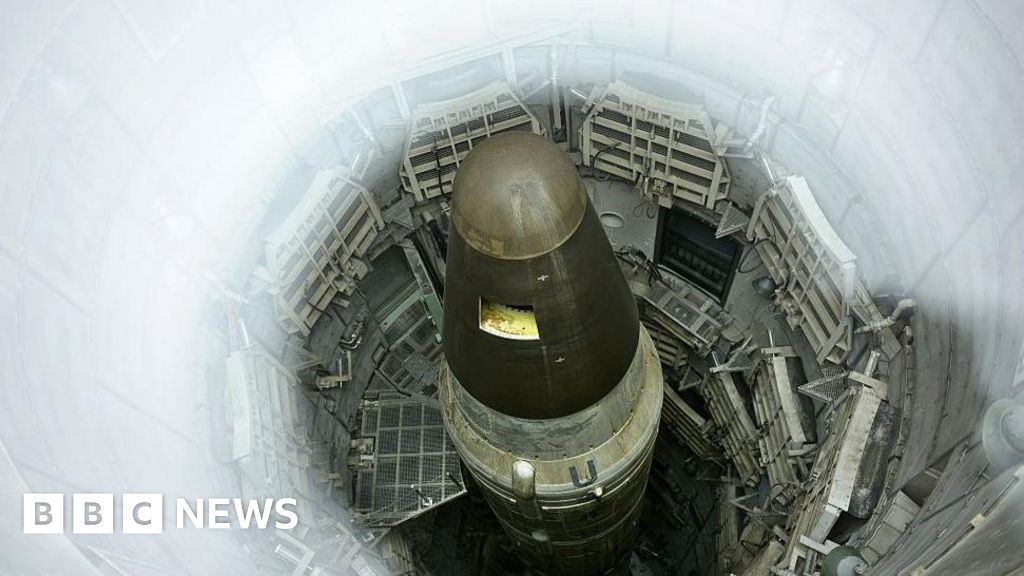
The decision to restart U.S. nuclear testing has notable geopolitical impact. Historically, the U.S. and Russia have maintained a delicate balance of nuclear arsenals, with recent estimates revealing Russia’s stockpile at approximately 5,580 warheads—more than the U.S.’s slightly lower count of about 5,225, according to the Federation of American Scientists (FAS). Meanwhile, China has dramatically increased its arsenal, reaching around 600 warheads and projected to exceed 1,000 by 2030, as per analysts from the Center for Strategic and International Studies (CSIS). By announcing a return to nuclear testing, the U.S. appears to be signaling a readiness to escalate the arms race, a move that critics warn could undermine the existing nuclear treaties and fuel further instability.

It’s worth noting that, since the last U.S. nuclear test in 1992, the international community has largely adhered to a moratorium on testing, reinforced by treaties such as the Comprehensive Nuclear-Test-Ban Treaty (CTBT). The recent Russian testing of advanced missile systems and the development of nuclear-capable underwater drones, like the Poseidon, showcase a new era of nuclear brinksmanship where technological innovation compounds strategic threats. The decision by the Trump administration, coupled with Russia’s own tests of new weaponry, may ignite a chain reaction of destabilizing responses among nuclear-armed nations. International agencies, including the United Nations and global disarmament advocates, have warned that a resumption of testing could jeopardize the nuclear non-proliferation regime, risking a future where nuclear conflict becomes more likely rather than less.

Leading historians and international analysts emphasize the gravity of this shift. For example, Dr. Hal Brands, a notable security expert, cautions that restoring a testing program could mark *”the end of the post-Cold War era of strategic stability”* and escalate the risk of nuclear proliferation among emerging powers. Meanwhile, opposition figures in Congress and advocacy groups have voiced fears over the revival of nuclear tests, arguing that this could “trigger a dangerous arms race” and undermine decades of diplomatic progress. The strategic calculus now moves perilously close to a precipice, with the future of global stability hanging in the balance. As the world watches, it remains uncertain whether diplomacy can contain this dangerous flashpoint, or if history will be rewritten in fire and radiation—an ominous testament to the fragile balance of peace and chaos that has defined the nuclear age.

Bella Culley's Georgia Drug Smuggling Sentence Cut to 2 Years
Bella Culley’s Georgia Drug Smuggling Sentence Cut to 2 Years

In a case that captures the attention of the international community, the trial of Bella Culley, a 19-year-old British national, underscores the complex and often controversial legal and geopolitical realities facing nations like Georgia. The recent plea bargain—where Culley’s family transferred a monumental £137,000 to reduce her potential sentence—spotlights not only the individual tragedy but also how deeply international relationships are intertwined with the country’s harsh stance on drugs. As Georgia enforces some of the world’s toughest drug laws—resolving over 90% of such crimes through plea bargaining—the case raises critical questions about sovereignty, justice, and the influence of foreign powers.

This incident is more than a simple criminal case; it embodies how nations assert sovereignty through strict law enforcement. Georgia, transitioning from a Soviet republic to an independent nation, has made a deliberate choice to adopt uncompromising drug policies. Experts like international legal analysts claim that such rigidity is rooted in both societal values and the geopolitical need to project strength in the region. The fact that Culley’s family opted to pay a sizeable sum to shorten her sentence underlines the power struggle between legal sovereignty and foreign influence. Historically, Western critics have condemned Georgia’s drug laws, yet they often overlook the government’s intent to establish a zero-tolerance stance as part of its broader strategy to affirm independence and resist external pressures.

The geopolitical impact of such cases extends beyond individual outcomes. As <Georgia’s government emphasizes strict law enforcement, it simultaneously sends a message to Russia, China, and even Western powers: that it remains committed to establishing a sovereign legal order, unbowed by external influences. Some analysts warn that this approach could intensify regional tensions, especially amid ongoing conflicts and the shifting alliances of the Black Sea and Caucasus regions. International organizations like the United Nations and European Union have offered varied responses—some advocating for diplomatic negotiations, others warning of potential human rights abuses. The case also raises questions about the societal impacts within Georgia—not least whether the country’s aggressive stance on drugs fosters an environment of fear rather than reform.

As history continues to unfold in these shadowy legal corridors, the case of Bella Culley becomes a symbol of the broader geopolitical chess game. With her pregnant condition adding a layer of humanitarian concern, her fate is intertwined with how Georgia balances justice, sovereignty, and international diplomacy. The story warns us that each decision made within these courts contributes to a larger narrative—where the struggle for national independence often manifests in the severity of law, and where the weight of history is poised to tip the scales of justice in ways that will resonate across borders for generations to come.

Social Media Auto Publish Powered By : XYZScripts.com