Matox News

Truth Over Trends, always!

Alaska Communities Face Years of Struggle After Devastating Storm

The recent devastating storm in Alaska exemplifies the escalating toll of climate-related disasters and highlights the precarious balance between national preparedness and federal support. The storm, fueled by the remnants of Typhoon Halong, battered remote communities, leaving over 1,500 residents displaced, human casualties, and extensive infrastructural destruction. Local officials, including Senator Lisa Murkowski and Governor Mike Dunleavy, have issued stark warnings about the prolonged recovery process, with Dunleavy predicting it could take up to 18 months for many communities to restore basic livelihoods. Their appeals for urgent federal aid underscore the critical geopolitical issue that arises when a nation faces natural calamities that outstrip regional capabilities.

This crisis not only exposes the vulnerability of Alaska—a state already at the forefront of climate change’s tangible impacts—but also sparks a broader conversation about how the United States manages its resources and its strategic role in disaster response. The decision by the Trump administration to cancel a $20 million EPA grant aimed at coastal erosion and flood prevention in Kipnuk in May raised eyebrows, especially as climate experts warn of increased storm intensity and rising sea levels. Critics argue such cuts reflect a dangerous underestimation of the threat, highlighting a pattern where fiscal austerity and political ideology often undermine preparedness. An international analysis by think tanks underscores that climate-related disasters like this do not respect borders and signify a geopolitical challenge that demands sustained, proactive intervention more than reactive measures.

Moreover, the incident in Alaska reverberates beyond local borders, pressing into international terrain as global climate policies and U.S.-China rivalry on environmental issues come into play. While the Biden administration has signaled a renewed focus on climate resilience, critics argue that actual policy shifts lag behind the rhetoric, leaving vulnerable regions exposed. As United Nations-backed organizations and climate analysts warn of escalation, the importance of strategic alliances and technological innovation in disaster mitigation becomes undeniable. How the most powerful nation in the world responds to natural crises now will shape geopolitical stability for decades—whether it emerges as a leader in resilience or retreats into neglect.

This ongoing saga reminds us that climate disasters are intertwined with geopolitical uncertainties and societal resilience. As winter looms and Alaska struggles to rebuild amidst limited transportation and broadband connectivity, the weight of history presses heavily—signaling that decisions taken today will echo through generations. Will this moment serve as a wake-up call, prompting renewed commitment and strategic foresight? Or will it be just another chapter in the slow unraveling of governance amid global crises? The Earth’s climate and geopolitical landscapes are shifting rapidly, and the world watches keenly as the pages of this unfolding story are written with the stakes of all humanity in mind.

Replit’s Breakthrough After 9 Years — Can They Sustain the Momentum?

Replit Surges with $250M Funding, Disrupting the Coding Ecosystem

In a remarkable display of innovation and strategic agility, Replit, a Bay Area-based startup specializing in cloud-based coding environments, announced its latest funding round of $250 million, led by Prysm Capital. This influx of capital comes on the heels of a staggering growth trajectory — revenues skyrocketed from a modest $2.8 million last year to an impressive $150 million annually, demonstrating how technological disruption can reshape market landscapes when combined with bold vision. Such achievements underscore the increasing dominance of AI-driven tools in the software development space, signaling a fundamental shift that could redefine how programming is approached worldwide.

Integrating tremendous resilience and disruptive innovation, Masad‘s team has transformed a previously stagnant platform into a leader for non-technical users. The company’s strategic pivot away from professional developers, focusing instead on enabling everyday knowledge workers, represents a novel market shift that challenges longstanding industry assumptions. The launch of Replit Agent, hailed as “the world’s first agent-based coding experience,” exemplifies this disruptive approach. This AI-driven tool can not only write code but also debug, deploy, and provision databases, effectively acting as a full-fledged software engineering partner. Such capabilities threaten to democratize programming, lowering barriers and fostering a new wave of innovation driven by mass adoption.

Market analysts like those from Gartner highlight that this evolution could serve as a catalyst for industry-wide dislocation. Replit’s positioning at #3 in Andreessen Horowitz’s recent AI spending report — outranking traditional development tools — signals a shift in where startups and enterprises are channeling their AI budgets. Meanwhile, the company’s focus on securing a $350 million war chest and its deliberate capital efficiency underscore a strategic readiness to scale aggressively, acquire niche companies, and push forward with vertical agent automation. These moves could consolidate Replit’s technological moat, while highlighting the importance of disruption-driven business models that prioritize accessible, user-centric innovation.

Nonetheless, Replit’s journey has not been without hurdles. The incident involving an AI agent mistakenly deleting a CEO’s production database in July exemplifies the potential pitfalls of rapid AI deployment. Venture capitalist Jason Lemkin publicly condemned the safety failures, reminding the industry of the inherent risks in AI-driven decision-making. Yet, Masad considers these setbacks as necessary for establishing a technology moat—a hard-earned advantage in a competitive and evolving landscape. With this incident prompting even more focus on safety and security, Replit’s ability to overcome these challenges will be critical for maintaining its disruptive edge in a future where AI-powered programming becomes ubiquitous.

Looking ahead, Replit’s trajectory exemplifies both potential and urgency. As startups and giants alike race to embed AI into the core of software development, those who innovate boldly—like Replit—may soon dominate the industry, forcing traditional players to rethink how they operate. The coming years will likely see an acceleration of agent-based automation and a transition toward mass-market programming—a transformation that could redefine the very essence of digital creation. For entrepreneurs and investors alike, understanding and capitalizing on this wave of technological disruption will be the key to staying ahead in a fiercely competitive, ever-advancing tech landscape. The future belongs to those who act swiftly and decisively, leveraging innovation to forge industries anew.

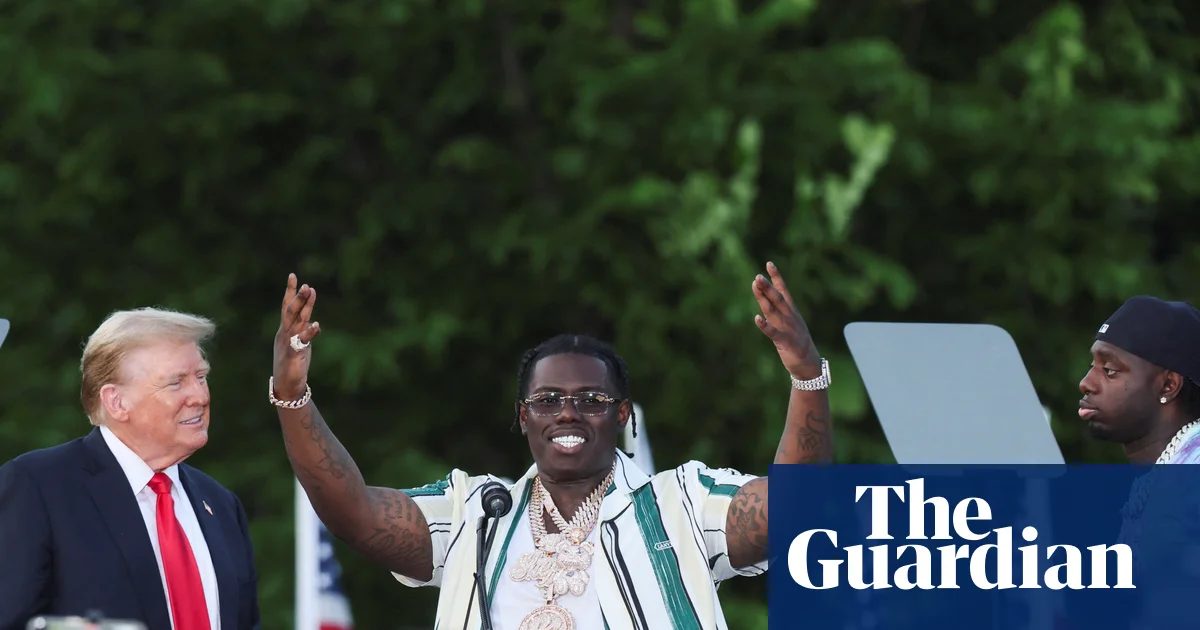
Hip-Hop Artist Who Campaigned with Trump Sentenced to Five Years for Attempted Murder

In an era where culture is often reduced to mere entertainment or fleeting trends, the recent legal downfall of Brooklyn rapper Sheff G reminds us that beneath the beats and viral videos lies a profound reflection of societal currents—a mirror to the values and challenges shaping our communities. Once celebrated as a rising star with millions of streams and YouTube views, Michael Williams—the man behind the stage name—demonstrated how the identity of modern youth can be both a source of pride and, tragically, a vessel for destructive pursuits. His plea deal and subsequent imprisonment underscore a vital truth: culture, when corrupted by violence and gang allegiances, becomes an obstacle to genuine progress rather than a catalyst for it.

Throughout history, cultural figures have wielded influence not just as entertainers but as symbols of broader societal struggles. The movement of jazz, the rebellious spirit of rock ‘n’ roll, or the poetic defiance of Gunnar Björling or T.S. Eliot all attest to the power of art to elevate or question the fabric of society. Yet, when that influence is exploited to glamorize criminality—such as Sheff G’s role in allegedly fueling gang violence—it becomes a distortion of this cultural legacy. Prosecutors have detailed how the rapper used his earnings not to uplift his community but to fund a cycle of fear and violence in Brooklyn’s streets. The indictment of more than thirty gang members, including alleged acts of attempted murder and drug trafficking, is a sobering reminder that culture without moral direction risks descending into chaos, promising nothing but its own eventual collapse.

This tragic convergence of art, violence, and shame echoes American philosopher Alexis de Tocqueville’s warning about the fragile nature of democratic societies: a culture that allows the degradation of moral fabric weakens the foundations of civil order. The fact that figures like Sleepy Hallow—another rapper who appeared alongside Sheff G during a political rally—also received punishment for conspiracy points to a broader societal challenge. It is not simply about individual culpability but about the systemic failure to harness creative energy in a manner that fosters tradition, respect, and societal cohesion. As Chesterton observed, “The true soldier fights not because he hates what is in front of him, but because he loves what is behind him”—a reminder that culture rooted in heredity and shared values must serve as the bulwark of society against nihilism.

The politicization of cultural icons, particularly in the context of President Trump’s rallies and campaigns, illustrates how deep-seated is the desire for authentic symbols that embody strength and tradition in a fractured society. Yet, the infiltration of violence and criminality into these representations diminishes their potential as patriotic or unifying forces. The critical task lies in reclaiming the cultural narrative—affirming that culture is both memory and prophecy, an ongoing dialogue between the past and the future. As T.S. Eliot posited, “The past (must) be altered by the future,” but it cannot be erased. Culture’s true power resides in its capacity to ground us in memory while inspiring us to forge a nobler destiny, one rooted in virtue rather than vice.

In reflecting upon these events, we are reminded that society’s true strength lies in the shared heritage of tradition and the moral compass it provides. Culture is never mere spectacle; it is the memory of human striving, a prophecy of where we are headed. To preserve this sacred continuity, we must guard against the corrosive influences that threaten to turn our creative energies into chaos. The story of Sheff G and his companions is more than a cautionary tale—it’s a call to recognize that when culture is rooted in virtue, it becomes an enduring beacon for generations to come, transforming fleeting fame into a testament of enduring human worth. And in this light, our collective future is a poetic unfolding—an eternal work in progress, written by the choices of those who cherish their roots and dream beyond the horizon.

Dress to impress: London’s latest exhibition marks 60 years of iconic film and TV costumes—where style meets history

In an age dominated by fast fashion and superficial trends, the art of authentic costume-making has experienced a renaissance—thanks to institutions like Cosprop. Founded in 1965 by costume designer John Bright, Cosprop set out with a clear mission: to recreate garments with historical accuracy, providing a tangible link to the past and elevating the visual storytelling of film and television. Over the past six decades, this commitment to craftsmanship has made Cosprop an iconic figure in the world of costume design, shaping some of the most recognizable outfits in cinematic history—from Colin Firth’s wet-shirt scene in Pride and Prejudice to Meryl Streep’s pioneering safari gear in Out of Africa.

Today, the cultural impact of Cosprop’s work extends beyond the screen. The recent exhibition, Costume Couture, at the South London’s Fashion and Textile Museum exemplifies how historical accuracy in costume design is not merely about aesthetics but about preserving and interpreting history. It showcases a rich collection of outfits from award-winning films and TV dramas, emphasizing the social relevance of authentic craftsmanship in a society where mass-produced replicas often dominate. Influencers, sociologists, and even industry analysts stress how these garments serve as visual anchors, reminding us that fashion is culture-shaped—a living history of societal values, power dynamics, and artistic expression.

What is particularly striking about Cosprop’s approach is its dedication to keeping old techniques alive. Their artisans employ methods reminiscent of haute couture houses like Chanel or Dior—techniques that have largely been lost to speed and automation. Keith Lodwick, a film historian and curator of the exhibition, highlights how these traditional skills—alterations, millinery, hand sewing—embed a sense of authenticity and craftsmanship that mass production simply cannot replicate. As Bright explains, these garments aren’t just costumes—they’re “clothes, not costumes,” designed to give viewers a genuine experience of another era. This revival of craftsmanship raises an important question: in a future increasingly defined by disposable trends, can the return to these techniques influence a shift toward more meaningful, lasting fashion?

As the cultural debate about fashion’s social role intensifies, many wonder if this focus on authenticity will have a ripple effect. Will it challenge the superficiality of “costume” as seen in exaggerated, heavily stylized series like Bridgerton? Bright contends that in times of societal turbulence, audiences gravitate toward historical dramas because they offer a glimpse of a “better” past—a desire rooted in nostalgia and hope for stability. Yet, beneath the surface lies a more profound movement: the call for fashion that tells a story rooted in truth. As this trend progresses, the big question remains—will society embrace a future where authenticity in fashion and storytelling becomes a mandate instead of an afterthought?

Man gets 5 years for arson targeting YouTube star FriendlyJordies’ Bondi home

In recent developments that underscore the fragile stability of modern nation-states, incidents of domestic terrorism and organized crime reveal broader questions about law enforcement capabilities and the influence of international criminal networks. A disturbing attack in Australia, where a popular YouTuber, Jordan Shanks, known as FriendlyJordies, had his home set ablaze, highlights the dangerous intersections of organized crime, political activism, and societal unrest. The arson attack, reportedly linked to the Alameddine gang, signals a worrying trend: criminal organizations extending their reach into the fabric of democratic societies, threatening the safety of citizens and the integrity of public discourse.

Analysts suggest that this incident is not isolated but a symptom of escalating crime syndicates’ influence in Australia, with police indicating possible connections to larger organized crime groups operating across borders in Southeast Asia and the Pacific. The plight of Jordan Shanks, who had been targeted for exposing local issues, underscores how free speech is coming under assault in the age of organized crime and political censorship. These developments have significant geopolitical impact: they jeopardize sovereignty, undermine rule of law, and highlight the importance of international cooperation to combat transnational criminal networks, which often operate under the radar during global power struggles.

Decisions made at the international level, such as the strengthening of extradition treaties, regional security pacts, and intelligence-sharing agreements, are crucial in curbing such threats. However, the rise of domestic violence and lawlessness also reflect broader societal shifts—a failure of social cohesion, economic instability, and political polarization—continuing to shape a volatile landscape that the global community must address. Teachers, students, and the rising youth generation are watching intently, aware that the tone of today’s decisions could define the world they inherit.

As history witnesses moments of transformation and conflict, the ongoing saga of crime, censorship, and international collaboration remains an indelible part of the larger narrative of our era. The recent events in Australia serve as a stark reminder that the battleground of tomorrow’s geopolitical conflicts lies not only in distant borders but within the very societies we strive to protect. The weight of history presses down, urging global leaders and citizens alike to consider: how do we preserve our freedoms amid rising chaos? How do nations stand firm against the rising tide of organized threats? The answers will be written in the coming days—yet, the storm of change, like the flames that consumed a simple home, leaves behind an echo that resonates far beyond the shores of Australia.

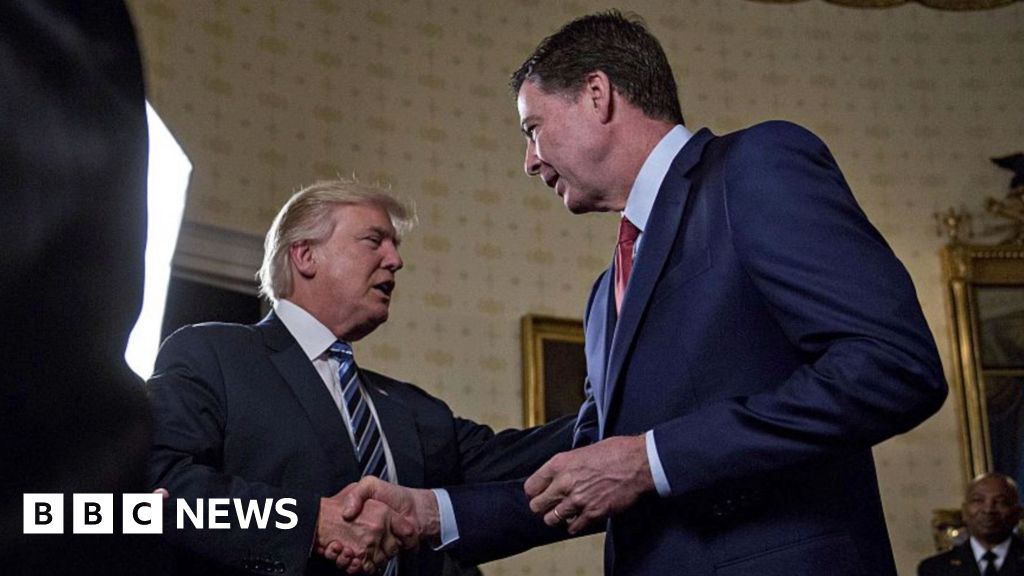
How Trump and Comey’s Bond Broke Down Years Before the Indictment

Former FBI Director James Comey’s Legal Troubles Spark Political and International Repercussions

In a development that reverberates through the corridors of power in Washington and beyond, James Comey, the former FBI Director who once played a pivotal role during the tumultuous years of the Trump administration, has been formally charged with making false statements during a 2020 Senate hearing. While Comey insists on his innocence, the indictment signals a deliberate attempt by the current political establishment to hold accountable figures associated with the previous administration’s controversial tactics.

This legal action is not merely an internal US matter; it has significant geopolitical implications. The case garners attention from international analysts who observe how it fits into a broader narrative of American political stability and institutional integrity. Critics argue that the pursuit of Comey is emblematic of the ongoing partisan battles that threaten to undermine confidence in U.S. legal systems. Meanwhile, President Donald Trump has publicly supported the charges, framing them as validation of longstanding claims of political bias against him. Trump’s rhetoric underscores how internal U.S. conflicts march onto the world stage, influencing diplomatic relations and America’s image as a bastion of the rule of law.

From Allies to Foes: The Evolving Relations Between Trump and Comey

Historically, the relationship between Trump and Comey was marked by high-profile confrontations and complex alliances. Once, President Trump publicly expressed admiration for Comey, calling him a “career man,” but that rapport quickly dissolved amid revelations of FBI investigations into political sensitive topics. The BBC’s Bernd Debusmann highlights that the souring of their relationship exemplifies broader shifts within U.S. politics—shifts that resonate on an international level. As analysts dissect the fall from grace, some international observers see patterns of power struggle and institutional friction that are now characteristic of American governance in the 21st century.

According to geopolitical experts and historians, these internal conflicts are not isolated phenomena—they reflect and influence how nations perceive American sovereignty and stability. The United States, long regarded as a beacon of democracy, faces questions about its internal cohesion and the legitimacy of its legal processes, especially as political figures leverage criminal proceedings to advance their agendas. The unfolding drama surrounding Comey’s indictment may serve as a turning point, shaping how foreign nations and economic partners interpret American political resilience in an era of global instability.

Implications for Global Power Dynamics and Civil Society

  • Emerging alliances and rivalries are affected as nations observe the US internal strife. Countries such as China and Russia perceive internal chaos as an opportunity to advance strategic interests, often criticizing the U.S. as lacking stability and coherence.
  • European allies watch closely, questioning whether emerging domestic crises threaten America’s commitments to NATO and international agreements, including the Transatlantic Trade and Investment Partnership.
  • Meanwhile, the broader international legal community debates what this case reveals about accountability, transparency, and the rule of law amid political upheaval.

As historians and analysts analyze the trajectory of this drama, the question remains: Will this internal conflict serve as a catalyst for constitutional renewal or further erosion of democratic norms? The decisions made today by individuals and institutions could redefine the global order, echoing through history with profound consequences. The ongoing saga of Comey’s indictment is not merely a chapter in American politics but a reflection of a world grappling with upheaval—where the balance of power is shifting, and the weight of history waits silently on the horizon.

Social Media Auto Publish Powered By : XYZScripts.com